

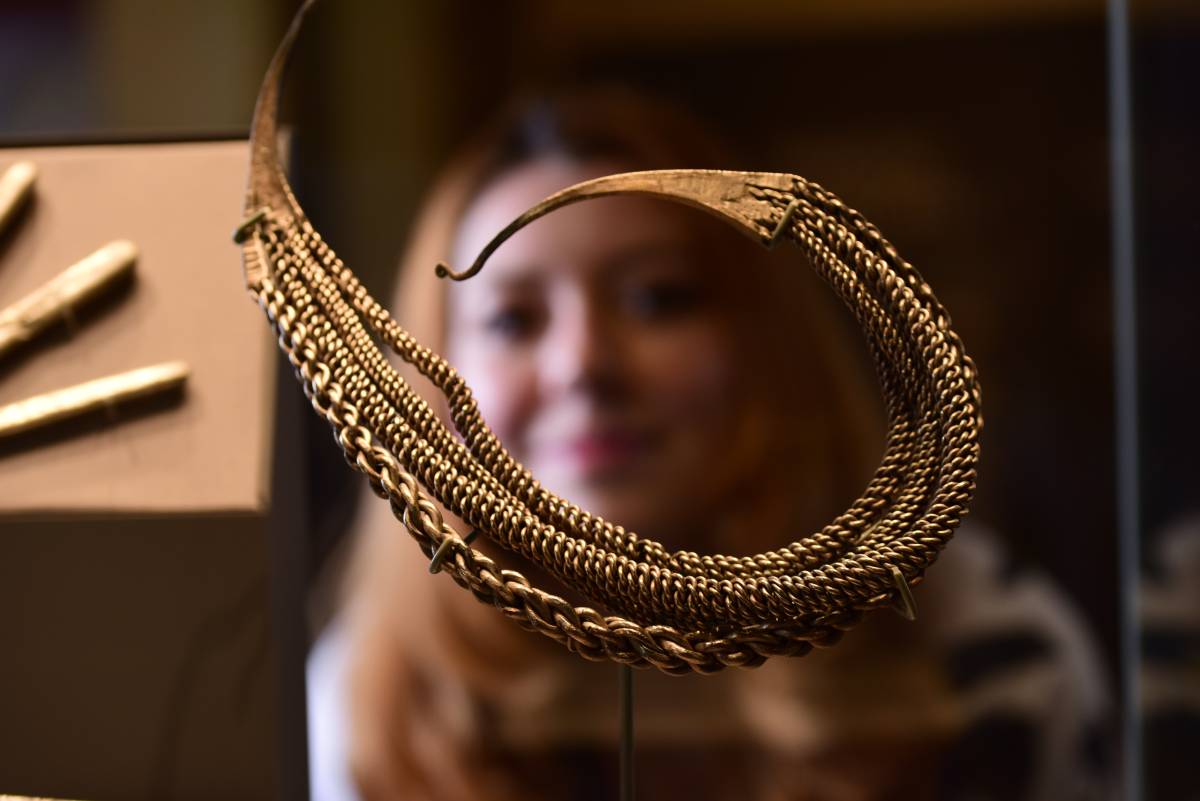
A new exhibition at the Yorkshire Museum in York, England, presents a spectacular array of Viking Age artifacts, including some items that have never been seen before by the general public.
Highlights include objects from the suspected Viking camp at Aldwark and the Vale of York Hoard. The Viking Herald speaks to curator Adam Parker to find out more.
The Viking presence
The exhibition, which opened on Friday, July 11, and will run through July 2027, presents the story of the Norse in Northern England from 866 to 1066 CE.
"It has been more than 12 months in the planning," Adam begins. "There is continuing new and emergent research into Viking archeology, and we wanted to take an opportunity to tell brand-new stories."
"We also had the idea of reinterpreting some of our existing collections using the most up-to-date and cutting-edge pieces of archeological science," Adam adds.
"It has been an aspiration of mine to undertake a dedicated look at our incredible Viking collections, and we think this is the finest collection of material culture from Viking Age England that you'll find in any museum in England."
York was famously occupied by the Vikings in the 9th and 10th centuries, with the Jorvik Viking Centre in the city telling the story of the Norse influence at this time.
As Adam explains, however, the Viking North exhibition seeks to tell a wider story of the Vikings in the north of England.
"York itself is incredibly important in Viking archeology," Adam admits. "But we do not want to tell the story of Viking York—that's what Jorvik is for. We tried to take a wider view."
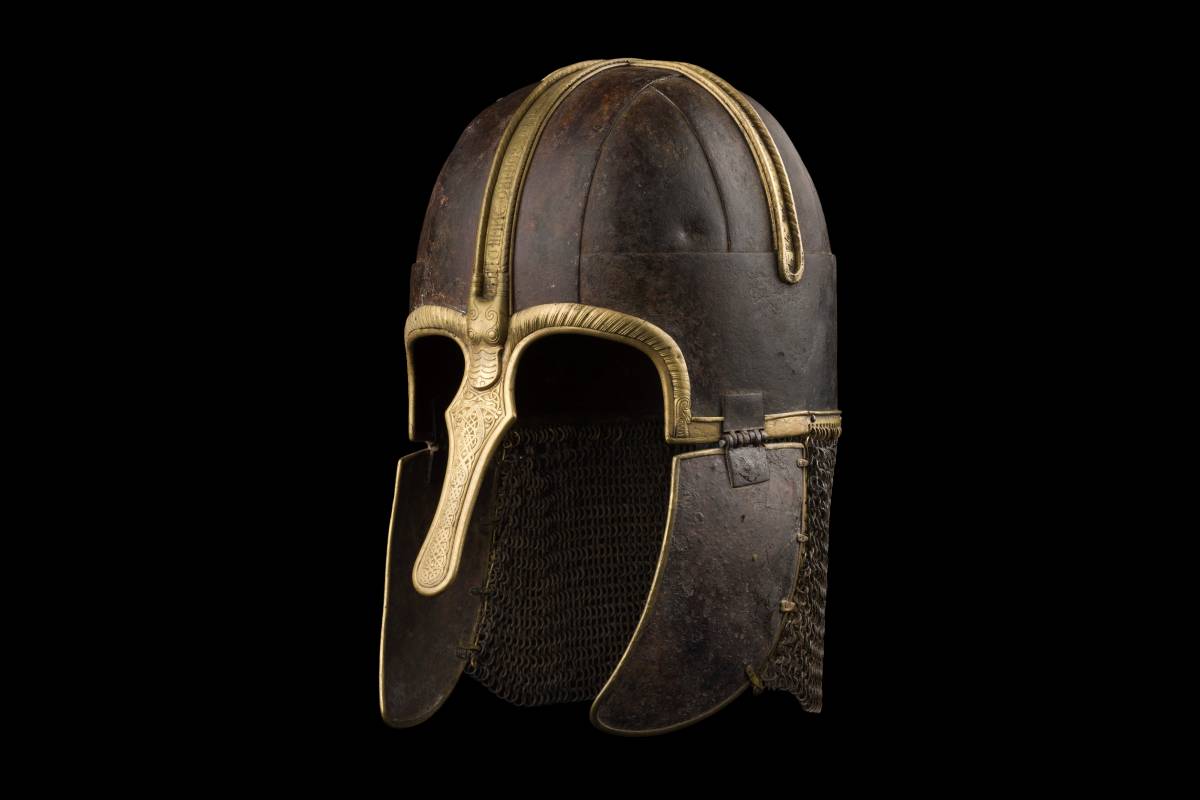
The Coppergate Helmet, made in 8th-century York, is one of the finest surviving examples of Anglo-Saxon craftsmanship. Photo: York Museums Trust
The camps of the Great Viking Army
As Adam informs us, this aim led the curators to look beyond the confines of the historic city to tales from the surrounding area.
"One part of the exhibition is concerned with the presence and archeology of the winter camps," he tells us.
"The Viking Great Army arrived in 865 and campaigned all across England. Each year, they stopped the military campaign over the course of winter and set up a specific camp where they remained until spring. These camps became like miniature towns."
"Excavations at places like Repton and Torksey have shown us what an archeological signature of a Viking Great Army camp looks like. A few miles south of York, there is a site called Aldwark on the banks of a river," Adam tells us.
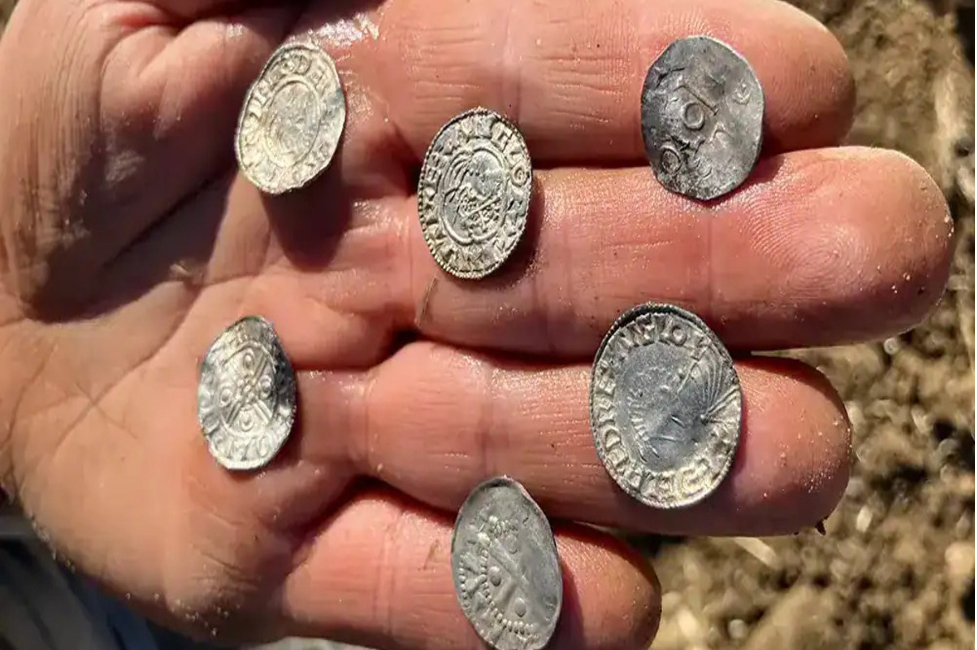
"It has been subject to metal detecting for decades and relatively recently was identified as a Great Army camp. There is hacksilver, gaming pieces, inset weights, armlets, and craft work, and everything else."
"With Viking North, we present a collection of material culture from the Aldwark Great Army site on display for the first time. I believe this is a story that hasn't been told very often."
"We know that the army went out plundering and pillaging, but there were also these groups of people spending two or three months together in one place."
"They would have been trading, fixing themselves, fixing their boats, or perhaps just bored, playing games and drinking."
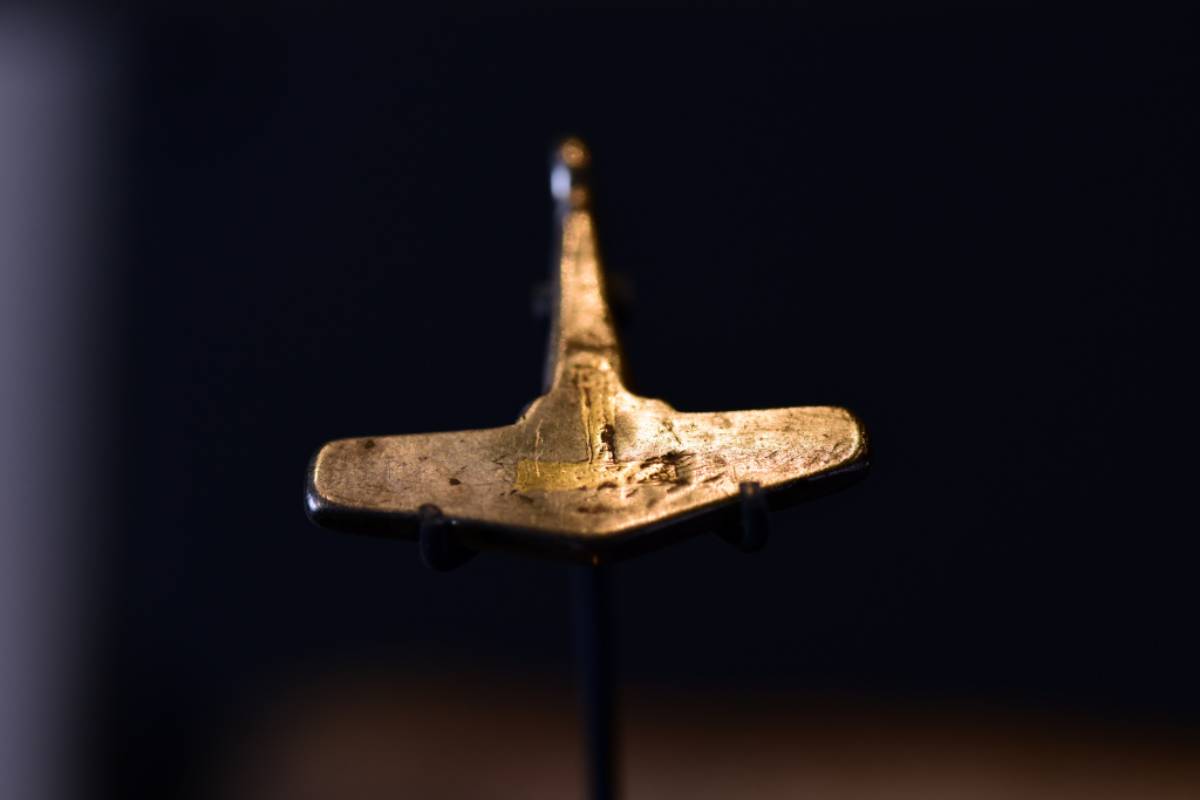
A Thor's hammer pendant, found near York, features a gold inlay and stylistic traits from both English and Scandinavian traditions. Photo: Anthony Chappel-Ross
The influence of culture
Many of the exhibition's finds also highlight the depth of integration and complexity of interactions between the Norse and Anglo-Saxons in Viking Age England.
"Professor Jane Kershaw at Oxford undertook some pioneering metallurgical analysis of one of our hoards, the Bedale Hoard," Adam points out.
"She was able to demonstrate that the silver that exists within the ingots and other objects comes from wildly different sources. In other words, the Vikings didn't just arrive, then start acquiring silver and melting it down," Adam explains.
"Some of the silver is from endemic British sources, while other examples are from the Middle East. This indicates the Vikings arrived with bunches of silver that entered the economy almost immediately and became mixed up with other silver objects."
"This really demonstrates the complexity around what these objects are, and indicates the sort of lives that are hidden from us."
"We also have a Thor's hammer pendant in the collection that has only just been acquired and is on public display for the first time," Adam adds.
"It was found 30-plus miles away from the urban center, but it's exactly the kind of thing that you'd expect someone to have been wearing in York. This shows the cultural change that's happening in the rest of the north."
"Most of the Thor's hammers you find in England are very plain, while the Scandinavian ones tend to have more detailed, intricate carving."
"This one has a slightly more elaborate shape, and a gold inlay of a miniature hammer on top of the hammer. It's almost halfway between these two traditions."
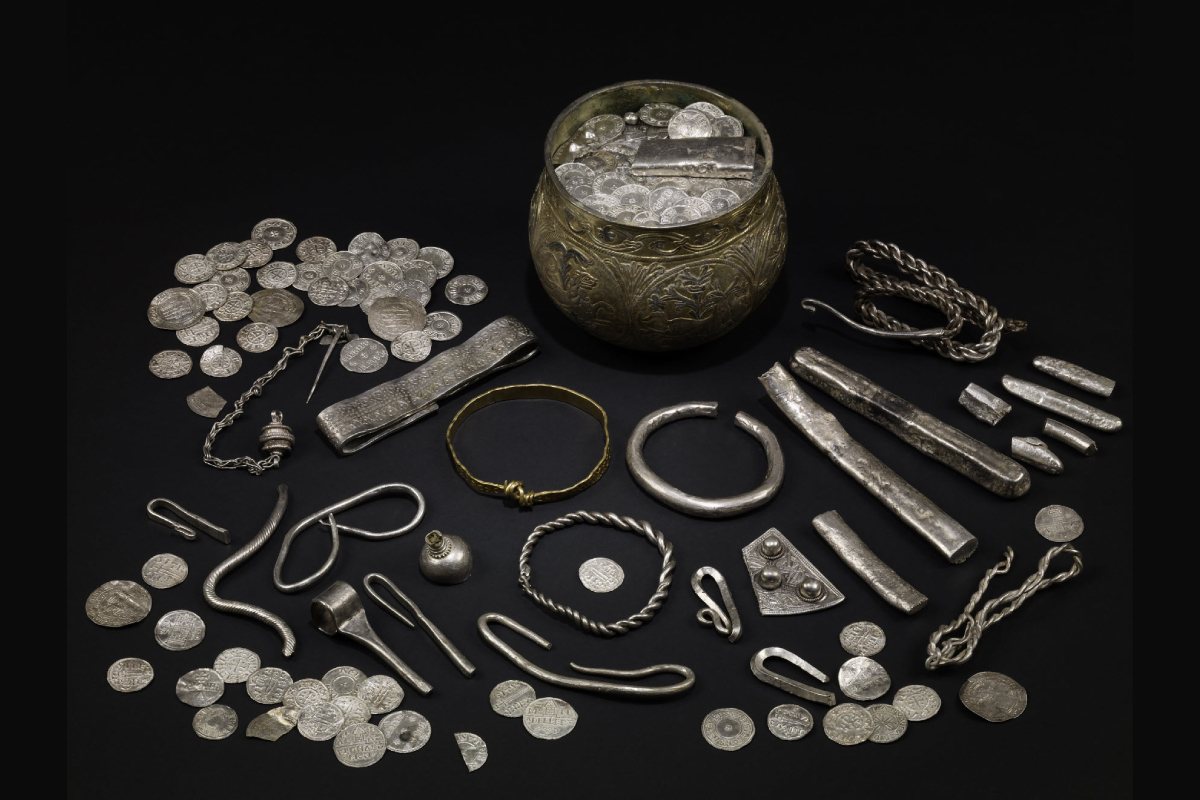
The Vale of York Hoard, found in 2007, is on display with over 600 coins and silver objects from across the Viking world. Photo: York Museums Trust
The people of Viking Age England
The team has also worked hard to present the objects and the stories of Viking Age Northern England in a more accessible manner.
"There are two complaints that I've had as a curator that I get more often than anything else," Adam admits to The Viking Herald.
"One is that there isn't enough information, the other is that there is too much. Trying to find a balance between those two things is the great challenge of my professional career!"
"For Viking North, we've produced new images of people wearing the collections," Adam explains. "This is a really powerful way to explain what these objects are."
"Even if you don't read the explanations, you can immediately understand what this object is for. I hope people will be able to respond to the exhibition in a different way."
"We're also involving costumed interpreters in this exhibition, as part of the interpretation," Adam adds. "There will be six different characters that are going to be in the exhibition on certain occasions for several hours a day."
"There's a man from the Viking Great Army, somebody from a farming site, an Anglo-Saxon enslaved woman, a trader from the Samanid Empire, and a money-earner from the 11th century."
"In each case, we've taken an object and we've built a story and a narrative around it about what we want these people to be able to tell," Adam explains.
"They're going to be dressed in period clothing with similar objects. We hope that this approach will draw people in. Everywhere you go throughout this exhibition, you should get a sense that everything found here is about the people."
We get to provide readers with original coverage thanks to our loyal supporters. Do you enjoy our work? You can become a PATRON here or via our Patreon page. You'll get access to exclusive content and early access.
Feel free to reach out to discuss potential stories that may be in the public interest. You can reach us via email at hello@thevikingherald.com with the understanding that the information you provide might be used in our reporting and stories.