


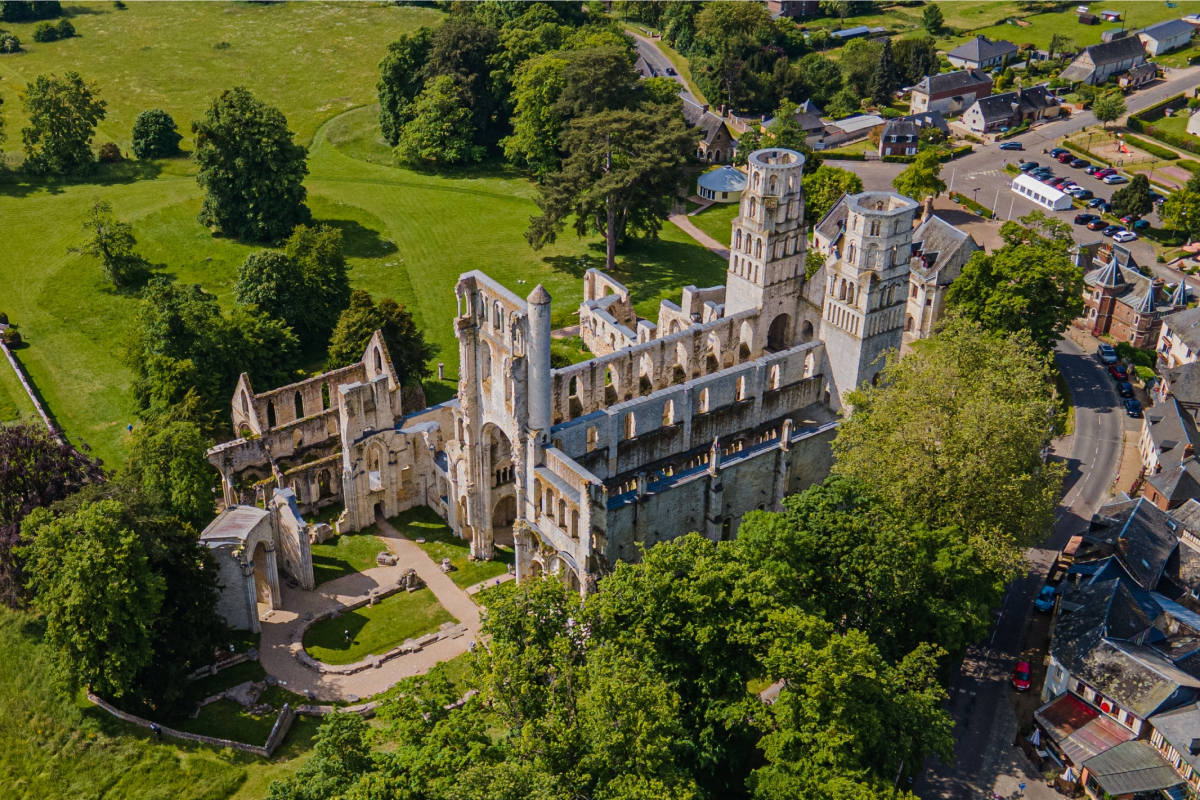
The Kingdom of the Franks was not only tremendously wealthy but also easily accessible by sea.
Little wonder, then, that it was a tempting landing area for Viking ships, and the scene of some notable Norse feats, including the daring raids of Asgeir and Ragnar Lothbrok’s sustained attacks during the Siege of Paris in 845.
While there is little to no archaeological evidence remaining today, it is worth noting that the Louvre, one of the most famous museums in the world, was originally built as a fortress specifically to repel Viking attacks.
The castle was demolished and rebuilt as a palace in the 16th and 17th centuries, but the remnants of its foundations are still visible today.
Then there was Rollo’s Normandy takeover, of course, which saw the Viking leader and his descendants emerge as key leaders of northern France.
Even so, there are surprisingly few Viking archeological and tourist sites in both France as a whole and even Normandy itself. Rest assured, however – what there is to see is definitely worth seeking out!
- READ MORE: The Viking history of France - Part 1
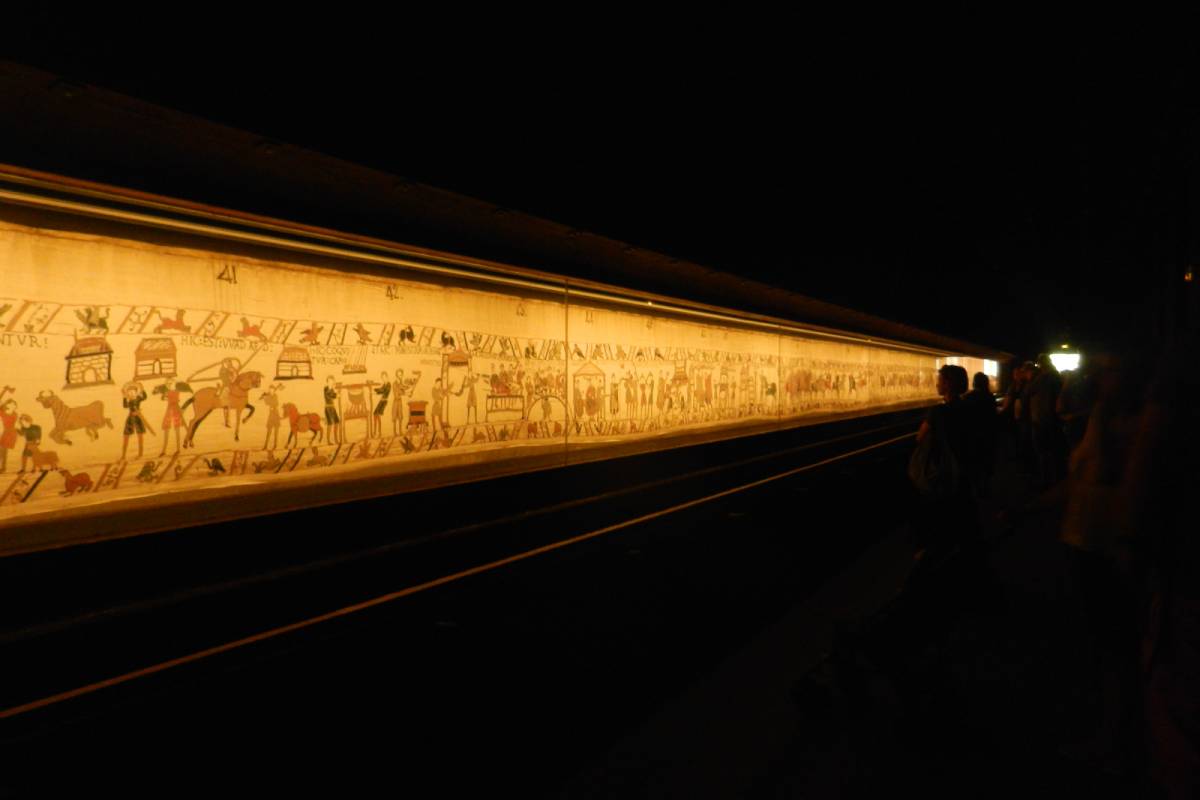
The Bayeux Tapestry, a 69-meter-long wool embroidery on linen, is believed to have been commissioned by Bishop Odo, William the Conqueror's half-brother, in the 11th century. Photo: Beat Ruest / Wikimedia Commons (CC BY-SA 4.0)
Bayeux: The Tapestry
At the town of Bayeux, of course, you can find the Bayeux Tapestry, which depicts not only the triumphant attack on England by William the Conqueror, but also the failed attempt of Harald Hardrada to gain control of the country.
It contains 58 detailed scenes that portray the events leading up to the Battle of Hastings in 1066, as well as the battle itself, housed at a museum in this small Norman town.
The tapestry is presented behind long, curved glass, and only minimal lighting is used to ensure its long-term preservation. The quality of the handiwork is simply outstanding.
Visitors can savor the imaginative and intricate depictions of Viking ships, Norman soldiers, Anglo-Saxon archers, and a whole host of other delights. These include a plethora of animals, death scenes, heated discussions, ornately crafted buildings, and, of course, spectacular battles.
In addition, there is a permanent exhibition that looks at the creation process and the historical context.
Finally, a 16-minute film presents the story of the Bayeux Tapestry, including reconstructed scenes from the Battle of Hastings.
The museum is a ten-minute walk from Bayeux Station at 13B Rue de Nesmond, 14400 Bayeux. You can reach it by car from Caen in less than half an hour and from Paris in just over three hours. By way of a taster, you can view the tapestry online.
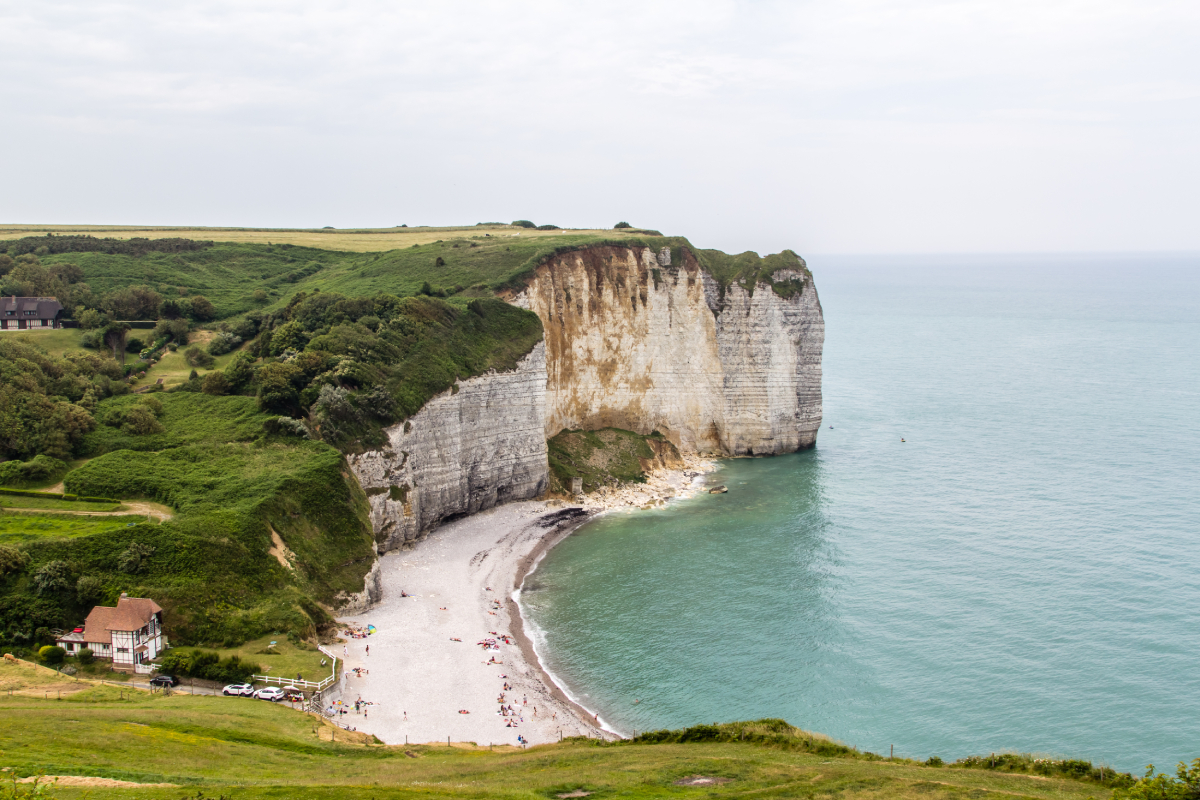
The town of Fécamp, marked by Viking destruction in 842, later flourished under Richard, Rollo's grandson, who restored its Abbey of the Holy Trinity and made the Ducal Palace a favored ducal residence. Photo: Philippe PATERNOLLI / Shutterstock
Fécamp: A royal birthplace
Fécamp is a fine place to let your imagination run away with you. With its accessible beaches and inviting shorelines, Fécamp was a common area of attack for raiding Vikings.
In 842, they even burned down the first abbey, which had been a popular site of pilgrimage for Christian believers.
Yet Fécamp was also the birthplace of Rollo’s grandson Richard. Indeed, Richard and his son, Richard II, would help restore Fécamp Abbey and turn it into one of the most important religious centers in France, while the castle became a favorite residence of the dukes.
Fécamp is also where William the Conqueror is said to have celebrated his coronation as King of England.
Today, you can visit the ducal graves at the remains of the castle or simply stare at the Channel and picture the sheer terror the locals must have experienced as the hordes invaded or the later triumphant feasts of Norse-descended Norman dukes.
- READ MORE: The Viking history of France - Part 2
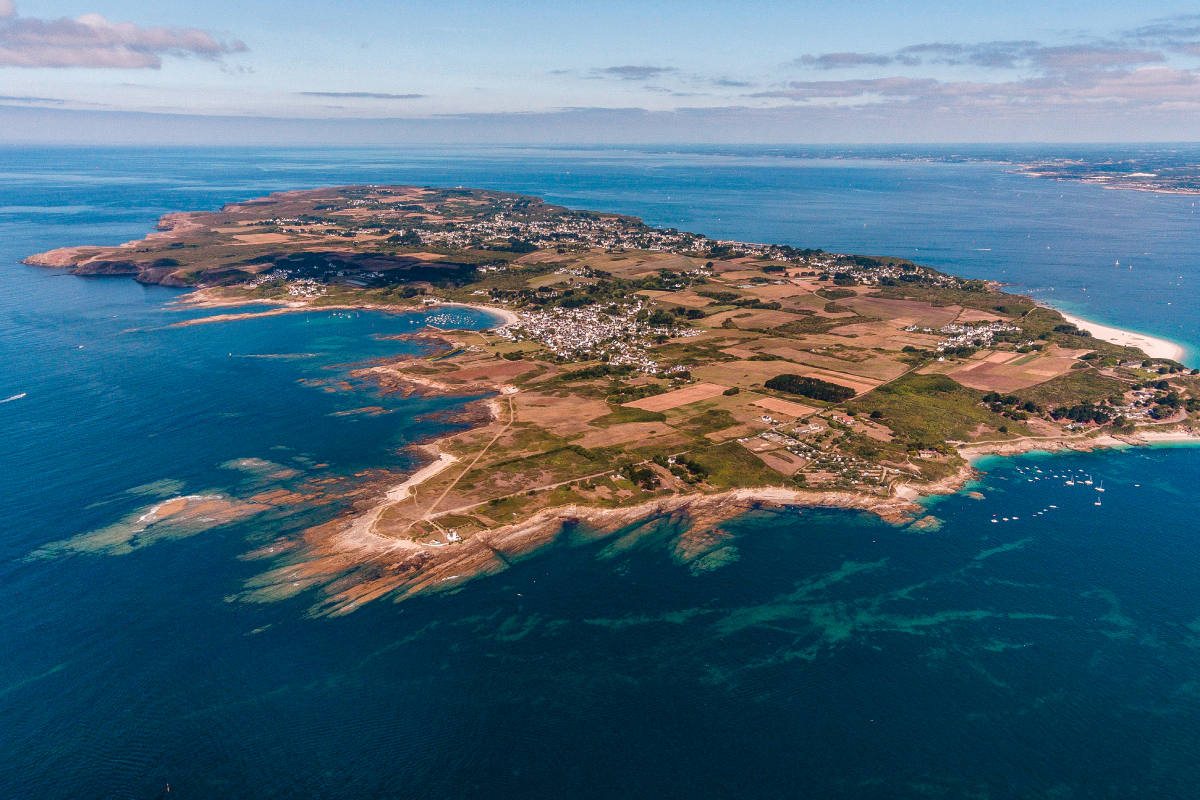
The island of Groix is unique in France for its Viking burial ground, discovered in 1906, showcasing remnants of a boat burial and various Norse artifacts, now part of the Groix Island Eco Museum's collection. Photo: Francois Hurtaud / Shutterstock
Groix Island: A rare archeological find
On a tiny island just south of Lorient, you will find the only Viking burial ground in the whole of France. The island of Groix, known as The Stone of Brittany, is thought to have been formed by the meeting of two tectonic plates around 400 million years ago.
Discovered by prehistorian Paul du Châtellier and mariner Louis le Pontois in 1906, the find contained what appeared to be the burned remains of a boat burial.
In addition, they also uncovered the bones of humans, a dog, some birds, bronze vases, jewelry, 21 shield bosses, swords, axes, spears, and a series of tools.
Though the site of the original burial ground is scenic enough, there is little evidence today of its historic nature. Instead, we advise heading to the Groix Island Eco Museum for an atmospheric presentation of some of the findings.
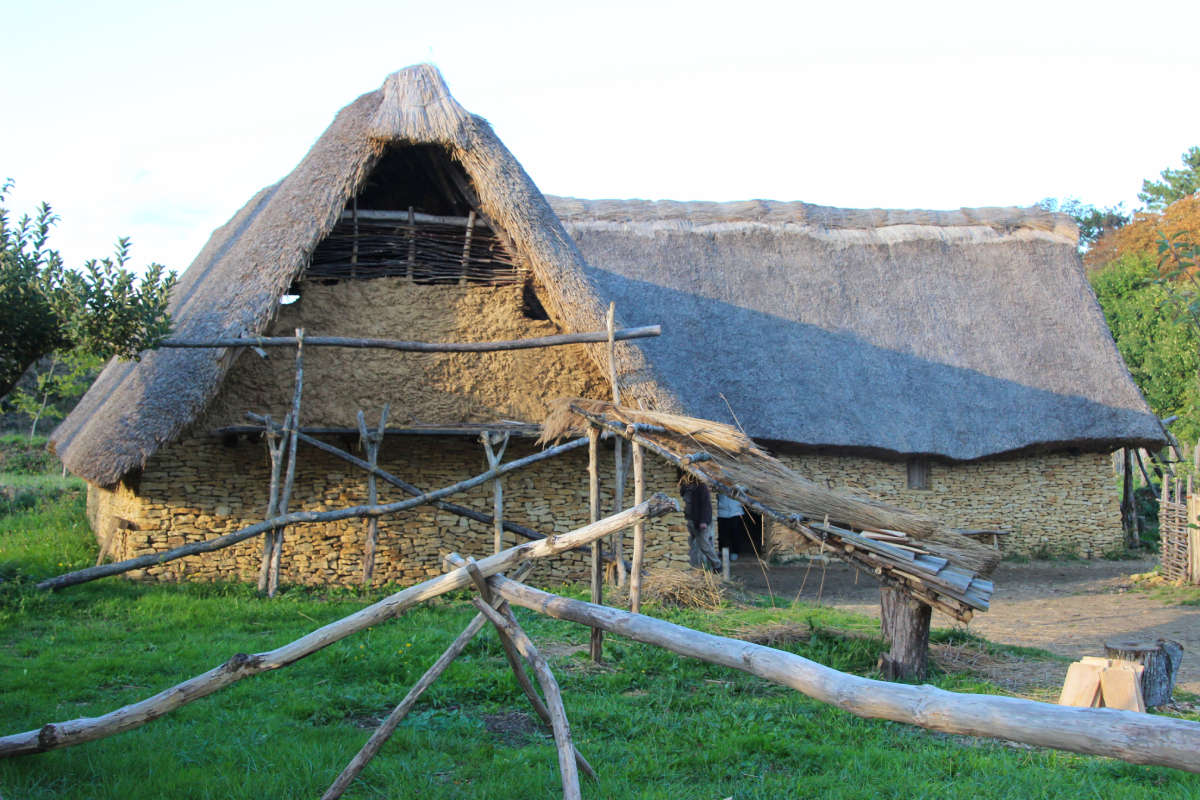
Ornavik, France's premier Viking park, offers a journey from 911 to the Battle of Hastings in 1066, featuring a Norse camp, engaging activities, and an upcoming interpretation center. Photo: Pascal Radigue / Wikimedia Commons (CC BY-SA 4.0)
Ornavik: Immersive history
Ornavik is probably the most spectacular Viking attraction in France.
Opened in 2011, the park is designed to provide visitors with an overview of Viking and Norman life from the year 911 to William the Conqueror’s victory in the Battle of Hastings in 1066.
Visitors step into an immersive world of living history featuring a fully reconstructed Norse camp.
Here, you will find Vikings in full costume, ships, fireplaces, and longhouses, not to mention a wide array of activities for kids and adults alike, including cooking courses, clothing production, and archery practice.
The park also contains a Carolingian village, while a Viking interpretation center is planned for 2025 that will present the history of the Viking Age.
Just down the road, the city of Caen is a testament to the might of the Normans. The towering stone walls of Caen Castle, established by William the Conqueror, are particularly evocative.
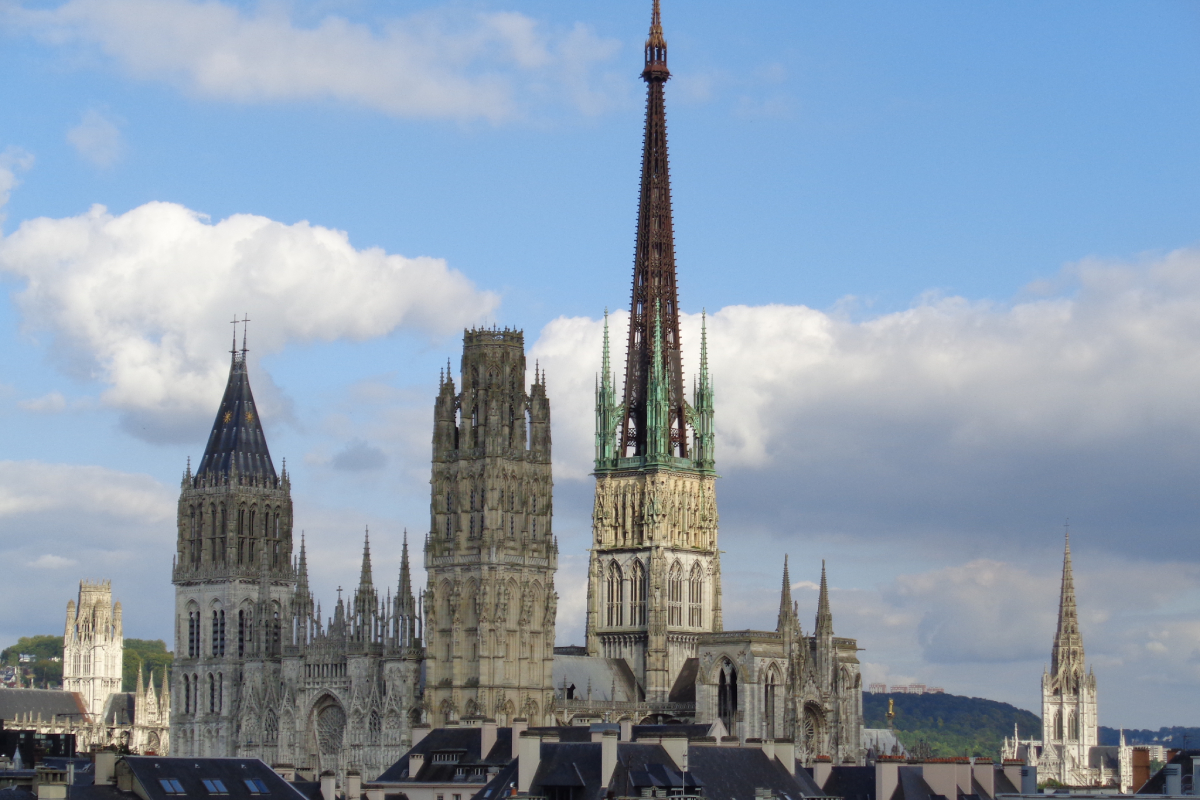
In the heart of Rouen lies its cathedral, a testament to the city's transformation from a Viking battleground to a seat of Christian power, and the final resting place of Rollo. Photo: Philippe Roudaut / Wikimedia Commons (CC BY-SA 4.0)
Rouen Cathedral: Rollo’s final resting place
Rollo was initially the scourge of France, waging war on the Franks, wreaking havoc on the coastlines, and besieging the city of Chartres.
Yet everything changed when the West Frankish king Charles the Simple offered a great swathe of land in exchange for Rollo’s alliance and baptism under the Christian name of Robert.
Rollo would go from a pagan invader to establishing a Norman dynasty that would help shape the course of history.
His grandson, Richard I, would expand the initial territory into the famous Duchy of Normandy. At the same time, Rollo’s great-great-great-grandson, William the Conqueror, would help bring an end to the Viking Age by invading England and establishing his own period of dominance.
Today, you will find Rollo’s tomb in the stunning environs of Rouen Cathedral.
After operating for a time as a thriving Norse trading town that connected Scandinavia with the new kingdom of Normandy, Rouen eventually grew to become one of the most prosperous cities in Western Europe.
Rouen Castle, which became the main seat of Norman power and was later used to imprison Joan of Arc, is also impressive.
We get to provide readers with original coverage thanks to our loyal supporters. Do you enjoy our work? You can become a PATRON here or via our Patreon page. You'll get access to exclusive content and early access.
Feel free to reach out to discuss potential stories that may be in the public interest. You can reach us via email at hello@thevikingherald.com with the understanding that the information you provide might be used in our reporting and stories.



.jpg)
