

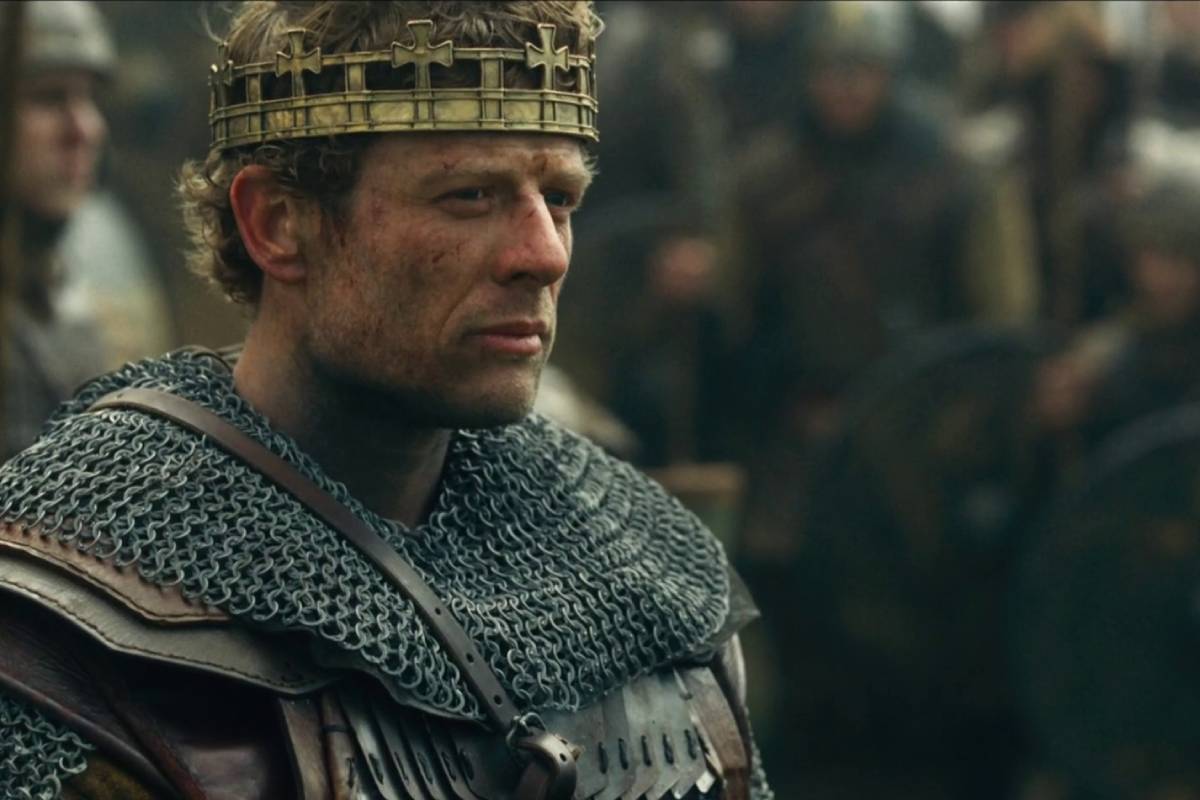
The popularity of the series Vikings has suddenly made the early medieval period uber-chic.
The original series not only ran for 7 seasons but also spawned a spinoff (Vikings: Valhalla) and was responsible for a spate of Viking-themed movies, from Marvel's Thor: Ragnarok to Robert Eggers' The Northman.
However, the traditional end of the Viking Age, at least in the Anglophone world, has never been fully explored on the small or silver screen until now.
Hoping to capitalize on this surge of early medieval mania, the BBC and CBS have commissioned a brilliant new 8-part series, King & Conqueror.
This co-production explores the blood, drama, and glory behind the events of 1066 CE, the beginnings of the Norman story in England, and the end of the Anglo-Saxon one.
Despite our love affair here at The Viking Herald with this period, the public is not made up of Viking aficionados and knows even less about the characters and events of the mid-11th century CE in Northern Europe.
They would struggle to know their Harold Godwinsons from their Harald Hardradas and probably wouldn't spot the difference between William, Duke of Normandy, and Baldwin, Count of Flanders.
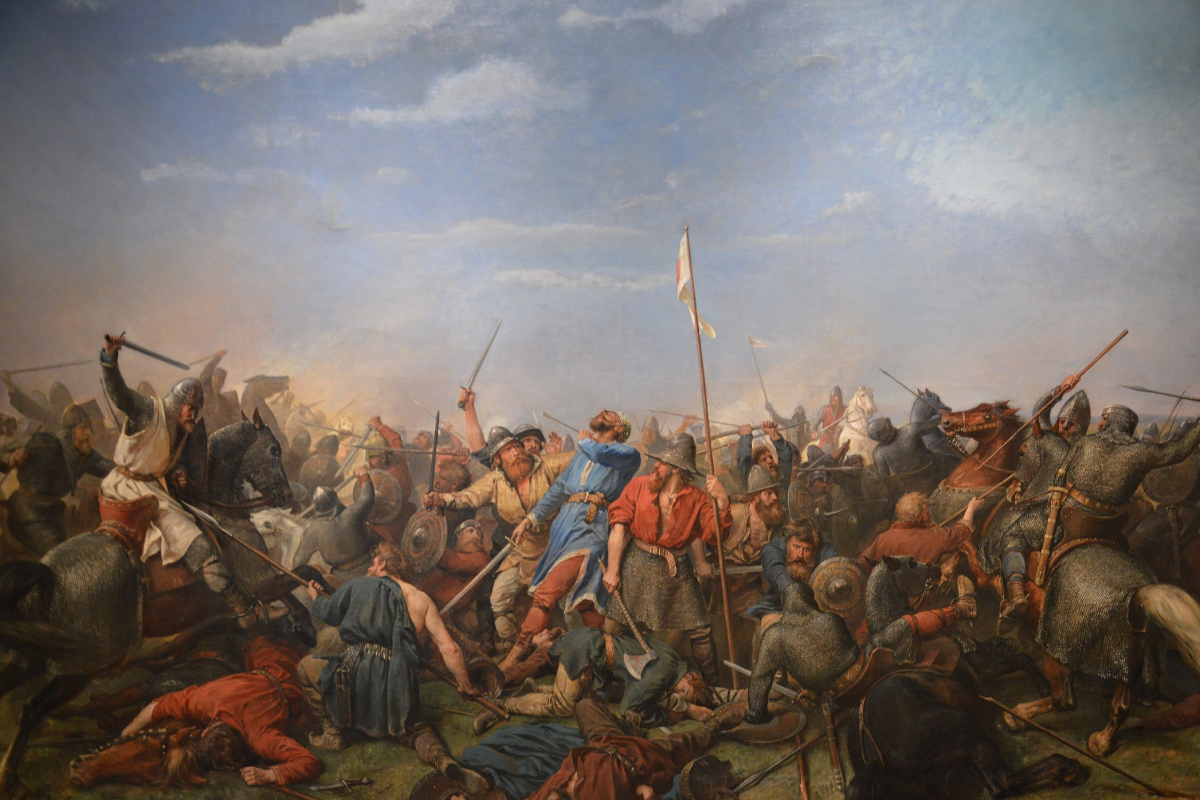
Much of the first half of this series then gives the viewer much-needed historical context that helps set the stage for the bloody battle in 1066 CE that reshaped England forever.
However, despite its basis in historical reality, King & Conqueror is indeed a fictional series, albeit one based on true events. So, how historically accurate is this series?
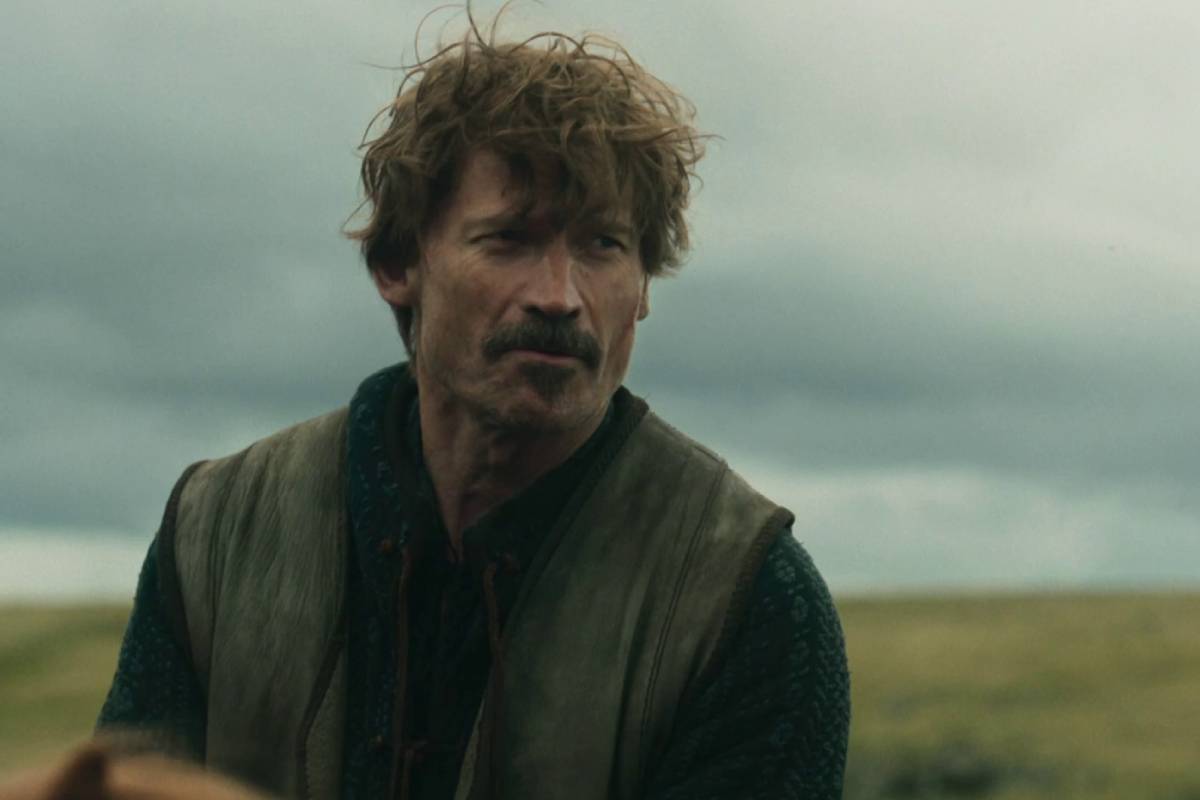
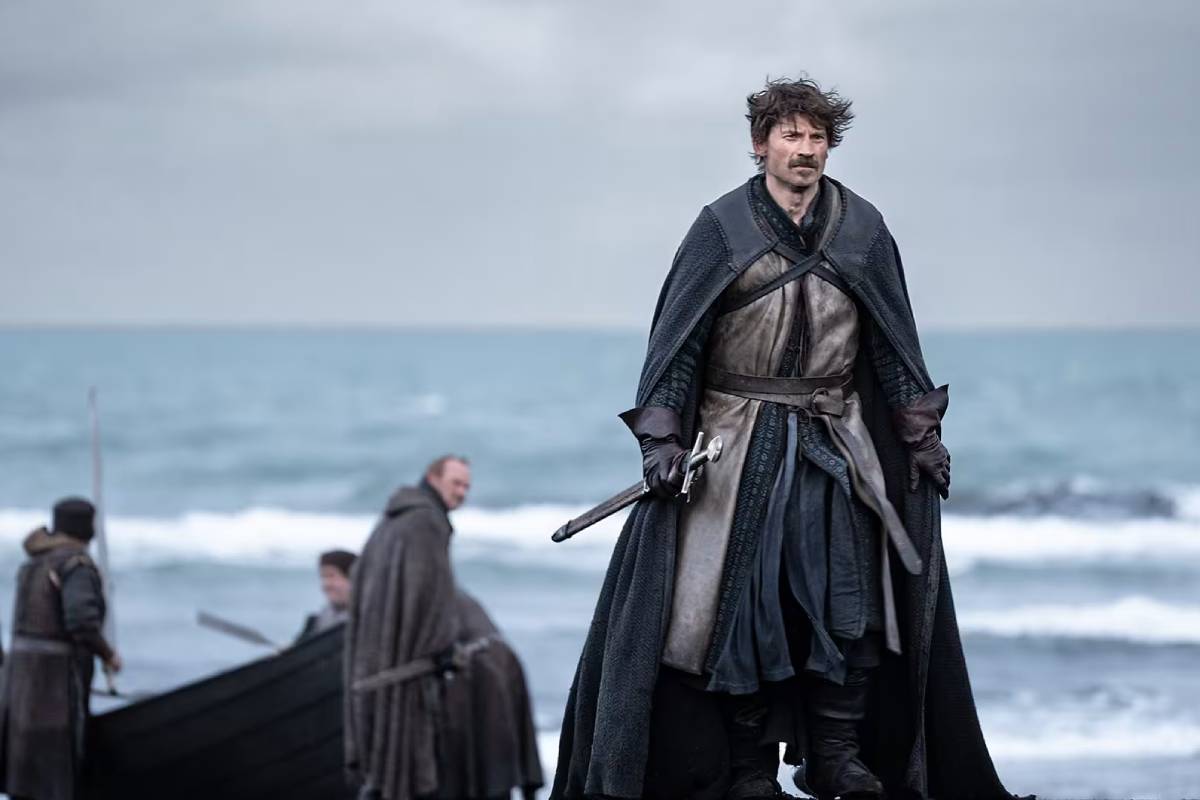
Nikolaj Coster-Waldau in the role of William, Duke of Normandy, the future William the Conqueror. Source: BBC, CBS Studios, screenshot (Copyright, fair use)
Claimants, rivals, rulers, and... friends?
The focus of the series is on intense rivalry and relationship (frenemies much?) between the Earl of Wessex, Harold Godwinson (James Norton), and William, Duke of Normandy (Nikolaj Coster-Waldau) in the dying days, quite literally, of the reign of English King Edward the Confessor (a madcap Eddie Marsan).
Whilst the show gets the rivalry correct – these two were indeed claimants for the English throne and inexorably linked to each other's fate – the series is on historically shaky ground when it comes to the exploration of their personal relationship, at times even a budding friendship.
The series is, remember, a work of fiction, and we can conclusively say that these two Kings of England never shared a yarn during a medieval hot tub session whilst dodging assassins' daggers.
Godwinson, the scion of a powerful Wessex family – many times in the series, Harold (portrayed by James Norton) mentions his proud ancestry that links him back to Alfred the Great – seizes the Earldom of Wessex from his older brother, Sweyn.
Their sister, Gunnhild (modeled on Harold's sister, Edith of Wessex, and portrayed by Bo Bragason), has married King Edward, yet this union, which was proffered up to supposedly secure a Wessex grip on the English throne, is tenuous, as they have yet to produce any children.
Rounding out the family is the youngest, Tostig (a very meek and sensitive Sam Spruell).
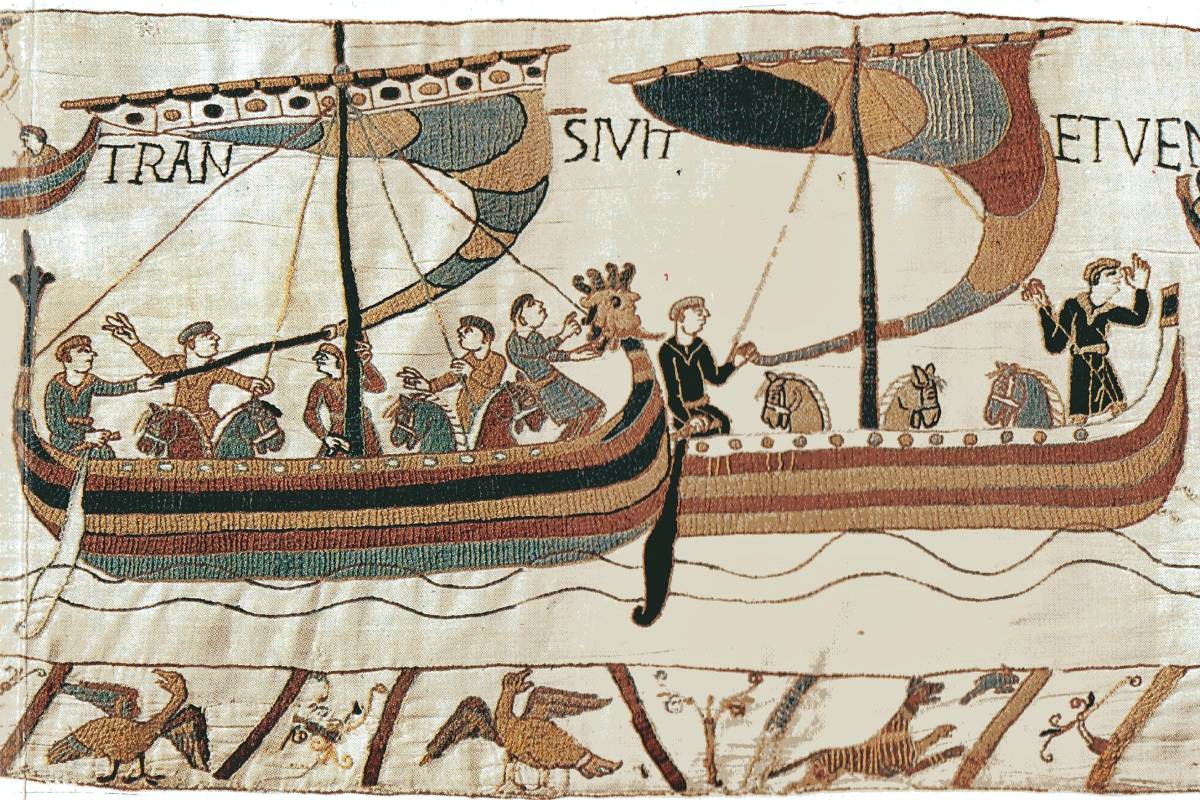
Across the Channel, William, Duke of Normandy, arguably has a stronger claim to the throne, being a distant cousin of Edward through his mother, Emma of Normandy (Juliet Stevenson). William is less proud of his lineage and notes his tough childhood (being called a "bastard" did little for his self-esteem).
What we particularly liked about the rivalry between the claimants to the throne was the depiction of Edward the Confessor's death scene. In this stirring scene, Harold Godwinson is shown at the king's bedside.
Here, Harold deftly seizes the moment, and thus the English crown, as Edward's life ebbs away by manipulating... sorry, "interpreting" the King's dying words as an endorsement of his own succession.
It's an ambiguous and dramatic moment, capturing both Harold's political shrewdness and the uncertainty that would soon plunge England into chaos.
It also shows that Harold has a ruthless streak in him, contrasting his earlier, more genteel depictions in earlier episodes.
Separated from Harold by the English Channel, William saw this usurpation as the ultimate betrayal. We have seen how Harold had not only sworn an oath for William's right to the English throne but also sort of befriended him – and indeed saved his life – in earlier times.
As David Bates writes in his 2016 book, William the Conqueror (available on Amazon here), it was Harold's oath, along with his own lineage, that made William "...so uncompromisingly convinced that he had a right to succeed Edward the Confessor."
Whilst the betrayal and oath have some historical basis, we know for a fact that Godwinson never leaped out of the woods to save the life of his future successor on the English throne from Mercian brigands.
Regardless, it is this sense of betrayal and exploitation, along with Harold's rather dubious claim to the throne, that fuels much of William's descent into revenge and warmongering that dominates the second part of the series.
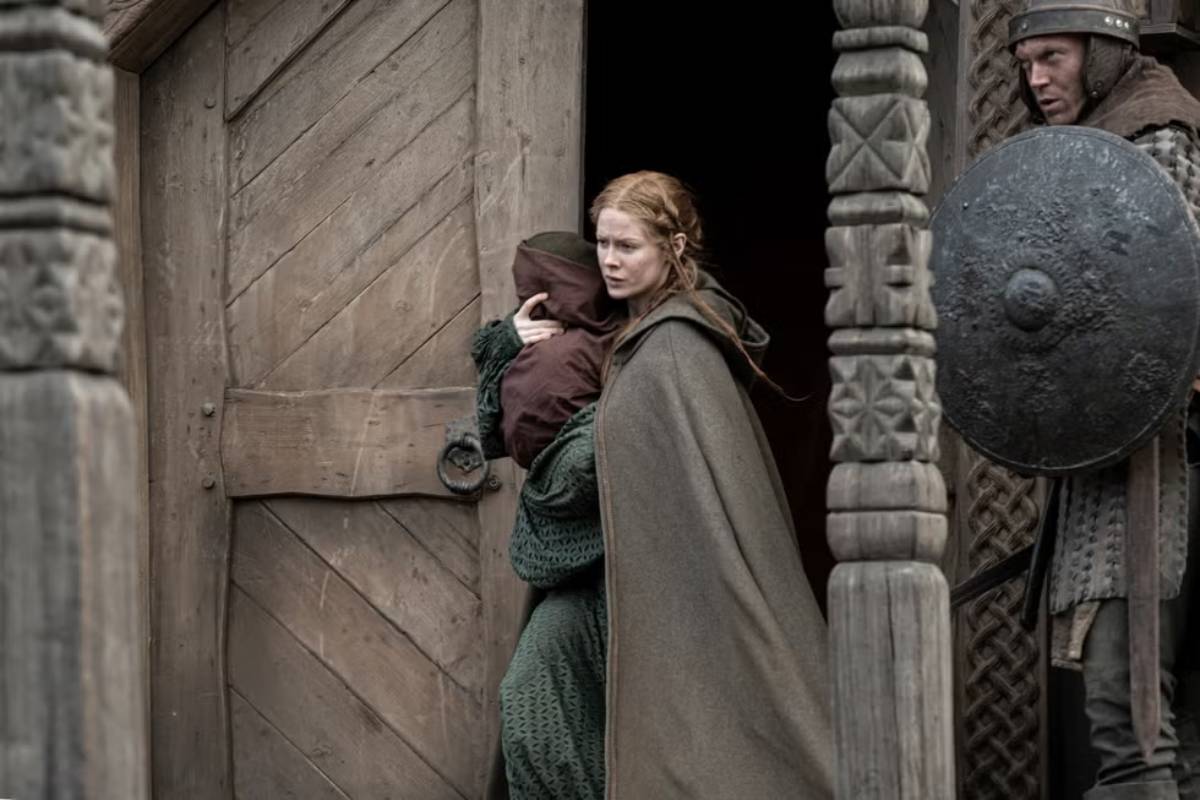
Emily Beecham in the role of Edith Swan Neck, Harold Godwinson's long-term partner. Source: BBC, CBS Studios, screenshot (Copyright, fair use)
Gritty, dark, stark, and bleak
Much praise should be given to the costume and set designers for this series. Whilst other depictions of the medieval period owe more to Walt Disney than the history books, this is not the case with King & Conqueror.
The gritty, realistic depictions of early medieval life and locations in the series are quite realistic and do have some basis in historical reality.
This is certainly not the sort of Camelot-esque depiction of the medieval period we are popularly bombarded with, that of grand castles, shining knights, and fair damsels.
This is a darker, more dangerous, and definitely more paranoid world.
Encapsulating this darkness, we particularly liked the scenes where Godwin, Earl of Wessex, held court with his family – Harold, Sweyn (played as grumpy, gruff, and morally outraged by David Dawson), and Tostig (portrayed by Sam Spruell) – all competing for their father's ear.
The dynamic sibling rivalry between all the brothers, as depicted in these few family scenes, leaves the viewer with a sense of claustrophobic energy.
This energy will be reflected in the ambitions that would later shape Harold's fate, along with Wessex itself.
Adding to the dark tone is the Anglo-Saxon look and feel of much of the set design involving the Wessex clan, inspired, we think, by the treasures of the Sutton Hoo burial.
The environment and scenery also match this dark and foreboding tone. Many of the English, Flemish, French, or Norman landscapes are stark, brutal, and isolated environments under a gray, windswept sky.
This adds to the brooding sense of insecurity and isolation that many in early medieval England rightly felt and adds to the paranoia of both Harold and William.
Conversely, the more populated areas – the camps, towns, and villages – are depicted as grimy and small settlements. London is shown exactly as it would have been in the late 11th century CE, little more than a large market town, albeit an important one, but not the confident and dominant metropolis it is today.
Finally, we particularly liked the majestic subtlety of the coronation scenes of all three kings – Edward first, then Harold, and finally William, the last man standing.
These were not the grand affairs of later medieval monarchs, but as the series rightfully depicts, these were small, intimate, and sacred affairs.
Whilst Westminster Abbey was indeed built during Edward's reign, this was still not the grand Gothic temple it would become in the later medieval period.
The first season of King & Conqueror is available to stream on Amazon's Prime Video here.
We get to provide readers with original coverage thanks to our loyal supporters. Do you enjoy our work? You can become a PATRON here or via our Patreon page. You'll get access to exclusive content and early access.
Feel free to reach out to discuss potential stories that may be in the public interest. You can reach us via email at hello@thevikingherald.com with the understanding that the information you provide might be used in our reporting and stories.