


The people of Scandinavia traveled far and wide during the Viking Age. While in some places, such as Spain, Italy, and Istanbul, their visits were more fleeting, in others they left a permanent reminder of their presence.
So which sites should be on the bucket list of any Viking enthusiast? Below, The Viking Herald offers up its list of the top ten Viking sites around the world.
For the sake of simplicity, we limit our choices to those places where the Vikings are known to have lived, and where you will also find—at the very least—a visitor center or a tour guide ready to tell you something special about the location's history.

Situated in Newfoundland, L'Anse aux Meadows is North America's sole confirmed Viking site. Photo: Russ Heinl
L'Anse aux Meadows, Canada: Utterly unique
The only confirmed Viking site in North America, L'Anse aux Meadows, a UNESCO World Heritage site, is believed to be a Norse settlement in the semi-mythical Vinland, as described in the Saga of the Greenlanders and the Saga of Erik the Red.
Archeological excavations in the 1960s revealed a cluster of eight Norse buildings and evidence of iron production and animal husbandry.
Most experts think L'Anse aux Meadows functioned as a likely base for Leif Erikson and his crew as they explored the eastern reaches of the continent.
Situated at the northernmost point of the Canadian province of Newfoundland, L'Anse aux Meadows is not exactly easily accessible.
Yet visitors who do make the trip will be rewarded with a reconstruction of the camp, a visitor center, and the chance to enjoy tours from knowledgeable guides dressed in authentic Viking clothing.
Just down the road, Norstead, a recreated Viking village and trading port, offers an even more immersive experience.

The Jelling stones stand in Jelling, Denmark, as one of the nation's most important runic monuments. Photo: Kenneth Bagge Jorgensen / Shutterstock
The Jelling monuments, Denmark: Birth of a nation
Known as "Denmark's birth certificate," the Jelling stones are believed to have been raised by the Viking King Harald Bluetooth and his father, Gorm the Old.
The larger of the two stones contains a runic inscription that celebrates Bluetooth's conquest of Denmark and Norway and the conversion of Denmark to Christianity. (Though a Norwegian archeologist did recently call this heritage into question.)
Like L'Anse aux Meadows, Jelling, in southern Denmark, is today a UNESCO World Heritage site.
The original stones, now protected by glass, are framed by two enormous burial mounds, a 170-meter-long stone ship setting, and an ancient church.
Next door, a high-tech visitor center provides information on the life of the Vikings through interactive activities and multimedia displays.
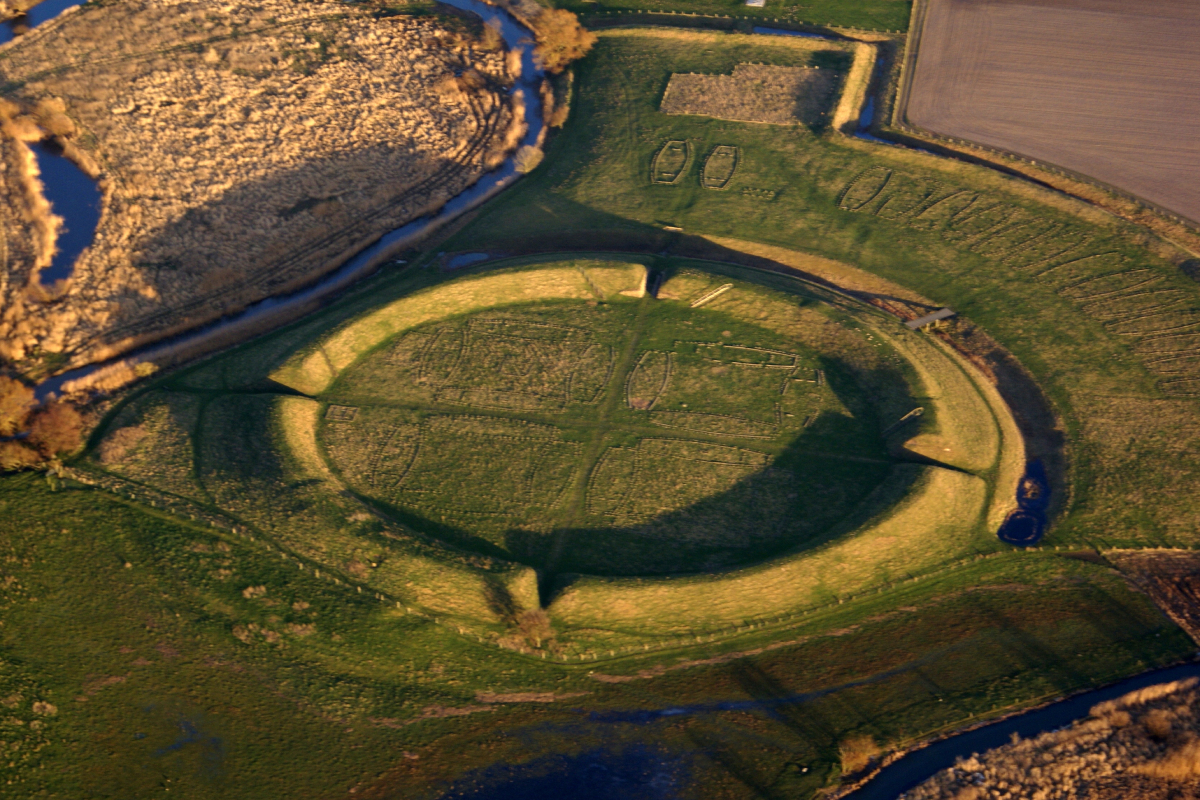
Trelleborg, built in Harald Bluetooth's era, is one of Denmark's iconic ring fortresses. Photo: Thue C. Leibrandt (CC BY-SA 3.0)
Ring fortresses, Denmark and Poland: Remnants of a martial past
In addition to the monuments of Jelling, Harald Bluetooth is also thought to be responsible for Denmark's ring fortresses at Aggersborg, Fyrkat, Nonnebakken, Trelleborg, and Borgring.
Built towards the end of the 10th century, the fortresses are believed to have helped consolidate the power of the newly burgeoning Danish kingdom.
With its full-size replica longhouse and Viking village, Trelleborg is well worth a visit. You can also visit another ring fortress a little to the east, on the island of Wolin in Poland. Here, however, the open-air museum is arguably slightly ahead of the archeology.
It is true that there are confirmed links between Scandinavia and Wolin in the Viking Age. We do not yet know, however, if there was truly a Viking stronghold on the island that could have been home to the mythical Jomsvikings.
This summer, a major new archeological project will seek to find out the truth.
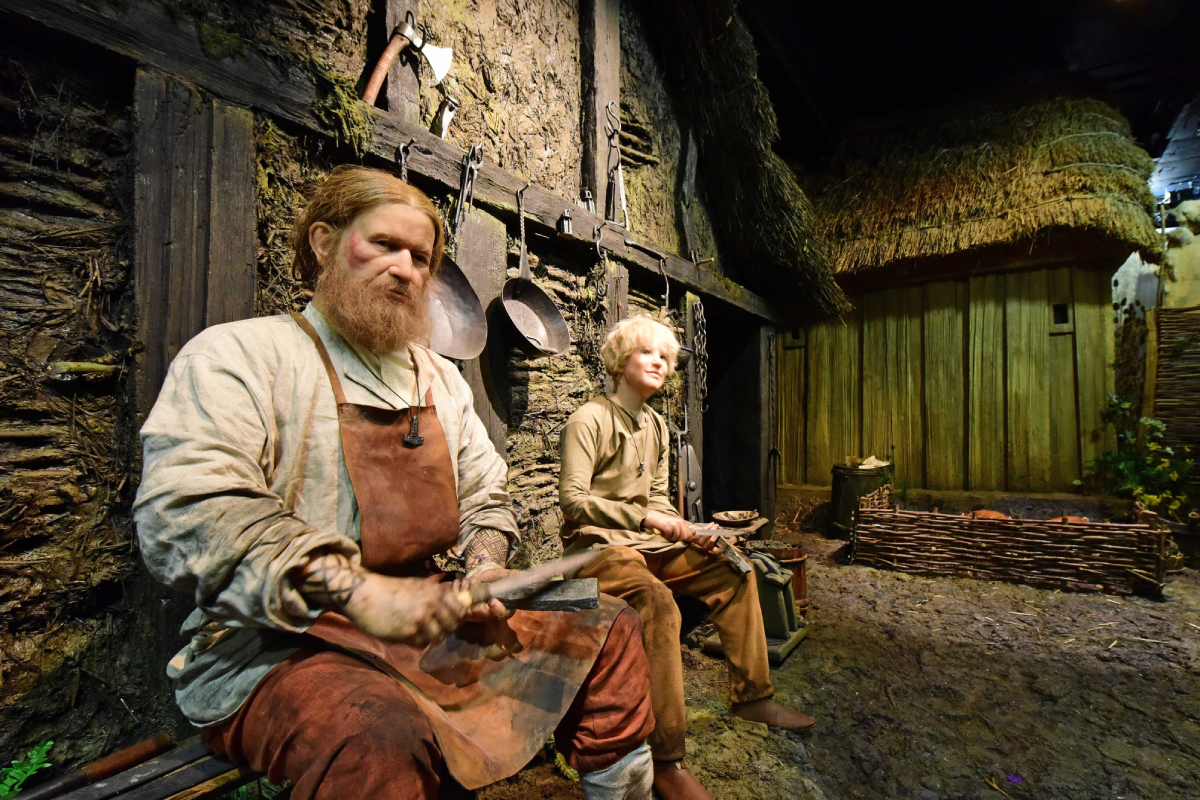
The JORVIK Viking Centre has merged archeological evidence from Viking Age York with modern storytelling techniques for 40 years. Photo: JORVIK Viking Centre
York, England: Layers of history
In the 1970s, archeologists uncovered a series of astounding artifacts during construction work on the Coppergate Shopping Center in downtown York, northern England.
Perfectly preserved due to the oxygen-deprived clay soil, the finds were dated to the Viking Age, when York was ruled by Norse invaders.
The collection of more than 40,000 objects included everything from building timber to bone ice skates, fully intact woolen socks, and even an enormous poo.
The finds have given us unprecedented insights into the everyday lives of the Norse and Anglo-Saxon residents of York during the Viking Age.
Today, the JORVIK Viking Center not only presents the best of the artifacts in a museum context, but also seeks to recreate the life of the city of Jorvik (the Norse name of York) through an award-winning ride and interactive display.

Birka, a UNESCO World Heritage site, brings Viking history to life with a museum, a reconstructed settlement, and guided tours on the island. Photo: Alex Stemmer
Birka, Sweden: The island of trade
Often referred to as Sweden's first town, Birka was a major trade center in the Viking Age, with links throughout Scandinavia and the British Isles and across the Baltic Sea, the Kievan Rus, and beyond.
It is also thought to have been one of the earliest sites of Christian worship in Scandinavia. The remains of the trading post were unearthed on the island of Björkö in the 19th century.
The subsequent excavations revealed a series of fascinating finds, including more than 3,000 graves, one of which—Grave 581—contained the remains of a high-status woman who may have been a Viking warrior.
The island is now home to the Birka Viking Museum, which presents the history of the trading post and also provides a glimpse of what life could have been like in the Viking Age through a living reconstruction of part of the settlement.
Visitors can also enjoy guided tours and even camp on the island. There are also a series of special events in the warmer months, from a Viking strongman competition to an increasingly popular historical tattoo festival.
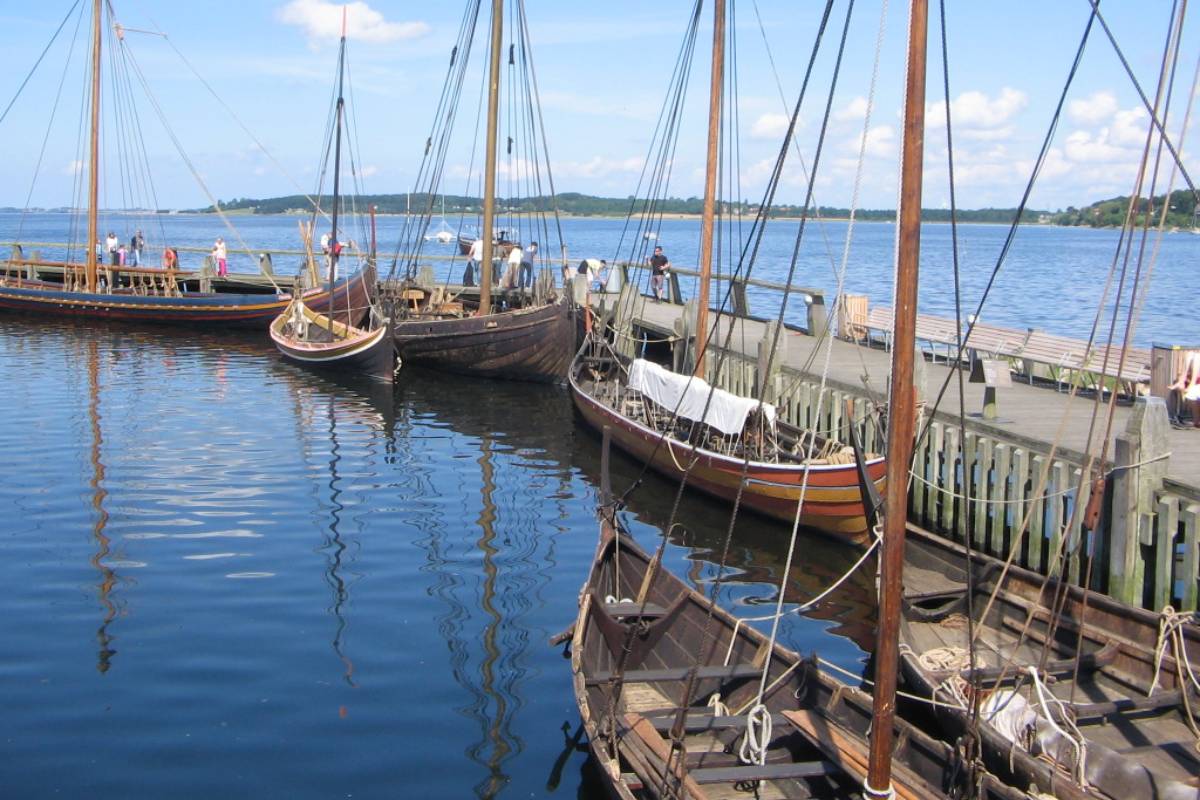
The Roskilde Viking Ship Museum has five Viking ships on display by the fjord, with replicas sailed regularly during the season. Photo: Viking Ship Museum in Roskilde
Roskilde Viking Ship Museum, Denmark: The art of shipbuilding
The longship is, of course, one of the most iconic symbols of the Viking Age. Unfortunately, very few genuine examples can be seen today, given that in almost all circumstances, wood quickly degrades and disappears.
At the Roskilde Viking Ship Museum, however, they have five such ships, each of which was excavated from a waterway 12 miles north of Roskilde in the 1960s.
It is believed that the ships were deliberately sunk in the 11th century in an attempt to block potential invasions from the sea.
Known as the Skuldelev ships, the vessels are currently on display in a beautiful setting right by the fjord. Work is also underway on a brand-new display building, scheduled for completion in 2030.
Visitors can also pay a visit to the shipbuilding yard, where expert craftspeople work on full-size replicas of Viking Age vessels.
In spring and summer, there are plenty of opportunities to try your hand at sailing an authentic ship on the Roskilde Fjord.

Dublinia highlights Dublin's Viking and medieval roots with immersive exhibits, reenactments, and a recreated Viking street. Photo: Jean Housen (CC BY-SA 3.0)
Dublinia, Ireland: The birth of a capital
The Norse held sway over large parts of Ireland for several centuries, and there are numerous historical accounts that indicate that the city of Dublin first emerged as a major settlement under Viking rule.
A series of archeological excavations in the 20th century at Wood Quay revealed the extent of their influence, with the finds providing a clear vision of a bustling and thriving trading town.
Although the site at Wood Quay is unfortunately now covered by the municipality offices, Dublinia more than makes up for the loss.
Inspired in part by Jorvik, the museum and visitor attraction narrates the Viking and medieval history of the city through historical reenactments and a wide-ranging exhibition.
The highlight is arguably a street recreation that provides a compelling taste of what life was like in Viking Age Dublin.
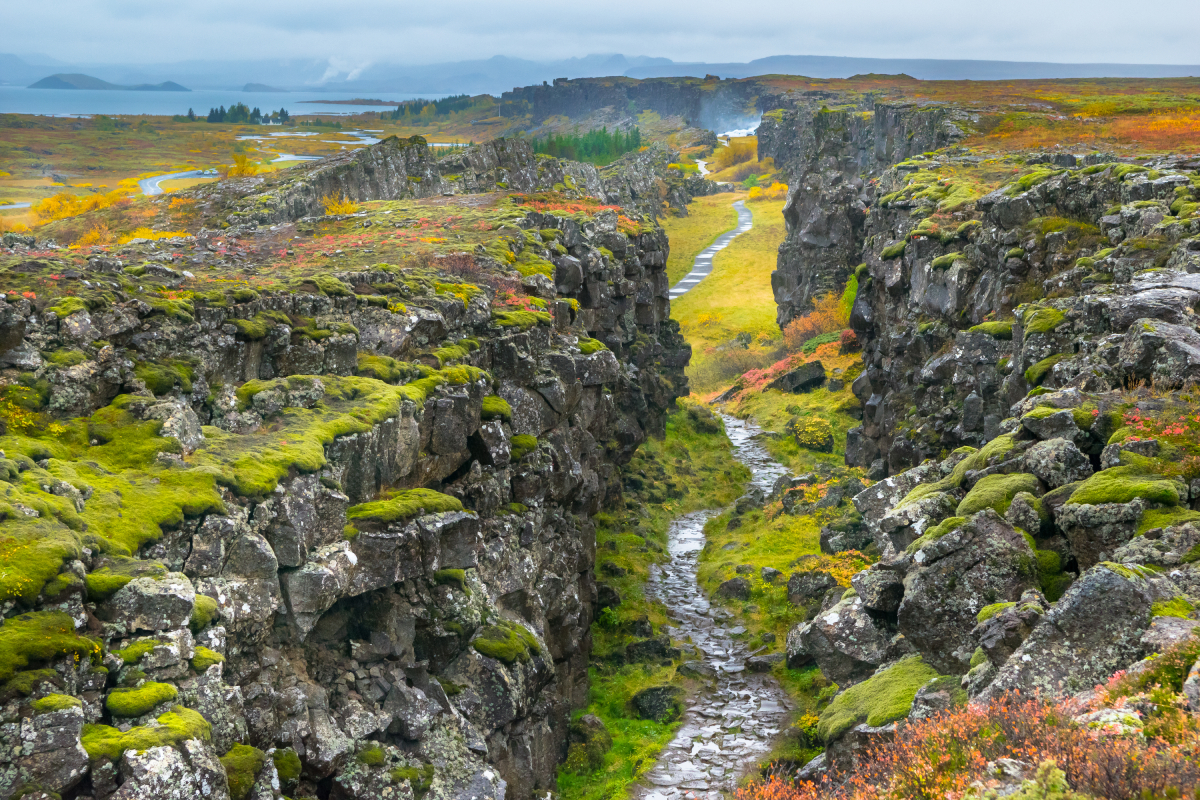
Thingvellir, the site of Iceland's Althingi parliament, offers stunning scenery and a chance to explore the birthplace of the Icelandic nation. Photo: Nido Huebl
Thingvellir, Iceland: The outdoor parliament
Thingvellir is central to the history of Iceland. For nearly nine centuries, from 930 to 1798, the country's leaders met here at the Althingi, the national parliament, to discuss pressing issues and set the laws of the land.
To many, Thingvellir is considered the birthplace of the Icelandic nation and remains a lasting symbol of democratic rule.
Unlike most of the other sites on this list, Thingvellir contains little or no archeological remains or monuments to admire.
Instead, visitors are invited to enjoy the stunning scenery of the Thingvellir National Park and let their imaginations wander back in time to the very foundation of the country.
However, if that's not enough, there is also a welcoming visitor center and the opportunity for guided tours throughout the warmer months.
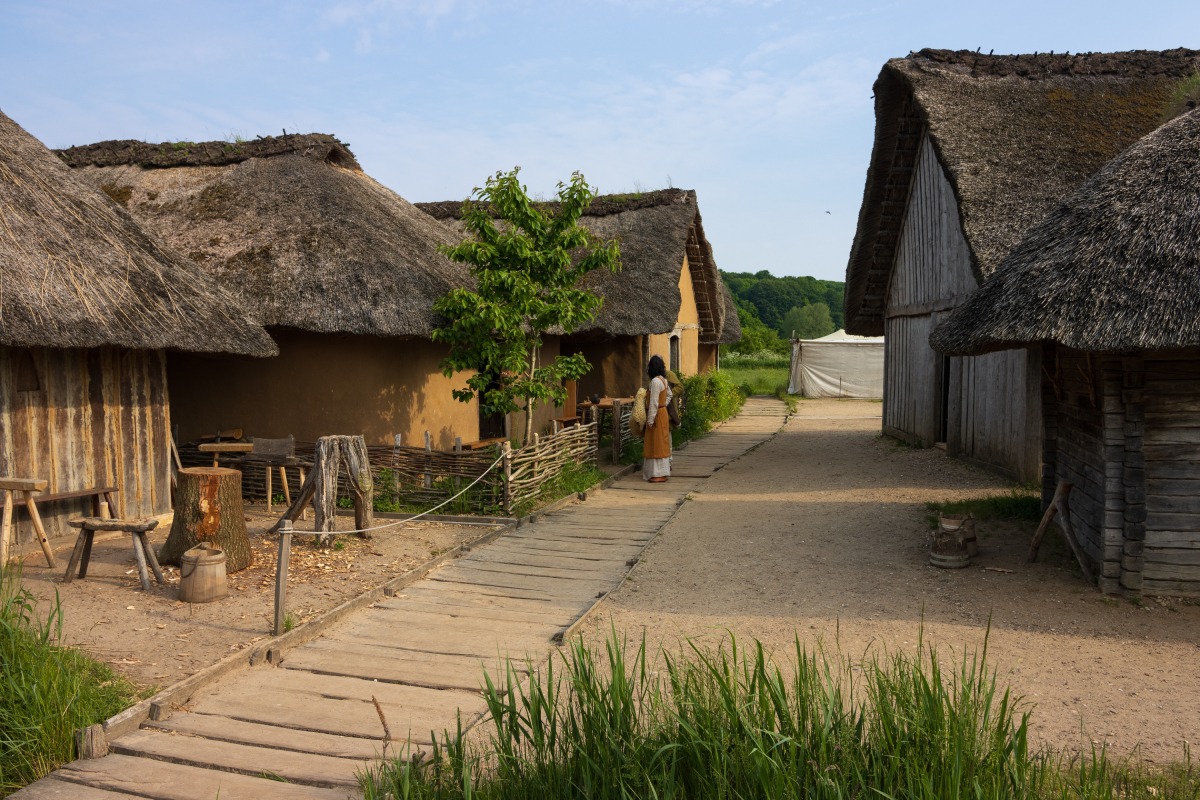
Haithabu, once a major Viking trade hub, now hosts a Viking museum with a ship reconstruction and open-air displays of Viking houses. Photo: LGieger
Haithabu, Germany: A giant of Viking Age trade
Denmark's answer to Birka, Hedeby was a key trading post in the Viking Age, serving as a link between Scandinavia, continental Europe, the Baltic region, and the east.
First established in the 8th century, Hedeby grew into a major settlement whose position was strengthened with the construction of the Danewirk, a series of earthwork barriers that marked the extent of Danish territory and protected the hub.
Today situated in Germany, Hedeby—or Haithabu, in German—is home to the Haithabu Viking Museum, which contains a full-scale reconstruction of a Viking ship and a series of artifacts from the 20th-century archeological investigations.
Adjacent to the museum building you will find an open-air reconstruction that features seven wattle-and-daub Viking houses and a landing bridge.
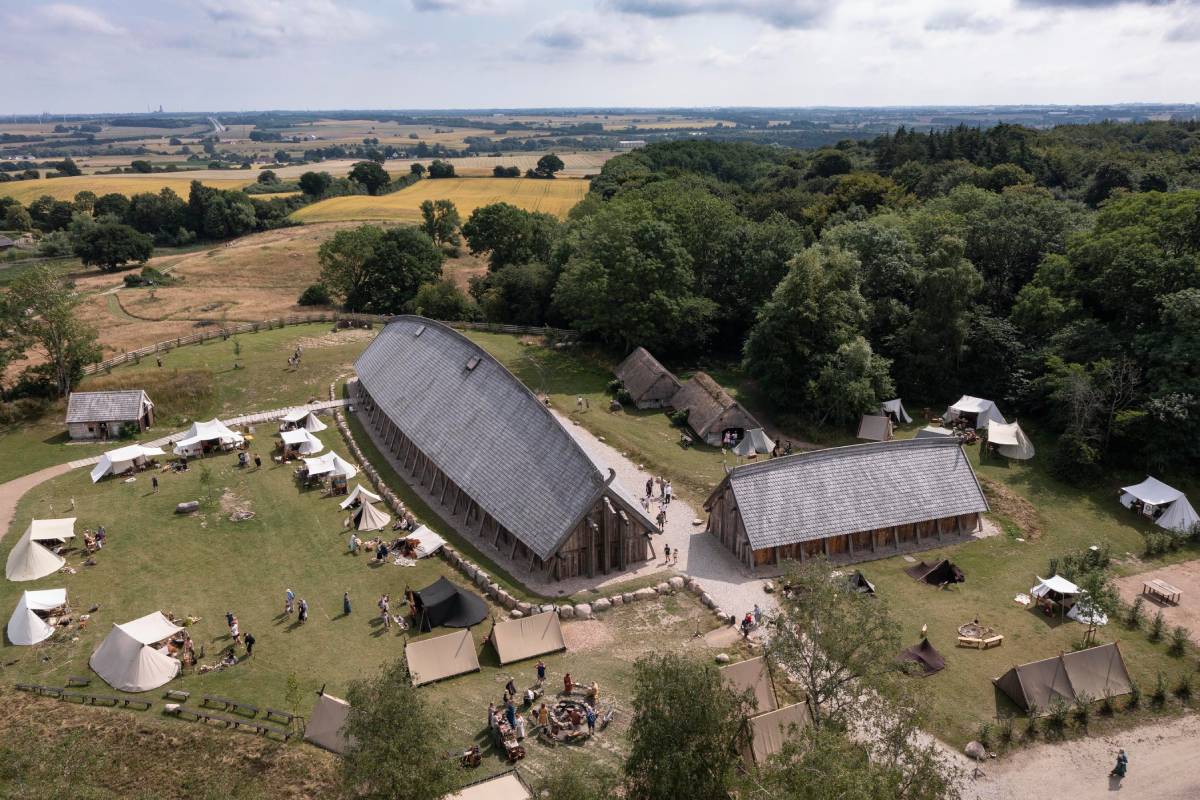
Lejre Land of Legends offers a Viking king’s hall replica, hands-on activities, and reconstructions from earlier eras. Photo: Lejre Land of Legends
Lejre Land of Legends, Denmark: Where archeology comes to life
Our final site is Lejre Land of Legends (Sagnlandet Lejre), found just 13 kilometers (8 miles) from the Viking Ship Museum in Roskilde.
Land of Legends is linked to the nearby archeological site at Lejre, which has revealed the remains of a large royal center of power. Both written accounts and the archeological findings indicate that Lejre was home to one of the most powerful kingdoms in Scandinavia during the early Viking Age.
Today, Land of Legends functions as both a site of experimental archeology and a popular tourist attraction.
The main highlight is a staggeringly large full-scale replica of the Viking era king's hall, though the site also includes reconstructions from the Stone Age and Iron Age.
Visitors can also look forward to guided tours, arts and crafts activities, and practical demonstrations of historical life.
Honorable mentions
It is, of course, impossible to fit all of the remarkable Viking sites in the world into one top ten list, or even one article.
Honorable mentions in Scandinavia go to the magnificent Ribe Viking Center in Denmark, and the Stockholm Viking Museum and Old Uppsala Museum in Sweden.
We also can't leave out the Museum of the Viking Age in Oslo, which may be currently closed for refurbishment but still houses the Oseberg and Gokstad, two of the most famous Viking ships ever discovered.
There is also Lindisfarne Priory in England, Jarlshof and the Govan Stones in Scotland, and the Waterford Viking Triangle in Ireland.
In France, attractions such as the Bayeux Tapestry and Rouen Cathedral are a reminder of the Viking legacy in Normandy.
To the east, Kyiv and Novgorod still contain traces of the Kievan Rus, founded by the Varangians, while the Hagia Sophia in Istanbul famously contains at least two examples of Viking graffiti. In other words, there is much to explore!
We get to provide readers with original coverage thanks to our loyal supporters. Do you enjoy our work? You can become a PATRON here or via our Patreon page. You'll get access to exclusive content and early access.
Feel free to reach out to discuss potential stories that may be in the public interest. You can reach us via email at hello@thevikingherald.com with the understanding that the information you provide might be used in our reporting and stories.