In what were the dying embers of the political union between Norway and Sweden, a collaborative excavation took place between the Swedish archaeologist Gabriel Gustafson and Norwegian archaeologist Haakon Shetelig. This joint effort on a farm near Tønsberg, Norway, would lead to one of the greatest archaeological discoveries of the 20th century: the Oseberg ship.
We have written widely about the archaeological treasure trove that Gustafson, Shetelig and their team uncovered during a series of excavations in 1904. Their main discovery was a 21.58-meter / 70.8-foot-long Viking longship, likely a karve.
This beautifully preserved Viking ship quickly caught the world's imagination and became a symbol not only of an entire age but also of the long and proud history of Norway, a nation that soon gained its independence after centuries of foreign rule.
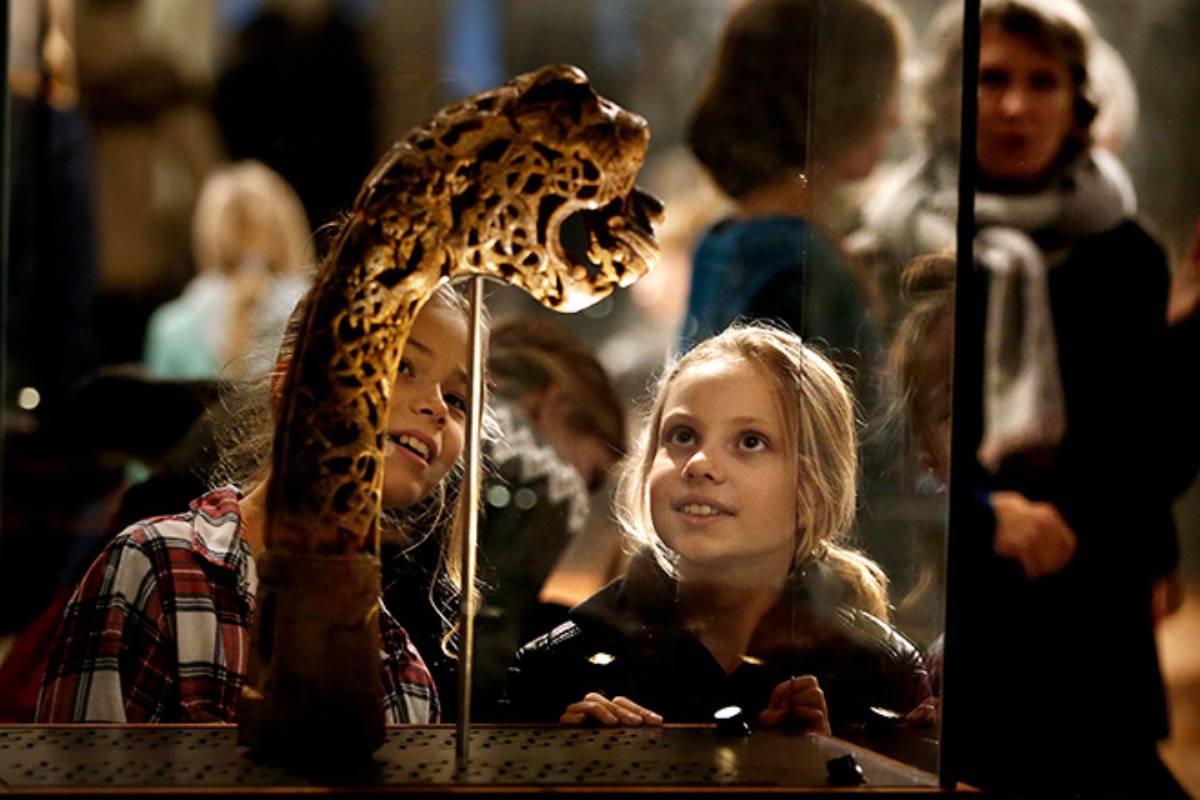
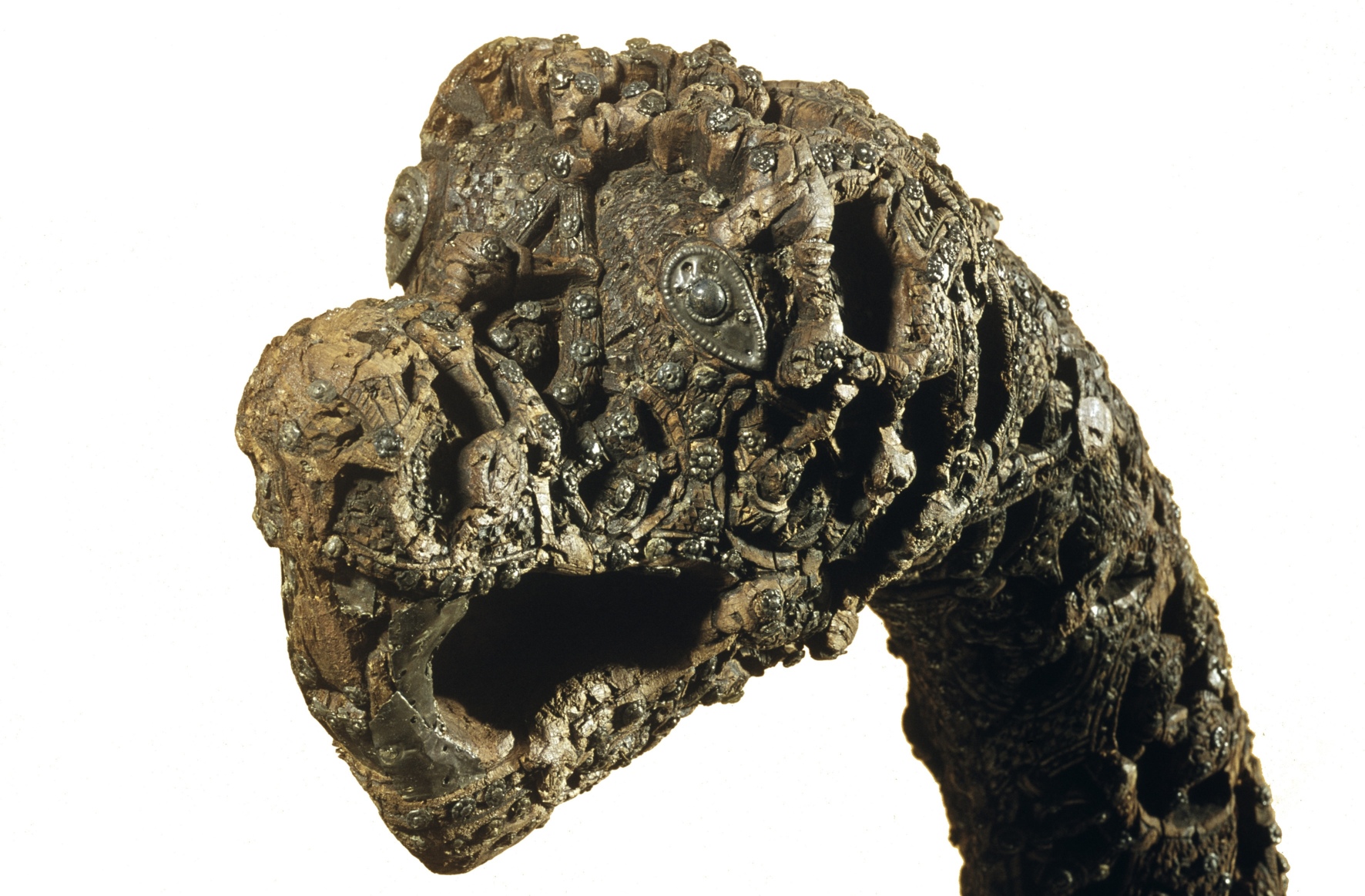
What made these excavations even more stupendous was what was lurking deep within the bowels of the Oseberg ship. The marvelous grave goods included some of the most intricately detailed pieces of Viking art ever carved, including five remarkable animal-headed wooden posts.
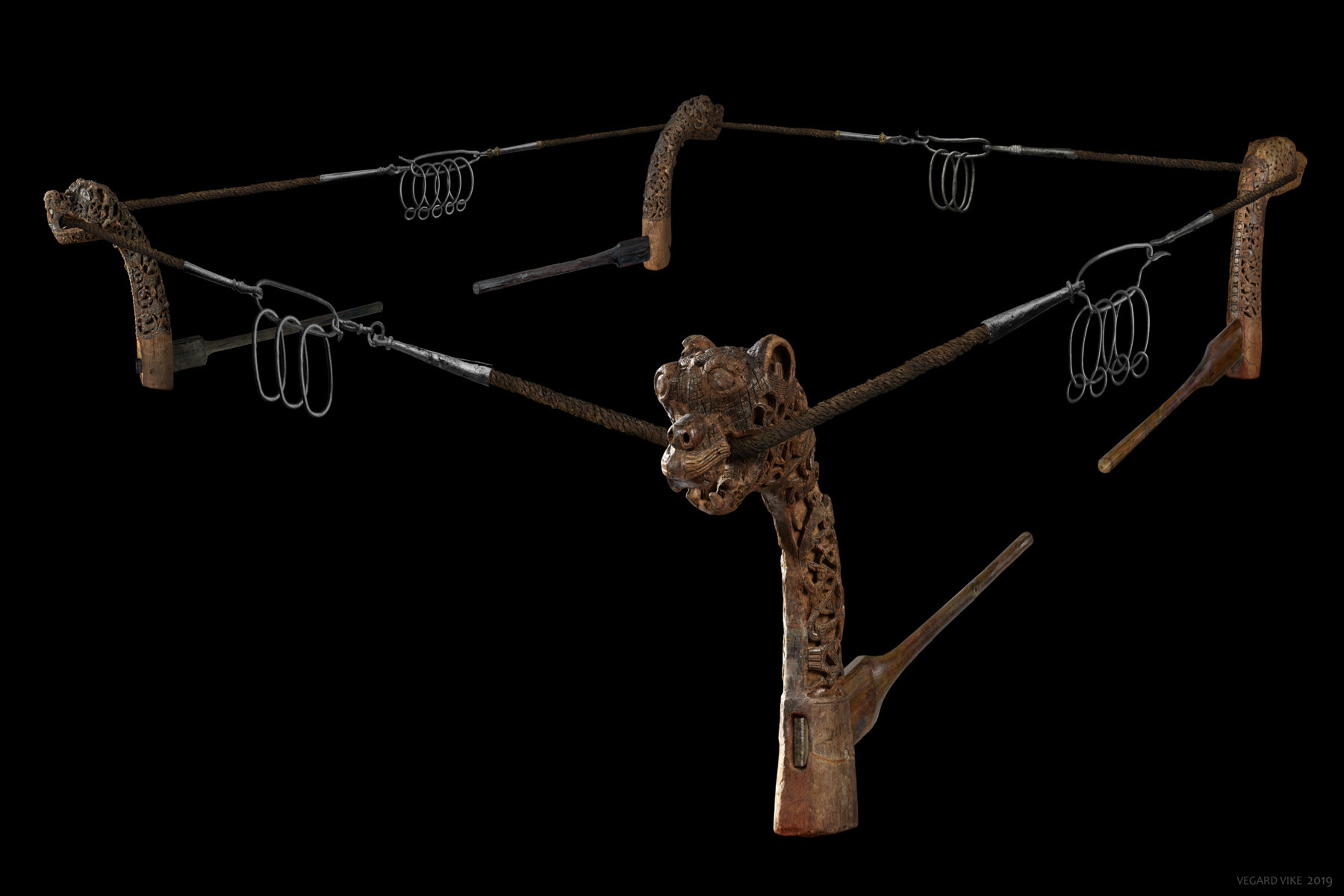
Four of the carved animal heads of the Oseberg ship. Source: Unimus.no
Viking art: Beyond the stereotype
For centuries, when it came to Norse people of the Viking Age, the focus always seemed to fall on the violence – the raiding, the warriors. Fortunately, we have begun to develop a much more nuanced picture of people from Viking Age societies, including the brilliance of their art.
This is in part thanks to the work of scholars such David M. Wilson and Ole Klindt-Jensen (their seminal 1966 book Viking Art helped popularize the subject to wider audiences) and James Graham-Campbell (his 2013 tome with the same name brought the subject up to date with new analysis).
Today, historians and scholars tend to divide art produced by people in Viking societies into six styles roughly spanning the early medieval period. These range from the dense, long-bodied animals that dominated the early phase, the Borre style, through to the graceful animalistic depictions that bookended the age with the Urnes style.
The woodcarvings, metalwork, and stone sculptures produced by the Norse in this period are arguably amongst the best art produced in the world in this era. And one of the six main styles, the iconic Oseberg style, is exemplified by the wooden animal carvings discovered in the Oseberg ship.
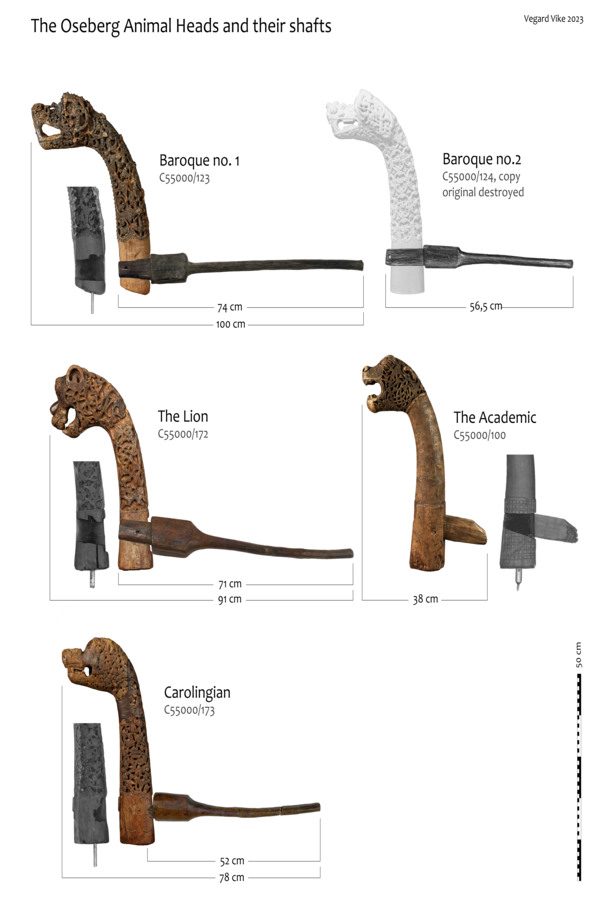
The five heads and their shafts. Source: Unimus.no
Five intricately carved animal heads
Each of the five wooden posts is approximately 50 inches long and believed to have weighed around 2 kilograms each. Due to the intricate carving of these posts, it is believed this must have been a collaborative effort between two or more artists.
Four of these posts were found in the burial chamber of the Oseberg ship, whilst a fifth was uncovered at the front of the ship. We do not have an exact date for these carvings, but they, like the ship, are believed to have been crafted in the first half of the 9th century.
Although some have speculated that the posts formed part of a bed, the exact purpose of these carvings remains unclear – nothing comparable has ever been found in Viking Age burials. Perhaps they were created for the woman of high status who was buried in the ship, or perhaps they were buried with her as part of ritual gifts to ease her transition in the grand journey after death.
To add further mystery to this discovery, there is no consensus on exactly what animal the posts are said to individually represent. Art scholars and historians have put forward a number of theories, including that they are the heads of dogs, bears, the cats of the Norse goddess Freyja, the wolves associated with the mighty Norse All-Father Odin, or perhaps even depictions of the Midgard Serpent.
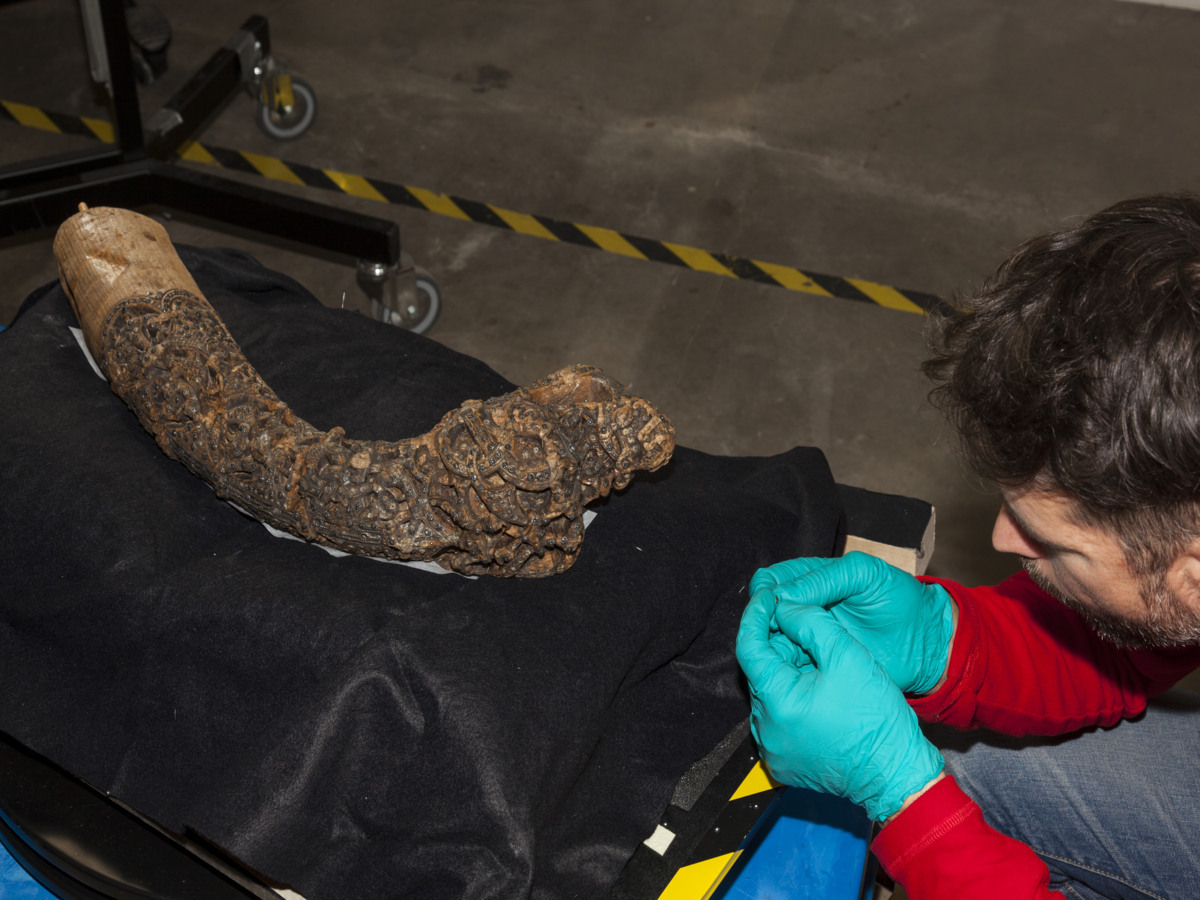
Present-day preservation work. Source: Unimus.no
A perilous preservation
Having uncovered these beautifully designed and carved wooden posts, preservation was the key. Sadly, however, the scientific and technological knowledge regarding preservation techniques was rather lacking in the early 20th century. According to the Museum of the Viking Age, the posts were basically soaked in water for half a decade.
It was believed that the best way to preserve these wooden objects, until better techniques were developed, was to place them on display in water. From 1912 onwards, each post went on display in Oslo's Historical Museum submerged in water.
As time wore on, these specifically designed display tanks became dirty, the water therein had to be constantly changed, and algae began to bloom. Due to this, one of the five animal heads degraded and broke down beyond all repair. Luckily, however, Gustafson had ordered the replication of all five wooden posts so future generations could see – even in replica form – the absolute mastery of the Viking art in its finest form.
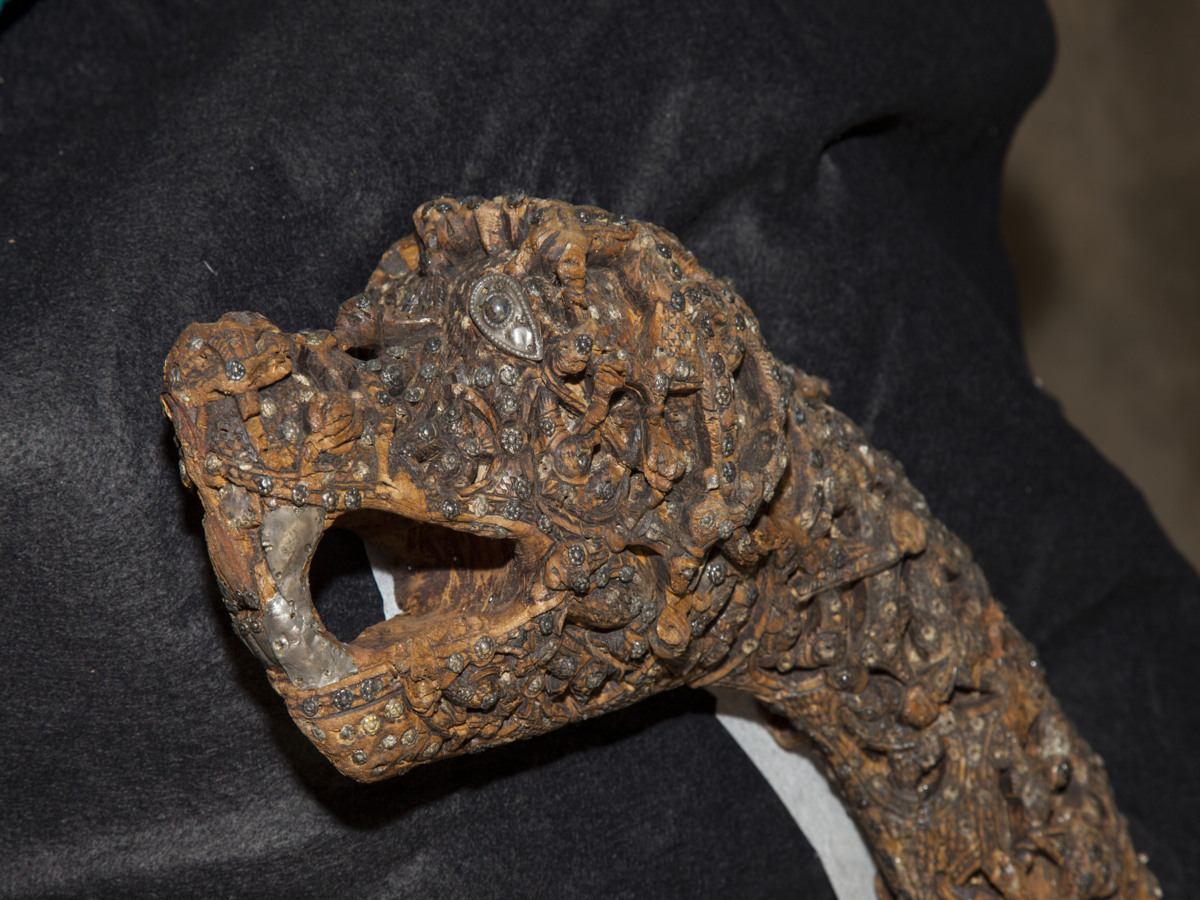
Another close up. Source: Unimus.no
Ready to shine again
Fast forward a century or so and the carved heads that have survived more or less intact (and the replica of the one that didn't) will go on display at Norway's new Museum of the Viking Age, set to open in 2027, alongside more than 5,000 objects from the early medieval period, a time when Vikings roamed.
That these intricately carved wooden posts are set to be a centerpiece of a multimillion-dollar new museum in the 21st century speaks to the skill and artistry of the woodcarvers who helped produce these detailed pieces more than a millennium ago.
The mystery of what these heads depict and what they were used for, however, remains an open one. Perhaps our Viking Herald readers have some ideas?
We get to provide readers with original coverage thanks to our loyal supporters. Do you enjoy our work? You can become a PATRON here or via our Patreon page. You'll get access to exclusive content and early access.
Feel free to reach out to discuss potential stories that may be in the public interest. You can reach us via email at hello@thevikingherald.com with the understanding that the information you provide might be used in our reporting and stories.