

This obsession came from a society steeped in a militant warrior culture and fascinated with vivid mythology.
Going berserk
Werevoles and Vikings don't, at first glance, go hand in hand. The former is the stuff of fantastical stories and horror movies, whilst the latter were one of the most successful military forces, explorers, traders, and settlers in early medieval history.
However, the people in Viking societies were obsessed with animals. Any glance through the rich tapestry of Norse mythology and you'll see a menagerie of different animals, from Odin's eight-legged horse to Freyja's two chariots pulling felines to Fenrir, a grey wolf who is one of Loki's sons.
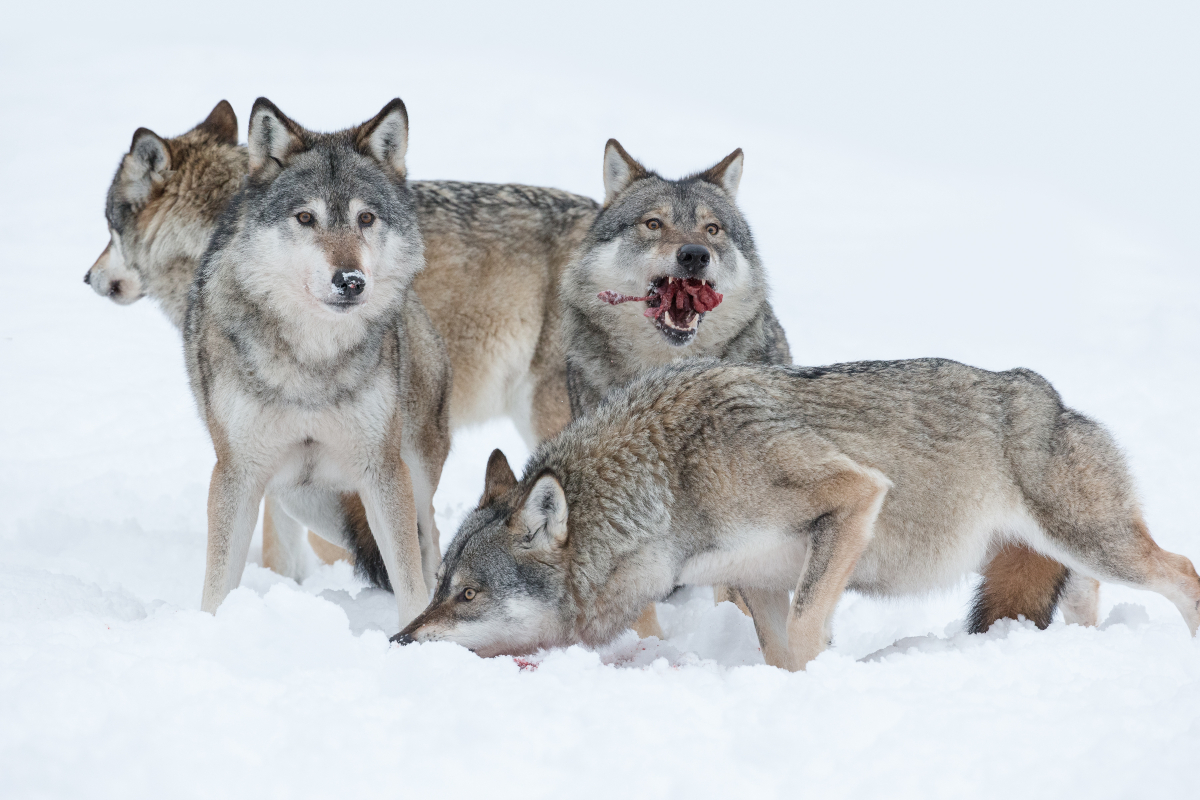
Speaking of wolves, the humble grey wolf (canis lupus) was a constant thorn in Viking societies' sides. Its natural environment is much of the northern part of Eurasia, especially around the Nordic region.
It should be no surprise that these wild scavengers were as much a part of Norse mythology as they were everyday life. As a natural predator to any Viking society – be it the sheep they tended or to younger or weak humans – these wolves were both revered and feared for their wild and unpredictable nature.
No more is this reverence observed than with a certain type of warrior called a berserker.
Going berserk
Whilst most academics and historians acknowledge that there was indeed a subset of Viking warriors called berserkers, there is an ongoing debate about the nature and number of these warriors.
Essentially, a berserker was said to be a warrior that fought with almost supernatural strength and ferocity and was often immune to pain or injury.
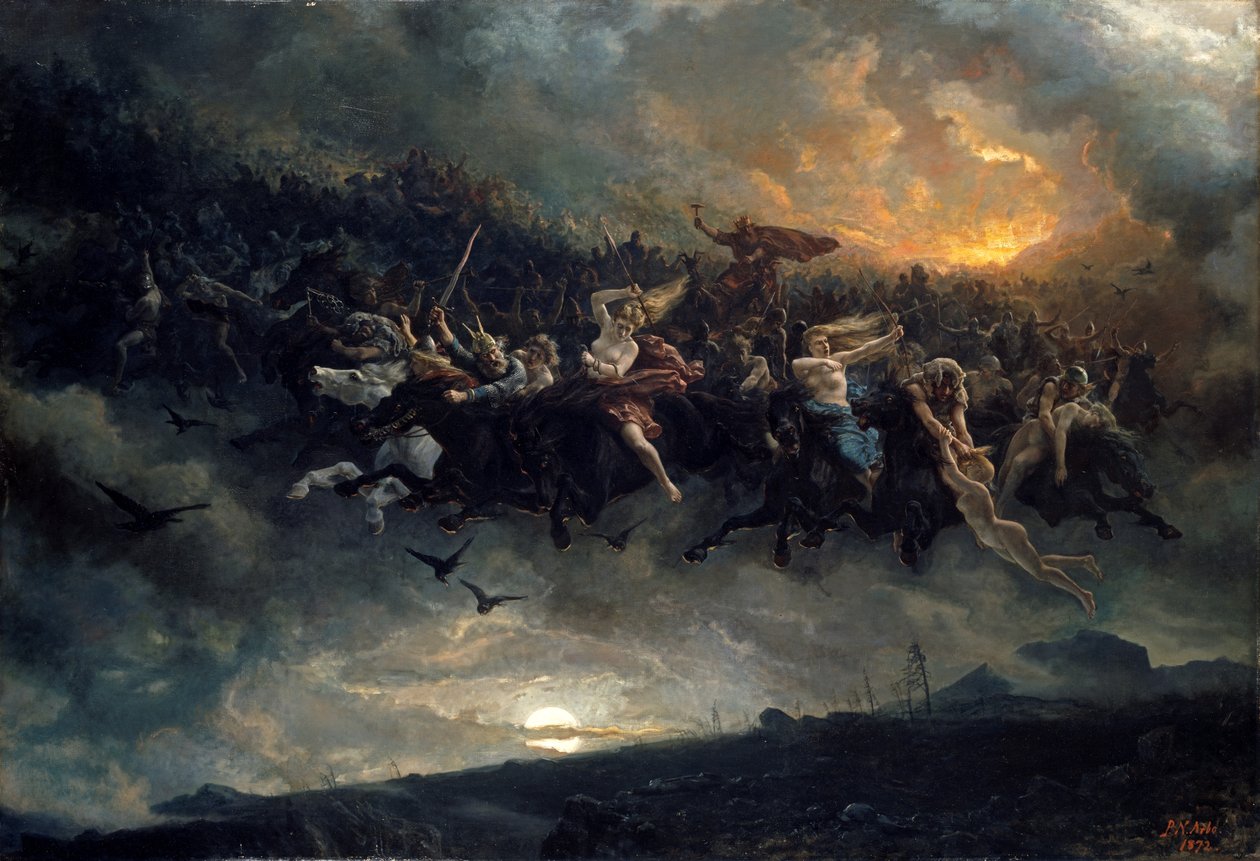
In contemporary accounts and chronicles, they had been depicted as a sort of Viking shock troops, the tip of the spear of any Viking raid, attack, or force - who were said to transform into animals – mainly wolves but occasionally bears.
This metamorphism and animal rage struck fear into the heart of many an enemy.
The legend of these berserkers developed in the early medieval period and saw warriors often wear the skins of bears or wolves.
- READ MORE: Did Viking berserkers really exist?
There are multiple examples, in the Norse sagas, where berserkers were said to take on the spirits of these animals – particularly wolves – when they donned their skin before a battle.
Some tales even spoke of a predisposition (this was centuries before the advent of modern science and genetics) of certain people to develop into berserker wolves.
Whilst this legend has some basis, the current academic consensus is that much of this was exaggerated. Many have speculated that these men who were said to transform into wolves were just part of an aspect of Viking psychological warfare meant to intimidate and scare enemies.
If word got out that a bunch of werewolves with superhuman strength, who were immune to any injury, were outside your city walls, you would probably freak out too, right?
There is also speculation that these warriors took either psychedelic plants or imbibed a lot of alcohol to enhance their physical or mental state, but there isn't a wealth of research as yet into this.

Many people in Viking societies adhered to shamanistic spiritual beliefs. Illustration: The Viking Herald
Shamanistic belief systems and werewolves
People from Viking societies were not alone in living in the northern parts of Scandinavian and northwest Russia. Several Finnic and Turkic tribes, as well as the Sámi, lived side by side with Viking peoples. Many of these tribes had a belief system steeped in animist shamanism.
A sort of cultural osmosis no doubt took place, and some scholars have argued that this influenced not only the berserker myth but also the much broader Northern European obsessions with werewolves that continued long after the Viking Age (c. 750 – 1100 CE).
Many people in Viking societies adhered to these shamanistic spiritual beliefs. A shaman was a spiritual leader who was said to communicate with the spirit world.
Part of this communication was to wear the skins of animals whose spirit they would literally possess. It is possible that the legend of berserkers grew out of this cultural contact with shamanistic belief systems.
A cultural icon long after the Vikings
These berserkers, and the transformation of men into wolves, had a profound impact on Viking culture, especially Norse literature.
Odin himself was said to have a group of berserkers in his personal bodyguard, whilst the god Tyr was often associated with flying into a berserker rage. Furthermore, he also lost his hand when trying to subdue the wolf, Fenrir.
Long after the Viking Age ended, werewolves became a staple of Northern European folklore and culture.
The Gothic horror genre, which originated in the 19th century CE, drew heavily on this folklore, with authors like Alexandre Dumas using werewolves in his fiction.
Hollywood has also recently drawn inspiration with movies like A Werewolf in Paris (1933) and, less scary but more hilarious, Teenwolf (1985) - which also has been rereleased as a Netflix series – ensuring the legend of Viking werewolves lives on.
Finally, the recently released Viking Wolf, a Norwegian show produced for Netflix, should sate your appetite for a mix of Viking lore and legend mixed with a good old dose of werewolf horror.
History Magazine has published more on the werewolf folklore that Vikings loved here.
This deep-dive article was written thanks to the support of subscribers to The Viking Herald's Facebook page. Do you enjoy our work? You can SUBSCRIBE here or via our Facebook page. You'll get access to exclusive content and behind-the-scenes access.
Feel free to reach out to discuss potential stories that may be in the public interest. You can reach us via email at hello@thevikingherald.com with the understanding that the information you provide might be used in our reporting and stories.