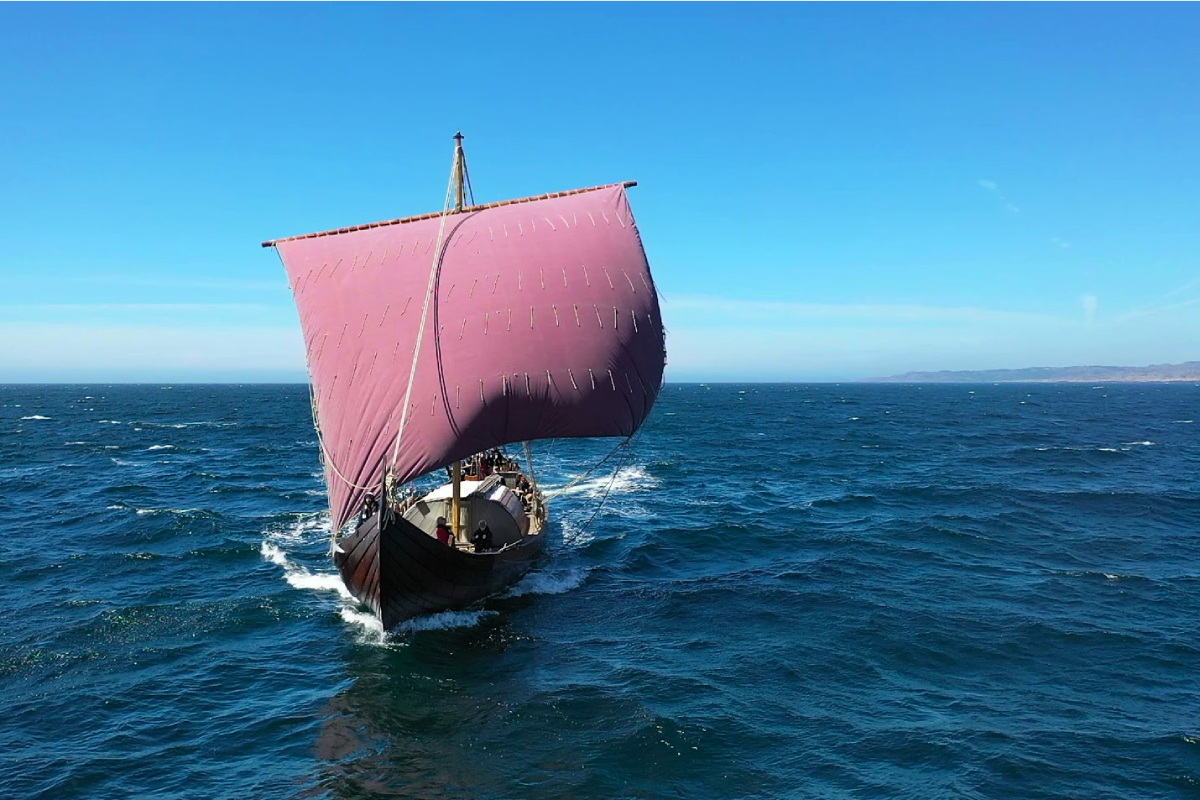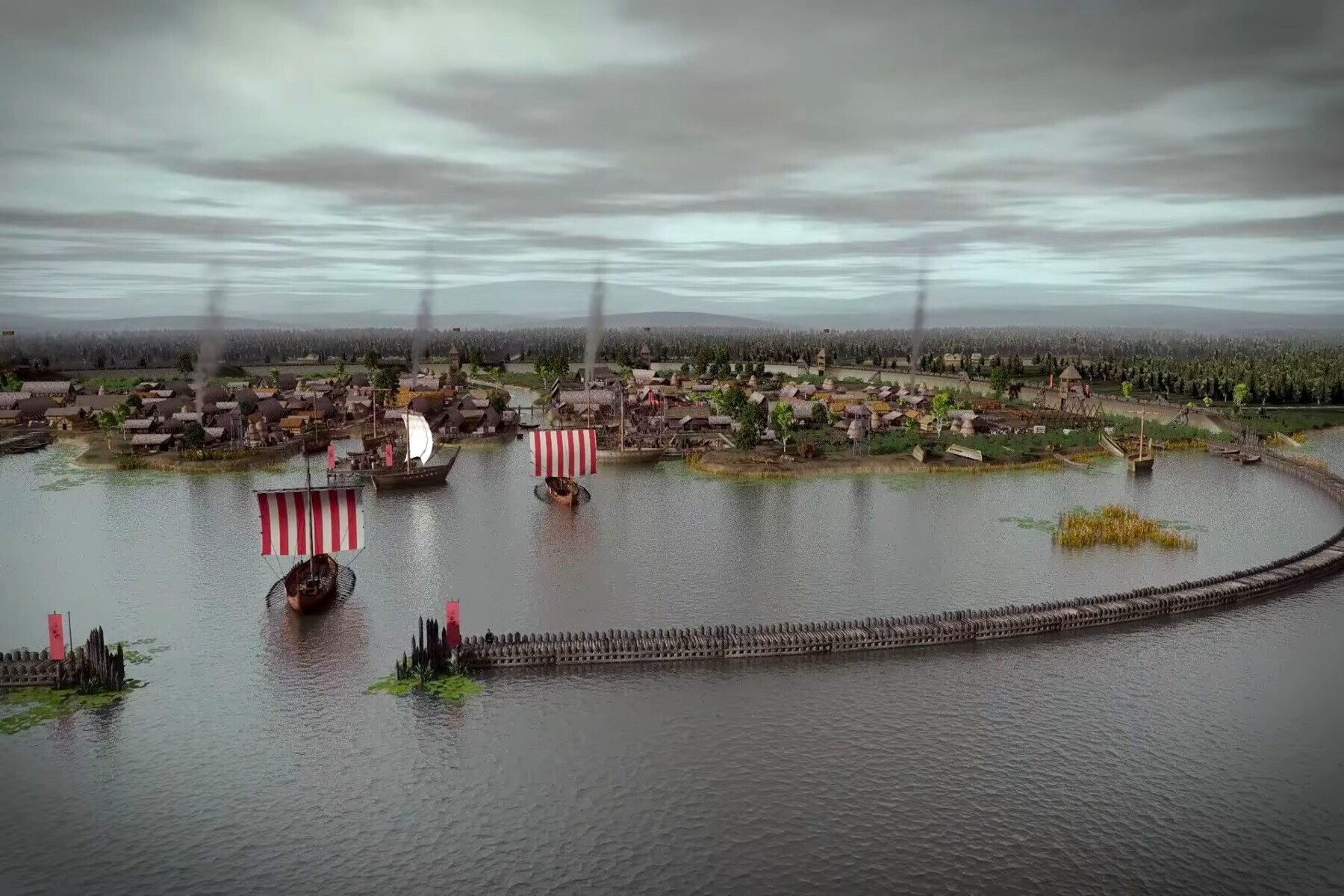


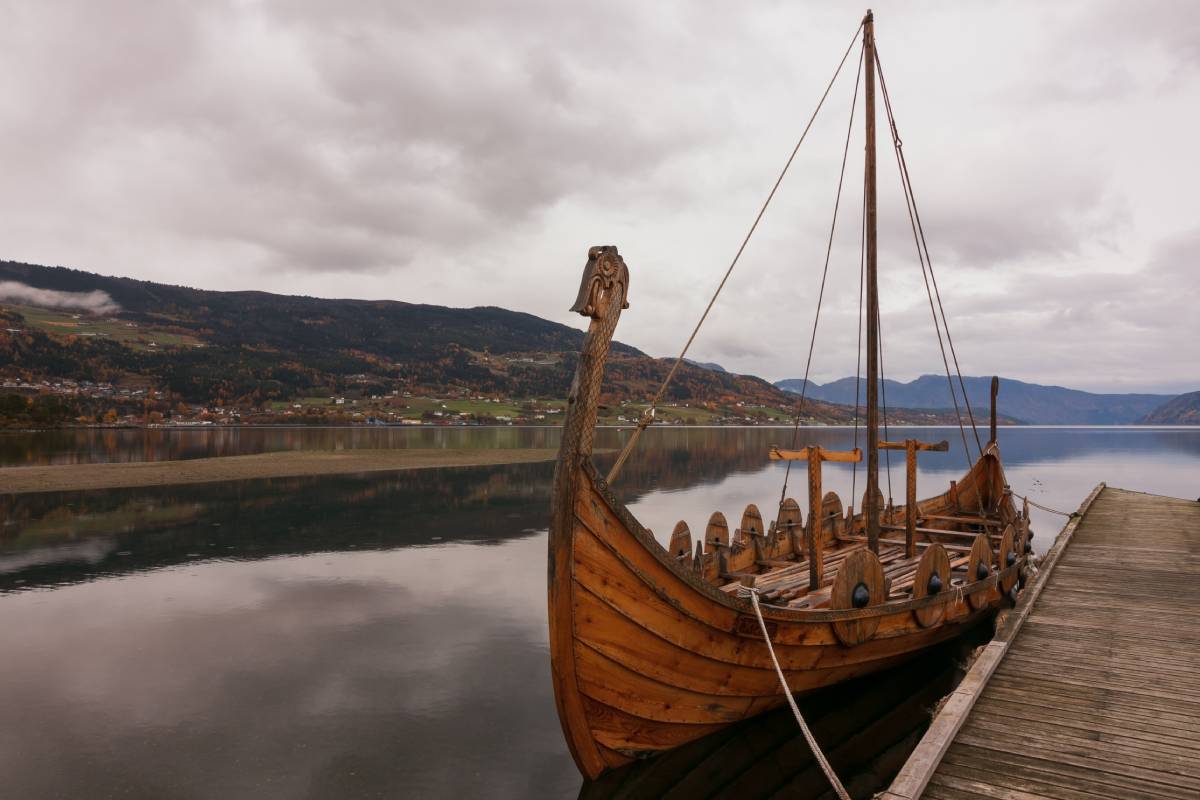
Countless Hollywood movies or streaming series have pictured Viking warriors, armed to the teeth, jumping onshore from a Viking ship.
Bearded and barbarian-like, they are no doubt up to no good–these early medieval ne'er-do-wells hellbent on raiding this poor village or ransacking that poor monastery.
Now, we are certainly not for historic revisionism here at The Viking Herald. There is a wealth of cold, hard, archeological, and objective evidence that people from Viking societies produced some of the most feared and deadly warriors of the medieval period.
These warriors terrorized everyone from the British Isles to the Baltic, from the Arctic Circle to Al-Andalus, and everywhere in between.
However, these same societies, dotted initially throughout the Scandinavian Peninsula and then slowly expanding outward to include much of what is now Europe, were not just one-trick ponies.
Death, honor, and violence were all key elements of their societies but not the only elements. The same societies that produced these warriors also produced uncanny merchants, traders, and early medieval entrepreneurs.
After centuries of (Western) European economic disintegration, degradation, and downgrading following the collapse of the (Western) Roman Empire, people from Viking societies helped reconnect ancient trade routes and forge new ones.
By the end of the Viking Age (c. 750–1100 CE), these routes connected Scandinavia with the many trade routes that snaked throughout Europe to Africa, West Asia, and along the Silk Roads to Central and East Asia.
They may have sometimes traded peacefully, sometimes violently, mostly profitably, and almost always with the help of a Viking ship.
- READ MORE: All you need to know about Viking ships
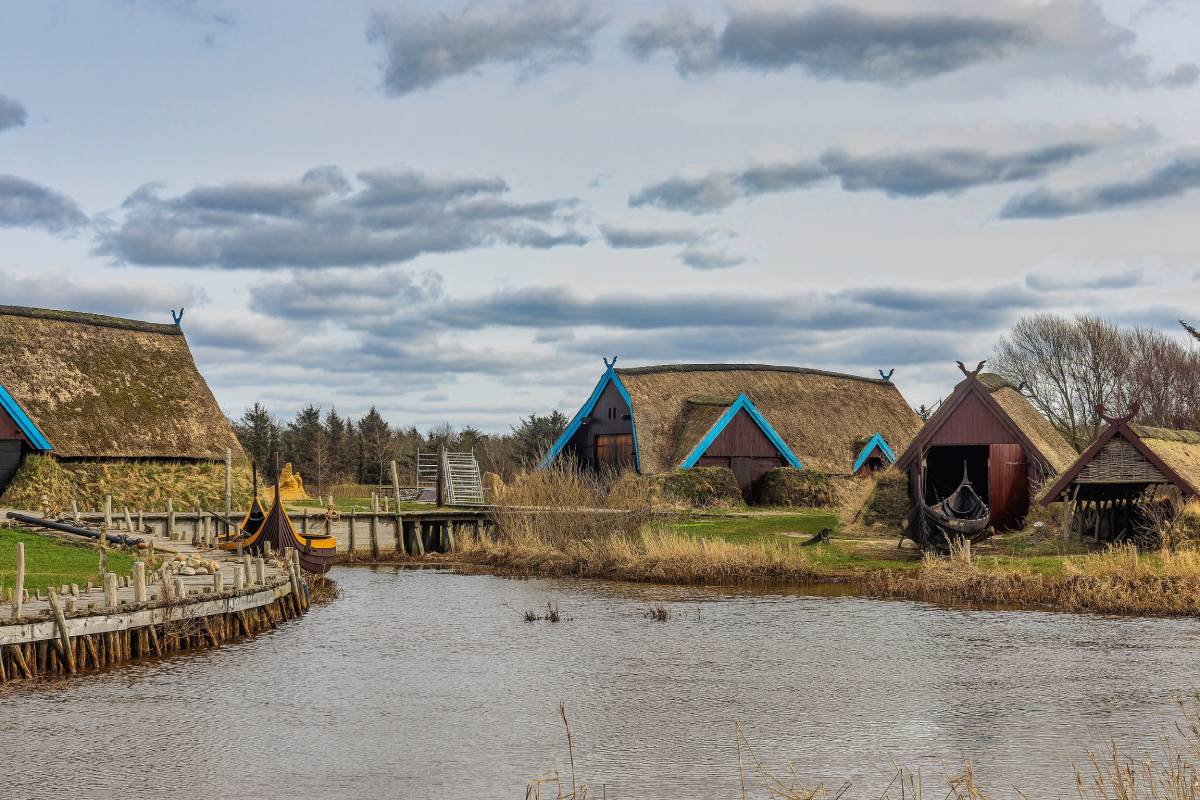
The Viking harbor in Bork, western Denmark, is a reconstructed site offering a modern interpretation of Viking maritime life. Source: Frank Bach / Shutterstock
Vessels were integral for transport and trade
Let us imagine, then, for a moment that we are back living in Scandinavia sometime smack bang in the middle of the 10th century.
Our ancestors probably have lived in the same small village for countless generations, and we may not have traveled further than beyond the next mountain.
This was not from a lack of curiosity or inquisitiveness but more for practical reasons.
There were minimal roads in Scandinavia; none were paved, and most were little more than dirt tracks inaccessible in the mud, rain, sleet, or snow.
Our village may have been nestled in a fjord, surrounded by the mighty sea. This, then, was our escape. For as long as our ancestors had been stuck in a village, they may have taken to the seas to trade or raid.
Archeologists and maritime historians are not exactly sure when the first Viking ship was built, nor are we ever likely to know.
Still, in the early medieval period, Scandinavian societies – building upon centuries, perhaps millennia, of maritime knowledge and shipbuilding skill – suddenly perfected the Viking ship.
Sleek, aerodynamic, strong yet flexible, these clinker-built vessels were as easy plying the Atlantic Ocean as they were whizzing around the Skagerrak, zipping around the Oslo Fjord, or gently caressing down the many river systems of Eastern Europe.
As John C. Sharpe discusses in his work The Viking Expansion: Climate, Population, Plunder, there is academic speculation that the Viking expansion in the early medieval period may have been driven by an explosion in the Scandinavian population.
Limited arable land and growing numbers of mouths to feed may have forced many, particularly young men, to take to the seas to seek their fortune.
However, this theory remains contested, with some scholars suggesting that other factors, such as political ambition, trade opportunities, or advancements in shipbuilding, played more significant roles.
Whilst undertaking a raid might be profitable, you could also end up six feet under the ground... if you know what I mean.
Imagine, then, back in our little village, we were not so brave or so handy with an axe or sword, but we knew a good deal.
We knew how to talk and barter, and we had a lust for gold. Riches were to be made by us, not by raiding but by trading.
- READ MORE: What did the Vikings trade?
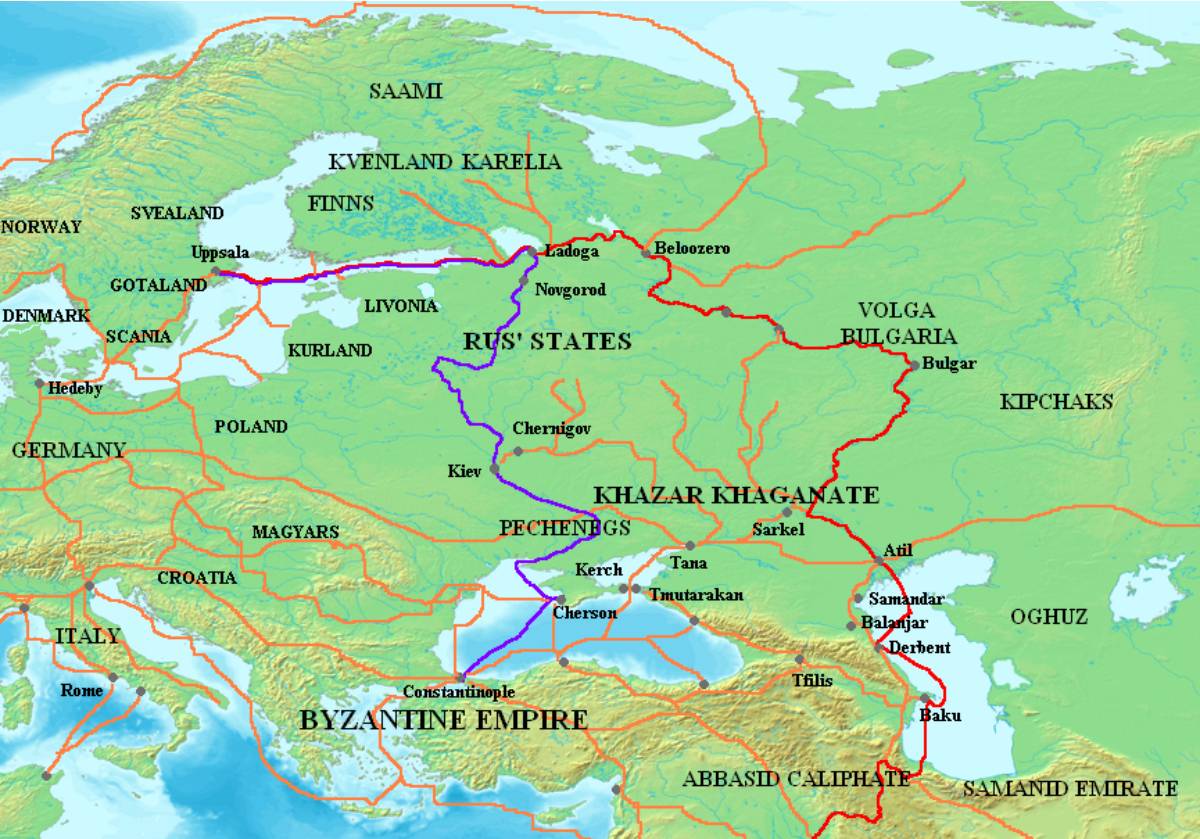
The map shows key Viking trade routes, including the Volga route (red), the Varangian-Greek route (purple), and other networks from the 8th–11th centuries (orange). Source: Briangotts (CC BY-SA 3.0)
Waterways
We know that people from Viking societies developed a huge trade network throughout much of Europe and West Asia.
They delivered precious cargoes of mostly natural resources – think timber, furs, and Baltic amber – along with animals such as bears, polar bears, falcons, and other birds of prey.
These goods were shipped across the North Sea to the British Isles, to the Frankish realms, or down through the river systems to the (Eastern) Roman capital, Constantinople.
From there, they used the Black Sea to travel to the edges of Central Asia and the Islamic world. These goods were undoubtedly traded and carried further east to Central and East Asia.
With much of Europe actively antagonistic to people in Viking societies, overland travel was, at best, laborious and time-consuming.
At worst, it involved battles, rearguard action, and constant harassment by enemy armies, brigands, or ruffians.
A coastal Frankish community, having suffered Viking raids for generations, could not tell the difference from a distance between a Viking ship loaded with amber and one loaded with warriors. Both looked equally violent.
The best way, then, to travel was by ship. Much of coastal Europe was only a few days' or weeks' sail away.
It should also be noted that much of the economic foundation of the British Isles – think Dublin or northern Scotland – was a direct result of the Viking slave trade.
How were these poor, unfortunate souls ferried around from Viking port to port, from slave market to slave market, but by Viking ship, of course!
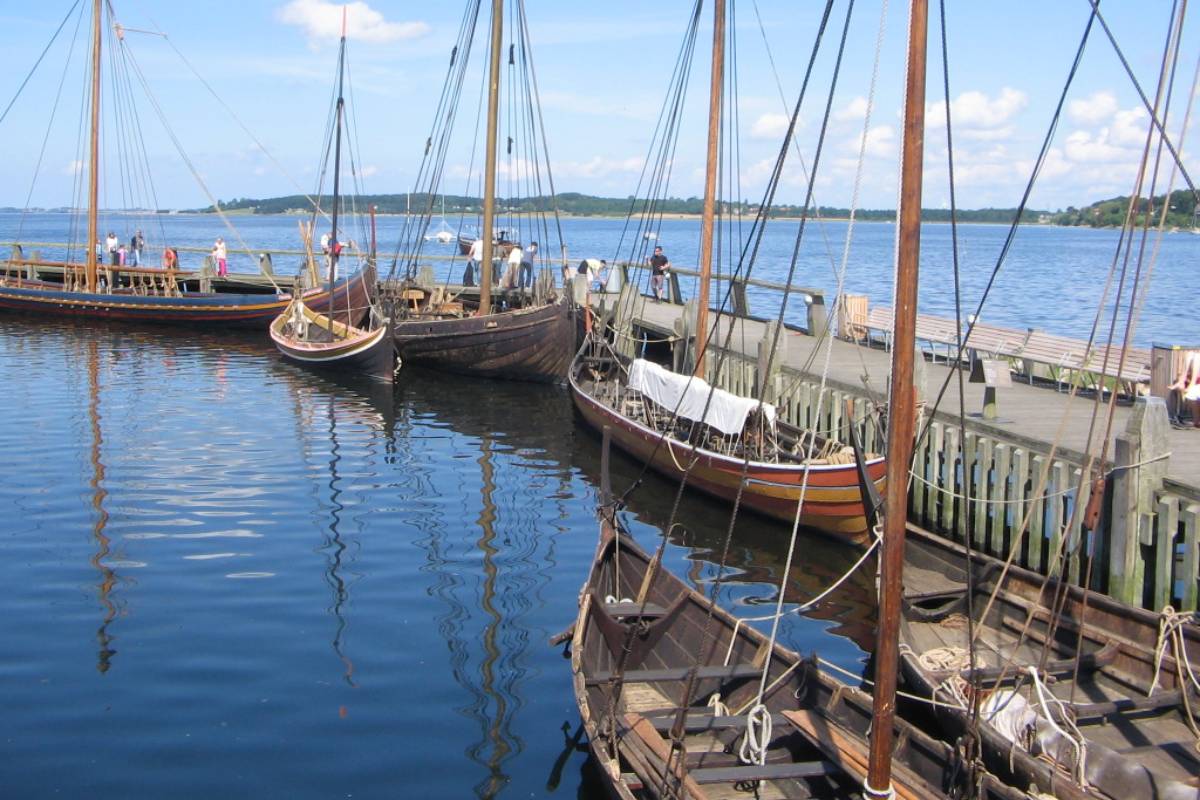
The discovery of five Viking Age ships near Roskilde in the 1960s provides key insights into Viking shipbuilding and maritime trade. Source: Viking Ship Museum in Roskilde
What do sunken boats in a Danish fjord tell us about Viking trade?
So, we know of people from Viking societies' exquisite skill in shipbuilding and navigation. We also know of the lucrative trade routes they built or forged with their help. What, then, of the ships themselves?
We turn now to the bottom of a Danish harbor, near the once-famous Viking town of Roskilde, now home to the excellent Viking Ship Museum.
The remains of five Viking Age ships were discovered in the 1960s and have been studied ever since.
These vessels are believed to have been deliberately sunk in the 11th century as part of a protective barrier.
Capable of ferrying commodities across vast distances, the ships uncovered at Roskilde rank among the most significant Viking trade vessels ever found.
Known as Knarr in the Old Norse tongue, these trading vessels were built of pine and designed to carry substantial cargo.
A single ship could transport up to 40 tons despite its relatively modest size – measuring just 17 meters, or 55 feet, in length.
Unlike Viking warships, the Knarr had a broader and more stable design. This construction made them reliable for navigating the high waves of the Atlantic Ocean and its surrounding waters.
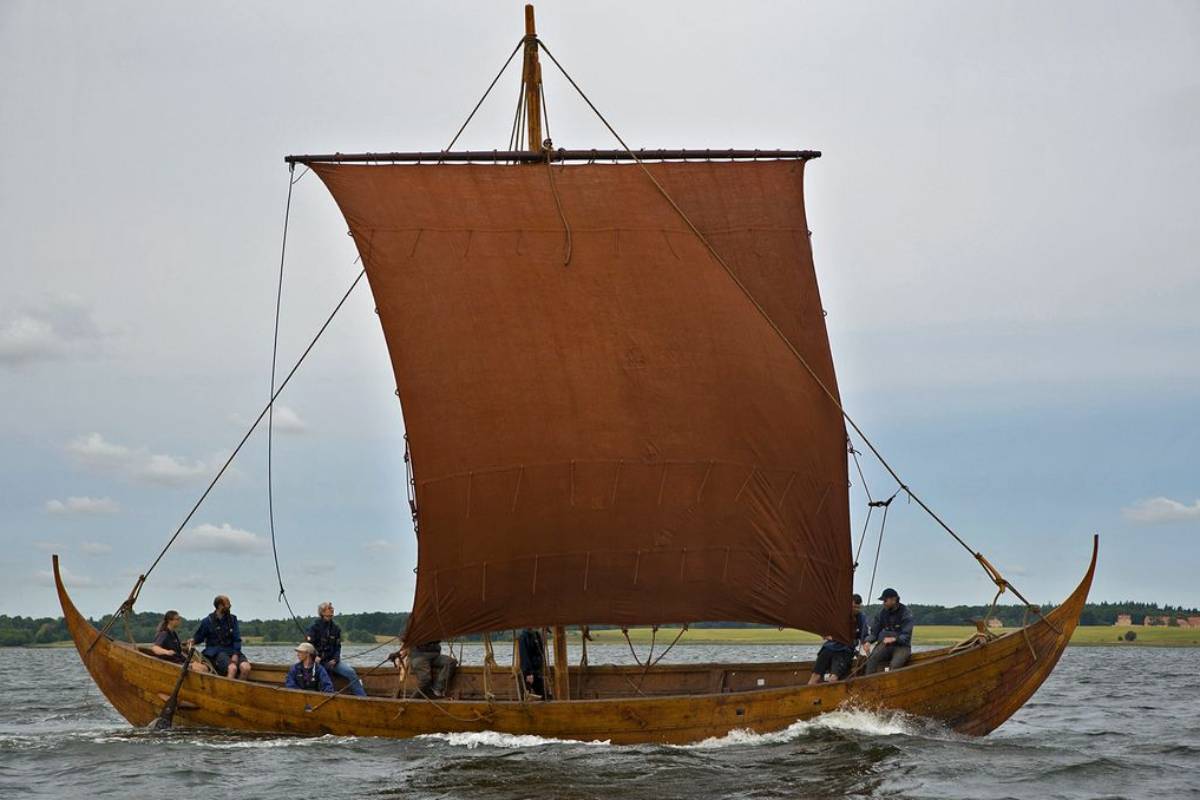
Estrid Byrding, built in 2022 by Roskilde Museum, is a reconstruction of Skuldelev 3, a small 11th-century Viking trading vessel. Source: Viking Ship Museum in Roskilde
Smaller boats were just as useful in trade
The other type of Viking trading ship was a smaller craft called a Byrding.
The merchants, traders, and warriors who headed eastward, as Dr. Cat Jarman writes masterfully in her recent book River Kings, needed a different type of vessel to navigate the many river systems between the Baltic and Black Seas.
A smaller, more versatile, and lighter vessel was necessary. These ships allowed travel down rocky rivers or, when the river became too dangerous, could be hauled up and carried overland.
Finally, there were the small boats – little more than a few meters, or several feet, long.
These would have been used to fish or for leisure but could also ferry minimal goods or people, perhaps between villages or across fjords.
Integral to early medieval growth
In an era before any sort of infrastructure, Viking ships were integral to the spread and proliferation of Viking commerce and culture throughout early medieval Europe.
They allowed people from Viking societies to tap into existing trade routes – think the economic hub of Constantinople and eastward to the fabled Silk Roads of Central and East Asia.
They also facilitated the construction of new routes, connecting Scandinavia to much of Europe for the first time in history.
The ships used for trading were often smaller than the famous Viking longships depicted in Hollywood.
These versatile vessels could navigate both open water and river systems. They truly were the economic engines of early medieval Europe's burgeoning trade networks.
Without them, amber would not have found itself in a Byzantine emperor's ring, nor would silk from China, via Ireland, have made its way into the elaborate burial of a Viking-era elite.
For more information on Viking economics, visit the BBC here.
We get to provide readers with original coverage thanks to our loyal supporters. Do you enjoy our work? You can become a PATRON here or via our Patreon page. You'll get access to exclusive content and early access.
Feel free to reach out to discuss potential stories that may be in the public interest. You can reach us via email at hello@thevikingherald.com with the understanding that the information you provide might be used in our reporting and stories.