

This article was commissioned by Michael Shore, a Viking Chieftain member of our Patreon page.
Viking warriors did not typically write their own history. Often, it was the victims of their bloody outward expansion throughout the early medieval period that recorded their deeds. Or, in other instances, their feats were passed down in oral form and only written down for posterity in the sagas centuries later.
A big, healthy dose of skepticism should therefore be applied when dealing with even historical chronicles detailing their martial prowess and deadly methods. This particular issue has often led us here, at The Viking Herald, on a sort of existential question: were Viking warriors as ferocious as detailed in the chronicles, or was their ferocity exaggerated by medieval monks and scholars, often the victims of their raids?
What is historically verifiable is the military ubiquity of Viking warriors throughout Northern Europe. There seemingly wasn’t a coastal or river-bound community safe from the Iberian Peninsula to Iceland, from the Baltic to the Black Sea. We also know that Viking societies had a culture that was steeped in the warrior ethos, which can partly account for their supposed ferocity in battle.
It was this ferocity that led many to become hired hands, mercenaries throughout the early medieval world. Whilst many ended up on the streets of Constantinople, the heart of the Byzantine Empire, protecting the (Eastern) Roman Emperor, what about the others? Where else did Viking warriors ply their bloody trade? What about the other Viking mercenaries?
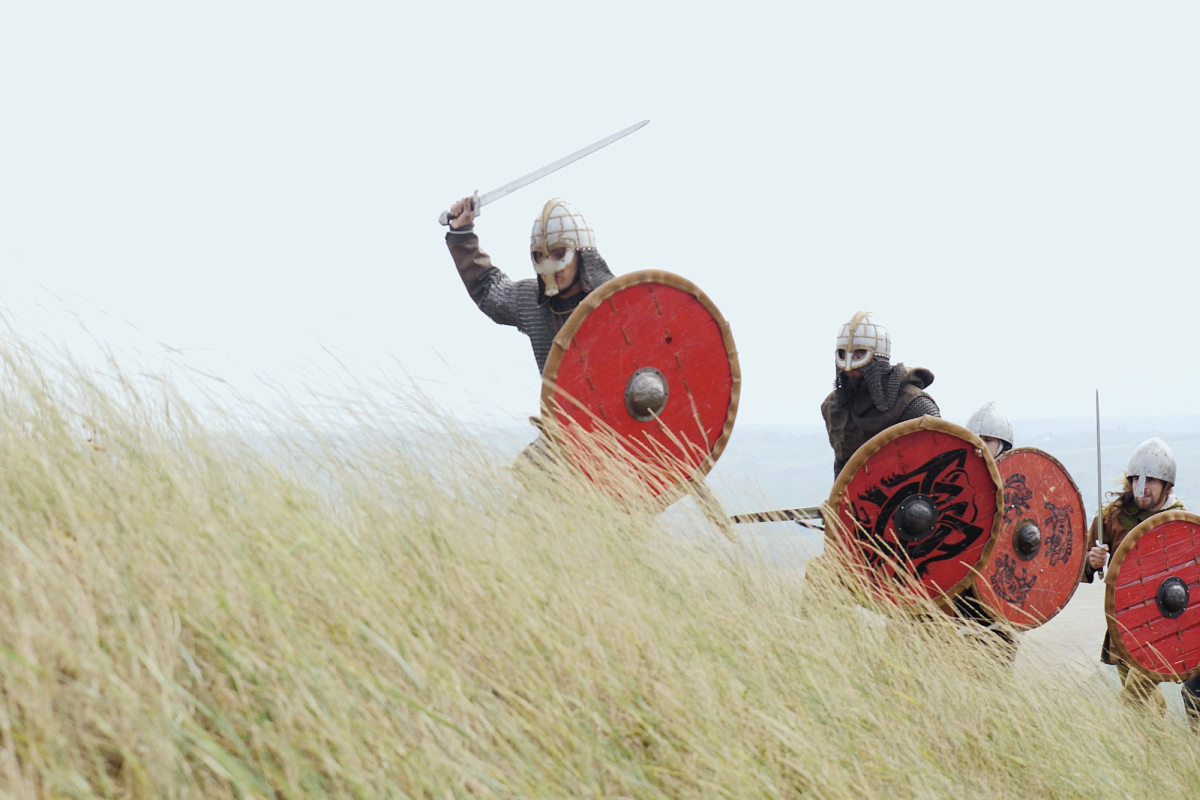
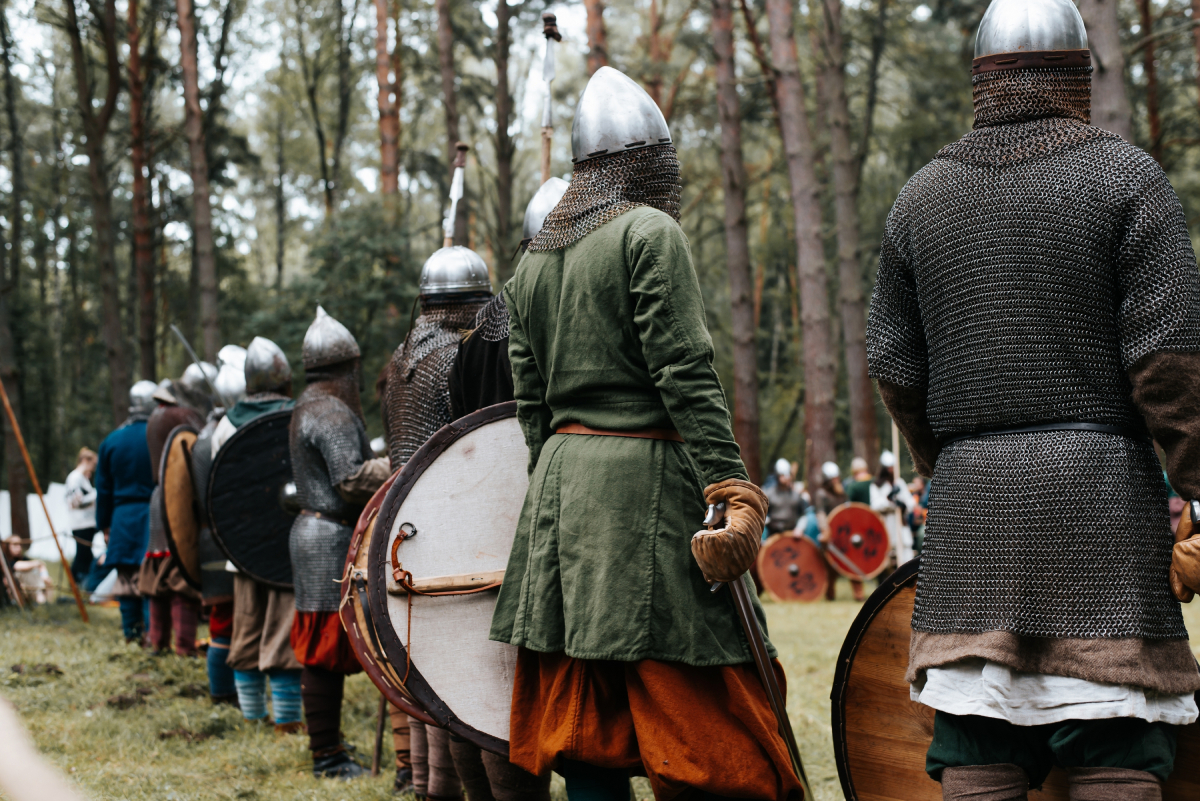
Viking warriors. Source: Shutterstock
Influenced British and Irish military history
The Viking history of the British Isles is often painted as one of conquest and subjugation. Whilst people from Viking societies left an indelible mark on the British and Irish Isles, influencing everything from language to the clan system, the role of Viking warriors as mercenaries is often overlooked. The early medieval period was one of almost constant warfare in these isles, and warriors from Viking societies were highly prized for their ferocity and martial skills.
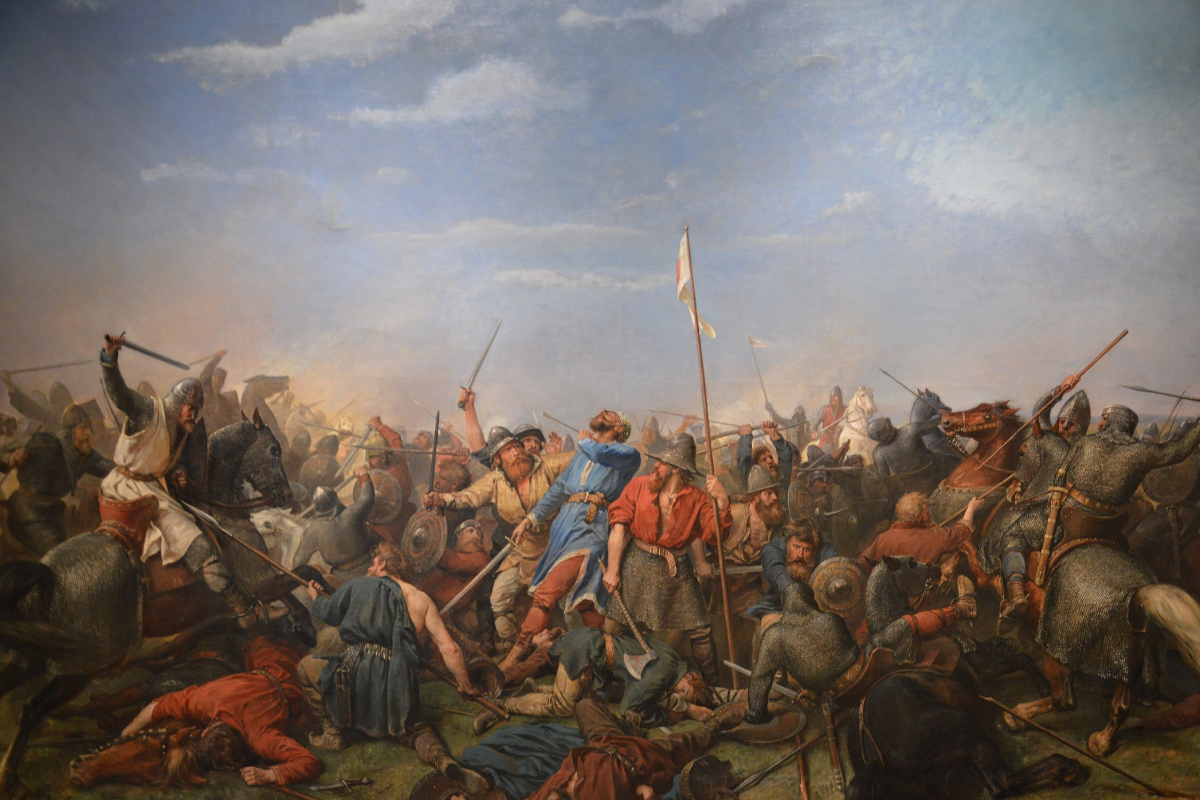
Anglo-Saxon rulers often paid Viking war bands in agreements forged through the famous medieval shakedown money, the Danegeld. Across the Irish Sea, Viking warriors were engaged in warfare across the Emerald Isles, forging alliances with local warriors. Perhaps the most famous example of Viking mercenary involvement was that of the seminal Battle of Clontarf, which saw an imported Viking force, led by Sigurd of Orkney, ultimately fail against a local Irish force led by Brian Boru.
The most famous Viking mercenary to grace the British and Irish Isles, however, is Thorkell the Tall. Having ravaged much of Anglo-Saxon England in his earlier life, he entered the service of King Aethelred the Unready with a huge fleet of warships. However, an invasion led by Viking warrior Cnut saw Thorkell swap sides, ultimately tipping the balance in favor of a Viking reconquest of Anglo-Saxon England. (You can learn about an anime portrayal of Thorkell the Tall on The Viking Herald Patreon, here.)
Paid off with real estate
Across the English Channel, the Frankish rulers had seen their realm ravaged by Viking warriors since the early 9th century CE. Not only were the coastal communities under attack, but Vikings utilized the river systems to penetrate deep into what was once the Carolingian Empire. By the early 10th century, the ruler of West Francia, Charles the Simple, tried a different tactic to rid his realm of the Viking influence.
A Viking force, led by a warrior named Rollo, had laid siege to much of the northwest coast of Francia but was defeated after a failed siege of the city of Chartres. Charles the Simple, in a strategically smart as well as magnanimous moment, decided that he could never truly rid his realm of a Viking threat, so he decided to utilize their martial valor instead.
He parceled off a huge slice of the realm, between the rivers Loire and Seine, in return for Rollo converting to Christianity, becoming his vassal, and defending this region from further Viking raids. Charles the Simple had outsourced his border security to the very people he had been trying to fend off. It seems that Charles's nous for strategic vision contradicts his rather unfair epithet.
The subsequent negotiations led to the Treaty of Saint-Clair-sur-Epte, in 911, that established the Duchy of Normandy but also saw Viking warriors be paid off to fight and defend against further attacks and incursions by their Northern brethren. Here, a Viking warrior and his kith and kin were shrewdly employed to defend a polity that they had devastatingly raided and ravaged.
Soon, people from Viking societies came to settle Normandy, and the Scando-Gallic mingling pot soon produced a Norman culture which would dominate much of Europe in the later medieval period. As Jean Renaud writes in the 2008 book Viking World, the integration of people from Viking societies and the local population was so successful that it “created a Norman people within a few generations' time.”
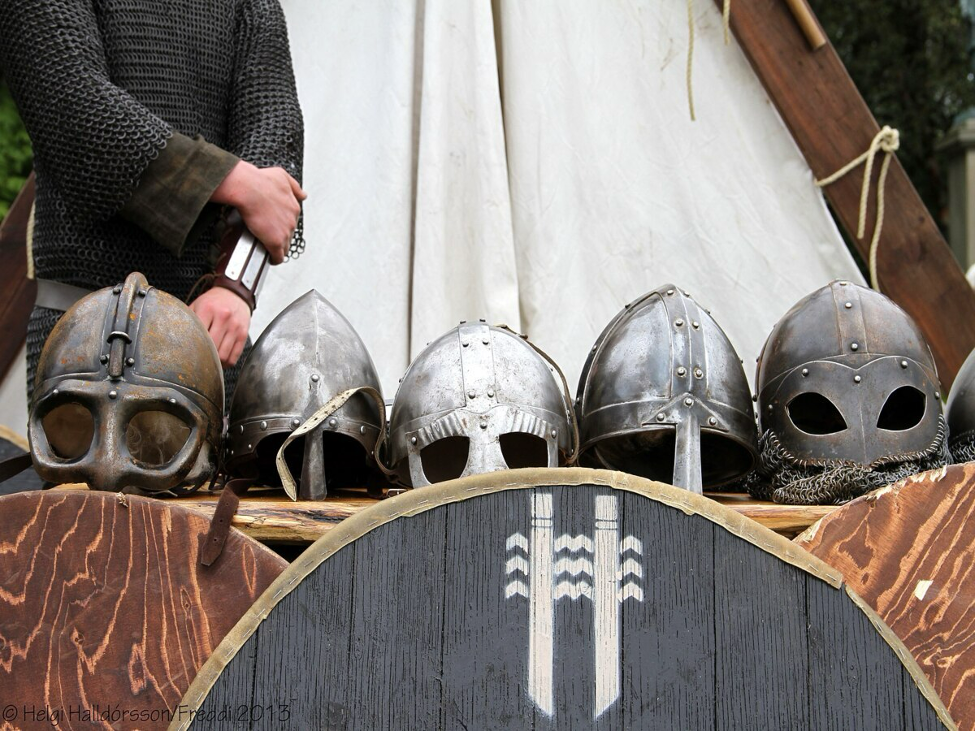
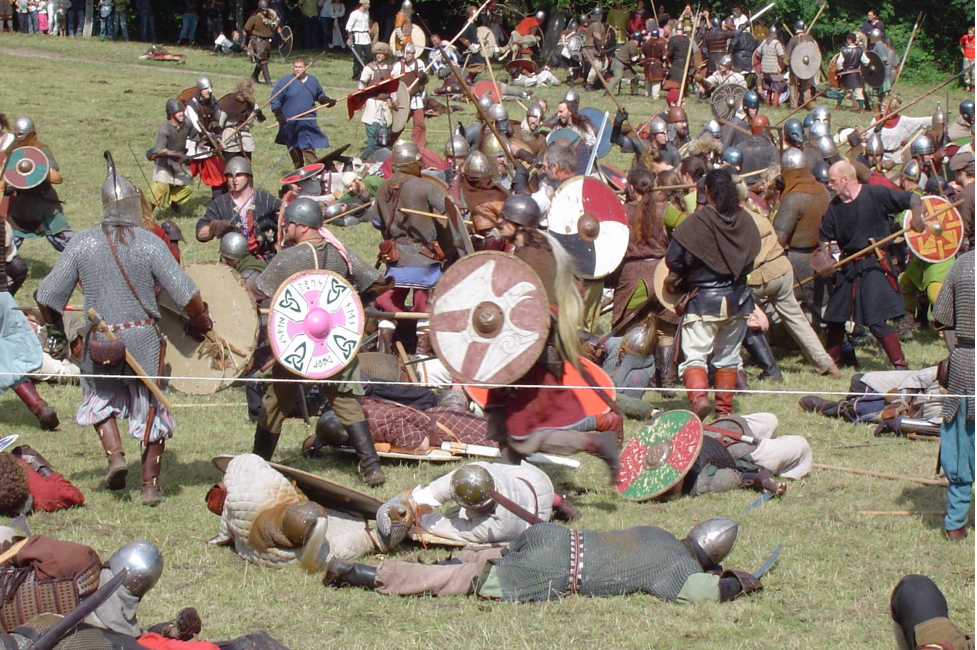
Viking arms and armor. Source: Wikimedia, author Helgi Halldórsson
Invited to rule?
In the Anglosphere, traditional Viking histories focus on Western Europe. However, people from Viking societies headed eastward, across the Baltic and into Eastern Europe too. These eastward adventurers, a heedy mix of settlers, traders, and warriors, became collectively known as the ‘Rus’. They were fundamental in establishing trade routes that snaked across Eastern Europe, connecting Northern Europe with the lucrative markets of the Byzantine Empire and the Islamic world. Though securing wealth was important, they soon became involved in the acquisition of control and power, too.
According to the Primary Chronicle, a history of much of Eastern Europe written in the 12th century, Kyiv, it was three Viking brothers, Rurik, Sineus, and Trevor, who were invited to rule over local Slavic tribes. Turning to an online version of the Chronicle (based upon a 1969 English translation by C.T Evans), this episode is described as thus,
"Let us seek a prince who may rule over us and judge us according to the Law." They accordingly went overseas to the Varangian Russes....The Chuds, the Slavs, the Krivichians, and the Ves' then said to the people of Rus', ‘Our land is great and rich, but there is no order in it. Come to rule and reign over us.’ They thus selected three brothers and their kinfolk, who took with them all the Russes [people from Viking societies] and migrated. The oldest, Rurik, established himself in Novgorod; the second, Sineus, at Beloozero; and the third, Truvor, in Izborsk. On account of these Varangians, the district of Novgorod became known as the land of the Rus".
First extracting tribute and protecting trade routes for local rulers, these “Rus” soon became integral to the foundation of a great polyglot medieval polity, the Kyivan Rus. It is this episode that is used in traditional histories as a foundational narrative for the later states of Belarus, Russia, and Ukraine. Sadly, this shared history has recently been invoked and politicized by Russian President Vladimir Putin as a historical justification for Russia’s invasion of Ukraine.
Stepping back to the early medieval period, Viking warriors – whether originally led by three brothers – helped to lay the foundation of the Kievan Rus whereby a small Viking elite ruled over a polity that was multiethnic, multicultural and encompassed a diverse range of religious and spiritual beliefs. It was their descendants, based upon the river Volga, that 10th century Arab and traveller Ibn Fadlan encountered and whose account portrays them as armed mercenaries and traders.
A legacy felt across Europe today
Viking warriors were employed throughout the early medieval period as mercenaries. Whilst the Varangian Guard does get all the historical attention, partially due to the exploits of Harald Hardrada and his role in indirectly assisting a Duke of Normandy to conquer England, Viking warriors plied their deadly trade far and wide.
Their involvement in warfare in the British Isles left a visible mark on culture, politics, and military tactics. Across the English Channel, their ferocity was so feared that a Frankish ruler paid them off with a huge slice of real estate to become border security. Finally, in Eastern Europe, traditional histories state that it was Viking warriors who were invited to rule and govern over a myriad of cultures and peoples. Their rule here was said to have laid the historical foundation that the modern states of Belarus, Russia, and Ukraine are built upon.
Part of the bloody outward expansion of people from Viking societies, throughout the early medieval period, was the presence of Viking mercenaries throughout Europe and its surroundings. Hired to fight and wage war, these mercenaries did far more by actively influencing regional politics whose legacy is still felt today in many European states.
We get to provide readers with original coverage thanks to our loyal supporters. Do you enjoy our work? You can become a PATRON here or via our Patreon page. You'll get access to exclusive content and early access.
Feel free to reach out to discuss potential stories that may be in the public interest. You can reach us via email at hello@thevikingherald.com with the understanding that the information you provide might be used in our reporting and stories.