

Archeologists working close to the Norwegian municipality of Hamar have found a mass grave during a recent excavation at a cemetery, with several instances of people buried in close proximity. Preliminary dating suggests the bodies were buried between 994 and 1190 CE.
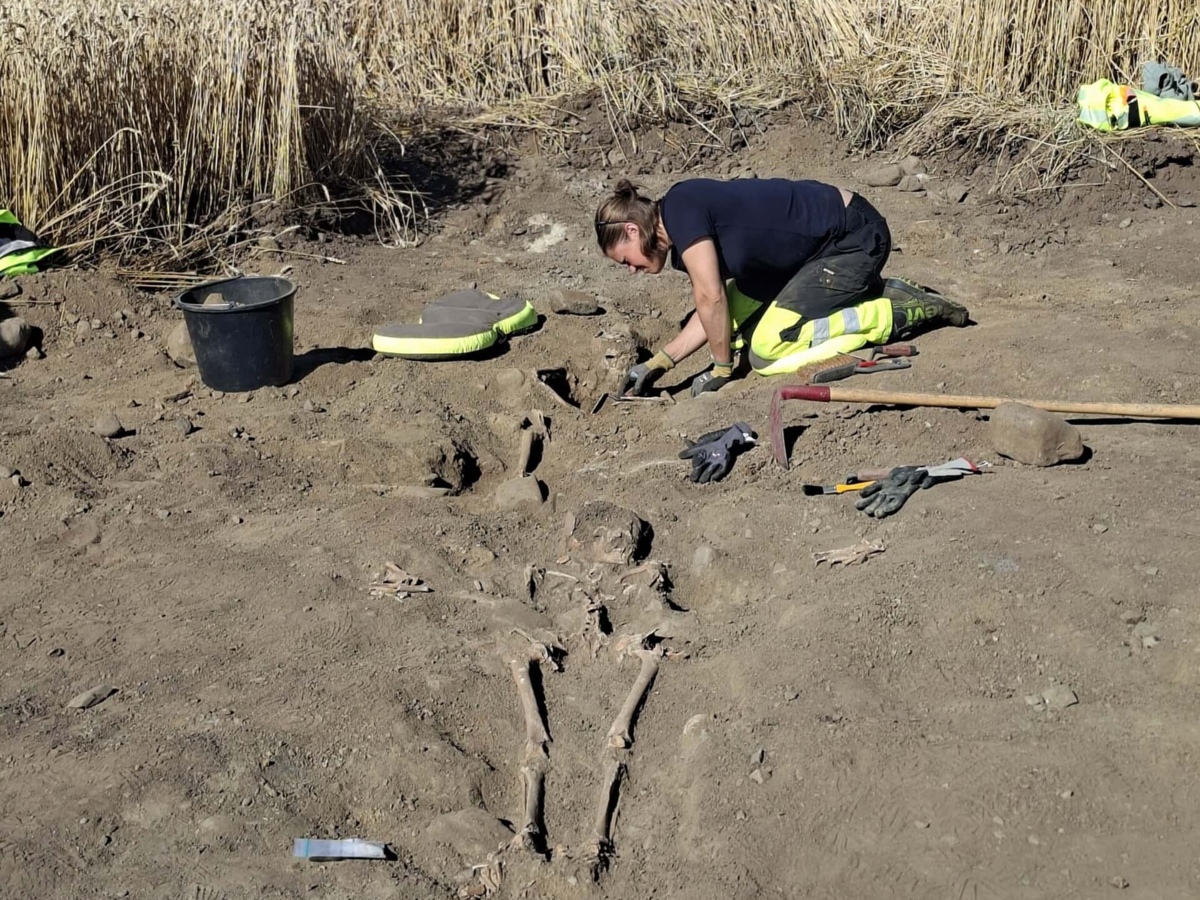
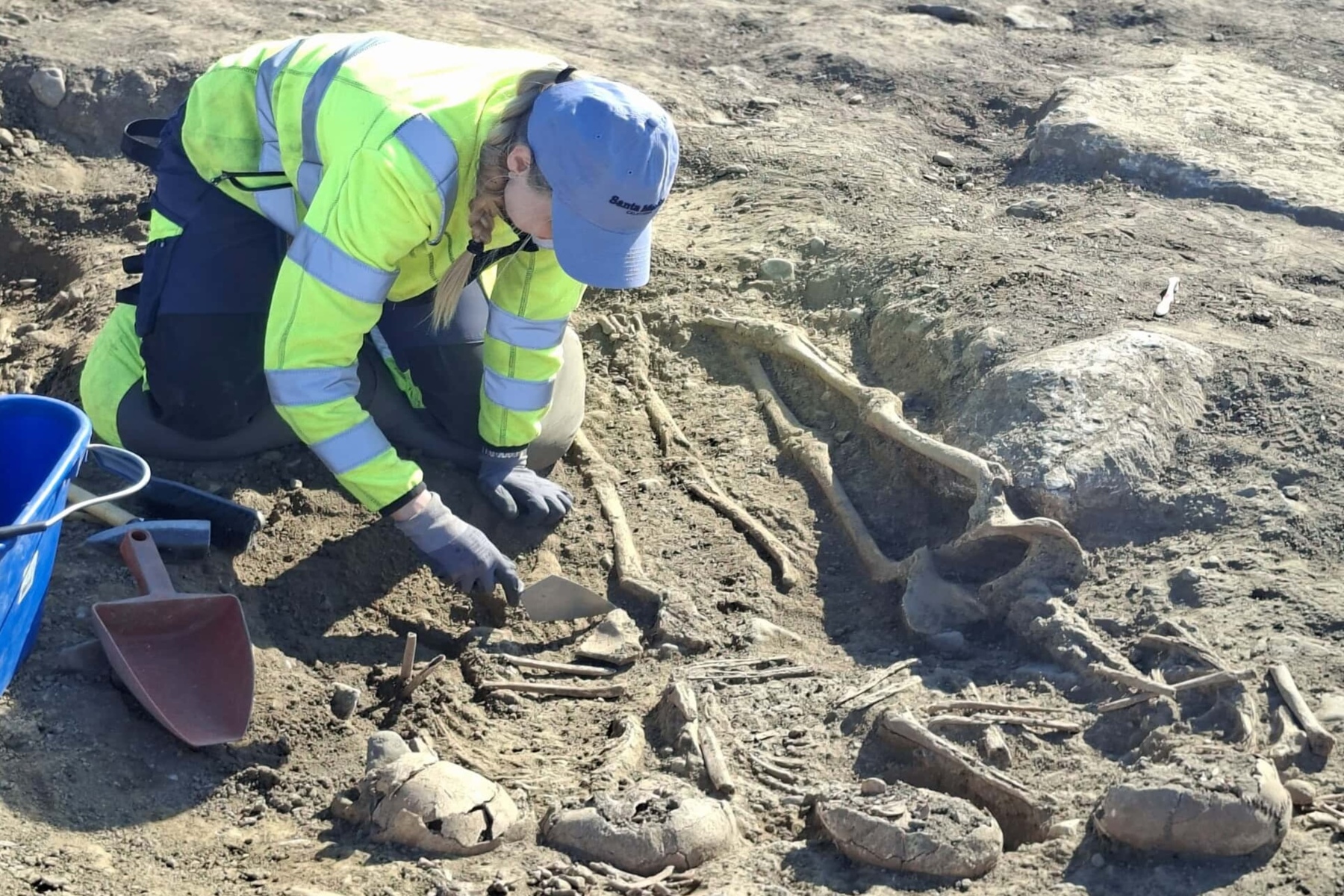
Åsa Celius from Innlandet County Municipality examines some of the shallowest graves. Source: Nina Sofie Hildre, Innlandet County Municipality.
Possibly Viking Age, almost certainly Christian
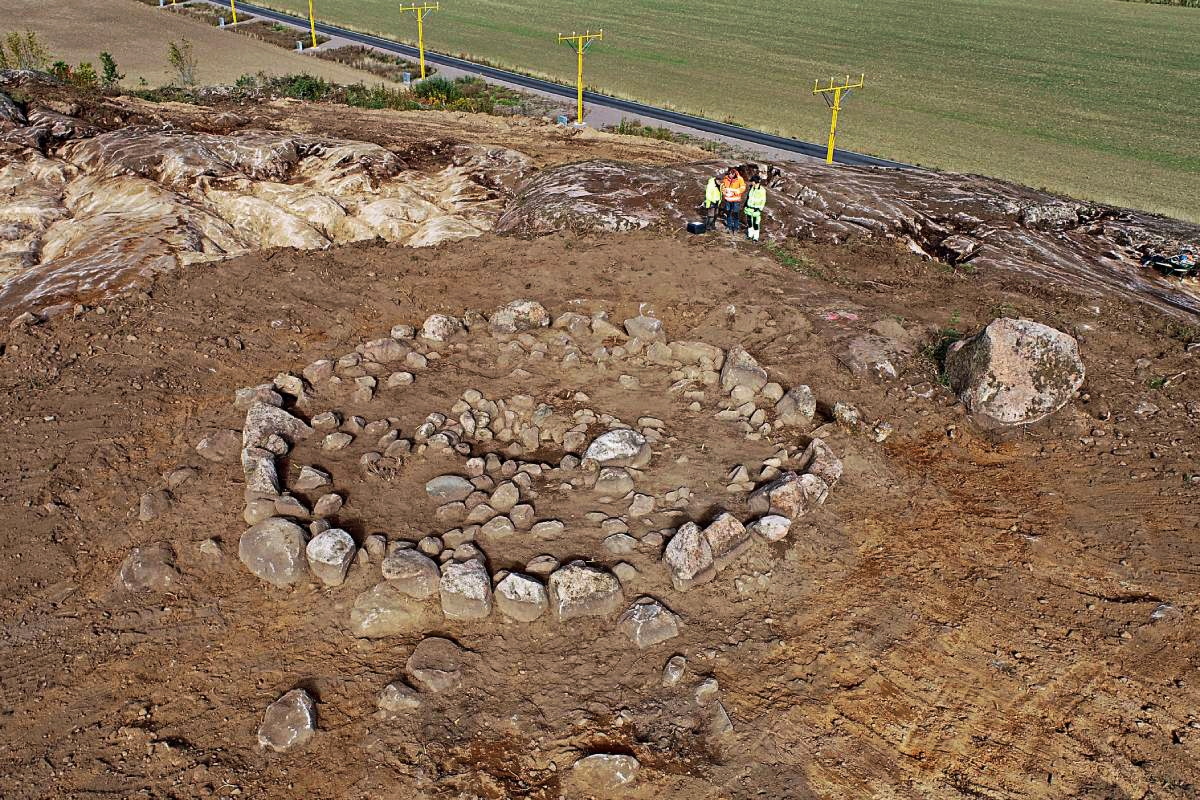
The excavations are being carried out by archeologists from the Norwegian Institute for Cultural Heritage Research (NIKU) and Innlandet County Municipality near the village of Ridabu, close to Hamar. Over the last few years, it has become clear that the area was used as a large cemetery.
The site was first identified in 2020, when a metal detectorist identified the possible remains of human bones. During initial archeological investigations, the team was able to identify the presence of skeletons directly below the topsoil. A decision was made to excavate and preserve the remains in order to prevent them being destroyed by agricultural activity.
Most of the graves are thought to have been dug in the 11th or 12th century, either during or just after the end of the Viking Age. However, early analysis suggests that the site is Christian, not pagan. There are no traces of grave goods – common in the pre-Christian era – and the graves are orientated east to west, in line with Christian tradition.
“Stirs up emotions”
A total of 15 individuals have so far been identified, including both children and adults. Unusually, in one grave there are four individuals laying close together. “It is very special to find so many common graves in a Christian cemetery, commented field leader Kristine Ødeby Haugan of NIKU in a recent press release.
“It stirs up emotions, since it is likely that there was illness or other circumstances that meant that people often had to be buried together,” she added.
"There have been many destinies here. One of the skeletons has a fracture in the lower leg, the bone has snapped right off and grown back together at the wrong angle. This person must have limped badly for the rest of his life. The person was buried with another individual and we can imagine that they had a close relationship and took care of each other.”
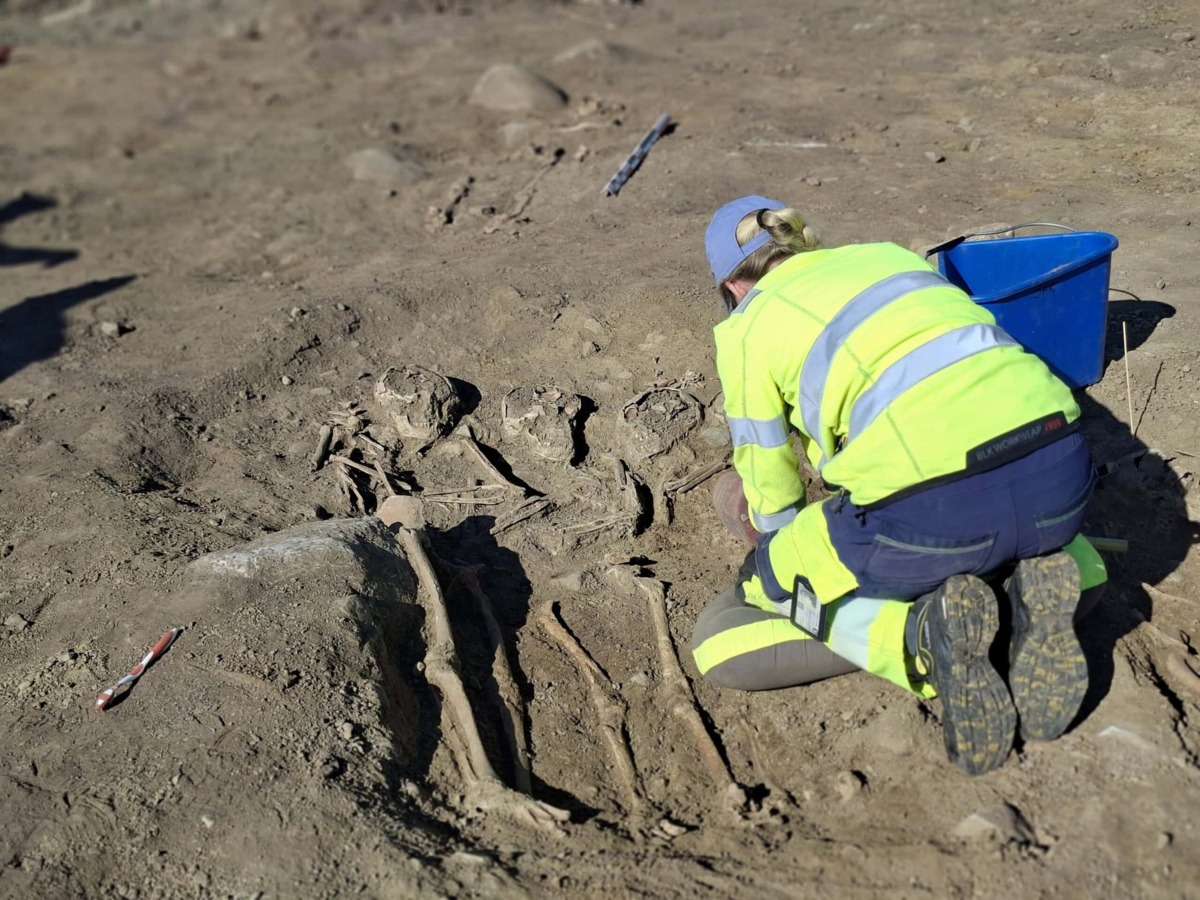
The cemetery includes several graves where multiple people are buried in close proximity. Source: Nina Sofie Hildre, Innlandet County Municipality.
The analysis begins
The current excavation is funded by the Norwegian Ministry of Cultural Heritage, which will also support further analysis. Although the skeletons found closer to the topsoil are poorly preserved, those further down are in better condition and more suitable for more detailed investigation.
It is hoped the investigation will help reveal more about life in Norway in the early Middle Ages. With this in mind, some of the remains will be sent for laboratory examination that can potentially provide information about the age and family relationships of the deceased, as well as their diet and the causes of death.
We get to provide readers with original coverage thanks to our loyal supporters. Do you enjoy our work? You can become a PATRON here or via our Patreon page. You'll get access to exclusive content and early access.
Feel free to reach out to discuss potential stories that may be in the public interest. You can reach us via email at hello@thevikingherald.com with the understanding that the information you provide might be used in our reporting and stories.