


From Norway’s rugged fjords to Ireland’s Viking-founded capital, Europe is rich with museums that bring the Viking Age to life.
Whether you're sailing a Viking ship in Denmark or exploring ancient trade routes in Germany, here's a look at the best Viking museums in Norway, Denmark, England, Sweden, Ireland, and Germany.
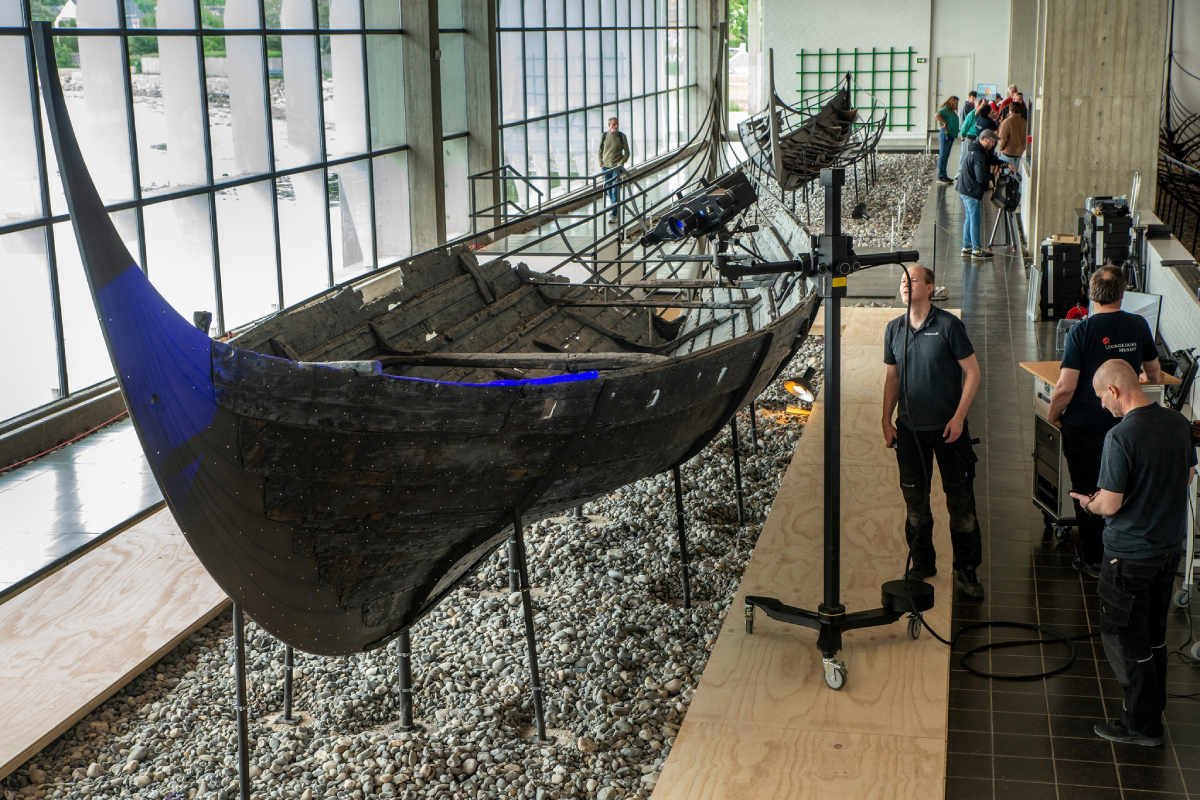
The Viking Ship Museum in Roskilde showcases five Viking ships that were deliberately sunk nearly 1,000 years ago. Source: Viking Ship Museum in Roskilde
The Viking Ship Museum in Roskilde, Denmark (Vikingskibsmuseet)
Whilst the old Viking Ship Museum in Oslo is currently being renovated and set to reopen as the Museum of the Viking Age in 2027, you will need to head further south to see some Viking ships.
The Viking Ship Museum (Vikingskibsmuseet) is dedicated to the five long-lost Viking ships.
These Viking-era ships were deliberately sunk in the nearby fjord almost a millennium ago to block a navigable channel from outside marauders and raiders – aka Vikings.
These five original ships have been lovingly excavated and preserved. They are the star attractions of this museum, which also offers broader insights into the art of early medieval shipbuilding and maritime culture.
The museum also offers daily sailing trips, from the beginning of May to the end of September, on a recreated Viking ship and periodic workshops, the latest being on how to build a toy Viking ship model.
There is also an onsite restaurant, Café Knarr, that serves up delicious Danish cuisine.
Location: Viking Ship Museum, Vindeboder 12, 4000 Roskilde, Denmark.
Opening hours: Summer season (May 1 to October 20): 10:00 am to 5:00 pm. Winter season (October 21 to April 30): 10:00 am to 4:00 pm.
Admission: Summer: Adults: 160 DKK, Family ticket: 300 DKK. Winter: Adults: 125 DKK, Family ticket: 230 DKK. Children under 18: Free.
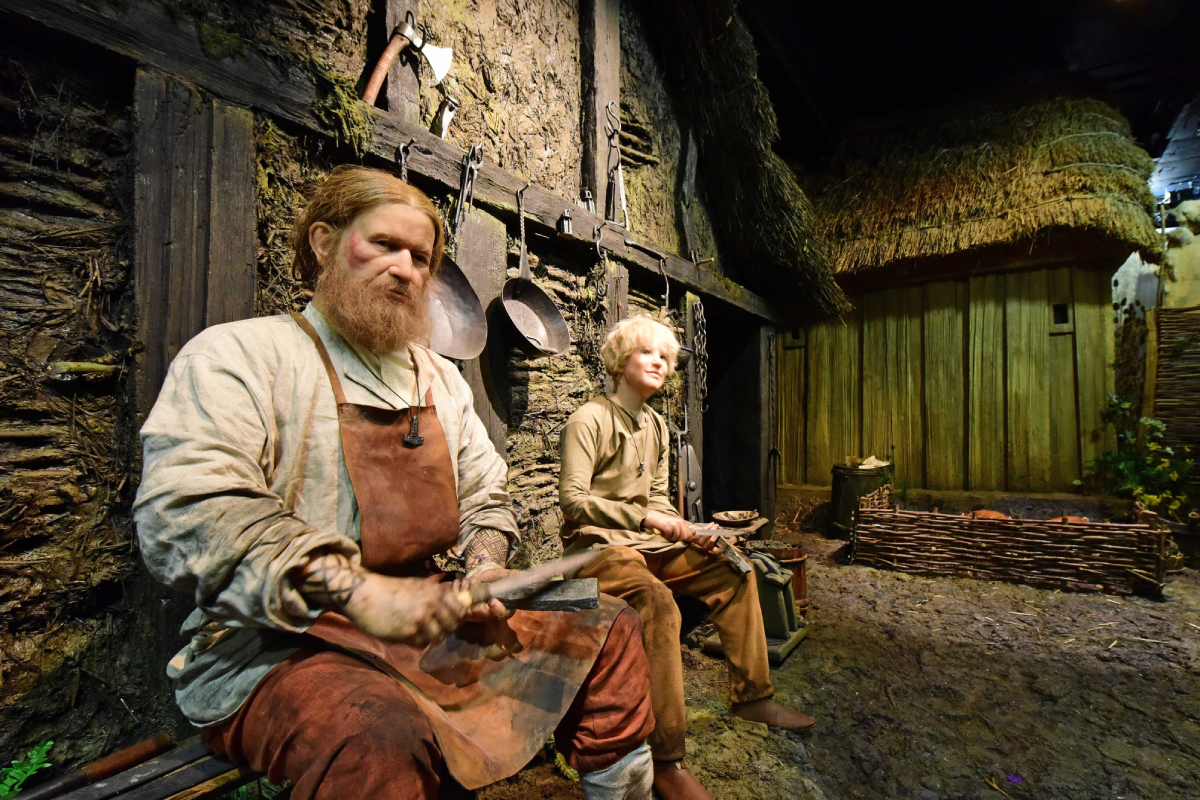
The Jorvik Viking Centre in York lets visitors experience daily Viking life through engaging dioramas and archeological displays. Source: Jorvik Viking Centre
Jorvik Viking Centre, York, England
For centuries, much of what is now England was under the direct control and domination of people from Viking societies, the so-called Danelaw.
In the centuries since, however, the northern areas of England had largely forgotten about their Viking roots.
The situation changed in the early 1970s when an archeological dig under an old chocolate factory in York uncovered a wealth of Viking-era artifacts, revealing a vivid picture of daily life in what was the Viking city of Jorvik during the early medieval period.
Inspired by these findings, one man had a vision to bring York's Viking history to life. John Sutherland set out to design an innovative, interactive museum that was truly ahead of its time.
Instead of wandering about the halls of a museum, visitors are whisked in a carriage through a variety of dioramas with life-size mannequins depicting life in Viking-era Jorvik.
This seemed to have scratched a historical itch not only in York but across England, leading to a renewed interest in studying and appreciating the Viking-era in English history.
According to the museum's website, by 2022, it had attracted more than 20 million visitors since its opening in 1984, making it one of the nation's most beloved and unique cultural institutions.
It also played a key role in the cultural renaissance of York, a proud northern English city.
Location: Jorvik Viking Centre, 19 Coppergate, York, YO1 9WT, England.
Opening hours: Open daily from 10:00 am to 5:00 pm.
Admission: Adults: 16.50 GBP. Children (5-16 years): 11.00 GBP. Under 5s: Free. Concession: 13.25 GBP. Family discounts available.

At the Historical Museum in Oslo, visitors can explore the VIKINGR exhibition, which reveals the many facets of Viking life. Source: Wolfmann (CC BY-SA 4.0)
Historical Museum, Oslo, Norway (Historisk Museet)
With the Museum of the Viking Age still a few years from completion, Oslo fortunately has a wealth of Viking-themed cultural institutions. The best, however, is the Historical Museum (Historisk Museet) in downtown Oslo.
Part of the University of Oslo, the nation's oldest institution for higher education, the museum houses one of the world's most extensive collections of Viking Age artifacts.
Taking pride of place is their permanent and wildly popular exhibition VIKINGR.
While there are crowd-favorite artifacts, including Viking swords and a helmet, the exhibition also goes to great lengths to highlight that people in Viking societies were more than mere warriors; they were also farmers, skilled artisans, and great poets.
The exhibition aims to show the multifaceted sides of Viking societies. While warriors were an important part of its martial culture, there was more to these societies than axes and swords.
Location: Historical Museum, Frederiks gate 2, 0164 Oslo, Norway.
Opening hours: Tuesday to Sunday: 10:00 am to 5:00 pm. Thursday: 10:00 am to 6:00 pm. Closed on Mondays.
Admission: Adults: 140 NOK. Children under 18: Free. Students and seniors: 100 NOK. Companions: Free.
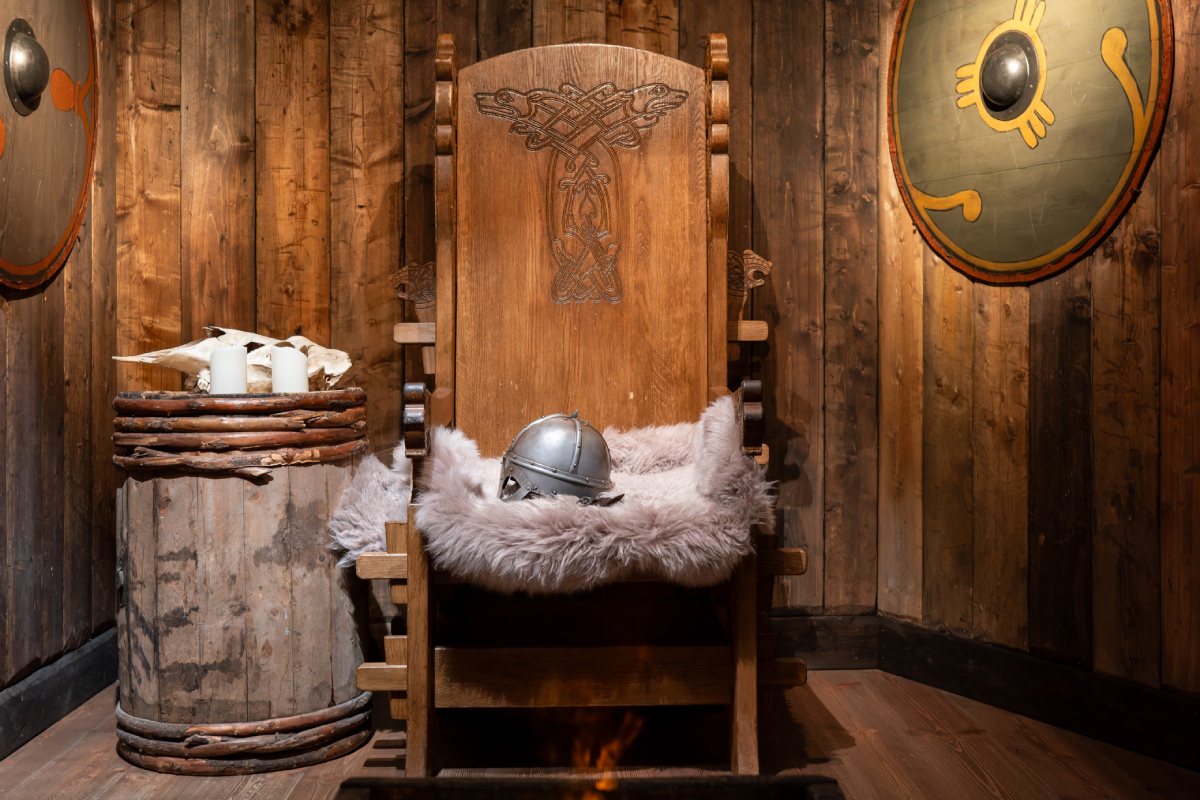
The Viking Museum in Stockholm features immersive, family-friendly exhibits that uncover the true history of the Vikings. Source: Jules Verne Times Two (CC BY-SA 4.0)
The Viking Museum, Stockholm, Sweden (Vikingaliv)
Stockholm is often praised as the "Venice of the North," with the bustling city built upon a myriad of beautiful islands.
One of the largest is Djurgården, which not only houses several museums, including ones dedicated to the band ABBA and the 17th-century ship Vasa. Yet surely the best (true, we are biased) is The Viking Museum (Vikingaliv).
The museum hopes to answer that age-old question of what the Vikings were really like with a range of immersive and interactive exhibits.
With a mission to separate Viking lore and myths from cold, hard historical facts, the guides are not only well-versed in all things Viking but also dressed in contemporary Viking-era attire.
The museum offers a wide variety of activities for the entire family, including mead tasting, daily guided tours (in Swedish and English), and plenty of fun educational experiences for kids.
Location: The Viking Museum, Djurgårdsvägen 48, 115 21 Stockholm, Sweden.
Opening hours: Monday to Friday: 11:00 am to 5:00 pm. Saturday to Sunday: 10:00 am to 5:00 pm.
Admission: Adults: 189 SEK. Students/Seniors: 165 SEK. Children (7-15 years): 149 SEK. Children under 7 years: Free. Family discounts available.
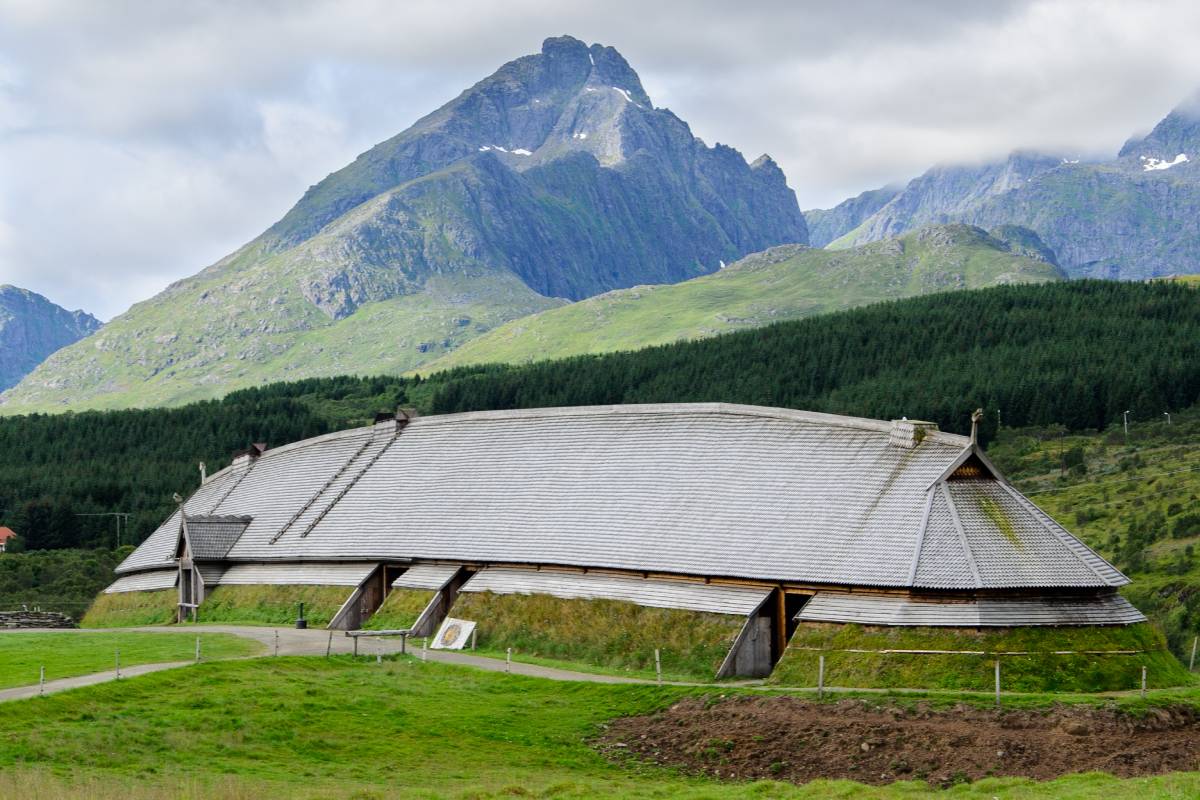
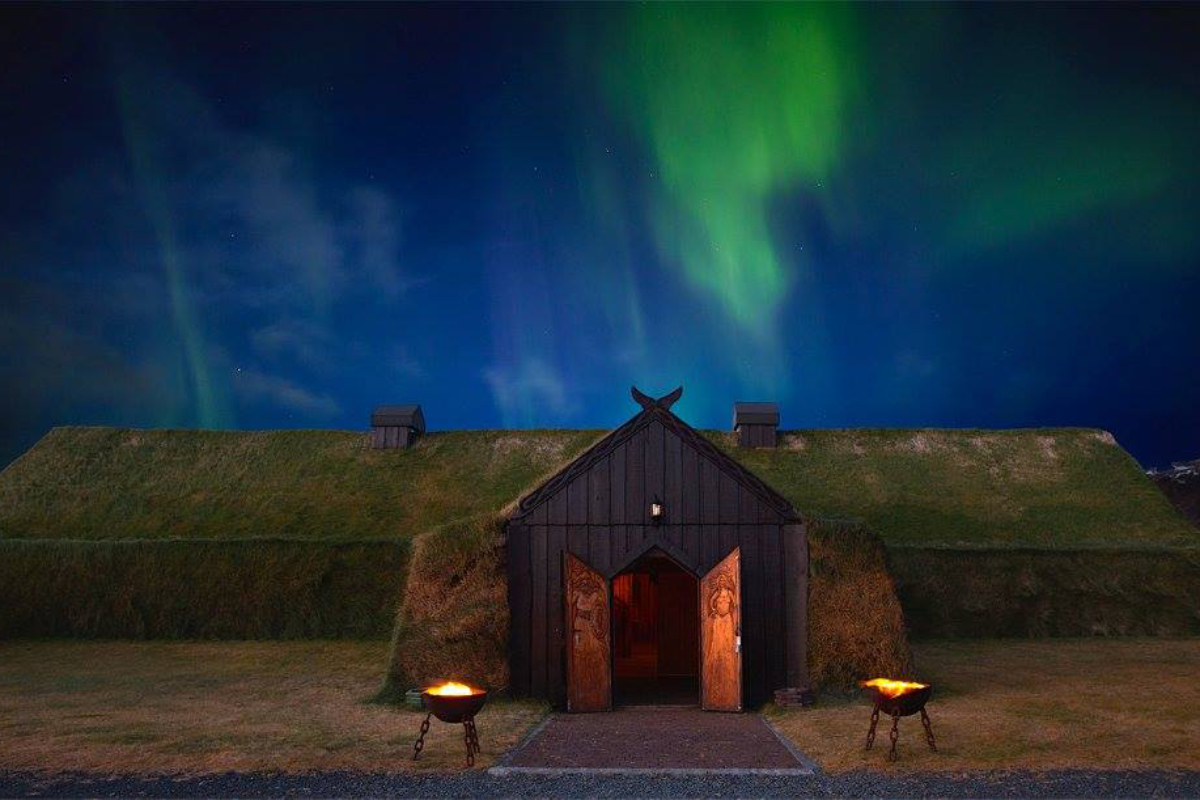
The Lofotr Viking Museum features a meticulously recreated Viking chieftain’s longhouse, complete with ship replicas and seasonal Viking festivals. Source: Marek Kania / Shutterstock
The Loftor Viking Museum, Lofoten Islands, Norway
Trekking above the Arctic Circle is a rite of passage for many Scandinavians and tourists alike.
Surely, there is no more beautiful location than the Lofoten Islands, known for their dramatic landscape of mountains, fjords, and charming fishing villages.
Aside from being one of the most beautiful places to see the Northern Lights in the colder months, the islands also host the Loftor Viking Museum.
Recent archeological excavations uncovered a Viking-era chieftain's longhouse, which has been masterfully recreated based on archeological findings and now houses the museum.
Not only is there a full 83-meter (272-foot) longhouse, but the museum has also recreated a blacksmith's forge and two Viking ship replicas – one based on the Gokstad ship – and a film theater.
During the warmer months, the museum comes alive with a Viking festival that includes live demonstrations of Viking cooking, crafts, and games.
Location: Lofotr Viking Museum, Prestegårdsveien 59, 8360 Bøstad, Lofoten Islands, Norway.
Opening hours: Opening hours vary by season.
Admission: Ticket prices vary according to the season.
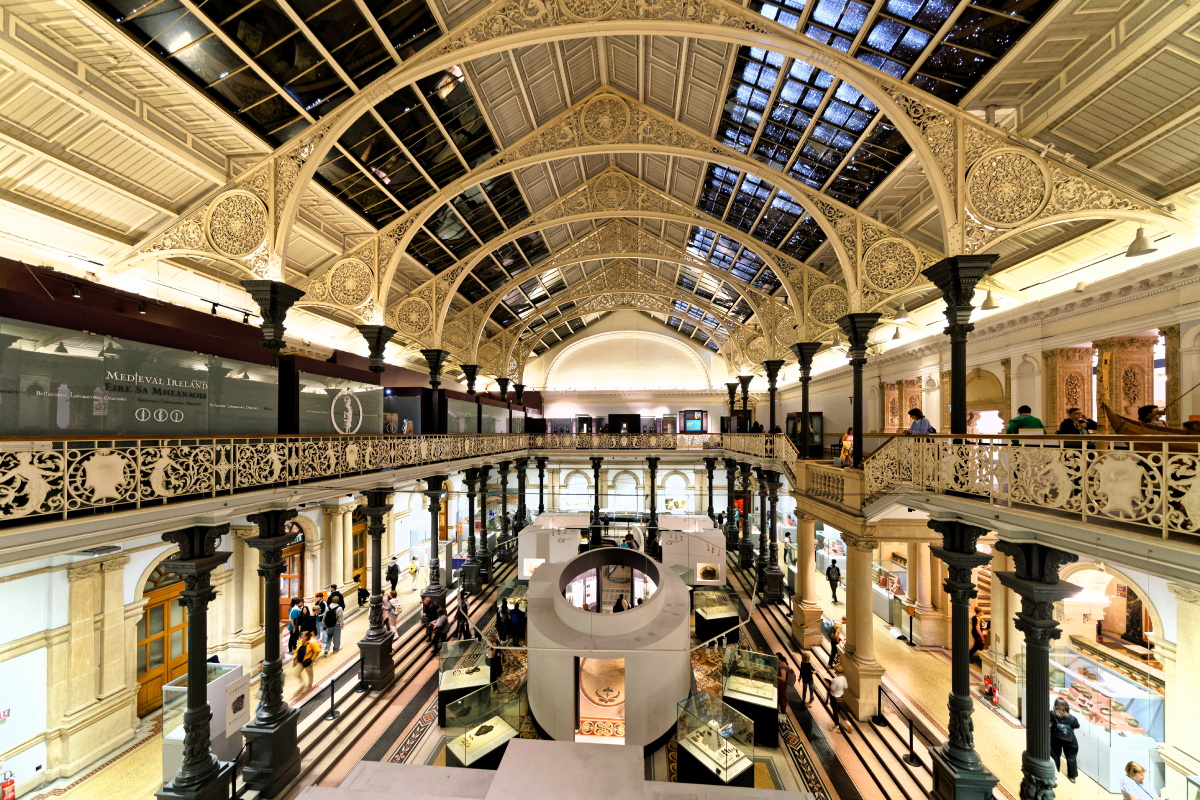
The National Museum of Ireland in Dublin has a dedicated exhibition on the Viking era, showcasing the lasting impact of Viking settlers on Irish culture. Source: Holger Uwe Schmitt (CC BY-SA 4.0)
The National Museum of Ireland, Dublin, Ireland
At the westernmost edge of the Viking world, Ireland has a long and proud Viking history. In fact, the nation's capital, Dublin, was originally established as a Viking trading town, primarily involved in the slave trade.
The National Museum of Ireland boasts an extensive array of Viking-era artifacts.
An exhibition is dedicated solely to the Viking era of Irish history, highlighting how people from Viking societies first came to Ireland as raiders but then transformed the culture, economy, politics, and society of early medieval Ireland.
Their website offers more information on the Viking exhibition, including a virtual 3D tour.
While Ireland is not necessarily the first country you may associate with the Vikings, the museum's extensive exhibition will quickly change your mind.
Location: The National Museum of Ireland, Kildare Street, Dublin 2, Ireland.
Opening hours: Open Tuesday to Sunday, 10:00 am to 5:00 pm. Closed on Mondays.
Admission: Free entry.
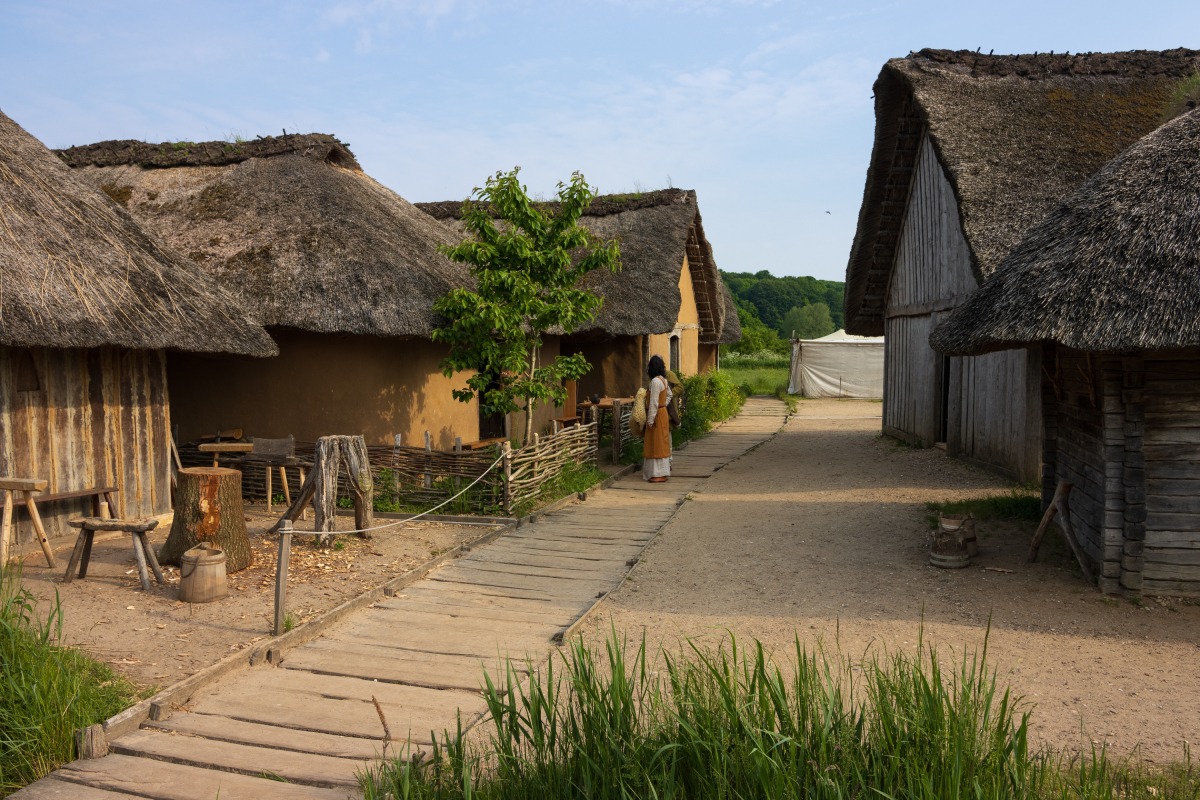
The Viking Museum Haithabu highlights Hedeby’s role in Viking trade through reconstructed buildings and interactive exhibits. Source: LGieger / Shutterstock
The Viking Museum Haithabu (Hedeby), Schleswig, Germany
The Viking Age trading town of Hedeby was one of the most significant cultural, economic, and political centers in the Viking world throughout much of the early medieval period.
Known as the southern gateway to the wider world, it connected the Viking homeland of Scandinavia to the Frankish realms, southern Europe, and beyond through extensive trade networks.
The Viking Museum Haithabu has faithfully recreated a number of Viking-era longhouses and buildings and has an exhibition that focuses on Hedeby's role as a regional economic powerhouse and its cultural connections through trade.
The museum is located near the former settlement, which was sacked by Harald Hardrada in 1055 and then destroyed by a West Slavic army in 1066.
Location: Viking Museum Haithabu, Am Haddebyer Noor 3, 24866 Busdorf, Schleswig, Germany.
Opening hours: Tuesday to Friday: 10:00 am to 5:00 pm. Saturday and Sunday: 10:00 am to 6:00 pm. Closed on Mondays.
Admission: Adults: 12 EUR. Reduced: 10 EUR. Family: 25 EUR. Children/Youth: 4 EUR. Group prices and special exhibitions have separate pricing.
We get to provide readers with original coverage thanks to our loyal supporters. Do you enjoy our work? You can become a PATRON here or via our Patreon page. You'll get access to exclusive content and early access.
Feel free to reach out to discuss potential stories that may be in the public interest. You can reach us via email at hello@thevikingherald.com with the understanding that the information you provide might be used in our reporting and stories.



_Museum_Oslo._VIKINGR_Norwegian_Viking-Age_Exhibition_08_Iron_helmet_from_Gjermundbu_(Gjermundbuhjelmen)._Best-preserved_viking_helmet,_grave_find,_destroyed_in_funeral._Equestrian_warrior_950-1000._4665.jpg)
