

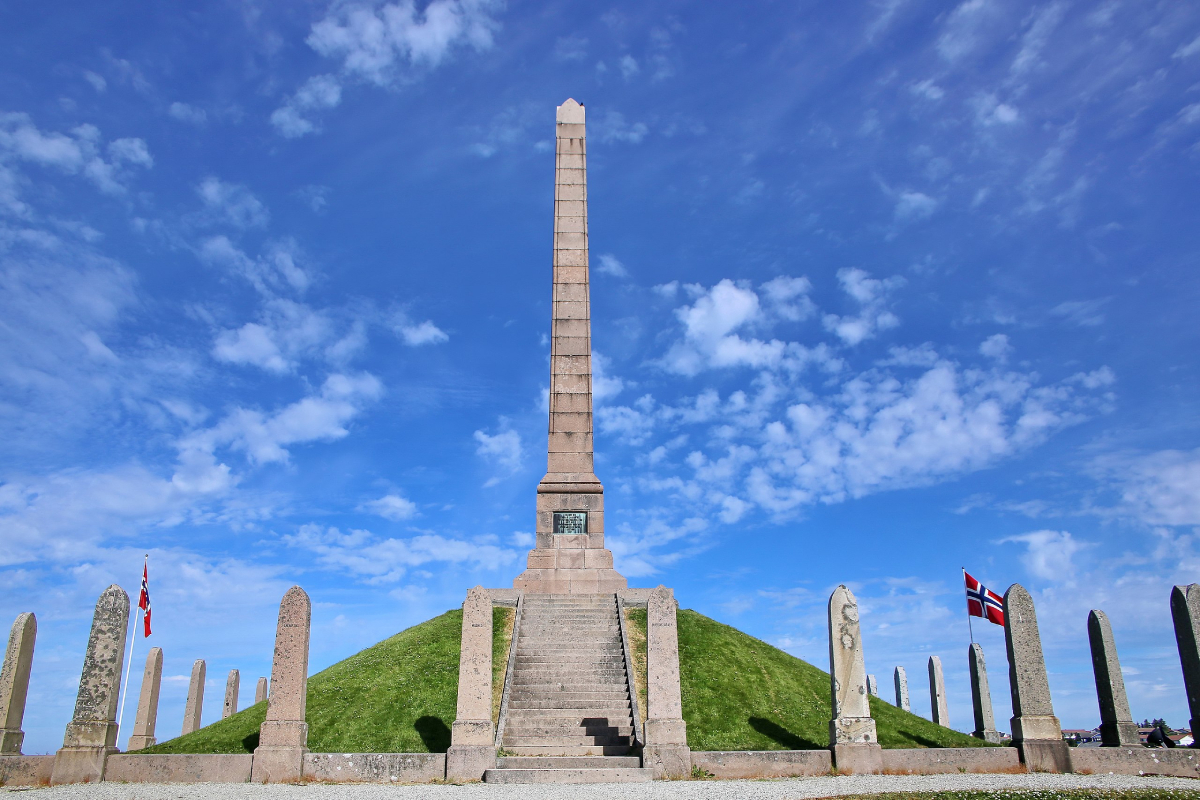
However, despite the high praise and hyperbole heaped upon Fairhair in the sagas, this idea of simple, single, decisive "unification" should be treated with caution.
A modern nation with early medieval roots
Current Norwegian King Harald V is the head of a kingdom that traces its ancestry back to a time when Vikings roamed Norway and its surroundings.
Whilst the modern Norwegian monarchy dates to Norwegian independence in 1905, the throne that His Majesty King Harald V sits on is often traced back, in traditional accounts, to his ancient namesake, Harald Fairhair.
According to traditional histories of the Kingdom, most of which are found in the rich tapestry of the Norse sagas, it was Harald Fairhair who went about systematically conquering and subjugating the several petty kingdoms present in Norway in the late 9th century CE.
The Saga of Harald Fairhair, a part of the Heimskringla compiled in the 13th century by Icelandic poet and politician Snorri Sturluson, sets up the bloody crescendo of this unification by Fairhair as the epic Battle of Hafrsfjord, traditionally dated to 872 CE.
In a dramatic naval battle (historians now normally date this battle as having taken place sometime between 872 and 900 CE), Fairhair finally defeated the two last holdouts – the Kings of Agder and Hordaland – and secured the final southwestern piece of his Norwegian puzzle.
Or, as the saga (we use an online version of the 1844 English translation by Samuel Laing) more succinctly describes the fallout:
"After this battle, King Harald met no opposition in Norway, for all his opponents and greatest enemies were cut off...
King Harald had now become sole king over Norway..." [Stanza 20–21]
Not a bad legacy for a historical figure from the early medieval period, whose achievements and life are shrouded in as much legend and lore as legitimate facts.
- READ MORE: A Viking history of Norway (part 1)
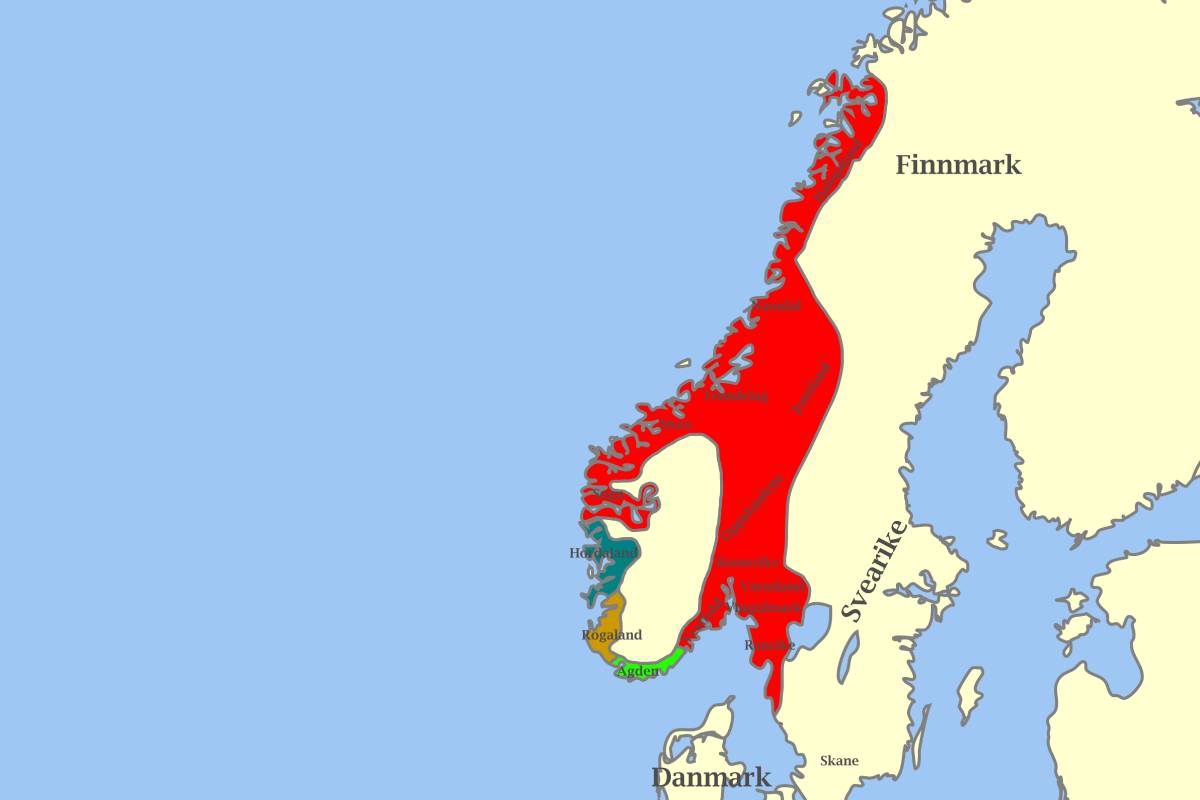
Map of Norway around 872, with red showing Harald Fairhair's realm as labeled on the map. Source: Madman2001 / Jappalang (CC BY-SA 2.5)
A centuries-long centralization of power
According to the sagas, from Fairhair's first battle to the dramatic events at Hafrsfjord, it took the first king of a unified Norway, in saga chronology, little more than 12 years to win a throne.
We know that not everything in the Norse sagas, despite how entertaining they are, should be taken literally.
Yes, there is indeed more than a shred of historical evidence and truth to many of the vivid stories and tales therein, but these sagas, such as that of Harald Fairhair, drew on oral tales and traditions that people in Viking societies told one another as a way to pass a long Scandinavian winter night.
Whilst historians today acknowledge that Fairhair was an inspirational figure (indeed a national icon and father figure) for many Norwegians during the 19th and 20th centuries, the era of independence, they have raised skepticism about his portrayal and exploits as told in the Norse sagas.
Chief among their concerns is the Battle of Hafrsfjord as the singular and decisive event in the formation of the medieval Kingdom of Norway.
Modern reference works usually place the battle somewhere in the late 9th century, often within a broad range, and the Norwegian Royal Court notes 872 as a traditional date while also citing sources that place the battle later, perhaps as late as 885.
Like its Scandinavian neighbors to the south and east, or the Anglo-Saxon kingdoms across the Norwegian Sea, Norway had experienced centuries of the long and bloody process of the centralization of power.
However, unlike its neighbors, this process took far longer due to the country's unique geographic challenges: the Scandinavian Alps running down its spine, limited arable land, and a small population all meant that political cohesion was a far more difficult and slower process.
When political cohesion was achieved, it was done through small, incremental steps rather than a sweeping and decisive process.
Bloody though this process was, it was not a singular event, nor did a single battle in a fjord decide it, whatever the sagas may say.
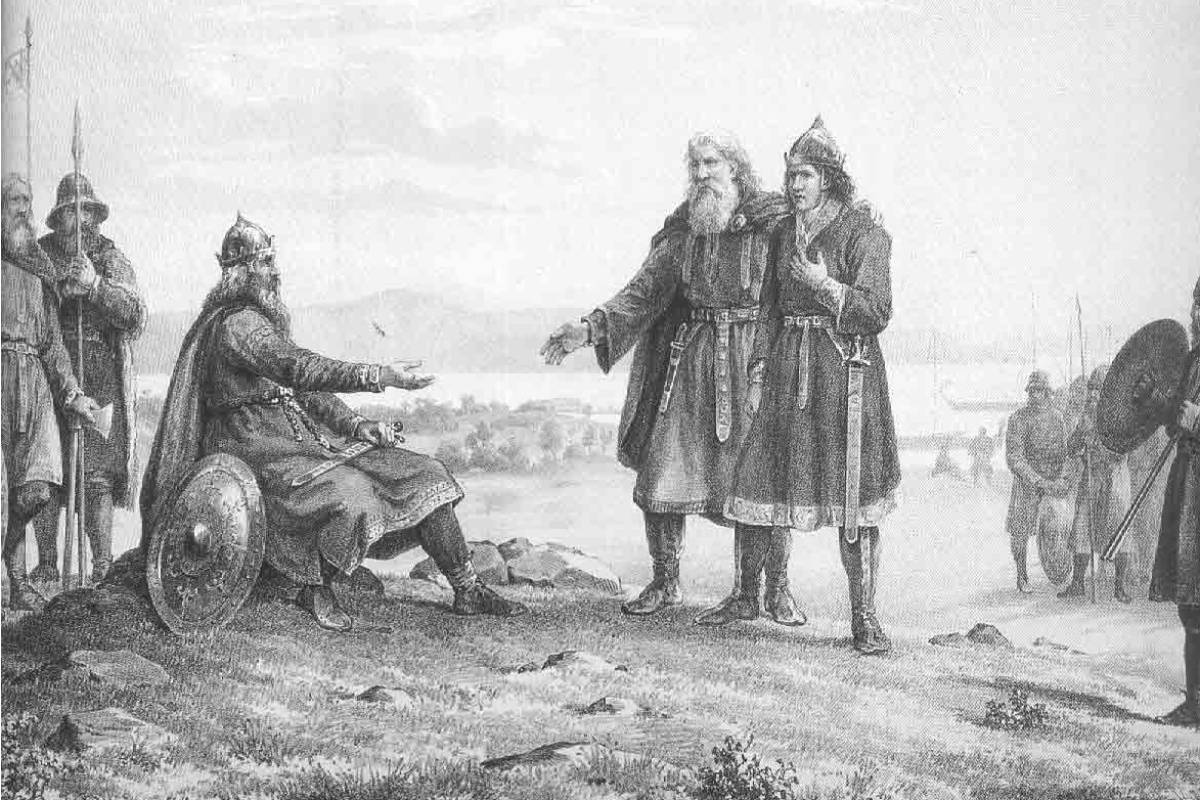
A 19th-century illustration of the skald Gudtorm Sindri reconciling King Harald Fairhair with his son Halfdan. Author: Peter Nicolai Arbo (1831–1892)
Not all of Norway was united
We can now pour more cold water on the idea of a decisive, singular battle to unite the medieval Kingdom of Norway.
Even though the medieval Kingdom of Norway did emerge from the late 9th century CE onward, not all the territories within the modern borders of Norway were conquered and incorporated into this nascent realm.
Even after Fairhair had supposedly forged a Norwegian kingdom, the sagas still describe another battle, years later, at Fjaler, tied to control of Sogn.
If Hafrsfjord was the supposedly decisive battle that the sagas portray, then why do the sagas place a major clash nearly a decade later in connection with securing that region?
Further north, things were complicated, too. Whilst Fairhair is credited with forging the several petty kingdoms into a unified state, there was a large amount of Norway that fell outside his iron grip, especially in the north.
The Earls (Jarls) of Lade were powerful regional kingmakers who were a persistent challenge to royal authority, remaining largely independent and continuing to shape and scheme Norwegian politics well into the later medieval period.
Contested history
The Norse sagas, particularly involving Harald Fairhair, are indeed entertaining snapshots into early medieval life. However, despite the shreds of historicity they contain, they should not be treated as true historical records.
The Saga of Harald Fairhair is very much a victor's document, steeped in bias and shaped to legitimize the power and perspective of the ruling elite.
We know that the formation of the medieval kingdom was a centuries-long process that, whilst shaped by powerful individuals, was never won on a battlefield in a single day.
Following the formation of this kingdom, there was a significant portion of the population and territory that lay outside the formal control of the Norwegian crown long into the later medieval period.
Regardless of how the sagas wax lyrical about Harald Fairhair's unification of Norway, the truth is that it was a far more complicated and contested process than tradition states.
Whilst the individual can influence events momentarily, the process of nation-building – in the early medieval period as now – is a centuries-long process.
For more information on the current Norwegian monarch and his family, visit the website People.
We get to provide readers with original coverage thanks to our loyal supporters. Do you enjoy our work? You can become a PATRON here or via our Patreon page. You'll get access to exclusive content and early access.
Feel free to reach out to discuss potential stories that may be in the public interest. You can reach us via email at hello@thevikingherald.com with the understanding that the information you provide might be used in our reporting and stories.