

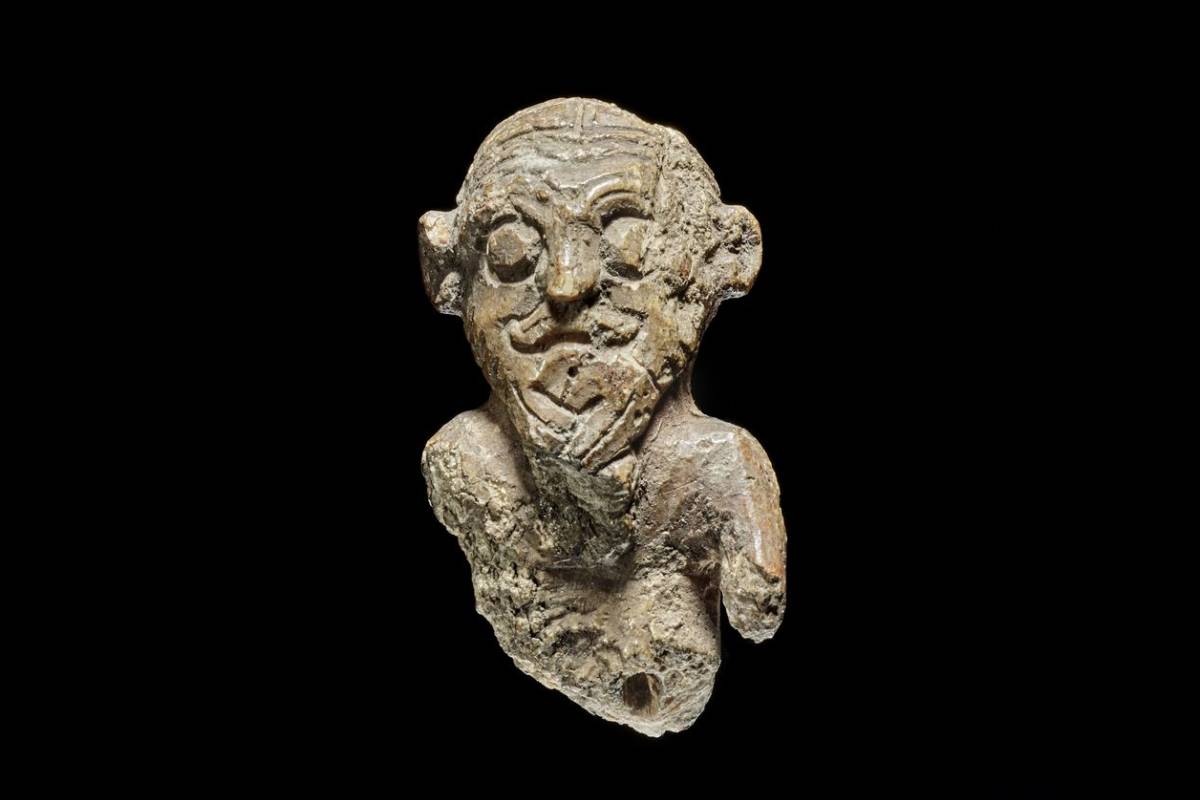
The reexamination of a Viking Age gaming piece first discovered in the 18th century has brought intriguing new insights into Norse culture.
The Viking Herald speaks to Peter Pentz, director of the National Museum of Denmark, about the artifact's possible links to Norse prophecy, portrait art, and Viking kings.
A long-lost treasure
The figurine in question, which has been dated to around 950–1000 CE, was unearthed at a burial mound at Flygstad, 30 km from Oslo, Norway, in 1796. Records show that 15 years later, Major Christoffer Henrik Sommer donated the figurine to the National Museum of Denmark as part of a larger collection.
The figurine was then forgotten for more than two centuries, until Peter Pentz plucked it from the archives.
"I was looking for 'new' artifacts for an upcoming Viking exhibition, The Viking Sorceress," Peter explains. "When I stumbled upon the figure in our storage, I was quite astonished by its qualities."
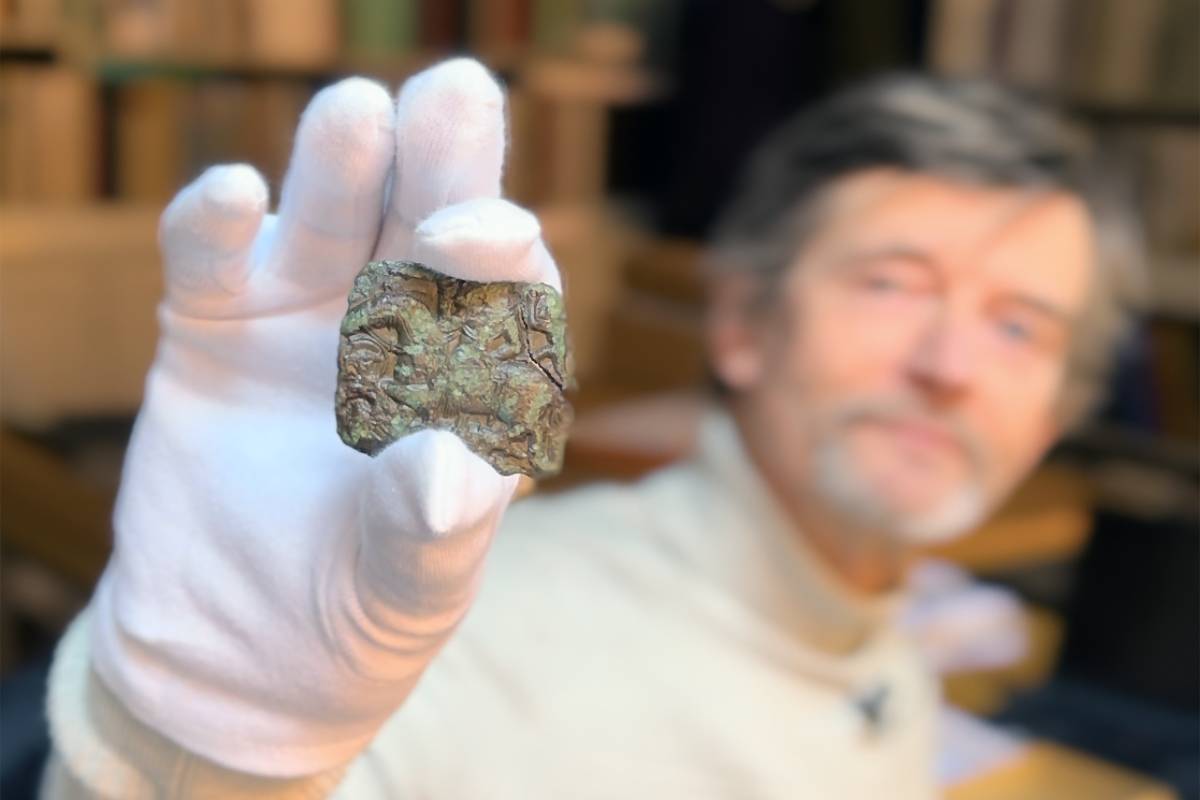
Made from walrus tusk, the figurine depicts a small, bearded character that Peter believes represents a king from Hnefatafl, a Viking Age table game.
"It is convincingly a gaming piece," Peter explains. "At its base there is a narrow drilled hole, which could indicate that the piece was a 'king-pin.'"
"This means it would have been mounted with a thin needle to be used on gaming boards with holes—this is a very practical arrangement when sailing in turbulent waters, for example! At the same time, it could also have had other functions, such as an amulet or talisman."
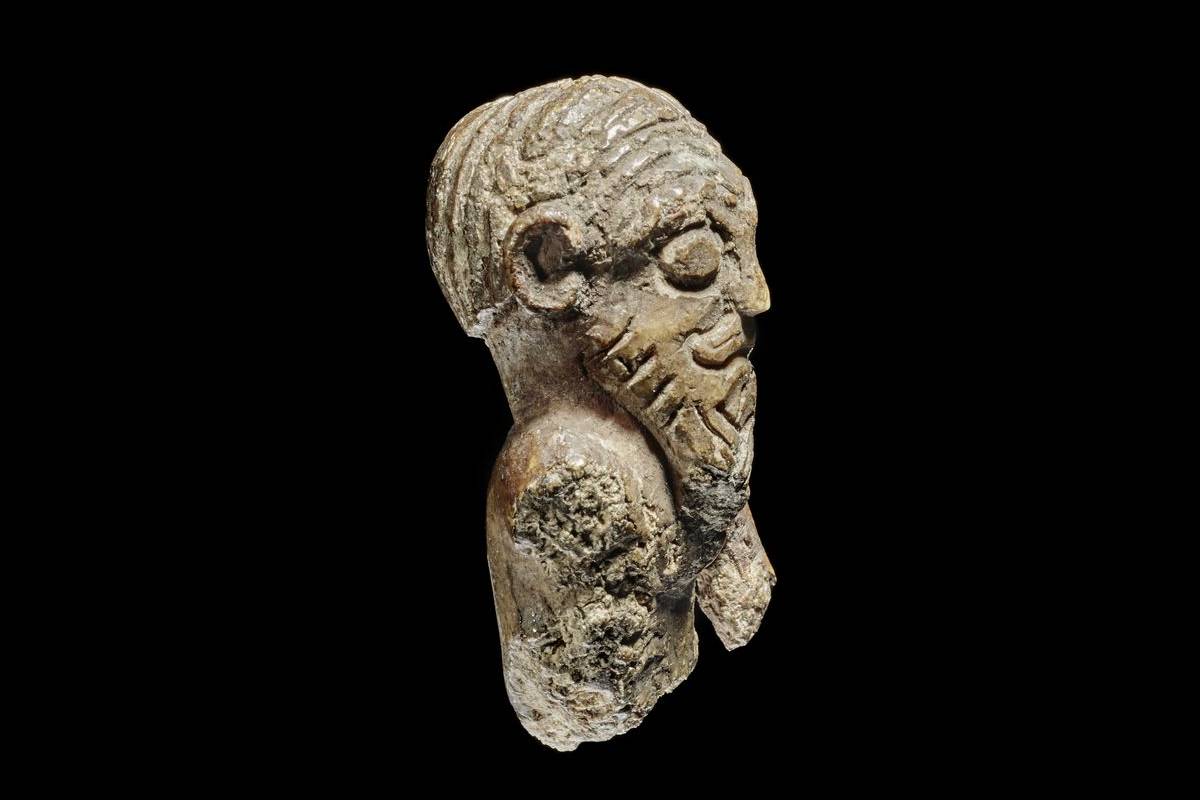
The figurine has been interpreted as the king piece in the Viking Age board game Hnefatafl. Photo: Roberto Fortuna / National Museum of Denmark
Tales of Ragnarök
"In their dwellings at peace they played at tables,
Of gold no lack did the gods then know,
Till thither came up giant-maids three,
Huge of might, out of Jötunheim."
(Völuspá, stanza 8, available online)
With the museum working on The Viking Sorceress, a new exhibition centered around the Norse seeress, the völva, Peter connected the gaming piece to Völuspá, an Old Norse poem that narrates the world's creation, history, and prophesied end and rebirth.
One section in particular appears to contain a reference to Hnefatafl. "This is why it is included in our present Viking exhibition," Peter explains.
"The prophecy—which we know from the poem—is about the creation and end of the world. The Vølve [völva] says that having created the world, the male gods relaxed by playing Hnefatafl."
"Playing board games like Hnefatafl is about following rules, so what the male gods did was actually creating rules. According to the Vølve's prophecy, the game of Hnefatafl is interrupted by three women."
The maidens come from Jötunheim, the land of the giants, one of the nine realms of Norse mythology. Their arrival signals the start of a cataclysmic battle.
"Ragnarök actually begins here, with women, who are closer to nature than men, initiating Ragnarök directly after the creation," Peter explains. A catastrophic battle follows, where the gods fight to the death against their enemies.
"In the end, nature conquers culture through the final defeat of the gods and Odin's warriors, surrendering to chaos," Peter adds.
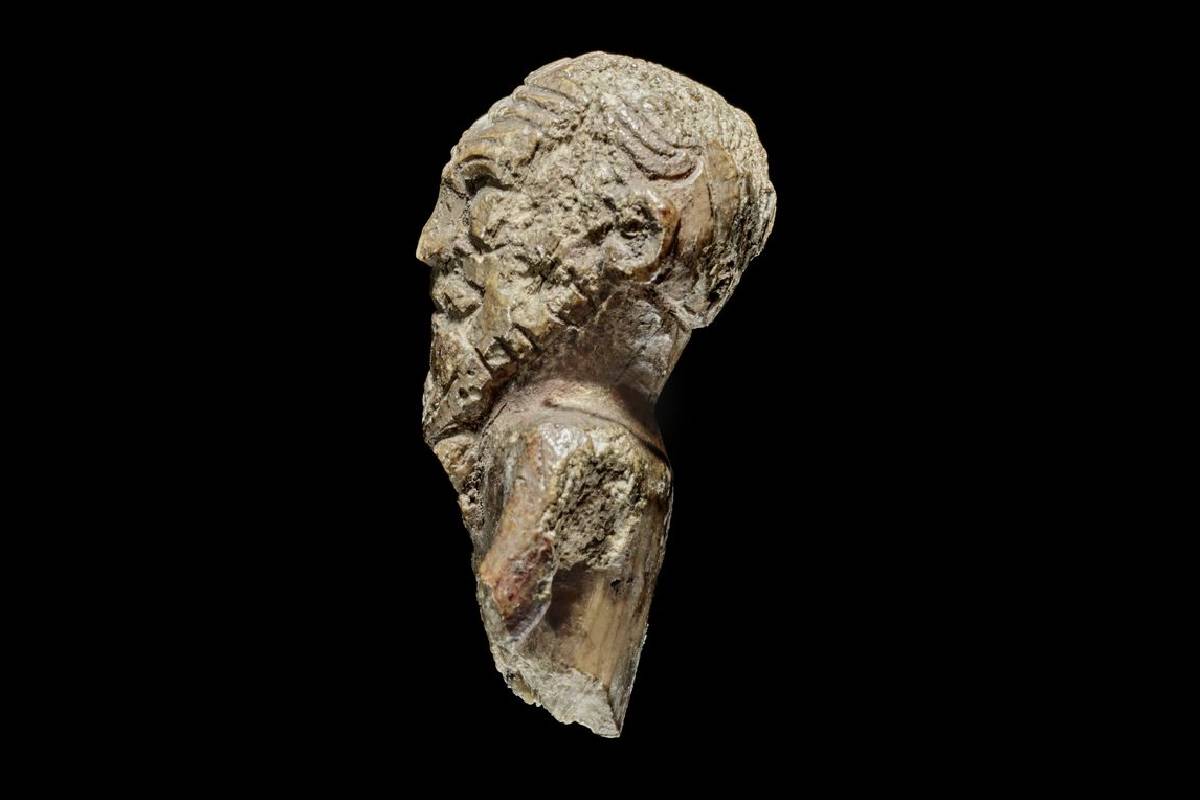
The Flygstad figurine is unusually detailed, with expressive features rare for Viking Age art. Photo: Roberto Fortuna / National Museum of Denmark
A Viking portrait?
Peter has also explored the striking appearance of the figurine in a recent academic paper, Understanding the Flygstad (Fløgstad) Figurine: Gaming Pieces, Kings, Gender and Fertility Rites, published in the journal Medieval Archaeology.
Here, Peter notes that the unusual braided beard has echoes in other figurines of the same era found in Iceland, Denmark, Sweden, and Ireland. As he notes in the paper, the symbolism of the beard appears to be closely linked to masculinity, kingship, and fertility.
Beyond symbolism, the figurine could also provide us with a rare glimpse of what everyday Viking Age people may have looked like.
"With perhaps the exception of Roman Britain, portraits in a modern sense did not exist in Northern Europe until the late Middle Ages," Peter points out to The Viking Herald.
"This figure, however, is a kind of forerunner. He is extremely detailed, and—above all—he is so very expressive. He displays a mischievous (or even malicious?) facial expression."
Some have suggested that the figurine could even bear some resemblance to a figure of history, such as Harald Bluetooth, though Peter admits this is more than a little speculative.
"To be honest, it is very unlikely, especially as no portraits as such are known from the Viking Age," he informs The Viking Herald.
"At the same time, the figure is a 'king-piece,' and it must have been produced in the second half of the 10th century, when Harald ruled over the land where the walrus piece was found. So his name does come to mind."
We get to provide readers with original coverage thanks to our loyal supporters. Do you enjoy our work? You can become a PATRON here or via our Patreon page. You'll get access to exclusive content and early access.
Feel free to reach out to discuss potential stories that may be in the public interest. You can reach us via email at hello@thevikingherald.com with the understanding that the information you provide might be used in our reporting and stories.