

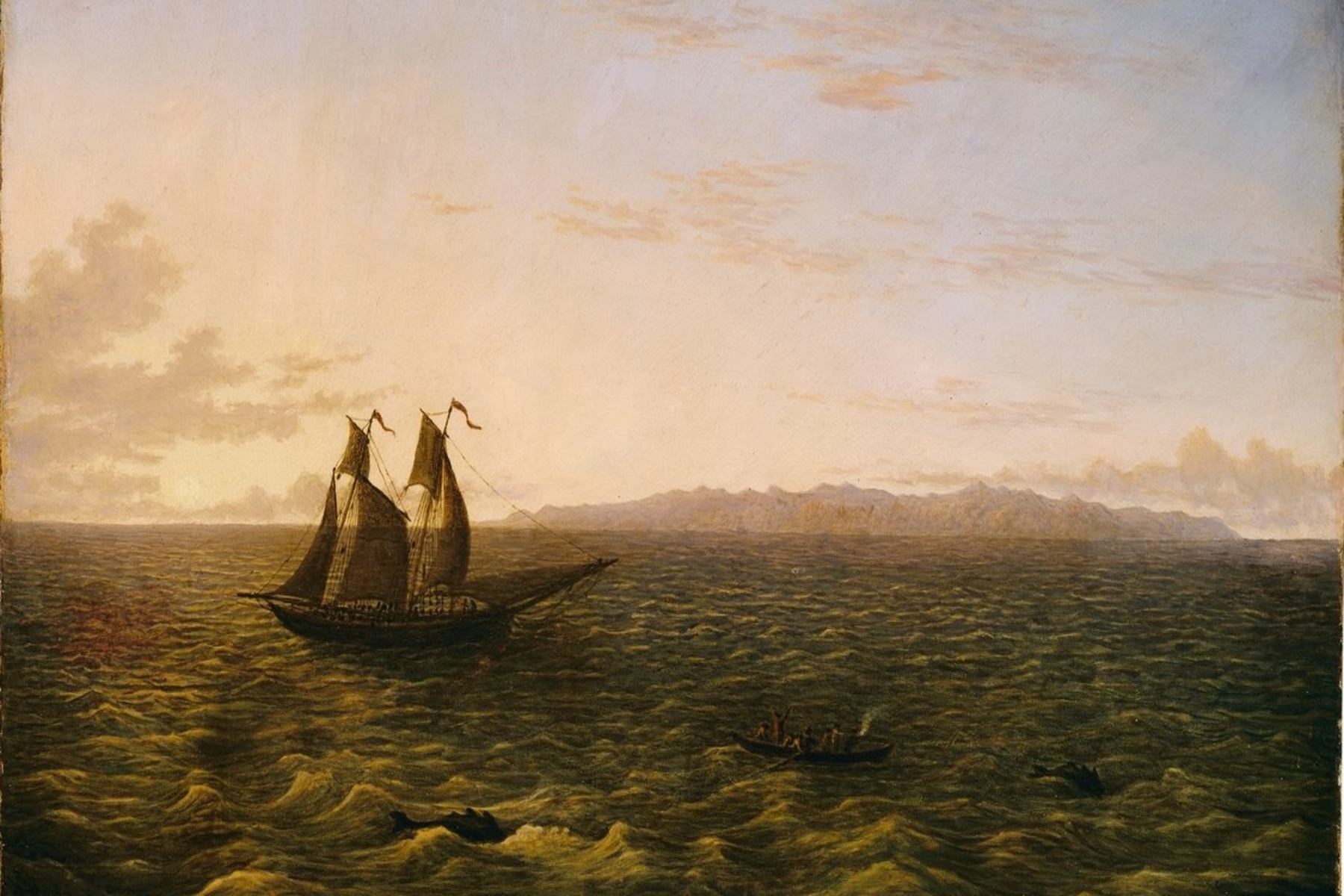
When the Dano-Norwegian missionary Hans Egede landed in Greenland in 1721, he was looking for the descendants of the old Norse settlers. He wanted to bring them into the Protestant church. Yet there were no Norse to be found, only Inuit.
Egede listened to what people told him and wrote it down. According to the stories of the Inuit, three ships had once attacked the Norse settlers, burned their farms, killed a good many of them and carried off the rest. Some have taken those tales as a sign that raids by foreign seamen played a part in the collapse of Norse Greenland in the 15th century.
At school most of us were taught a quieter version. The Norse simply faded away. It got colder, the farms failed, relations with the Inuit soured, and in the end the ships stopped coming.
But these old stories of the three ships keep nagging. In the 1990s, the Norwegian researcher Kåre Prytz suggested that some of the Greenlanders had been taken as slaves by Portuguese ships and sold on Madeira. The press gave him a rough ride.
Knut Langballe, however, thought the idea had been dismissed too quickly. For some 20 years he followed it up on his own. He went through libraries in Funchal, wrote to professors, tracked down old pictures of boats, read genetic reports and talked to people on the northwest coast of Madeira. In this time, he has begun to believe that Prytz's theory could be a plausible one.
At the same time, Knut (the father of the author of this piece) is the first to say that none of what follows proves anything. Still, he thinks it raises questions nobody has answered properly. We sat down with him and went through his notes.
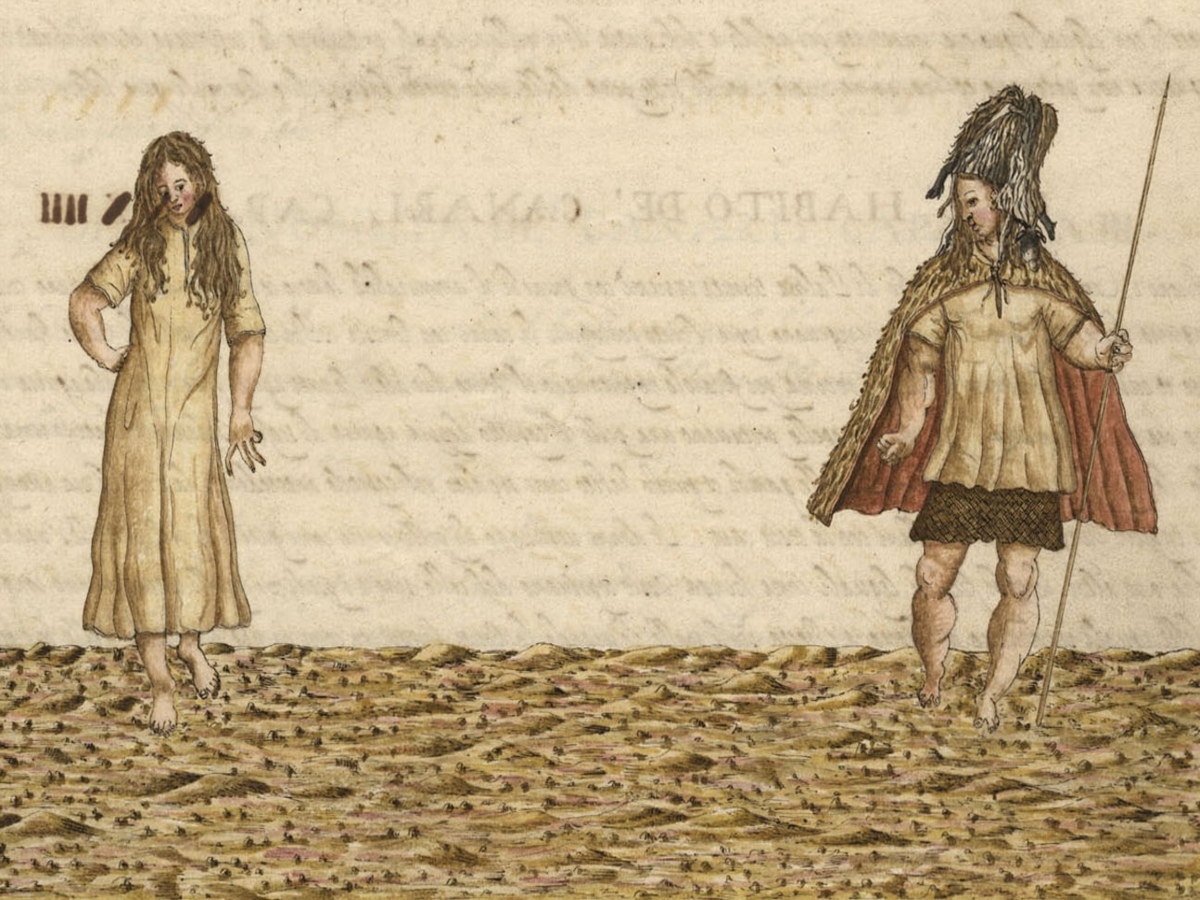
A sketch of the Guanche people of the Canary Islands by Leonardo Torriani, 1592. Source: Public domain
A glimpse of the truth?
Brynjulf Haugan: What made you take Prytz's idea seriously?
Knut Langballe: Prytz proposed that part of the Norse population in Greenland was taken as slaves by the Portuguese and probably sold on Madeira. Critics rejected it outright. They said the slaves couldn't have been sold on Madeira, because the people there are very dark, while the people of Tenerife are much lighter. If the theory were right, they argued, the slaves would more likely have ended up on Tenerife.
But the people of Tenerife in the Canary Islands were lighter because the island had a large native Guanche [Guanches are the indigenous inhabitants of Tenerife, Ed.] population when the Spaniards conquered it. The Guanches were said to be fair, with blue eyes.
The Canaries were also discovered about a hundred years before Madeira. In the mid-15th century, Madeira was still being built up and needed workers far more badly. I found it unlikely that the Portuguese would sell slaves into Spanish territory under those circumstances.
BH: You went to Madeira yourself. Did you find anything in the libraries?
KL: My wife and I were in Madeira in 1995 and visited the library in Funchal where the librarian at my request found four old history books in English about the island. In the oldest book, printed in the 1850s, sure enough, the population was described as "very swarthy with distinct traces of Arab and Negro slaves".
But it was claimed that in the northwest the population was completely different. Here, a significant part of the population was "fair haired and bright-eyed". This was intriguing, as the northwest is coldest and wettest, and would therefore be best suited for slaves from Greenland.
Upon returning to Norway I contacted Kåre Nilsson, head of the Portuguese Philological Department at the University of Oslo, suggesting that it might be interesting to investigate whether words derived from Norse can be found on Madeira, especially in the northwestern part. There was unfortunately no belief that this could be the case.
In 1997, we again were in Madeira and found an even older history book: "History of Madeira with a series of Twenty-seven colored Engravings illustrative of the Customs, Manners and Occupations of the Inhabitants of that Island." The book was published in London in 1821.
On page 79, this book also points to the fact that the people on the west side of Madeira were different and "much better", with bright eyes, etc. The descriptions in the two books may be based on even older observations. In any case, in the last two centuries the differences in population have probably largely been wiped out.
Consulting the experts
BH: Did the experts in Madeira support the idea of Norse slaves?
Knut Langballe: I visited Professor Alberto Vieira at Centro Estudos História Atlântico in Funchal. He is an expert of the slave trade in Madeira. He informed me that there were records of all slave ship calls to Madeira and that all show that only Arab slaves and African slaves were brought there.
There was one exception, however: three ships that carried Guanche slaves. He had no belief that there were slaves from Greenland on Madeira.
BH: Did you learn anything from the information you got from Professor Vieira?
KL: I found the information about three ships with Guanche slaves very interesting, as this fits well with the Inuit legends described by Kåre Prytz of three ships that came to catch the Norse in Greenland. The pope had, according to Prytz, declared the Greenlanders no longer Christians as no bishop had arrived there for many, many years.
Even so, it would still be natural for the slave traders to get more credibility by declaring the slaves as Guanches, who were heathens, because it was strictly forbidden to take Christians as slaves.
BH: You also followed the genetic research. What did it find?
KL: Professor Vieira told me a genetic survey of the Madeiran population was planned, to find out the background and makeup of the people. About a year later the Human Genetics Laboratory at the Centre of Macaronesian Studies, University of Madeira, carried it out. As I'd expected, they found no trace of the Guanches.
The abstract says, and I'm quoting: "Nevertheless, the recorded introduction of Canary native Guanches, who are characterized by the presence of particular sub-clade U6b1, has left no detectable imprints in the present day population of Madeira."
The results and discussion say: "Although the presence of Guanches in Madeira is well documented, we could not find the particular 'Canary' haplotype in our Madeiran sample."
Perhaps even more strikingly, the report also mentions "a remarkable inflow of north-European people" to Madeira and also the Azores
I wrote to the lab to ask for an explanation for the lack of Guanche DNA in the research. They replied that the three shiploads of Guanche people must have "traveled back to where they came from."
You can accept that if you like. I find it highly unlikely. Why is there no record of them leaving? And how is it possible to explain the continued presence of fair-haired, bright-eyed people in the north-west?
I think there is a more probable explanation: The registration of three ships with Guanche slaves was a cover to keep it from being known that the captives were Christians from Greenland.
After all, large parts of the northwest portion of the island belonged to Portuguese noblemen and even to the royal family, and they'd have had every reason to keep a serious breach of the law quiet.
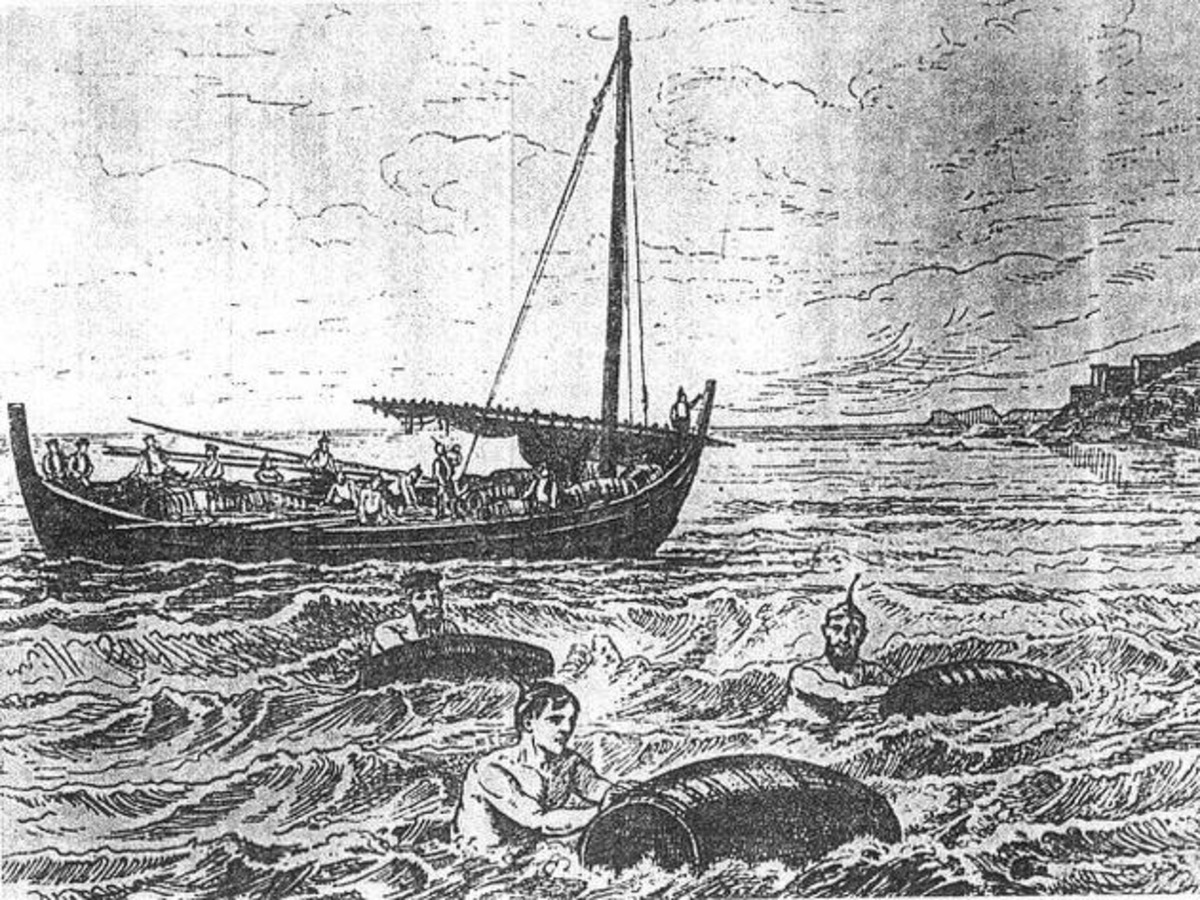
The depiction of what appears to be a clinker-built boat.
A striking image
Brynjulf Haugan: Did you do any investigations in other parts of the island?
Knut Langballe: I traveled to Porto Moniz on Northwest Madeira where I found a newer book with some old pictures from previous books in a library. One picture was of a boat anchored on the north side of Madeira and unloading wine barrels by swimming and pushing them to shore – there were no port facilities on the volcanic portion of the island. And the ship completely resembled a Viking ship.
The bow and aft were high-stemmed and the hull was clinker-built [distinctive shipbuilding techniques used by the Norse, Ed.], but it also had the mast further forward. This can easily be explained: King Henry the Navigator's brother, Pedro, spent some time in Venice and observed that the Arab ships with a lateen rig could sail more upwind. Henry then ordered that all new boats should be built with a lateen rig, that is, with the mast further forward.
In this regard, it is interesting to note that three shiploads of slaves to the sparsely populated northwestern part of the island would have represented a significant proportion of the population. The whole of Madeira at the end of the 16th century had a population of approximately 5,000, maybe about 170 years after the arrival of the slaves.
Three shiploads of slaves must therefore have had a significant impact on the cultural development in the northwestern part of Madeira and it is likely the slaves would build boats their way.
Upon returning to Norway, I contacted Professor A. E. Christensen at the Viking Ship Museum in Bygdøy, Oslo and told him about what I had found. He had no faith in the Greenlandic slave theory, but when I later sent him a fax of the boat picture he became very interested in where I had got it from.
He informed me that there had only been one or two examples of high-stemmed or clinker-built boats found in Mediterranean cultures.
I also contacted Professor Knut Weibust in Stockholm. In his booklet on boats and boat-building on Madeira, he writes that the older boats from the island had higher stems than today's, and that high stems are still more common in the northwest than in the south. A travel account from 1748 even mentions carved stem ornaments – another Norse trait.
Word of mouth
Brynjulf Haugan: On a later trip you came across local oral traditions.
Knut Langballe: I went back to Madeira in January 2015. The old library in Funchal had closed and the books had been moved to a new central library. The young staff couldn't find a thing unless I gave them the exact title. Progress, I suppose.
On the northwest coast, a masseur in Porto Moniz called Nélio Rodrigues told me that many people in the western village of Ponta do Pargo still have blue eyes. He put me in touch with Rui Nelson, who has studied the local "Guanche" tradition. In fact, the fair-skinned slaves are still remembered as Guanches there.
Rui told me that high up in the jungle above Seixal there are ruins of a few houses, very hard to get to, said to have been built by escaped Guanche slaves. It would be worth checking whether they have anything in common with Greenlandic building practice.
BH: You keep stressing that none of this is proof.
KL: No, absolutely not. I'm not claiming my private digging proves anything. It's a set of pointers that I think professional researchers should look at.
If early boat-building on the northwest coast was strongly influenced by Greenlanders, a few technical terms might still survive in the local speech. After my first trip I wrote to Kåre Nilsson, head of the Portuguese Philological Department at the University of Oslo, and suggested looking for words of Norse origin on Madeira, especially in the north-west. Unfortunately he didn't think there was anything to find.
Early clothing might be worth comparing too, especially the thick woollen caps with the upright tassel, and if they match Greenlandic dress. You see these caps both in the boat picture and in the pictures in the 1821 book.
BH: I should say I'm not entirely neutral here. Your work inspired me to write a book of my own, The Salt of Ancient Tears. What would you say to readers who want to follow this trail further?
KL: I was glad to hear you took it up. If it makes other people curious enough to start looking for themselves, in libraries, in archives, on Madeira, then it has been worth the effort. Just keep to the rule I've tried to follow: say what you've found, and don't claim more than that.
I leave it to the readers to draw their own conclusions. But I think the indications I've found ought to interest the research community, and I hope my efforts will one day show that Kåre Prytz was right. I have convinced myself that he was right.
We get to provide readers with original coverage thanks to our loyal supporters. Do you enjoy our work? You can become a PATRON here or via our Patreon page. You'll get access to exclusive content and early access.
Feel free to reach out to discuss potential stories that may be in the public interest. You can reach us via email at hello@thevikingherald.com with the understanding that the information you provide might be used in our reporting and stories.