

The year 1021 has an unusual kind of certainty to it. We know that in one summer of that year, three particular trees in what is today northern Newfoundland were felled with iron blades, and the stumps left to rot. We know this because of something that happened 28 years earlier, a great distance above the sea.
In 993, a burst of solar particles struck the upper atmosphere and raised the level of radioactive carbon-14 around the entire globe for a single growing season. Every tree alive that year took in the excess carbon and fixed it into one dark ring, where, in some cases, it has stayed ever since.
That ring is now a fixed point in the worldwide record of dendrochronology, the equivalent, as one of the researchers involved has put it, of a chalk line drawn across every trunk on the planet.
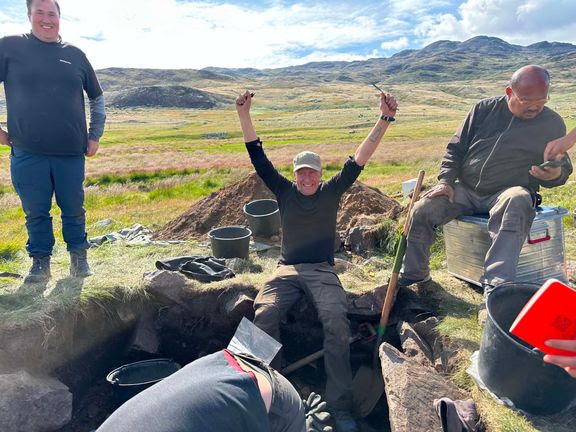
In 2021, a team led by Margot Kuitems of the University of Groningen applied this marker to three wooden fragments recovered from L'Anse aux Meadows, each of them still carrying its outer bark. By counting the rings outward from the 993 spike to the bark edge, they were able to fix the year of felling at 1021, exactly.
Three different trees, three different species, all cut in the same summer, a thousand years to the season before the study was published. The trees had been cut by someone using metal which rules out an indigenous origin. They had been cut fresh, as structural timber, not as driftwood or salvage. Someone was there, with axes and a purpose, doing serious work.
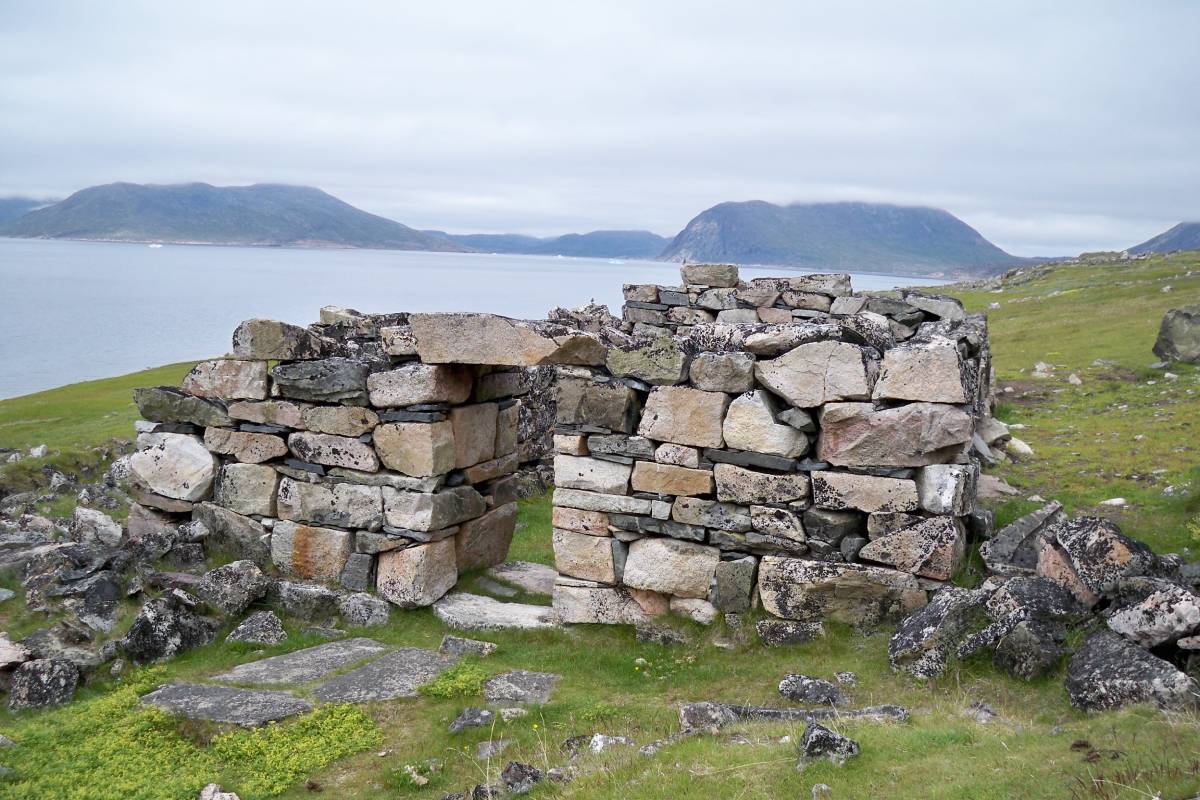
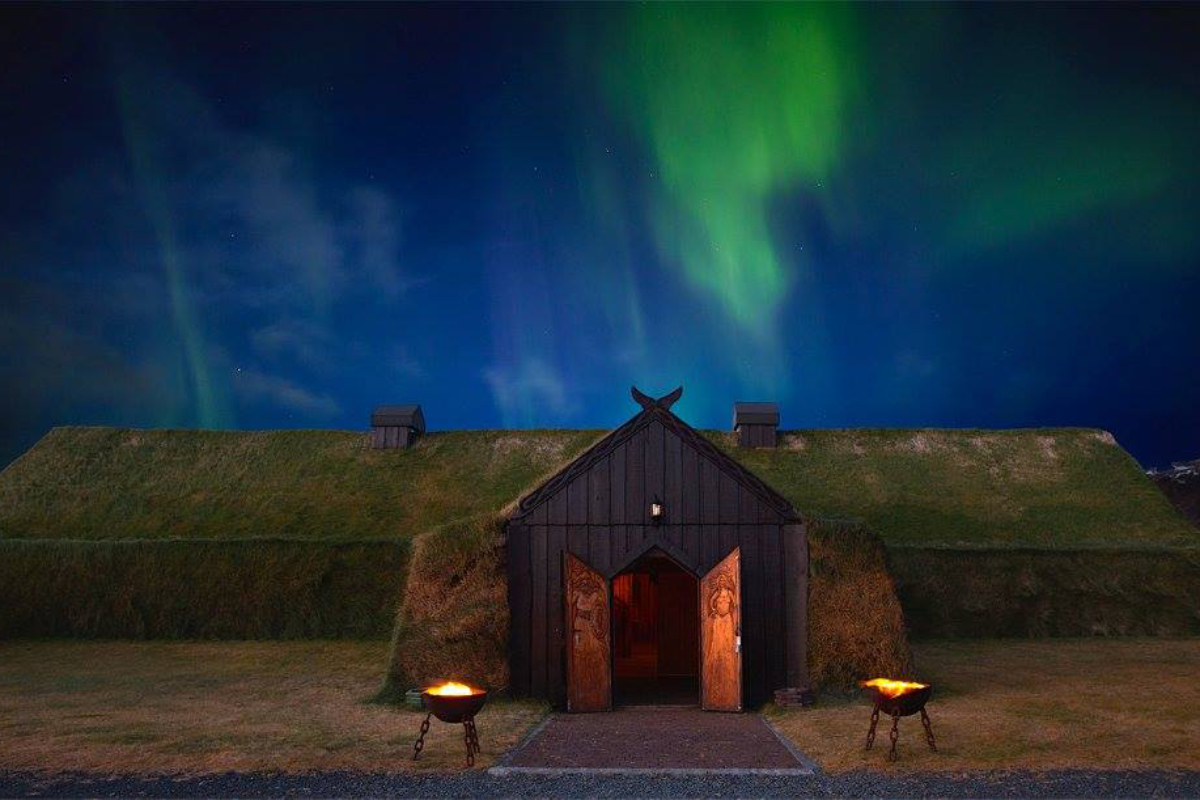
Hvalsey Church, Greenland. Source: Public domain
What the wood in Greenland was made of
The same someone, as it turns out, kept coming back for a very long time.
Over the past decade, the wood anatomist Lísabet Guðmundsdóttir, at the University of Iceland, has examined something like 8,500 samples of worked wood excavated from five Norse sites in Greenland, covering the period from Erik the Red's arrival around 985 to the disappearance of the Eastern Settlement in the middle of the fifteenth century.
Most of the samples were exactly what one might expect: imported Norwegian oak and pine for the grander buildings, Siberian larch and spruce that had drifted in on the East Greenland Current, and a miscellany of local birch, willow and juniper for the daily business of living.
Scattered among these, however, were fragments of eastern hemlock (Tsuga canadensis) and Jack pine (Pinus banksiana). Neither species grows anywhere in Europe. Ocean currents, moreover, do not carry driftwood from Labrador or Newfoundland across to Greenland; they run the other way. If Jack pine was ending up in Greenlandic farmhouses, someone would have needed to cross the Davis Strait and carry it there.
What is especially striking about Guðmundsdóttir's results is the distribution in time. The American species appear in both the earliest and the latest layers. This is not a dim cultural memory of one famous voyage in the time of Leif Eriksson. It is a sustained practice that appears to have continued for as long as the Norse were in Greenland at all.
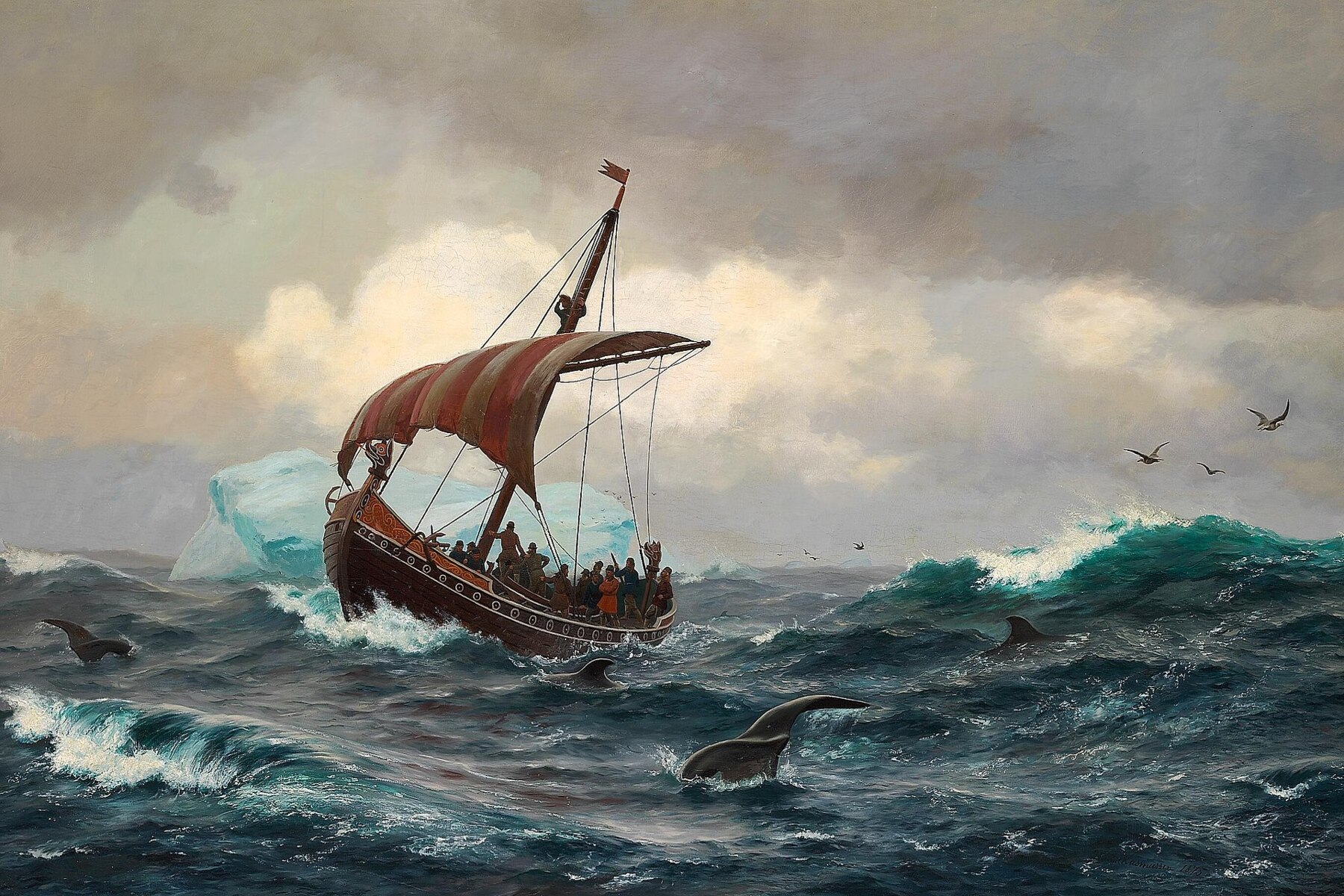
The medieval Icelandic annals supply the outer bracket. Under the year 1347, the annalists note, without excitement, the arrival in Iceland of a small vessel from Markland that had been blown off its course, carrying a crew of seventeen or eighteen men and a cargo of timber. The tone of the entry is remarkable only for how unremarkable it is.
The monks clearly consider the voyage itself to be nothing of note and mention it only because of the bad weather. Three hundred and twenty-six years after the felling season dated at L'Anse aux Meadows, Greenlanders were still sailing to the Labrador coast for wood, and the scribes in Iceland found this ordinary.
Why bother with such a long voyage
Greenland, for all the poetic implications of its name, has no usable timber. The local birch and rowan give firewood and the occasional bent handle, not keels, roof-beams or long planks. For anything that had to carry load or float, the Norse settlers had to look elsewhere.
The thirteenth-century Norwegian treatise Konungs skuggsjá, "The King's Mirror," puts the matter with typical frankness. Everything needed to build up the country in Greenland, its anonymous author says, must be brought in from abroad: iron, and every stick of timber used in the houses. Part of the demand was met by driftwood. Another part was met by imports from Norway. The remainder, as the wood evidence now confirms, was met by direct harvesting across the strait, from the forests of Markland.
The Jack pine and hemlock pieces, tellingly, come from high-status contexts. This was not scrap wood. It was investment-grade timber, reserved for the buildings of the Greenlandic elite, and someone had paid, in effort and risk, to bring it across.
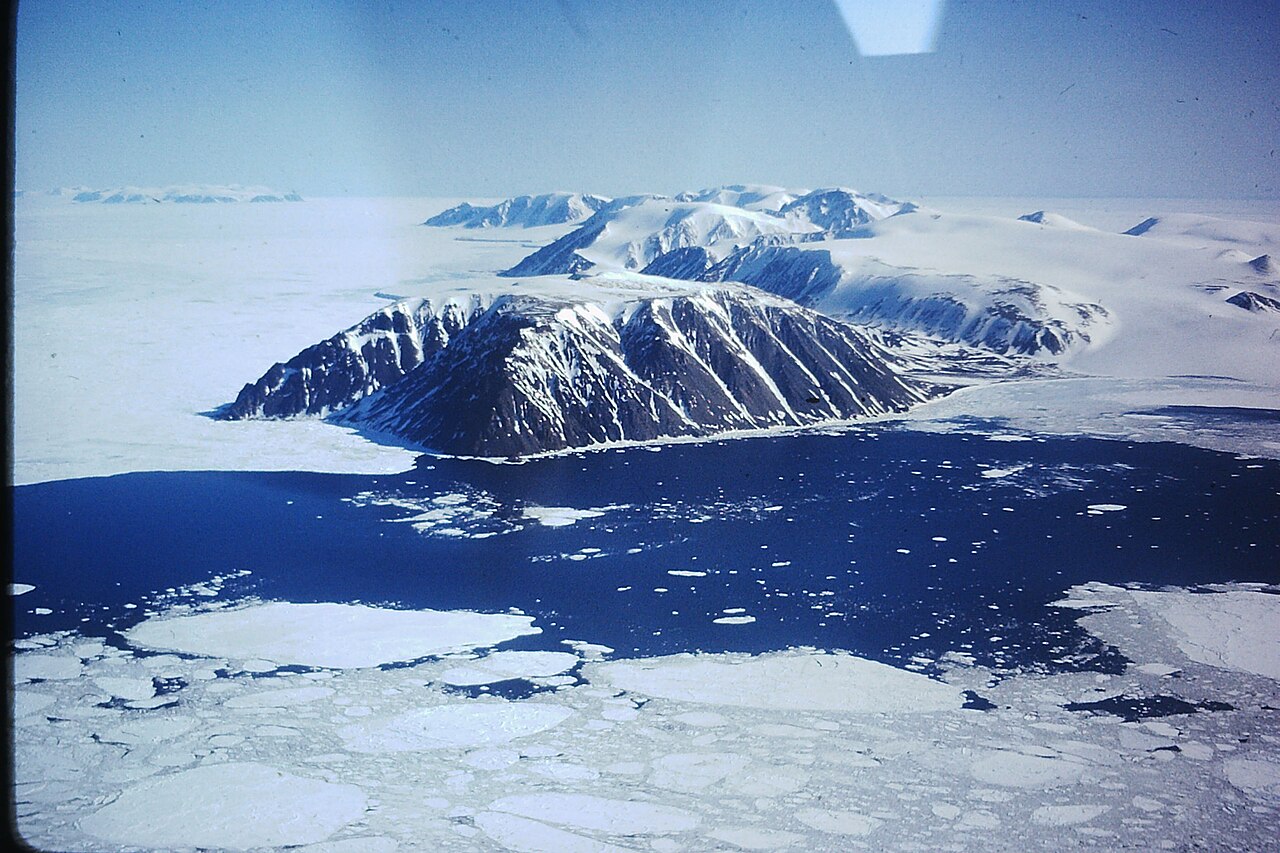
North Water Polynya in June 1975, Coburg Island and Ellesmere Island in the background. Source: Lorenz.King@geogr.uni-giessen.de (CC BY-SA 4.0)
Tusks in the High Arctic
Timber, as it happens, may not even have been the main prize. A study published in Science Advances in 2024 reconstructed the genomes of walruses whose tusks had ended up in medieval European workshops, and matched them against the DNA of living walrus populations around the North Atlantic. The result was startling.
The study suggests that by the later centuries of the Greenland settlement, Norse hunters were taking walrus not only from the bays near their own farms but from the North Water Polynya, the stretch of open water between northern Greenland and Ellesmere Island in what is now the Canadian High Arctic. This is more than a thousand kilometers north of the Eastern Settlement, in waters already being hunted by the Thule, the ancestors of today's Inuit.
The implication is hard to avoid. Two seafaring peoples, arriving on the same hunting grounds from opposite directions, would have had to develop some kind of working relationship. Avoidance, trading, a seasonal understanding of some sort, something. It need not have been friendly. And it cannot have been absent.
A document from 1327 gives some sense of why the Norse were willing to sail that far in the first place. In that year, a single shipment of tusks taken from 260 walruses, paid as tribute, from Greenland to the papal collectors by way of Bergen, was valued more highly than the combined six-year effort of Iceland's woolen export, the contribution of nearly 4,000 farms.
A growing body of archaeological opinion now treats the Greenland Norse less as farmers who hunted in the off-season than as ivory hunters who kept farms in order to eat. Their economy pointed west and north, toward the tusks.
With this in mind, the string of out of place finds along the North American coast begins to hang together. At L'Anse aux Meadows itself, excavators have long puzzled over the presence of butternuts, whose natural range does not extend north of New Brunswick. The Newfoundland base was plainly a staging post rather than an end point, and its occupants were ranging south into the Gulf of Saint Lawrence.
On the Baffin coast, hundreds of kilometers to the north, Patricia Sutherland's team identified whetstones with traces of bronze and brass embedded in them, alloys that the Dorset and Thule peoples did not smelt. Alongside the whetstones are possible turf-built structures and spun yarn of a kind the Norse are known to have produced. The interpretation of these sites is still argued over, and honest archaeologists continue to disagree about the details. What is no longer seriously disputed is that something Norse reached that coast.
What it was, and what it was not
It is worth being careful about what this long contact actually amounted to.
It was not colonization in any serious sense. The settlement attempt at L'Anse aux Meadows seems to have lasted ten or fifteen years, perhaps a single generation, and nothing has yet been found to suggest that the Norse ever established permanent communities on the American side of the Davis Strait.
What they established instead was something closer to an extraction network, a standing seasonal operation to collect the specific commodities that Greenland could not produce and that Europe would pay for. Timber. Ivory. Furs, probably, though the evidence for those is less good. The base was always Greenland. America was the resource.
That distinction is probably why the operation lasted as long as it did, and also why it has left such a thin archaeological footprint. A logging camp used for a few weeks each summer does not build up the deep middens of a farmstead. A hunting party on the Baffin coast leaves a whetstone and a broken rivet, not a cemetery. The voyages were businesses, and like most successful businesses they were not theatrical.
They ended, eventually, together with the Greenland settlements themselves, sometime in the middle decades of the fifteenth century. The reasons continue to be argued. A cooling climate, almost certainly, as the Little Ice Age tightened its grip. The collapse of the walrus-ivory market as African elephant ivory returned to the European trade after the Black Death. The breakdown of shipping links to Bergen. Possible conflict with an expanding Thule population pushing south. Possibly raiders from further afield.
What is striking is how late the last of it went on. The Icelandic annalists were still noting Markland voyages in 1347, and giving no particular sign of surprise. Columbus's first voyage lay another 145 years in the future.
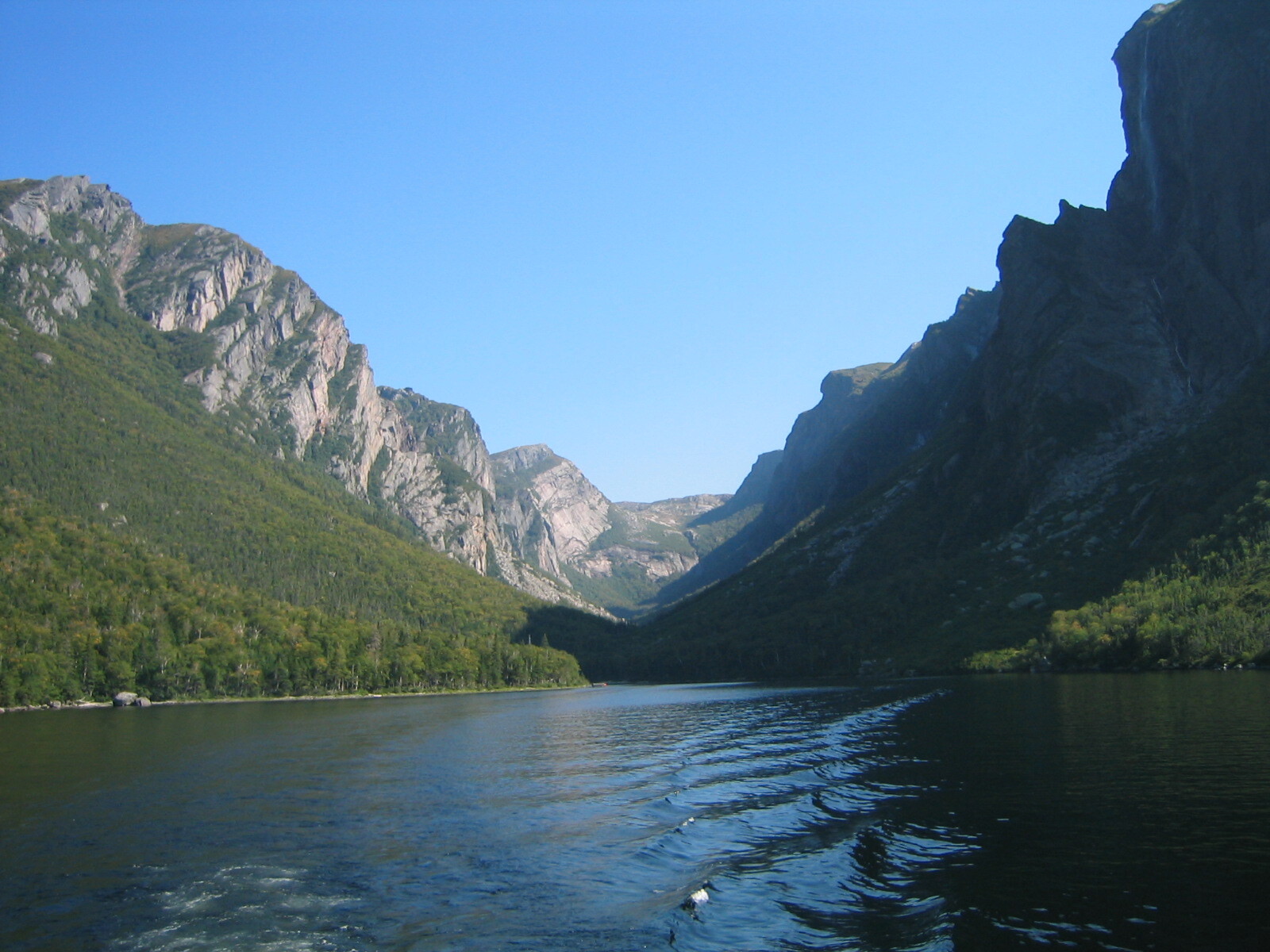
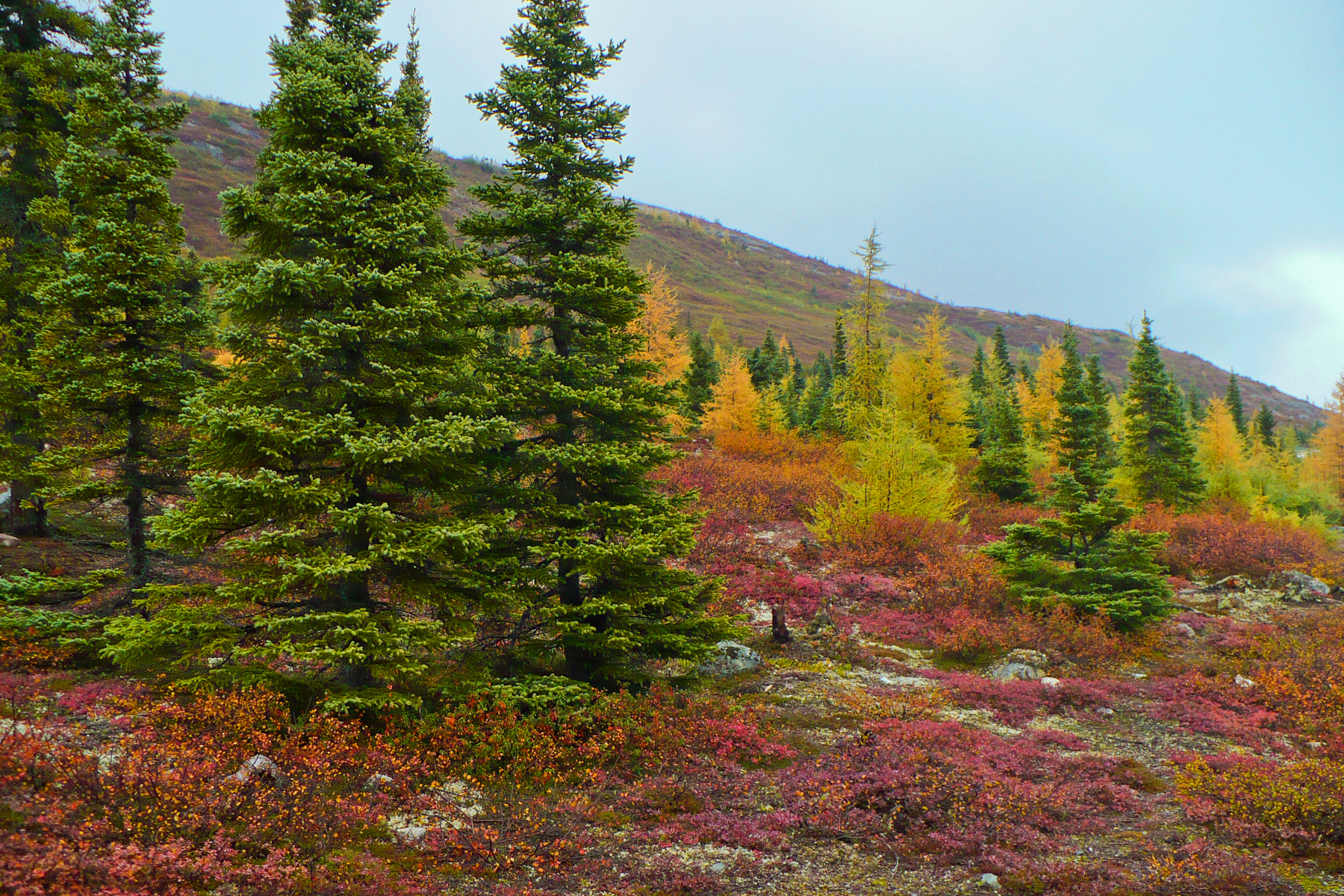
Long Range Mountains, Newfoundland. Source: Jcmurphy (public domain)
Reading the sagas forward
For most of the last century, the Vinland sagas, Grænlendinga saga and Eiríks saga rauða, have been treated by professional historians with a certain guarded skepticism. Useful as literature, but suspect as fact. The sagas described three lands beyond Greenland, Helluland, the flat-stone country, Markland, the forest country, and Vinland, the country of wine or meadows, and they described timber runs, ivory hunts, and repeated encounters with people the Norse called Skrælingar. The question was always how much of this was memory and how much of it was made up.
The tree rings, the type of wood, the walrus genomes, the whetstones on Baffin: none of these prove every detail of every saga episode. What they do is confirm that the broad picture set down by the saga writers, of westfaring voyages for wood and ivory, continuing over generations, with intermittent contact with native peoples, appears to be substantially what is likely to have happened.
The saga writers had it essentially right. They only understated how long it lasted. Three hundred and twenty-six years is a long time for a working relationship to last between a small Norse community on the edge of the known world and a continent whose existence the rest of Europe had not yet acknowledged.
It is worth letting that number settle for a moment, especially for anyone still carrying the old image of the Viking as a raider in a horned helmet. The people who made these voyages were something different. Sailors, traders, loggers and hunters, keeping a working operation alive across 2,000 kilometers of cold water, for 300 years.
We get to provide readers with original coverage thanks to our loyal supporters. Do you enjoy our work? You can become a PATRON here or via our Patreon page. You'll get access to exclusive content and early access.
Feel free to reach out to discuss potential stories that may be in the public interest. You can reach us via email at hello@thevikingherald.com with the understanding that the information you provide might be used in our reporting and stories.