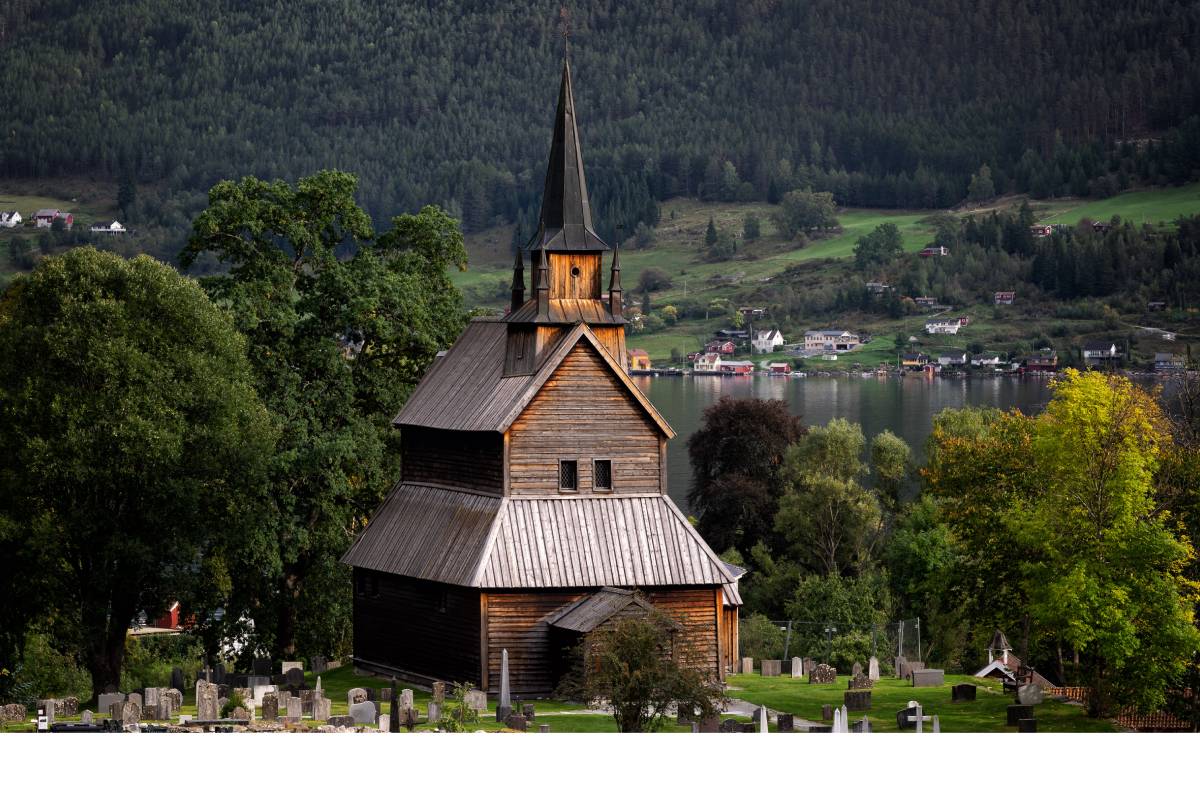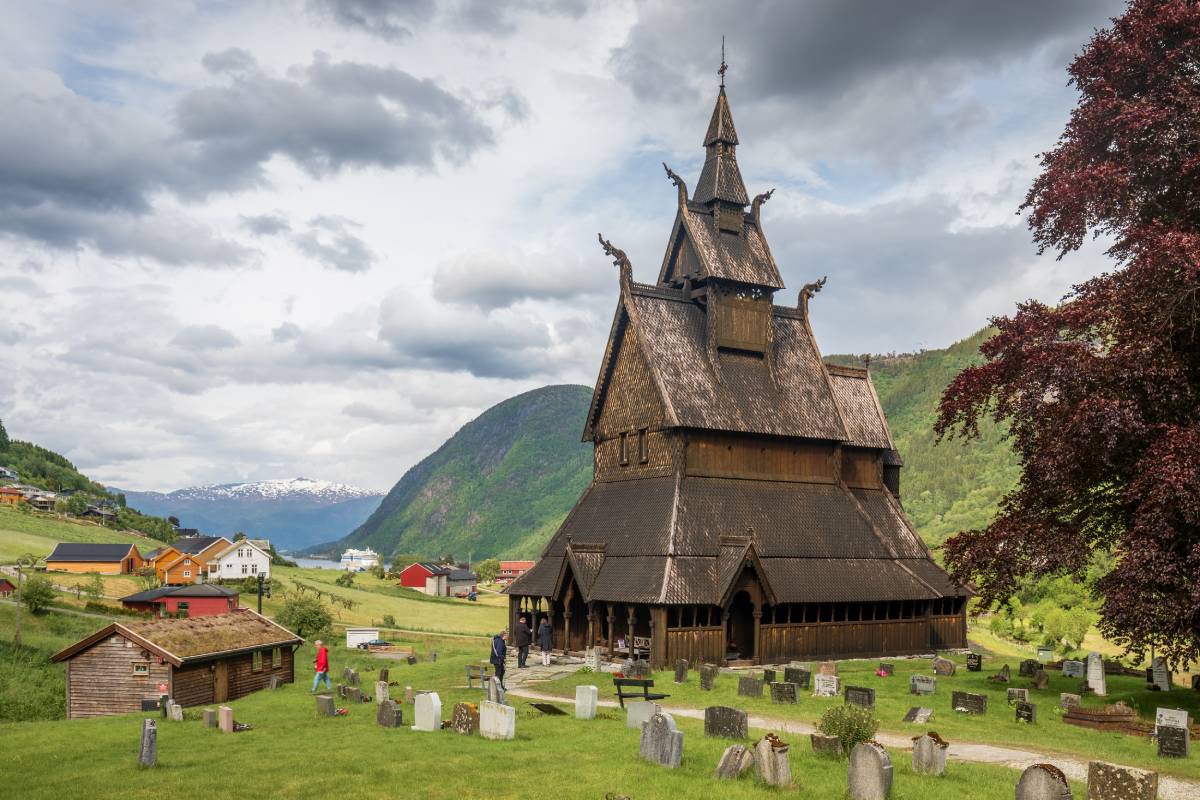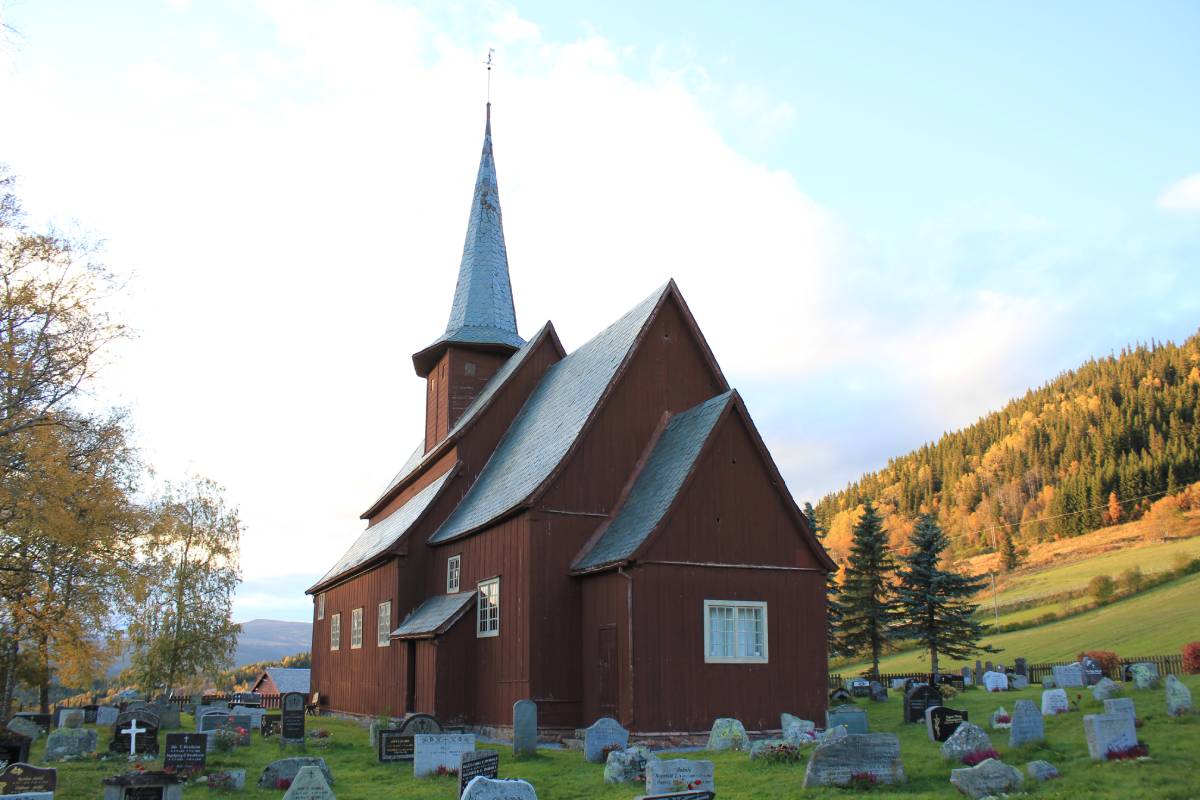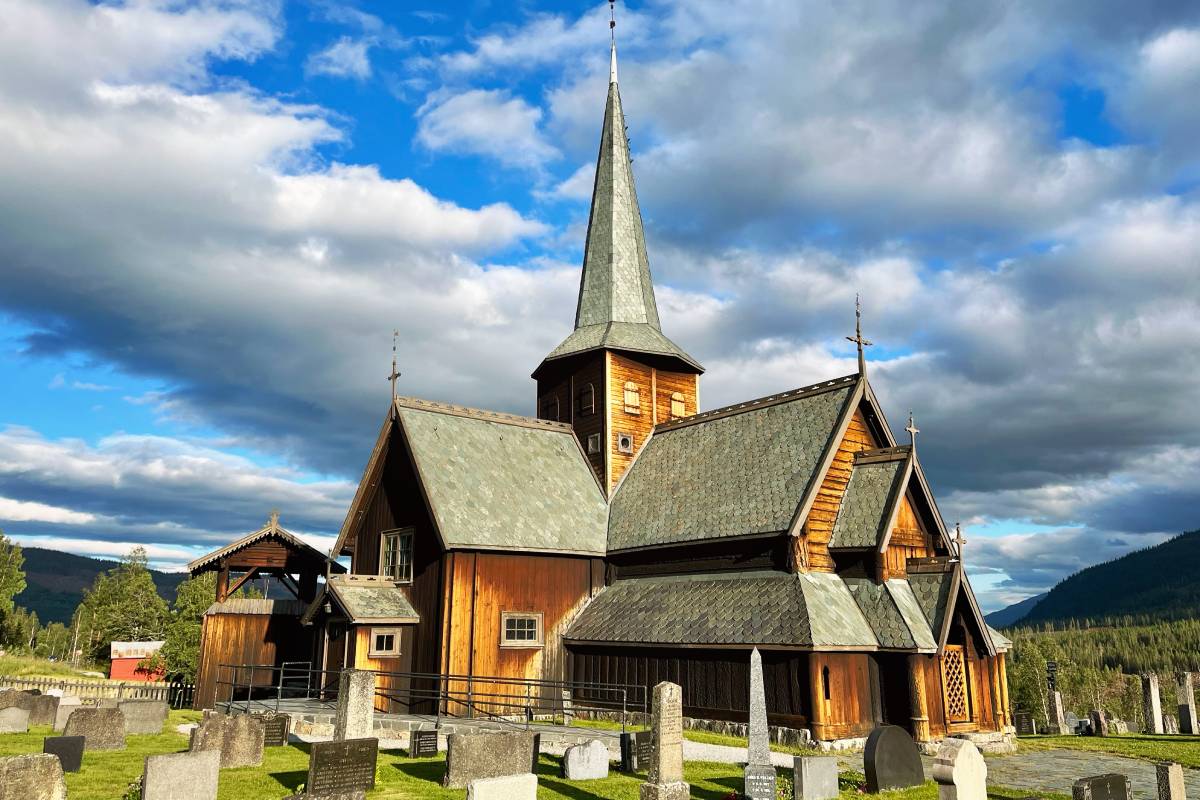


The early medieval period was the first, but not the last, time that peoples from Scandinavia sailed westward across the Atlantic Ocean.
There is no doubt that people from Viking societies dominated the history of early medieval Europe. Their exploits in trading, raiding, colonization, and everything in between impacted the history, politics, culture, and even religion of a huge swath of Europe.
The Nordic nations owe their direct existence in large part to the early medieval military adventures and political machinations of these Viking societies.
Centuries after the last Viking ship sailed, in the latter half of the 19th century, ships carrying Scandinavian souls again headed westward from the Scandinavian Peninsula and surrounds.
These emigrants – mostly poor rural Norwegians but not exclusively – headed to the United States and Canada to forge a new life, escape poverty, and do their best to chase that ethereal North American dream.
Jon Gjerde wrote in his 2001 article in the journal Immigrants & Minorities how huge swaths of what is called the Midwest in America and the Prairie Provinces in Canada – the large central regions of each country where the land is arable, fertile, and economically plentiful – were dominated by Scandinavian immigration.
Nowadays, any small town or village from Manitoba to Minnesota, or from Cincinnati to Chicago, bears the physical, cultural, and societal hallmarks of these 19th-century "Viking" immigrants.
Sadly, however, this meant that huge swaths of rural areas in Scandinavia, especially in central and northern Norway, have never recovered from this loss of population.
Areas that were once thriving communities are now ghost towns.
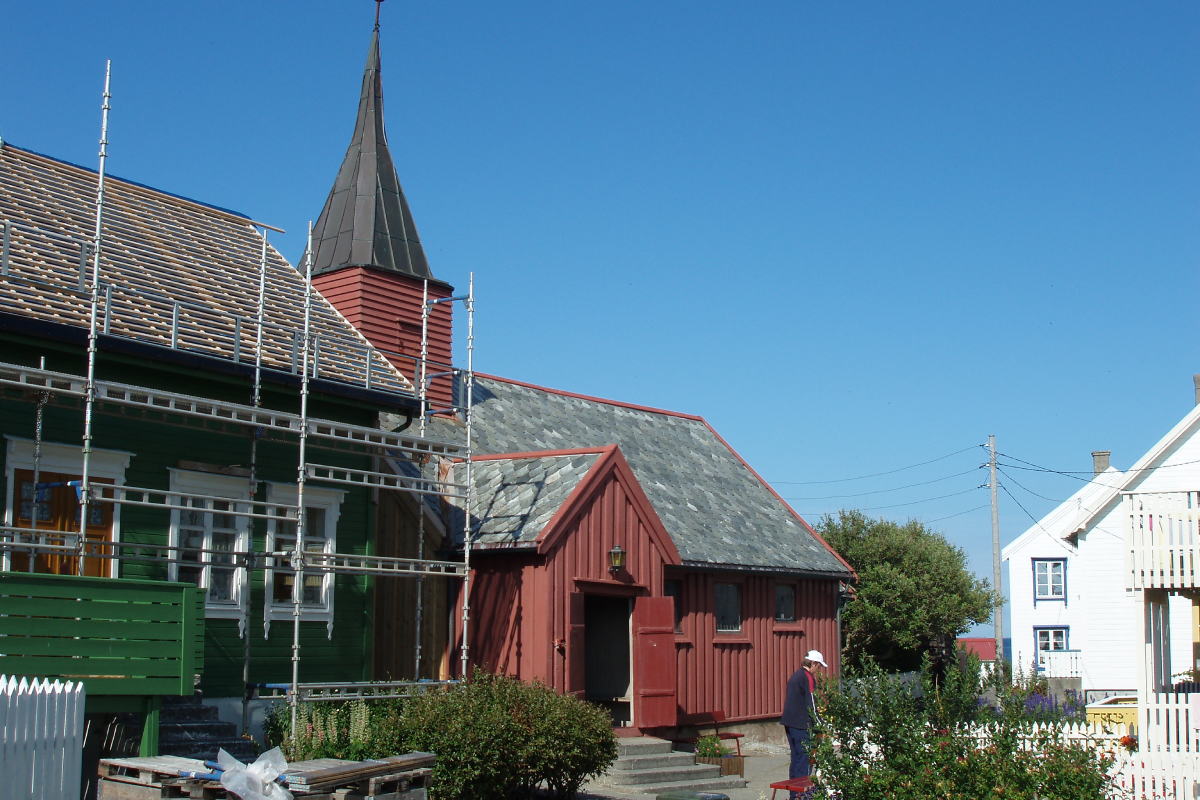
Nowhere is this more evident than on a tiny island just miles from the city of Kristiansund, where all that remains of a once proud community is a stave church.
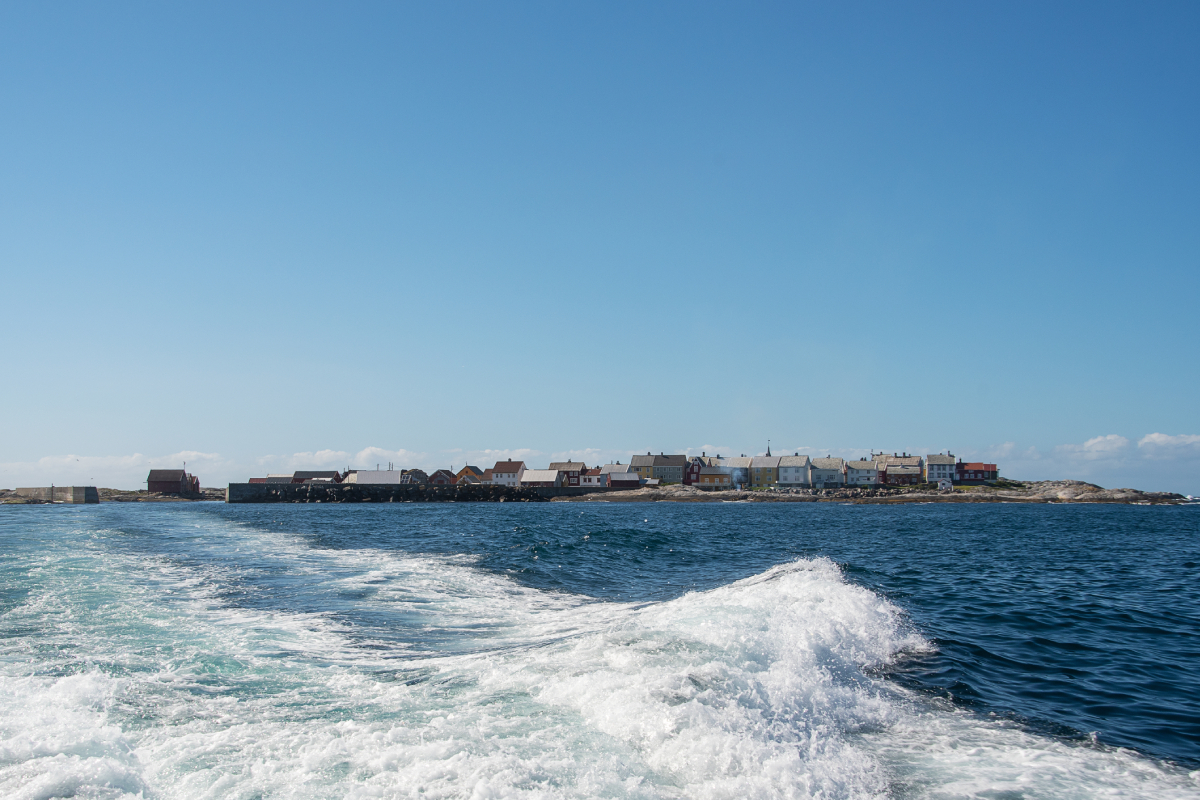
The isolated island of Grip, once a thriving fishing village, is now best known for its historic stave church. Photo: tufo / Shutterstock
A tiny rocky outcrop
The tiny island of Grip floats like a cork in the harsh North Sea, lying just miles from the northern city of Kristiansund.
This small island housed a community that, by the mid-15th century, lived, survived, and thrived on fishing.
By 1470, the community was so bustling – no doubt helped by the Hanseatic League, which saw parts of Norway connect to the wider European economy through commercial trade – that church authorities decided to build a stave church.
The church authorities – Norway was then still a Catholic country with the Lutheran religious revolution, Reformation, and all its repercussions lying half a century in the future – decided to adopt a very old style for this very new church.
They chose a church style that spoke of Norway's proud Viking past, a medieval style that encompassed a fusion of Norse and Christian motifs and symbolism.
They decided the style that they would furnish the church with was a throwback to early medieval Norway, so they constructed a stave church.
Surely, the Grip Stave Church, perched on this island for more than half a millennium, is one of the hidden cultural gems of Kristiansund, nay Norway at large.
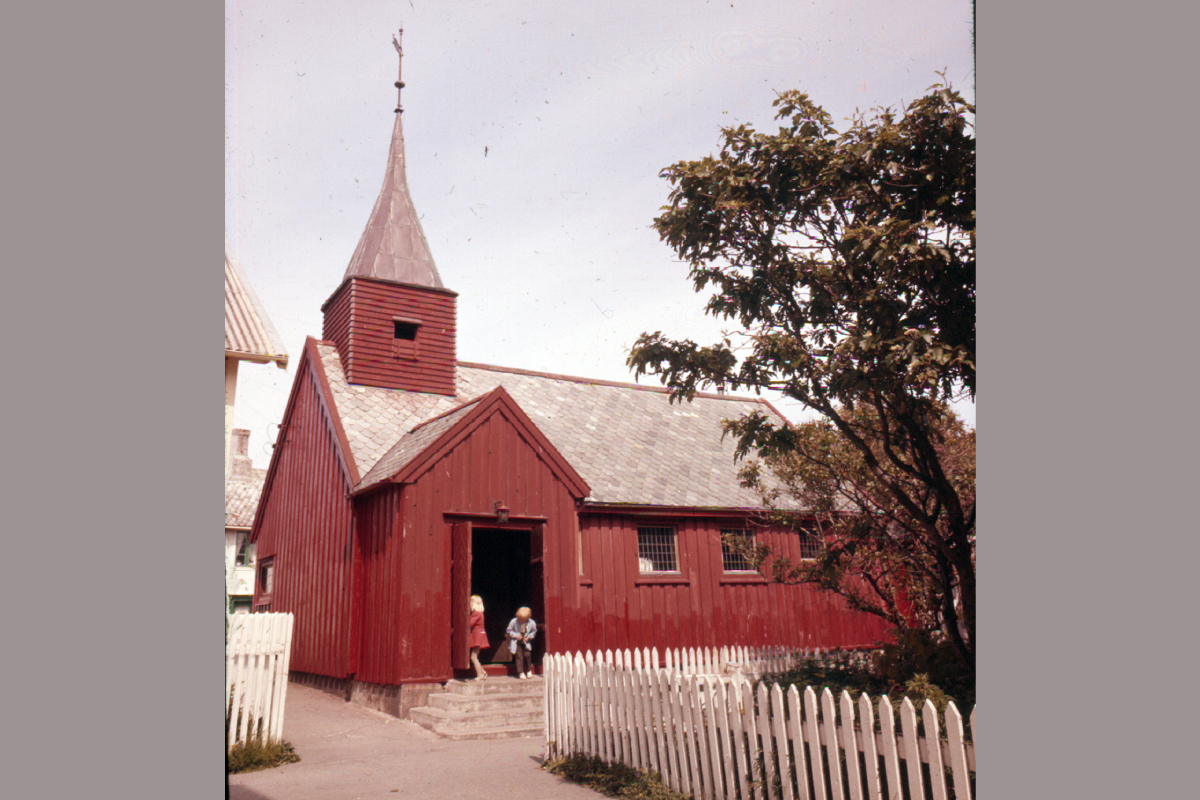
The Grip Stave Church was originally painted white for visibility from the sea, but it has since been repainted a striking red. Photo: Hans Grendahl (Public domain)
Spiritual guidance from near and afar
Sitting on the island some 12 kilometers (a little over 7 miles) off the coast of Norway, the Grip Stave Church is one of Norway's most remote places of worship.
When constructed back in 1470, the local parish priest lived on the island in the church.
Sadly, since 1635, there has been no priest living on the island, meaning that this community had to rely on regular visits from the mainland for their weekly religious and spiritual guidance.
Given the harsh climatic conditions of Norway, especially in northern regions and on tiny islands off its coast, you must have some empathy for the brave and hardy priests who were sent out to live in this remote fishing village.
As Petter Aune, Ronald Sack, and Arne Selberg wrote in their 1983 article in the journal American Scientific, the church, like many coastal buildings in Norway, was originally brilliant white – making it easy to spot from open water – but has since been painted brilliant red.
Much of the original foundations are still in place and have been restored with two major renovations taking place in the 20th century, in the 1930s and 1970s.
More recent weathering and refurbishment took place in 2007, with roof repairs.
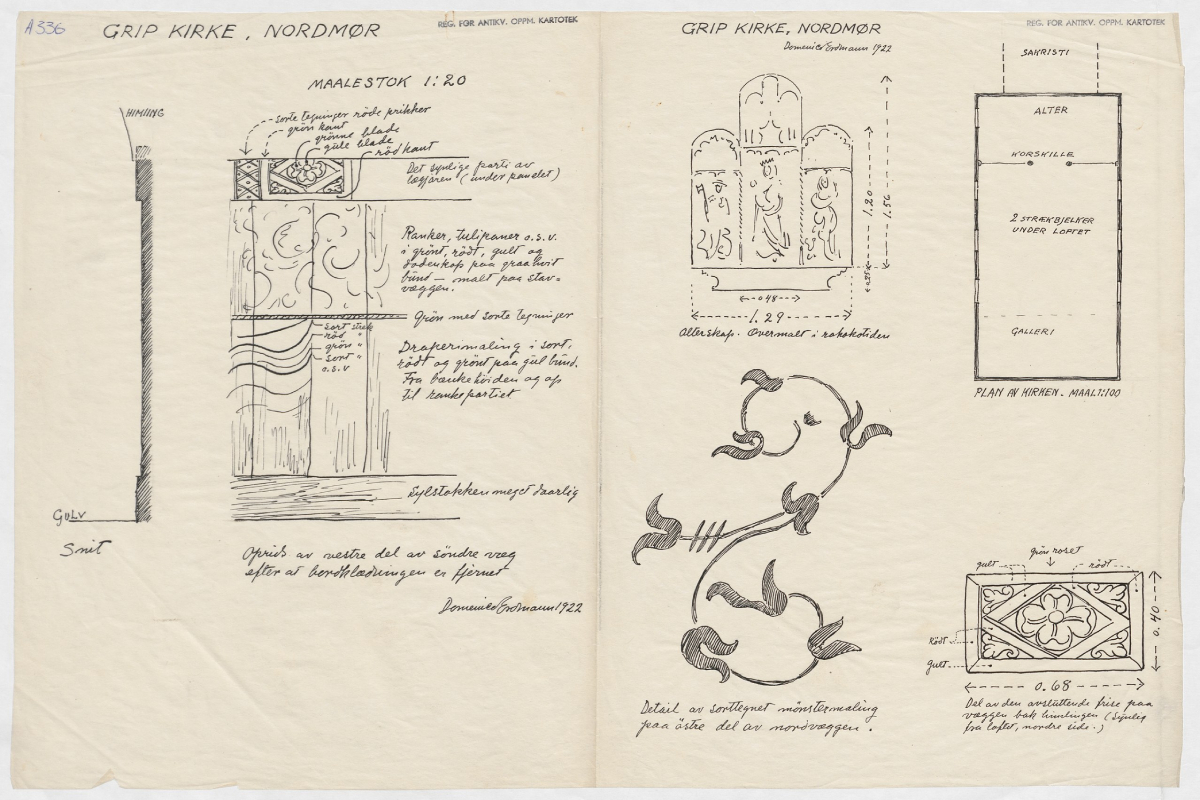
An architectural drawing from 1922 showcases the ground plan, altarpiece sketch, and wall painting details of Grip Stave Church. Illustration: Domenico Erdmann (1879–1940), Public domain
Connections to great moments in Norwegian history
Like most stave churches still standing, the interior is a pastiche of different historical periods and artistic styles.
Whilst the wooden interior harks back to the early medieval period, all eyes are drawn toward the altar. Here, a triptych takes pride of place, said to be a gift from a Spanish princess, Isabella of Asturias.
She was on her way to marry the Danish King Christian II in 1515 and was escorted by the Archbishop of Norway.
Her seaward journey was terrible, but she never forgot the calm reassurance from the archbishop. She then donated five triptychs, one of which the Grip Stave Church was blessed to receive.
Fast forward almost three centuries, the church was also the center of one of the most important dates in modern Norwegian history: 1814.
It was in this year that some Norwegians took to the polls for the first time to elect a Constituent Assembly that would go on to write the Norwegian Constitution, a seminal piece of political literature that the modern independent nation-state traces its ancestry back to.
The Stave Church, despite being in a deserted fishing village at the time, was one of just 300 churches that saw polling action in their hallowed walls on that momentous day.
Whilst the island now has zero permanent inhabitants – many flock here in the warmer months to experience life on this rocky island – it houses a piece of architectural history that connects the early medieval, early modern, and modern periods of Norwegian history within four walls.
That in itself should make the Grip Stave Church a must-visit when you are next in Kristiansund.
Visit Norway has more information on Grip Stave Church, available here.
We get to provide readers with original coverage thanks to our loyal supporters. Do you enjoy our work? You can become a PATRON here or via our Patreon page. You'll get access to exclusive content and early access.
Feel free to reach out to discuss potential stories that may be in the public interest. You can reach us via email at hello@thevikingherald.com with the understanding that the information you provide might be used in our reporting and stories.