

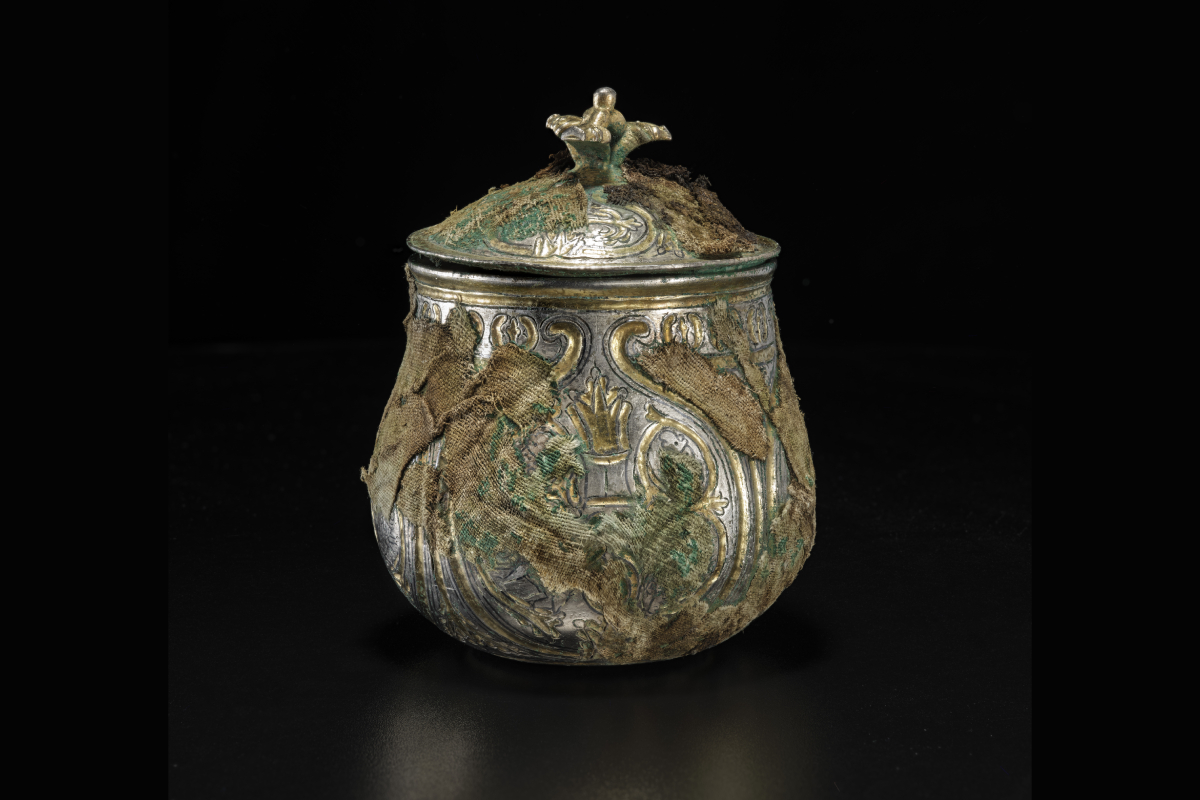
Nowadays, Iranian people make up a thriving and important diaspora in Scandinavia.
Much of this population headed to the cold north following the fallout from one of the most important events of the 20th century, the 1979 Islamic Revolution.
Whilst modern Iran was significantly reshaped by the 1979 Islamic Revolution, its roots trace back millennia to the ancient civilizations of Persia.
The ancient lands of Persia (as Iran was known until 1935) have seen empires rise and fall, from the Achaemenid to the Parthian and Sassanid Empires, with Persia at the center of world events for millennia, serving as both the cradle and graveyard of empires.
The early medieval period saw great political changes not only throughout Europe (following the collapse of the Roman Empire) but also in West Asia.
The Sassanid Empire (c. 224–651 CE), named after the House of Sassan, was the bridge between Late Antiquity and the medieval period in Persia but would ultimately fall following the Islamic conquests of these ancient lands.
Although direct evidence is limited, there were indirect connections between the people of Persia and those in Scandinavia through broader trade networks during the early medieval period.
Whilst we have no evidence of a direct Viking presence in Persia, we must turn to the archeological record to properly show the once-hidden history of Persia and the Vikings.
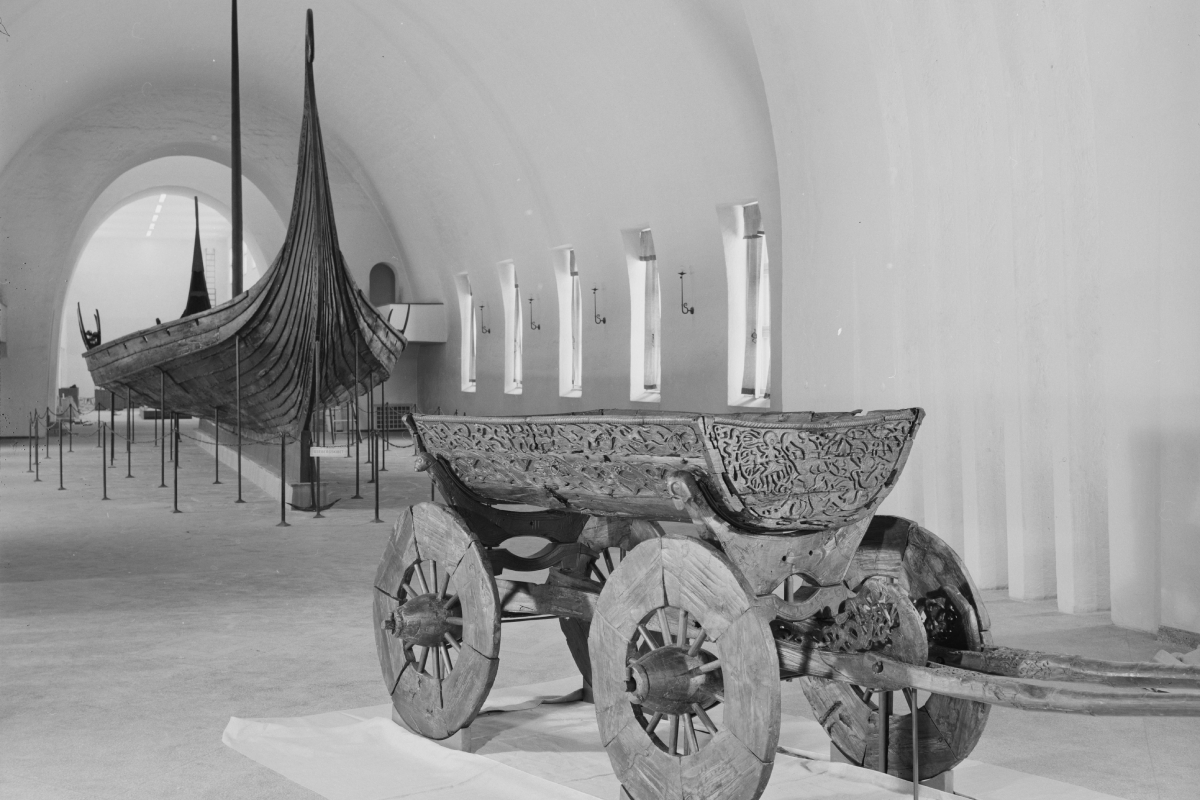
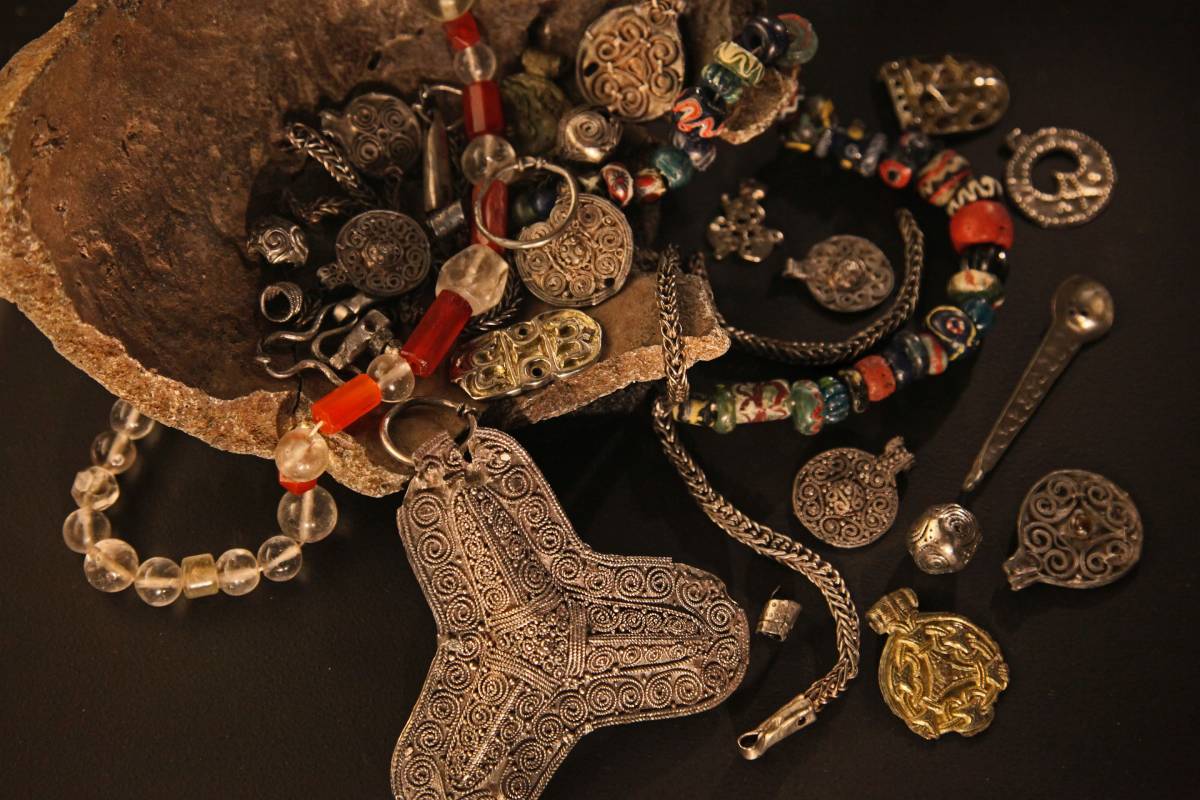
The Oseberg burial in Norway contained a wealth of items, from elaborate carvings to silk that was linked to Sassanian Iran. Photo: Jac Brun (1921–1995)
A buried ship and hidden treasure
One of the most striking symbols of the Viking Age was unearthed on a farm in Oseberg in 1903.
The story of the discovery and impact of the Oseberg Viking ship cannot be overstated, as it helped breathe life into the study of the entire Viking period, and its artistry and skill have helped shatter centuries-old historical stereotypes about the society that constructed this ship.
Analyzed to have been constructed c. 800 CE, this ship housed the remains of two women, one of whom may have been of high political or religious status and potentially buried with an attendant or servant, along with that most prized of medieval possessions: silk.
Originally, the hypothesis was that some of the artifacts buried as grave goods with the ship may have been looted from the British Isles. Yet recent scientific analysis shows that the silk originated further east, in the ancient lands of Persia.
A specific weaving technique used to create the silk (samite) was common in regions across the Byzantine and Persian Empires, including what is now Iran.
Furthermore, the imagery on the silk was analyzed further, revealing a wealth of symbols and motifs from the Zoroastrian faith – a dominant religion in Persia until the Islamic conquests and a sizable minority ever since.
The ship was buried on a farm near what is now Tønsberg, Norway. Located on the western edge of the famous Oslofjord, this town claims to be Norway's oldest, tracing its foundation back to the era of Vikings.
Throughout the early medieval period, Tønsberg was an important trading town.
The silk likely traveled the extensive trade networks from the East before arriving on a ship to be buried among the other grave goods, accompanying one of the most remarkable Viking ships yet uncovered.

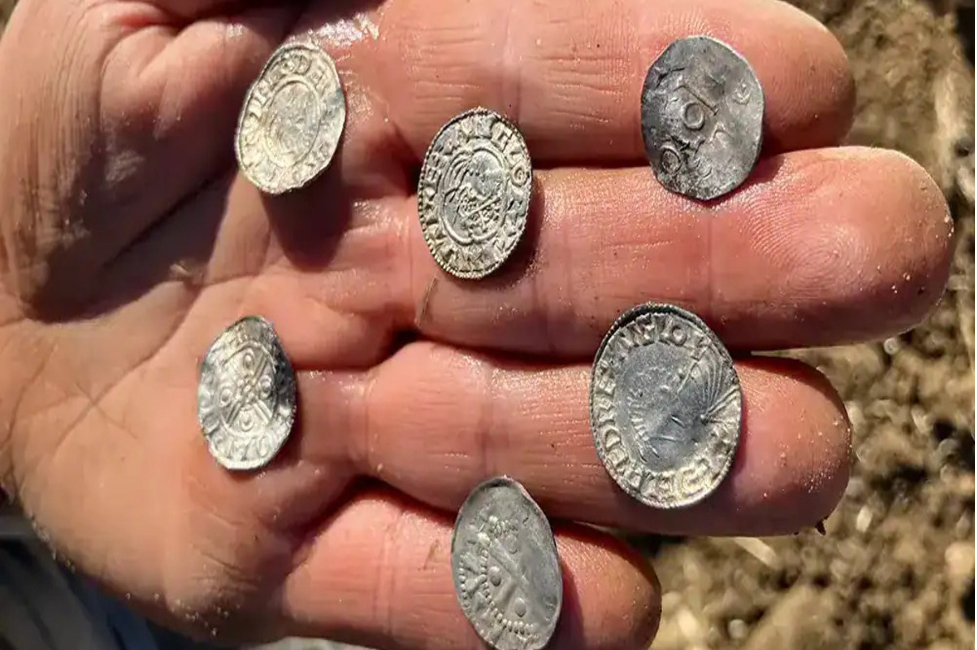
The Stjørdal hoard, discovered in Norway, contains an Islamic coin from the early 700s, pointing to far-reaching trade ties. Photo: Birgit Maixner / NTNU Science Museum
Monetary connections
The connection between Persia and people in Viking societies wasn't just limited to ritual burials.
For much of the early medieval period, European societies experienced political insecurity and violence, with limited financial systems to secure and manage wealth as we understand it today.
Thus, for people in Viking societies, great treasures and loot were often buried to be dug up at a safer time. Luckily for us, many of those who buried the loot never dug it up.
As Märi Gaimster writes in her 2016 book Silver Economy in the Viking Age, this has left us with several significant Viking Age hoards, some of which include coins from Persian-influenced regions.
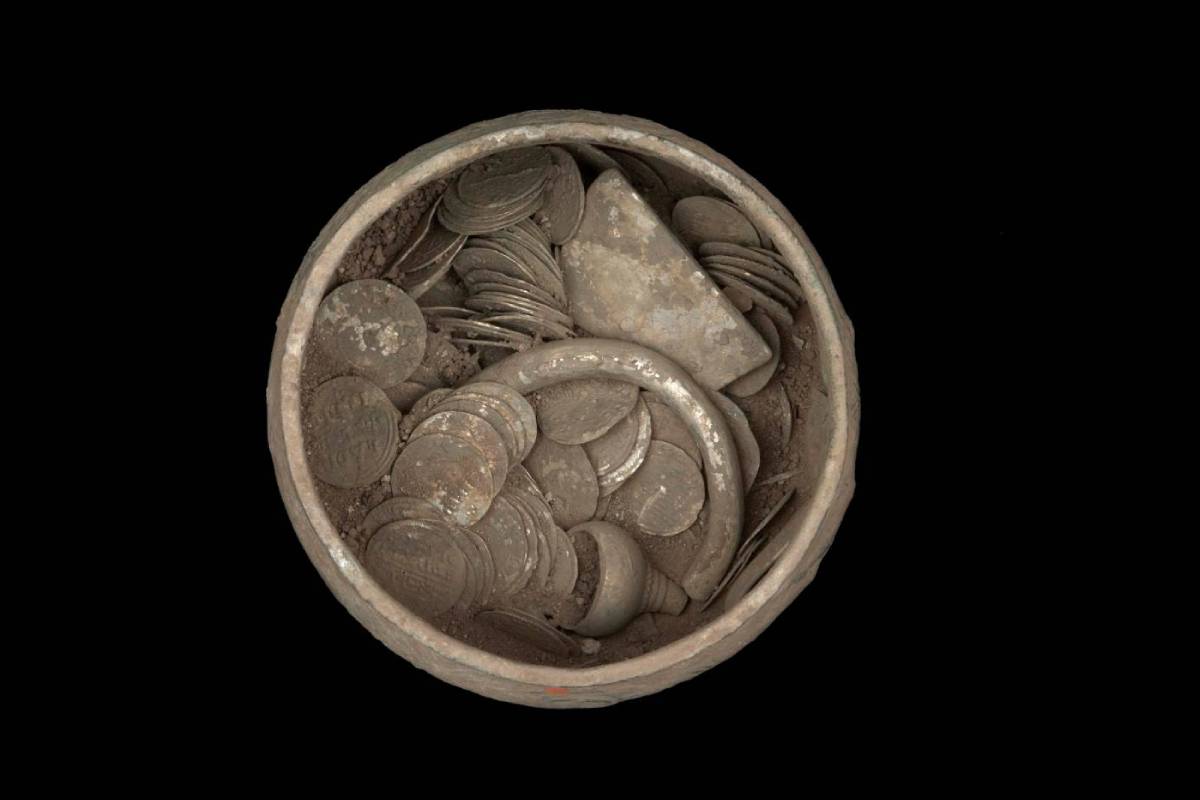
The most impressive Viking hoard – discovered live on Swedish television back in 1999 – was on the Baltic island of Gotland.
The Spilling Hoard consisted of over 14,000 coins, including a significant number minted during the late Sassanid Empire and early Rashidun Caliphate, particularly silver dirhams.
Many of these Sassanid coins were simply reused by the Islamic Caliphate's successor state and had Islamic phrases inscribed upon them.
Further north, in the Uppland province of Sweden – home of the highest concentration of Viking runestones in the world – several Sassanid-era silver coins have been unearthed.
Whilst Gotland – situated in the middle of the Baltic Sea – was an important trading hub throughout the medieval period, the discovery of Central Asian and Islamic coins further north shows how the trade networks of the early medieval period stretched from Central Asia to Scandinavia and beyond.

Persian steel, potentially used in Ulfberht swords famed for their durability, points to trade networks connecting Frankish smiths to Asian resources. Photo: Wolfgang Sauber
Blades of glory and fame
Hollywood sure does love the image of a sword-brandishing Viking jumping off a ship to raid some unlucky coastal community.
Despite the fact that only a small number of people in Viking societies engaged in raiding – and thus were technically "Vikings" – there was a sizable thirst for weapons.
The Frankish blacksmiths of what is now the borderlands between France and Germany, around the river Rhine, were renowned for their high-quality skill and product when it came to swordsmithing.
One such renowned brand was Ulfberht, a mark used by skilled Frankish swordsmiths who crafted these deadly weapons that ended up in the hands, and later graves, of Viking warriors.
Fredrik Carpenter Ljungqvist from Stockholm University has shown that the steel used to make these blades originated in what was then called Persia.
Despite the collapse of the Sassanid Empire and the rise of the Rashidun Caliphate, the trade links connecting Europe with Asia – the fabled "Silk Roads" – remained open.
The presence of Persian steel in Frankish swords used by Viking warriors suggests that a bustling trade continued, despite seismic political and religious changes. As much then as now, money talks.
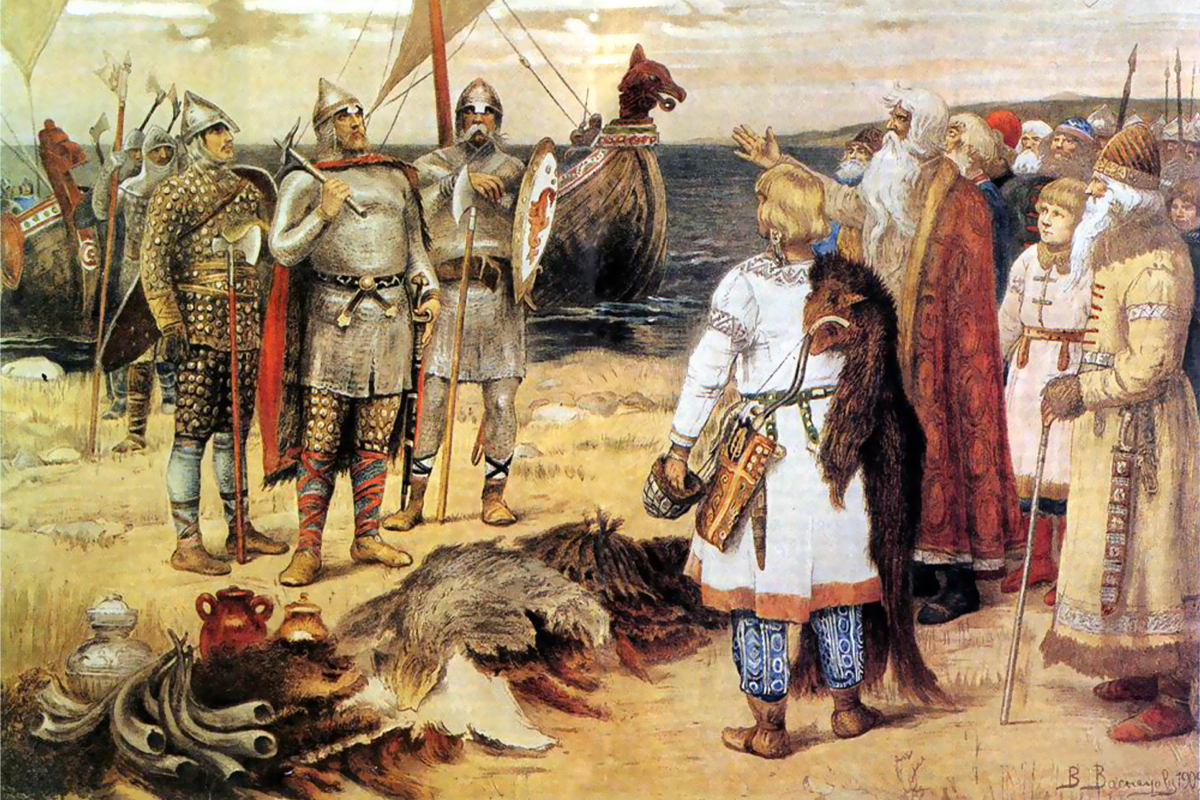
The painting "Invitation of the Varangians" shows Norse leaders invited to bring order to the Ilmen Slavs and begin a new rule. Source: Viktor Vasnetsov (1848–1926)
The Rus and later raids
Whilst we can only speculate if people from Viking societies ever made it as far as the ancient lands of Persia, there is a large amount of archeological evidence to illustrate at least indirect contact and trade.
We know that people from Viking societies headed eastward as soon as the Viking Age began (c. 750–1100 CE) to trade, raid, and eventually settle.
Snaking their way through the river systems of Eastern Europe, the Rus contributed to the formation of the Kievan Rus, a state that later influenced the historical development of Belarus, Russia, and Ukraine.
The Eastern Vikings – known as the Rus – operated in the Black Sea and may have reached as far as the Caspian Sea and the Caucasus, according to 26 runestones associated with one famous Viking traveler.
Ann Feuerbach, in her 2023 article in the Parseh Journal of Archaeological Studies, discusses accounts from the 12th-century Persian historian Ibn Isfandiyar, who wrote a history of his region of Persia, Tarikh-i Tabaristan.
According to Isfandiyar, Rus raided areas in and around the Caspian Sea, burning communities and abducting people – perhaps to be sold in slave markets further west.
Sadly, there has been no archeological evidence to back up Isfandiyar's accounts, but it presents us with the tantalizing prospect of a direct, if brief and violent, Viking presence in Persia.
However, like so much of Viking history, the truth may very well be buried underfoot, waiting to be dug up in the future.
For more information on a further Persian connection with the Vikings, visit The Independent here.
We get to provide readers with original coverage thanks to our loyal supporters. Do you enjoy our work? You can become a PATRON here or via our Patreon page. You'll get access to exclusive content and early access.
Feel free to reach out to discuss potential stories that may be in the public interest. You can reach us via email at hello@thevikingherald.com with the understanding that the information you provide might be used in our reporting and stories.