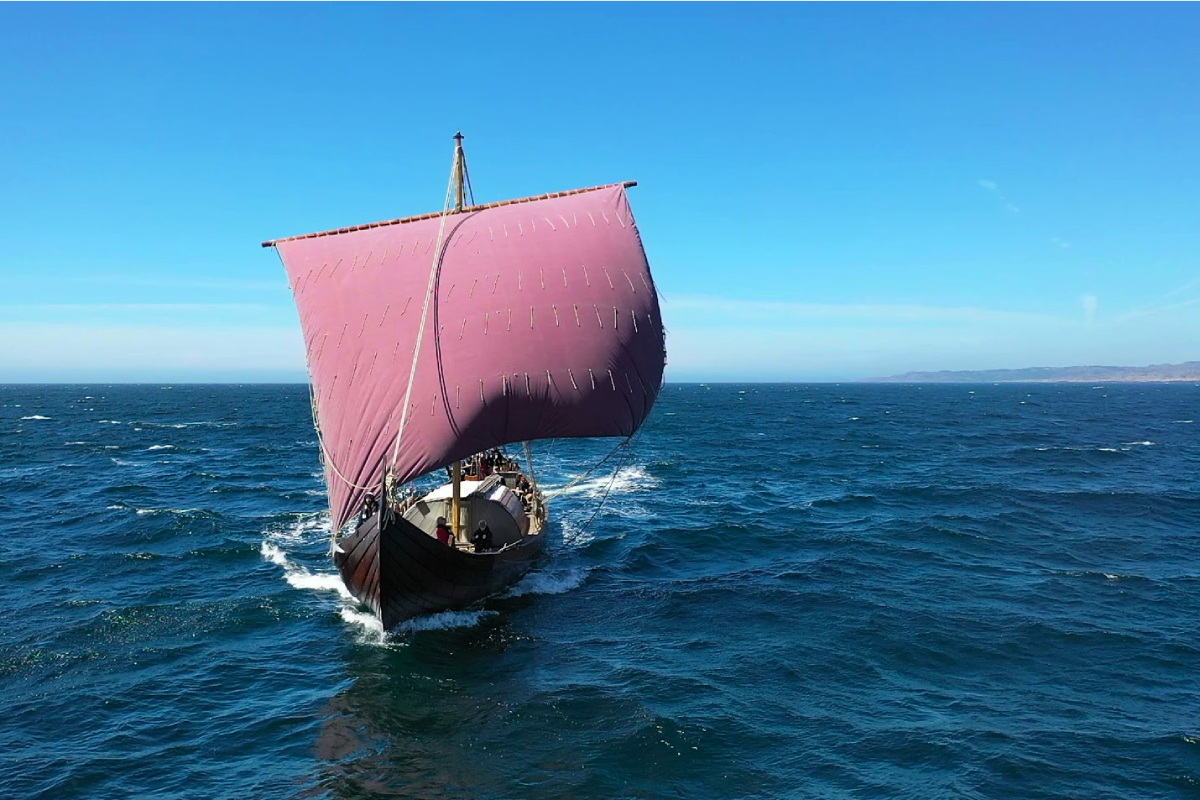


On April 24, 2016, a 35-meter (115-foot) Viking longship left the safety of Haugesund Harbor in Norway to voyage across the wild North Atlantic Ocean.
Centuries after the last Viking raid took place, the Draken Harald Hårfagre (Dragon Harald Fairhair), first launched in 2012, would sail to a series of engagements in the United States.
The Draken, funded by self-professed oil tycoon Sigurd Aase, is the most striking and modern example of an ancient craft: the Skeid. Whilst Draken Harald Hårfagre is based on the 9th-century Gokstad ship, a karve, it was built to match the size and shape of what a Skeid might have been like.
This type of Viking longship once plied the oceans, rivers, and seas of much of the Viking world, but in the 2016 expedition of the Draken, it would only excite and entertain, not strike fear into the hearts of those who gazed upon the horizon.
We know that throughout the Viking Age, people in Viking societies adapted their ship and boatbuilding skills to construct a series of vessels that could sail across vast oceanic distances, carefully traverse a windy river, or ferry goods, livestock, and warriors across seas.
The type of Viking ship known as the Skeid takes its name from the Old Norse skeið, meaning something like "cutter" or "slider," with the sense of a ship that speeds through water.
It was the most feared of all Viking vessels, used for large-scale military expeditions across the vast waters that connected the Viking world.
How, then, was the Skeid designed to ply the choppy waters of Northern European oceans, ferrying vicious warriors? The success of the Skeid lies in its perfect balance of function with form.

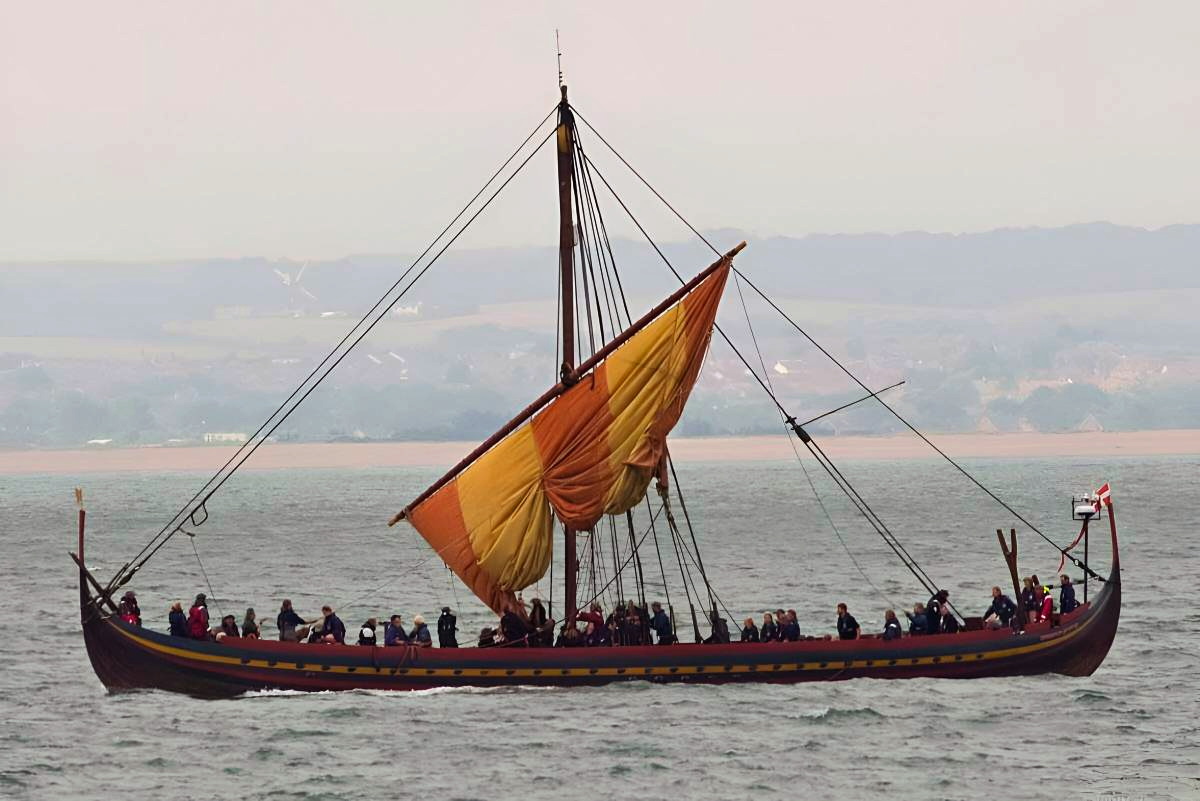
Constructed in 2012, the Draken Harald Hårfagre is a 35-meter Viking ship based on the Skeid design. Photo: Odd Roar Aalborg (CC BY-SA 4.0)
Designed to be lethal and sleek
Next time you are watching anything Viking-related on the silver or small screen, keep an eye out for a Skeid.
The Skeid has become cemented in popular imagination as what a Viking ship should look like... at least to Hollywood producers and directors.
Its imposing size, coupled with its sleek design, makes it the perfect vessel to be snaking through the water, waiting to pounce on an unsuspecting coastal community in many a Viking movie or series.
Like their modern counterpart, the Draken Harald Hårfagre, the historical Skeid ships were a larger form of Viking longship that was said to carry, on average, about 30+ rowing benches, meaning an approximate length of 20–30 meters (65 to 100 feet).
The Draken was built slightly larger, with 25 pairs of oars, making it larger than its ancient ancestor.
The larger size and crew of a Skeid meant that, unlike other Viking ships, this was a large and robust vessel, perfect for ferrying weapon-clad warriors hellbent on a good raiding or sacking.
This robustness was further enhanced, like all ships built by people in Viking societies, by its clinker-built hull. This meant that wooden planks, often oak, overlapped, creating a flexible but durable structure.
Add to this a shallow hull and the fact that it was "double ended" (meaning symmetrical sterns and bows), and this allowed a speedy ship that was easily maneuverable.
It had the perfect design to enable Viking warriors to sail and strike at a moment's notice and traverse a wide array of environments, from the open seas to coastal inlets and rivers.
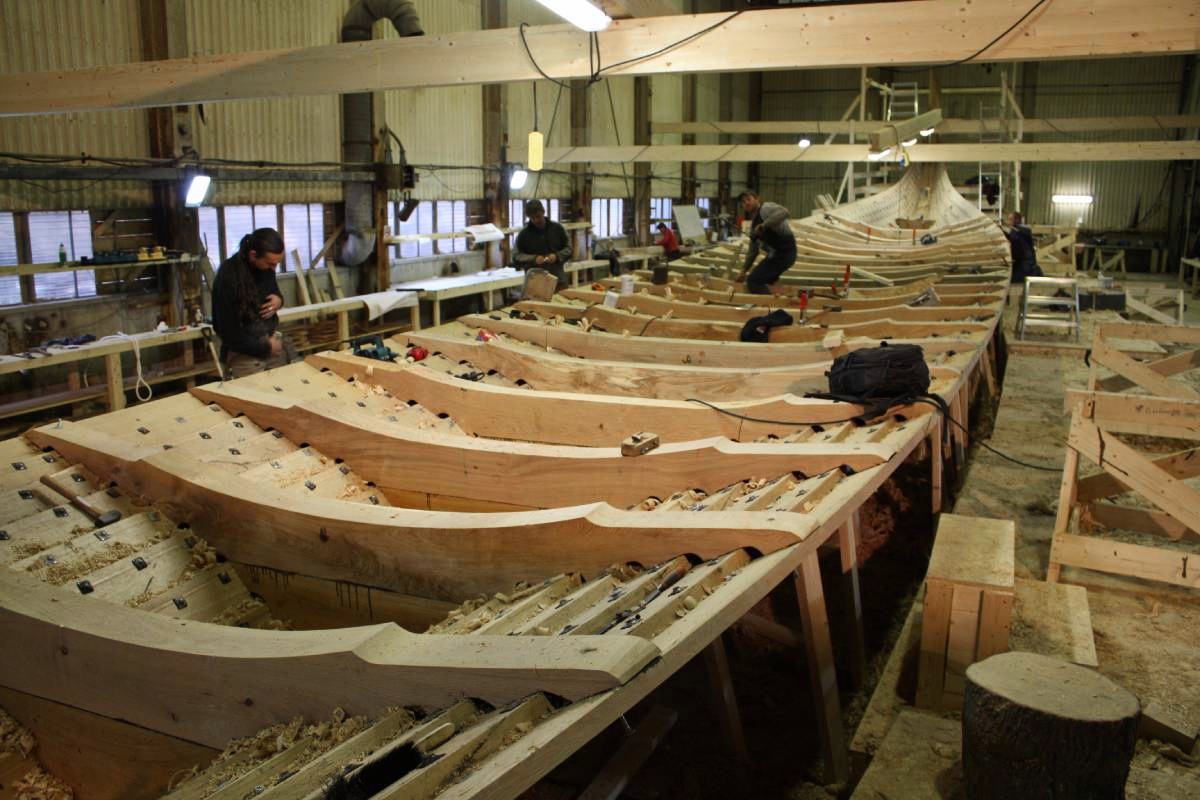
Builders shape the ribs of the Draken Harald Hårfagre in Norway, 2010. Photo: Marit Synnøve Vea (CC BY-SA 4.0)
A symbol of prestige and military power
The resources, labor, and time needed to build a Skeid meant that they were seen as a prestige symbol. Only a powerful Viking chieftain or ruler could manage to have the resources at hand to commission such a ship.
This larger form of a Viking ship was seen as an early medieval status symbol of wealth and power. Only those with great power and influence could not only command that such a ship be built but also have the number of warriors needed to sail such a vessel.
As John R. Hale explains in his 1998 Scientific American article, it was this combination of size and speed that allowed a Skeid to serve as both a transport vessel and an effective platform for ferrying troops on and off shore.
Part of the success of what modern historians call the outward Viking expansion was the fact that many Viking chieftains and rulers could use ships like Skeids to launch raids and attacks on unsuspecting coastal and river-bound communities.
As the Viking Age progressed, Skeids were responsible for launching lightning attacks throughout Northern Europe that not only weakened local resolve but also brought a steady stream of loot, treasure, and enslaved people back to Viking communities.
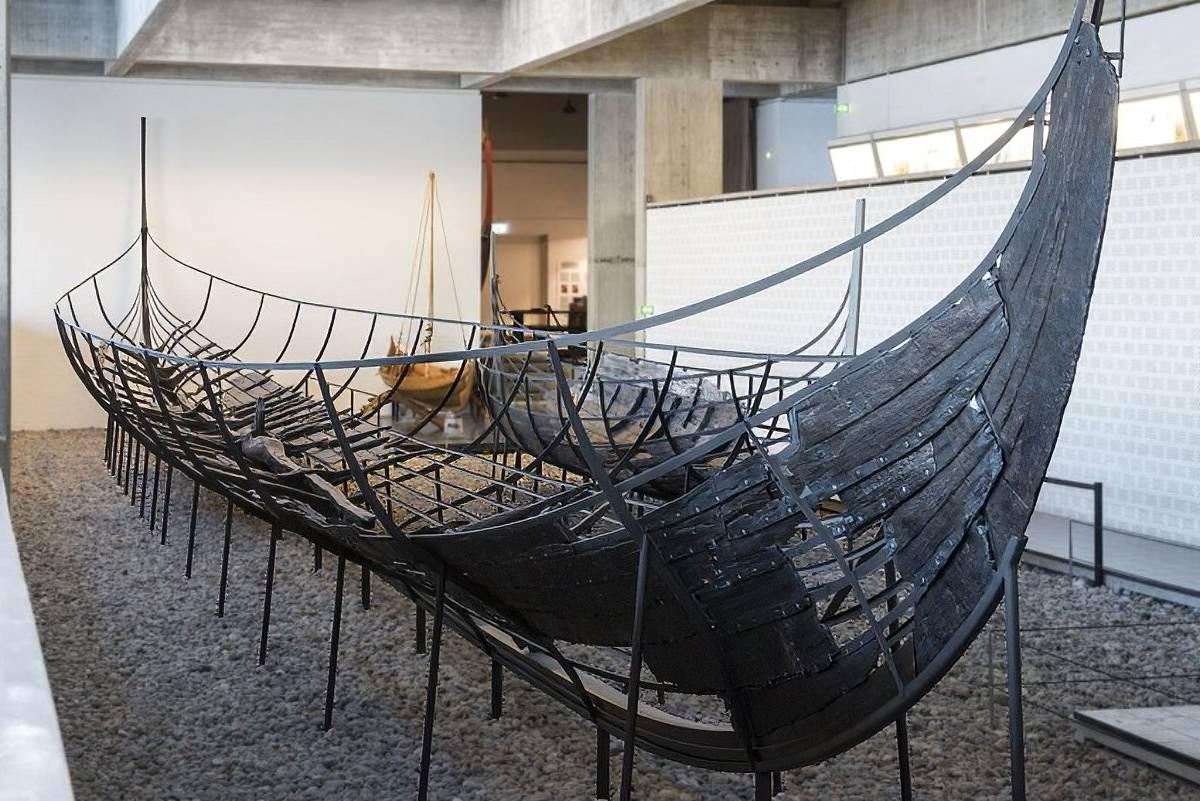
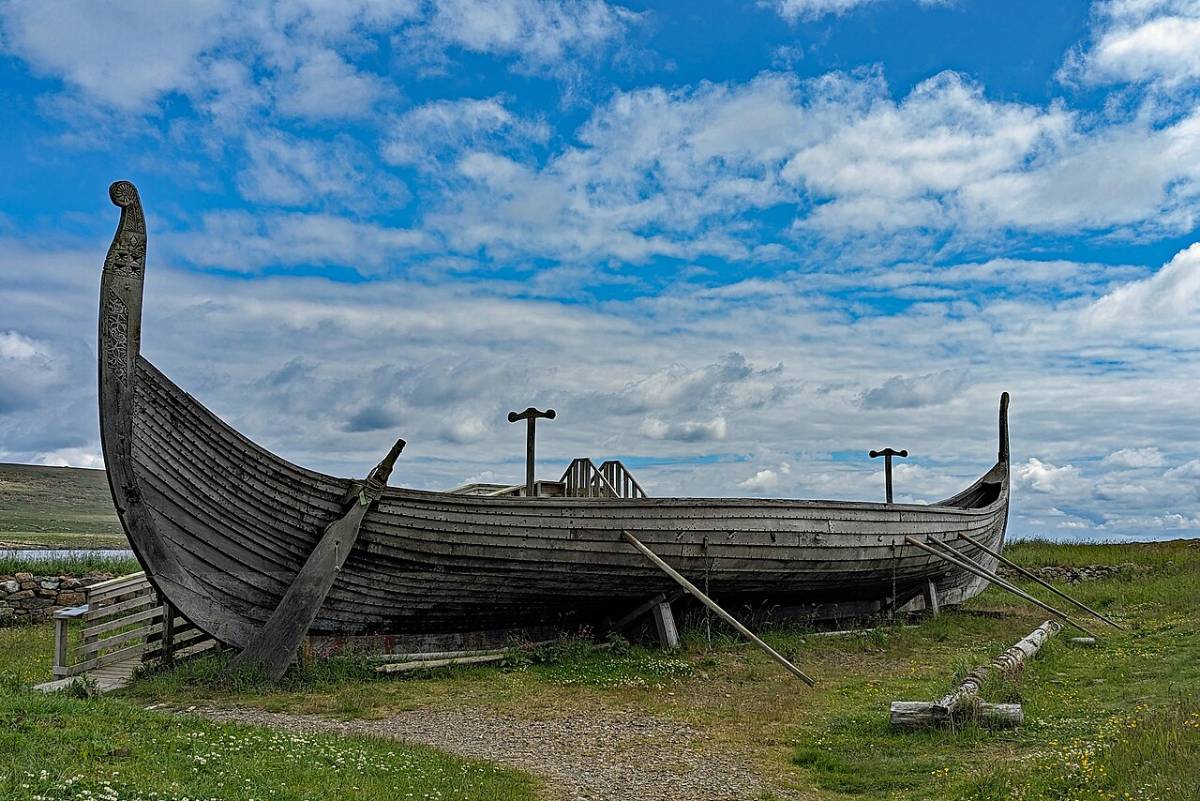
The remains of Skuldelev 2, a large Skeid-class longship, were excavated in Denmark in 1962. Photo: Viking Ship Museum in Roskilde
Ancient wrecks and more modern reincarnations
There is no doubt that the Skeid type of Viking longships were instrumental in the Viking expansion throughout the early medieval period. However, we have not found any archeological fragments of Skeids.
In 1962, the remains of five Viking-era ships were uncovered in a waterway just north of Roskilde, Denmark. As Angela Croome (1999) notes in her International Journal of Nautical Archaeology museum report, the Skuldelev ships were deliberately scuttled to block a mid‑ to late‑10th‑century seaborne invasion.
One of these ships, confusingly named Skuldelev 2 and 4 (originally thought to be two ships but later discovered to be two parts of one), was a Skeid believed to have been constructed in Dublin, then a significant Viking trading port, in about 1042 CE.
Roughly the length of the Draken and with room to carry 75 to 80 men, Skuldelev 2 (and 4) was a powerful weapon of war.
Like the Draken Harald Hårfagre, a modern-day reincarnation of Skuldelev 2 took place in Ireland between 2000 and 2004. The Sea Stallion from Glendalough, as it is known, took more than 40,000 hours of work to painstakingly recreate the sunken Skuldelev 2.
Like its modern counterpart, any commissioning of a Skeid ship would have had to have been ordered by a figure powerful enough to have both the finances and labor at hand to take on such a large project.
The construction of any Skeid was a serious investment, and thus a serious return was expected—be this loot from a coastal community, a large number of enslaved people to trade, or ferrying Vikings to defeat regional armies or powers.
The Skeid style of Viking ship was once feared throughout the Viking world as a carrier of Viking warriors.
Thankfully for us, both the Draken and Sea Stallion nowadays only carry those wanting to experience how it was to sail on these magnificent vessels. These modern reincarnations are far more entertaining, too.
For the latest information on the Draken Harald Hårfagre, visit the ship's official website here.
We get to provide readers with original coverage thanks to our loyal supporters. Do you enjoy our work? You can become a PATRON here or via our Patreon page. You'll get access to exclusive content and early access.
Feel free to reach out to discuss potential stories that may be in the public interest. You can reach us via email at hello@thevikingherald.com with the understanding that the information you provide might be used in our reporting and stories.