

Try to imagine how hard it must have been for our early modern ancestors to map the world. Cartography has a long history, but it was only during the early modern period that it took off with European explorers, traders, and settlers.
For much of this time, whilst Europe, North Africa, and Western Asia were well-trodden paths, lands further afield were shrouded in mystery and intrigue.
Look at any medieval or early modern map, and you will see vast blank spaces adorned with a few dragons.
The dragon – a powerful mythical creature found in the culture of many civilizations throughout history – was seen as a symbol of the unknown, of terra incognita (unknown lands).
In the humble opinion of we here at The Viking Herald, dragons saw their best depiction in the myths of Viking societies.
The rich tapestry of Norse legends, myths, and sagas is littered with countless references to these powerful creatures. Yet one, more than any, stands out as an icon – a testament to the vivid creativity and imagination of Viking-era skalds and poets.
This is Fáfnir, the mighty dragon whose character continues to inspire, entertain, and teach centuries after the last Viking ship sailed.
A mythic creation that bridged Germanic and Viking cultures
Our first stop, as with anything Viking-related, is to take a trip to the bookshelf and dust off some of the Norse sagas.
Fáfnir, whose name has been translated from Old Norse into something akin to "the Embracer" (quite why anyone would want a hug from a dragon is beyond me), appears as a character in some of the most celebrated Norse sagas.
These sagas grew out of even more ancient Germanic tales that reached far back into what modern historians call the Migration Period (c. 0–400 CE in European history).
These tales were orally transmitted and saw further creative and literary evolution during the Viking Age (c. 750–1100).
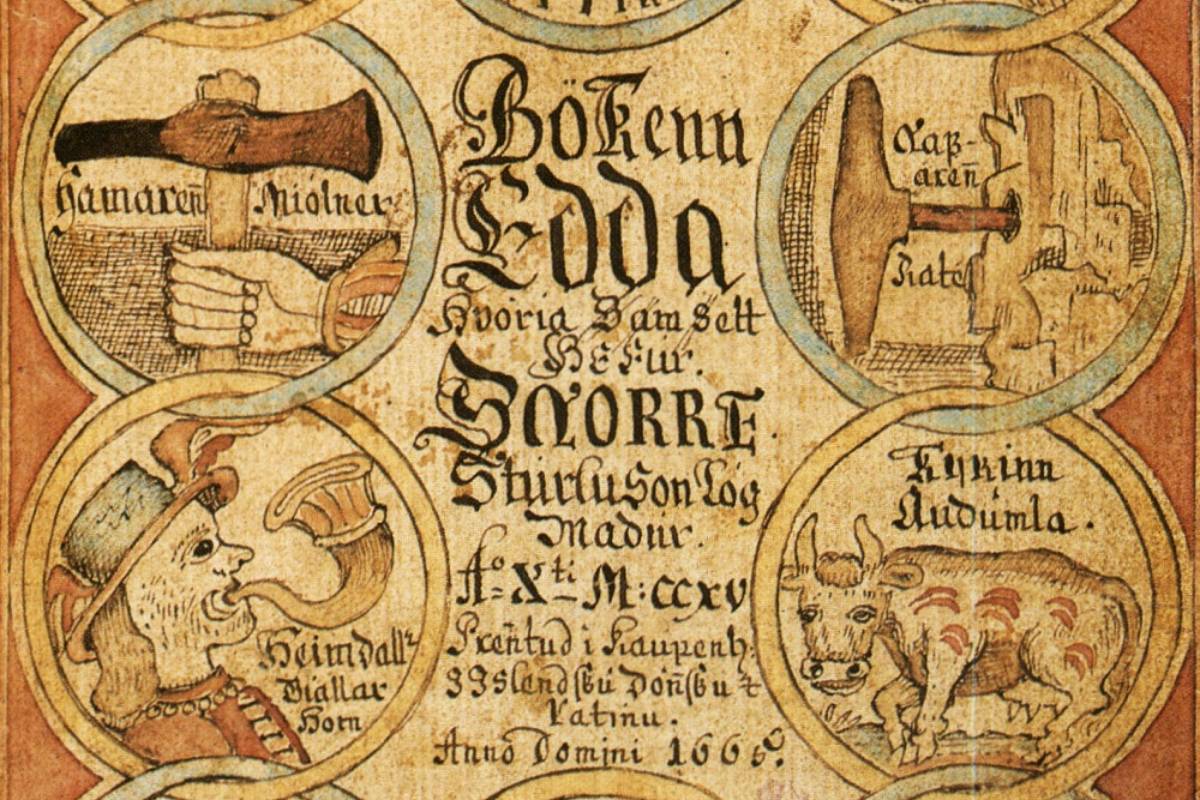
It was only in the late 13th century that many of these legends, sagas, and tales were finally compiled and transcribed thanks to literati like Snorri Sturluson.
Fáfnir not only appears as a character in the epic Völsunga saga – dealing with the origins, rise, and fall of the Völsung clan – but there are myriad references to him in the many poems that make up what we call the Poetic Edda, a compilation of poems, sagas, and stories compiled by Sturluson.
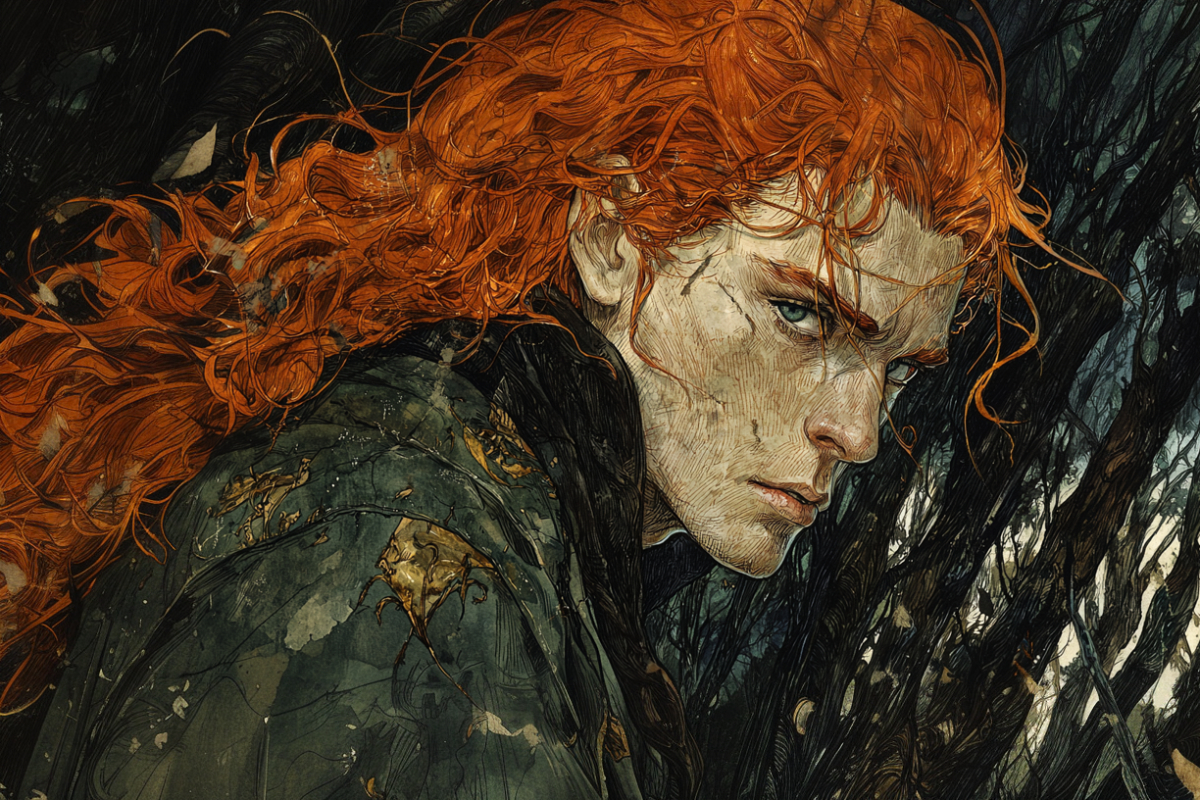
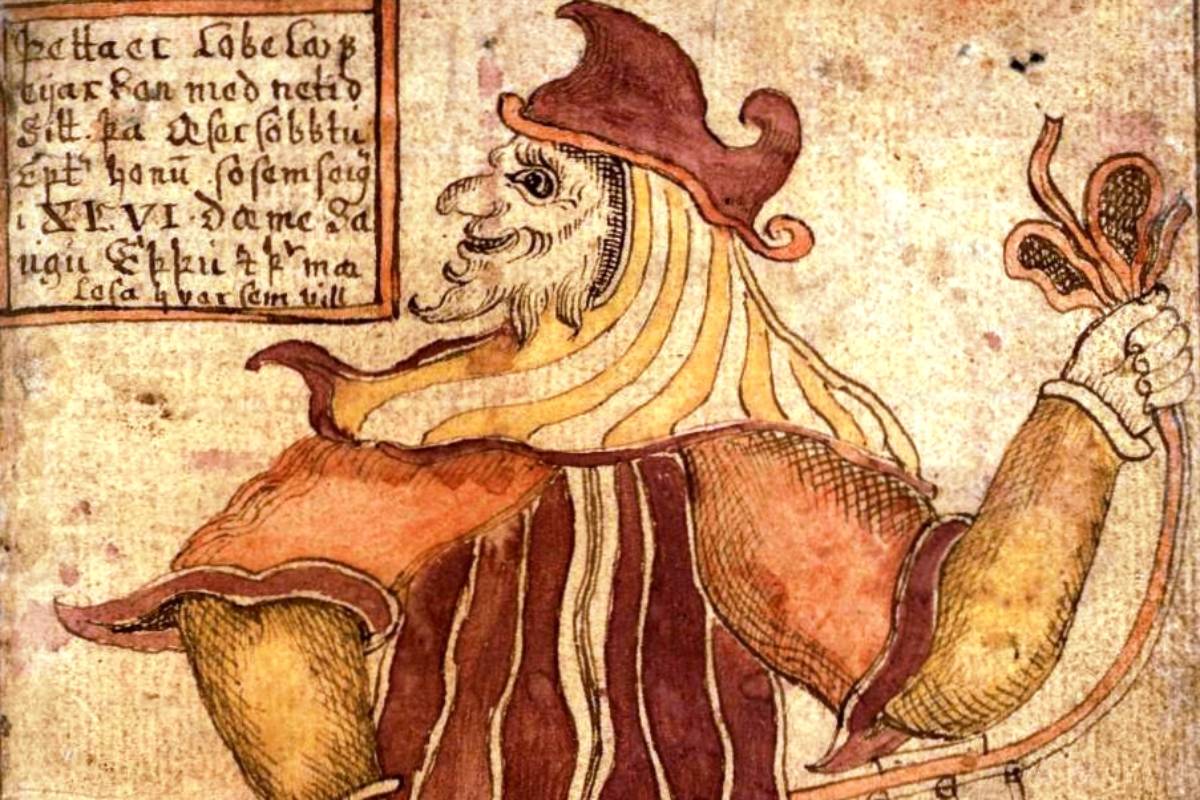
Loki's theft of Andvari's cursed hoard and magical ring triggers the series of events that lead to Fáfnir's transformation into a dragon. Illustration: The Viking Herald
Ancient origins: blood, treasure, and a transformation
The sad tale of Fáfnir begins with a curse by the Norse gods. Loki accidentally kills a powerful dwarf ruler's son and is meant to pay a blood price (compensation for the bereaved family).
He manages to steal a great treasure hoard from Andvari, including a magical ring. He fleeces the dwarf's treasured riches despite a great curse of misfortune on the riches and the enchanted ring, Andvaranaut.
Fáfnir first appears as one of the brothers of the slain dwarf, who is fearless and brave. Yet, as his family acquires the blood price from Loki, his heart is said to be darkened by avarice and greed.
He kills his father rather than sharing this newly acquired wealth and is soon transformed into a great dragon who guards his hoard jealously at all costs.
He is cast into isolation, further cementing his paranoid and possessive nature, and dwells along with the riches in a dark and desolate wilderness named Gnitaheath.
Unlike other dragons and mythical creatures, however, he retains both the ability to speak and his great intelligence.
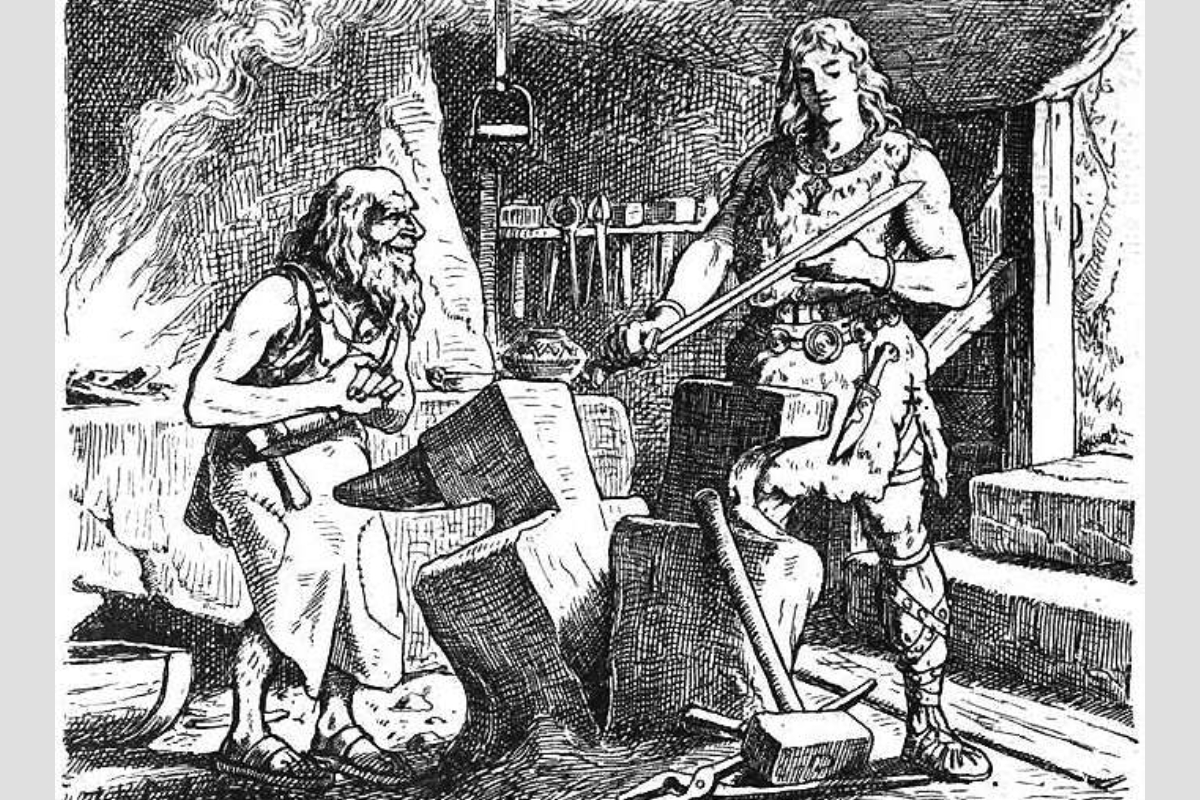
Gram, the sword given to Sigurd by Regin, is instrumental in slaying Fáfnir, whose scales made him nearly invulnerable. Source: Johannes Gehrts (1855–1921)
Enter the dragon: The Völsunga saga
It is in the Völsunga saga where Fáfnir plays his most important dramatic and literary role.
As Jordan T. Williams writes in his 2021 thesis, A Literary Analysis of Magic: A Dissection of Medieval Icelandic Literature, this saga, whilst compiled in the 13th century and tracing the origins, rise, and fall of the Völsung clan, was heavily influenced by ancient Germanic legends and tales.
Among the most memorable characters in this saga is the hero Sigurd. Whilst he is most remembered for his association with the Burgundian princess Brunhild, Sigurd is also known as the dragon slayer.
Sigurd falls under the mentorship of Regin, one of Fáfnir's brothers, who not only envied his brother's stolen wealth but also nurtured a burning desire to avenge his father's sudden demise.
Reminiscent of a scene in every single Rocky movie, Regin takes Sigurd under his wing, trains him in a grueling regime (no running up the Philadelphia Art Museum steps, though), and gives him the mighty sword, Gram.
Regin manipulates Sigurd into fighting this epic dragon and securing his golden hoard.
Without any doubt, one of the most famous duels in the Norse sagas is the fight to the death between Sigurd and Fáfnir.
Sigurd arrives in Gnitaheath and hides near a river, waiting for Fáfnir to quench his thirst. As the mighty dragon waddles down to take a sip of water, Sigurd thrusts Gram into the dragon's heart and slays him.
As Bernard Evslin writes in his 2014 book Monsters of Norse Mythology: Fáfnir, this mighty dragon was said to be heavily scaled and more of a serpent-like creature, similar to other creatures found in the Norse sagas.
It is this armor of scales that led Sigurd to strike him from below, causing his ultimate downfall.
In a gruesome act, Sigurd then cooks Fáfnir's heart and suddenly gains the ability to understand birds.
Through this new linguistic skill, he learns that Regin's goal is to secure the treasure for himself by slaying Sigurd. Sigurd then slays Regin, adding another gruesome death to this bloody saga.
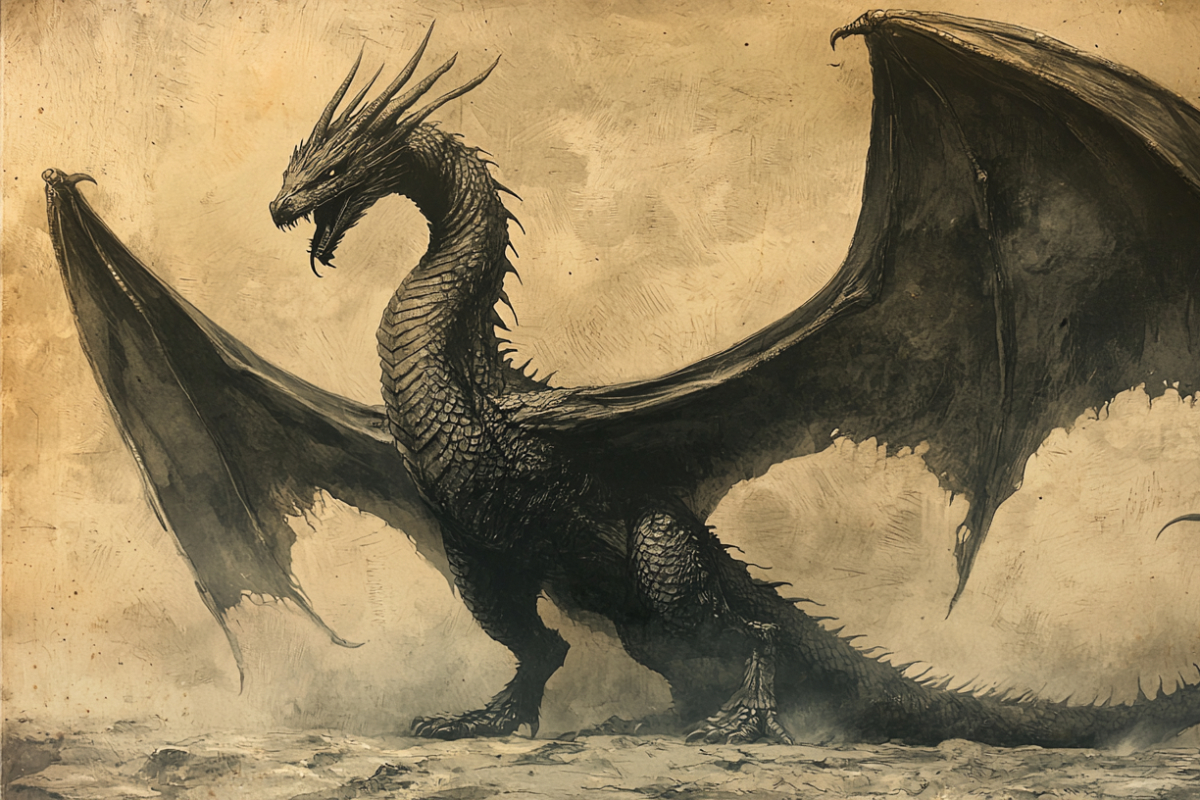
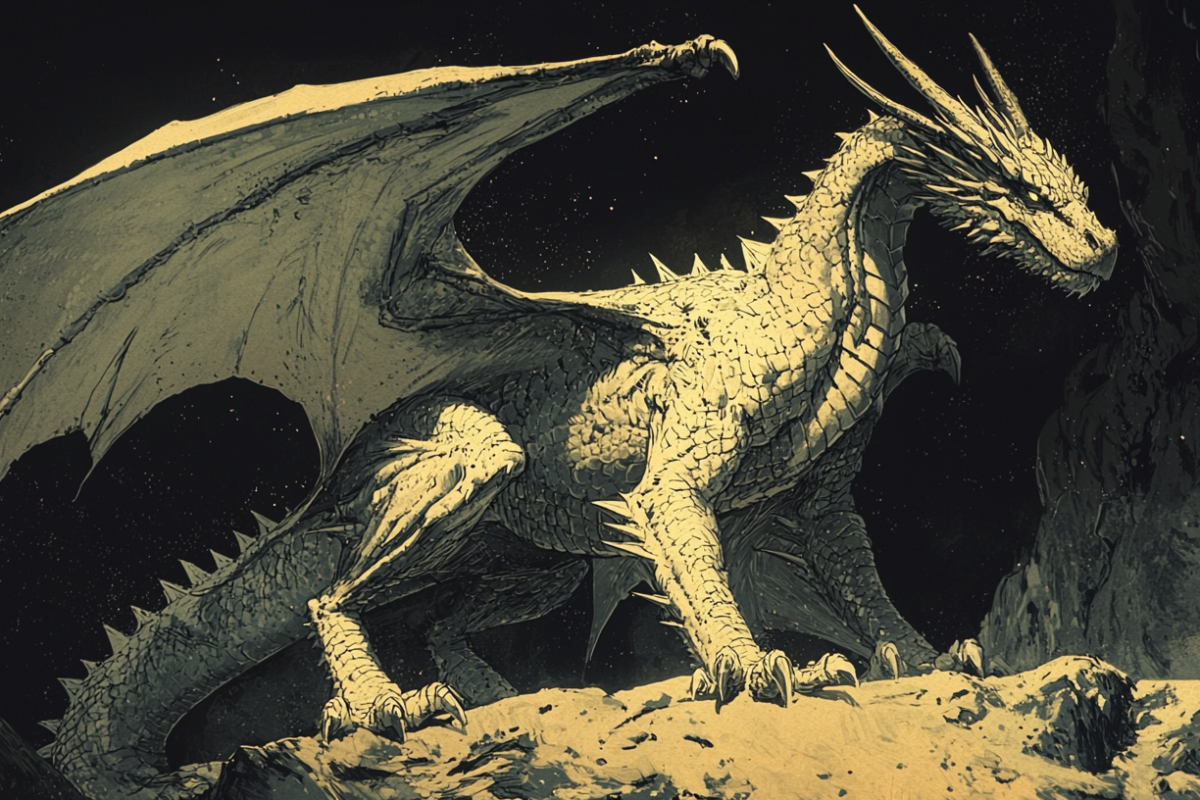
Fáfnir’s transformation from a flightless serpent into a dragon with legs, wings, or both parallels changes in medieval dragon imagery. Illustration: The Viking Herald
Later cultural adaptations
It is Fáfnir's transformation into a great beast that has inspired countless cultural adaptations throughout the ages.
The 19th-century opera composer (and later favorite of the Nazi hierarchy, including Adolf Hitler) Richard Wagner used Fáfnir, in his dragon form, as a central character in Der Ring des Nibelungen – which mixes Germanic tales with the Norse sagas, especially the Völsunga saga.
In more recent times, the main antagonist in the fantasy book The Hobbit by J.R.R. Tolkien is the mighty dragon Smaug.
Tolkien raided the Norse sagas for inspiration, and there is no doubt that the character of Smaug bears more than a striking resemblance to Fáfnir.
It should also be noted that Tolkien was very much a cunning linguist and even spoke Old Norse, the language of Viking societies.
Peter Jackson's film adaptation of the novel finally brought Smaug – and thus Fáfnir – to a modern audience with all the color and action of state-of-the-art CGI graphics.
For more information on how the Norse sagas inspired Tolkien, visit the BBC here.
We get to provide readers with original coverage thanks to our loyal supporters. Do you enjoy our work? You can become a PATRON here or via our Patreon page. You'll get access to exclusive content and early access.
Feel free to reach out to discuss potential stories that may be in the public interest. You can reach us via email at hello@thevikingherald.com with the understanding that the information you provide might be used in our reporting and stories.