

The 55,000-year-old relationship between this parasite and humans may now be a lot clearer thanks to Norse poo from Denmark.
What is the breakthrough?
The intestinal parasite Trichuris trichiura, also known as the "whipworm," is a type of roundworm that can infect the large intestine and trigger the disease trichuriasis.
This not only can cause a number of uncomfortable symptoms but can also impact childhood development and growth. According to zoologist Christian Kapel from the University of Copenhagen, "in people who are malnourished or have impaired immune systems, this can lead to a serious illness."
The parasite seems to have spread alongside humans from Africa to the rest of the world around 55,500 years ago, so it has followed humanity for much of our history.
Nowadays, the parasite and the subsequent disease are rare in the Western world, but it remains a significant issue in regions with poor sanitation, and it is estimated that 604-795 million people in the world are infected with the whipworm.
As it mostly affects developing countries, research into the parasite has been limited.
However, whipworm eggs have amazing longevity and, in the right conditions, can survive for thousands of years. By taking samples of eggs from human feces from ancient times, the genome of these ancient whipworms has been mapped, allowing scientists to understand how the parasite spread and how it developed.
This means that the interrelationship between the parasite and humans can be better understood, and we can learn how to balance the parasite and perhaps prevent its spread.
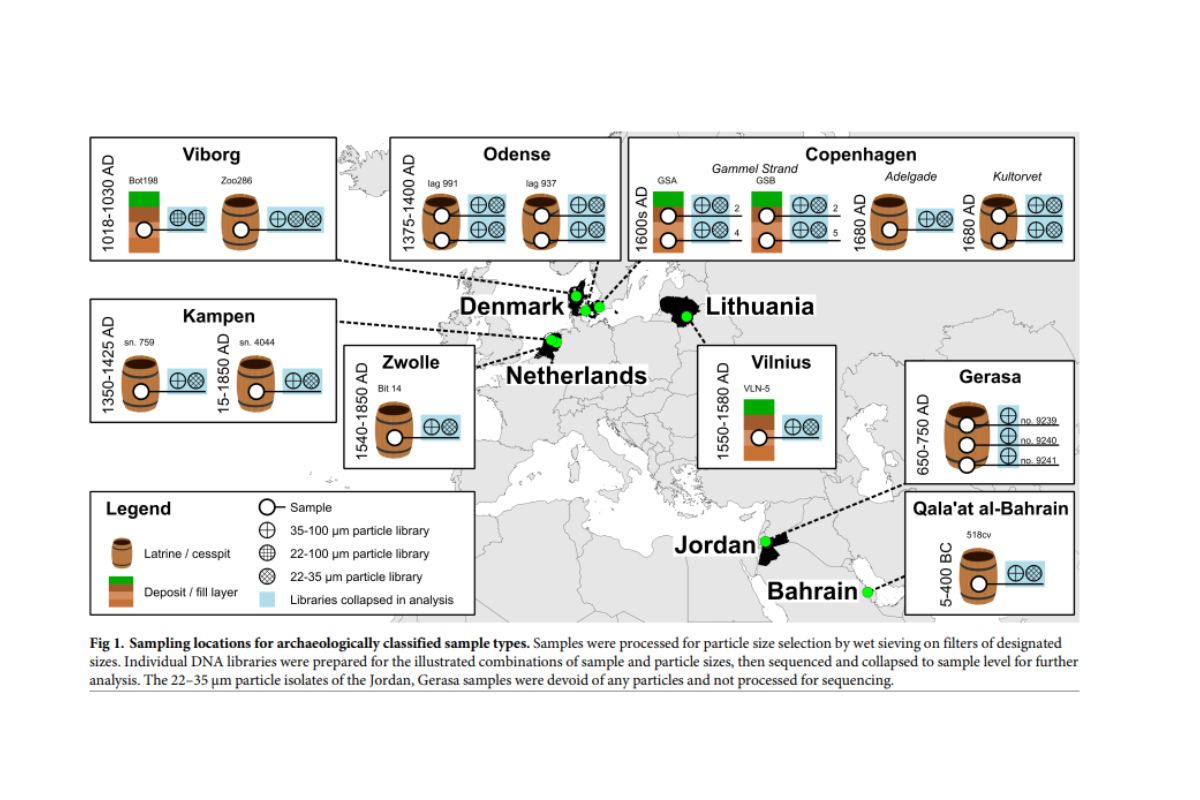
An illustration of the sampling locations. Photo: University of Copenhagen
How did the Vikings help the breakthrough?
One of the samples that allowed the whipworm genome to be mapped came from latrines from Viking Age settlements in Viborg and Copenhagen. Most samples were around 1,000 years old, but some came from over 2,500 years ago.
These latrines provided the optimal conditions for the parasite's genetic material to survive, allowing scientists to retrieve the DNA. Furthermore, Viking hygiene standards made it the perfect time period to take the sample from.
Although the stereotype of the Vikings is that they were well groomed, well washed, and took care of themselves, living conditions were obviously not as hygienic as they are today.
Professor Kapel said: "During the Viking Age and well into the Middle Ages, one didn't have very sanitary conditions or well-separated cooking and toilet facilities. This allowed the whipworm far better opportunities to spread."
The study was carried out by the University of Copenhagen, which had easy access to these Norse sites, which provided DNA from a range of time periods.
According to EurekAlert: "The study suggests that humans and parasites have developed a delicate interaction over thousands of years, whereby the parasite tries to stay 'under the radar' not to be repelled, which allows it more time to infect new people."
The prominence of this parasite in Viking latrines is a testament to the effectiveness of this equilibrium even in medieval times and provides hope for the millions affected by the disease.
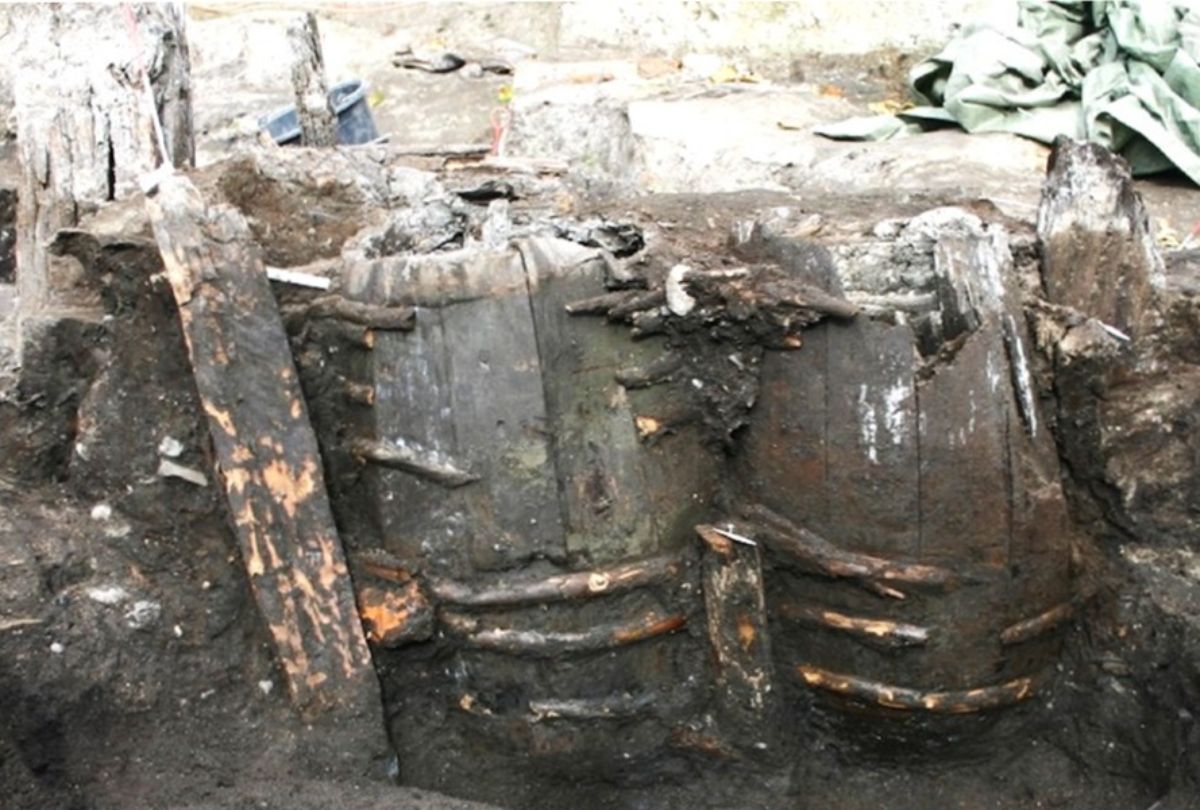
Latrines from the 1650s, found during the excavation of the Copenhagen Metro. Photo: University of Copenhagen
The Vikings and modern science
This is not the first time that the Vikings have provided key insights into the modern world. Viking farming habits and forest clearing endeavors in Norway and Iceland have modern consequences and still inform practices today.
The Vikings were massively affected by changes in the climate, which influenced their ability to explore and also the success of their settlements in Greenland and North America. How they adapted to and exploited climate change may help us understand how we can deal with future threats.
Whipworm and trichuriasis are also not the first time that the Vikings and modern diseases have been linked. The examination of Viking skeletons has highlighted that osteoarthritis was common in the Viking Age because of the physicality of farming, the most common profession in the Viking Age.
There is also an illness known as the "Viking disease" because it is thought to have originated in Scandinavia. Also called Dupuytren's contracture, the disease causes the fingers to become increasingly skewed and bent as well as small, hard bumps under the skin of the palm.
The name "Viking disease" has fallen out of fashion as it is no longer ascribed to Scandinavia, with higher levels seen in Africa and Asia.
Though they lived almost a thousand years ago, the Vikings continue to impact our lives in many ways, with even their feces providing important scientific data that may help to improve living conditions around the globe.

An illustration of a "whipworm" egg. Photo: Timonina / Shutterstock

A 3D illustration of the eggs of the parasitic roundworm Trichuris trichiura, the "whipworm," which is the causative agent of trichuriasis. Photo: Kateryna Kon / Shutterstock
We get to provide readers with original coverage thanks to our loyal supporters. Do you enjoy our work? You can become a PATRON here or via our Patreon page. You'll get access to exclusive content and early access.
Feel free to reach out to discuss potential stories that may be in the public interest. You can reach us via email at hello@thevikingherald.com with the understanding that the information you provide might be used in our reporting and stories.