

In a private spot in Sherwood Forest, Robin Hood's famous home in the heart of the English Midlands, you will find a unique site that not only offers some clues to the Nordic presence in the region but also led to the formation of the Friends of Thynghowe, a passionate group of local history enthusiasts.
A lucky find
The Friends of Thynghowe group was formed after a serendipitous discovery made by professional researcher Stuart Reddish in 2004.
As his wife Lynda Mallett explained in 2013: "Stuart purchased a box of old documents from an auction on the Welsh border. He had no idea what was in it and stored it in the loft until he had time to look through it."
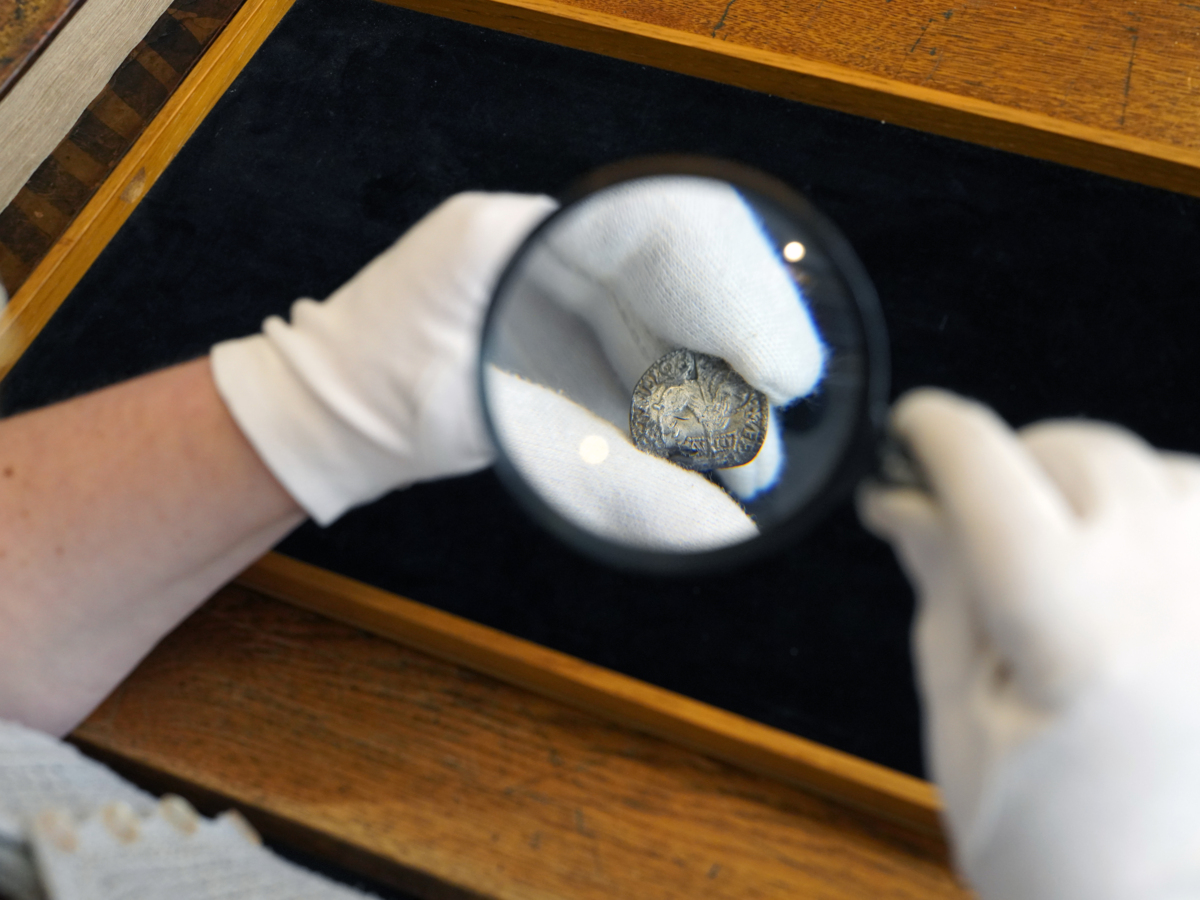
"A year later, Stuart opened the box and found an old vellum document bearing the title The Lordship of Warsop Perambulation. It was dated 1816 and described a boundary walk in Sherwood Forest."
The exact location described was in the Birklands, a part of the forest that formerly belonged to the British royal family and whose name is thought to derive from Old Norse.
Though the land is still privately owned, Forestry England, which manages the site, fortunately, granted permission for a search to take place.
So it was that on a cold January day in 2005, Lynda, Stuart, and their friend John Wood set off to explore. They found three unusually large stones on a raised area known as Hanger Hill, though at this point, they had no idea of their significance.
Eventually, however, Stuart discovered an old map dating from around 1609 that clearly showed the same summit, but with an unmarked standing stone on top referred to as the Birklands Forest Stone and the map legend showing "the way to Thynghowe" – the former name of the hill.
As Lynda recounts, "Stuart realized this referred to a Viking assembly place, and the true significance of the site became apparent."
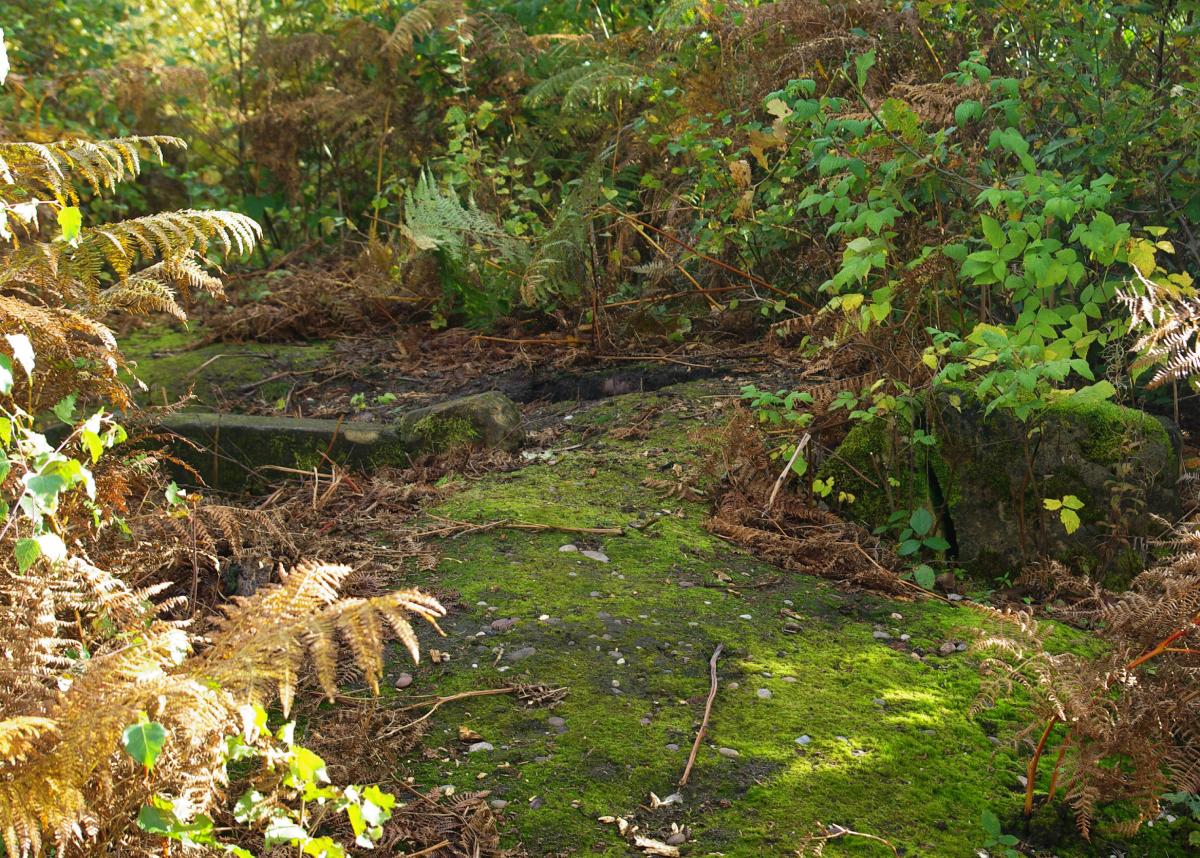
The Thynghowe site. Photo: Friends of Thynghowe
Investigations and support
Spurred on by their discovery, the friends decided to form an official group that could help ensure the area received protection, carry out further research, and also serve as a focal point for local history enthusiasts to celebrate and explore the area's Viking heritage. It is known that the East Midlands had a significant Viking presence.
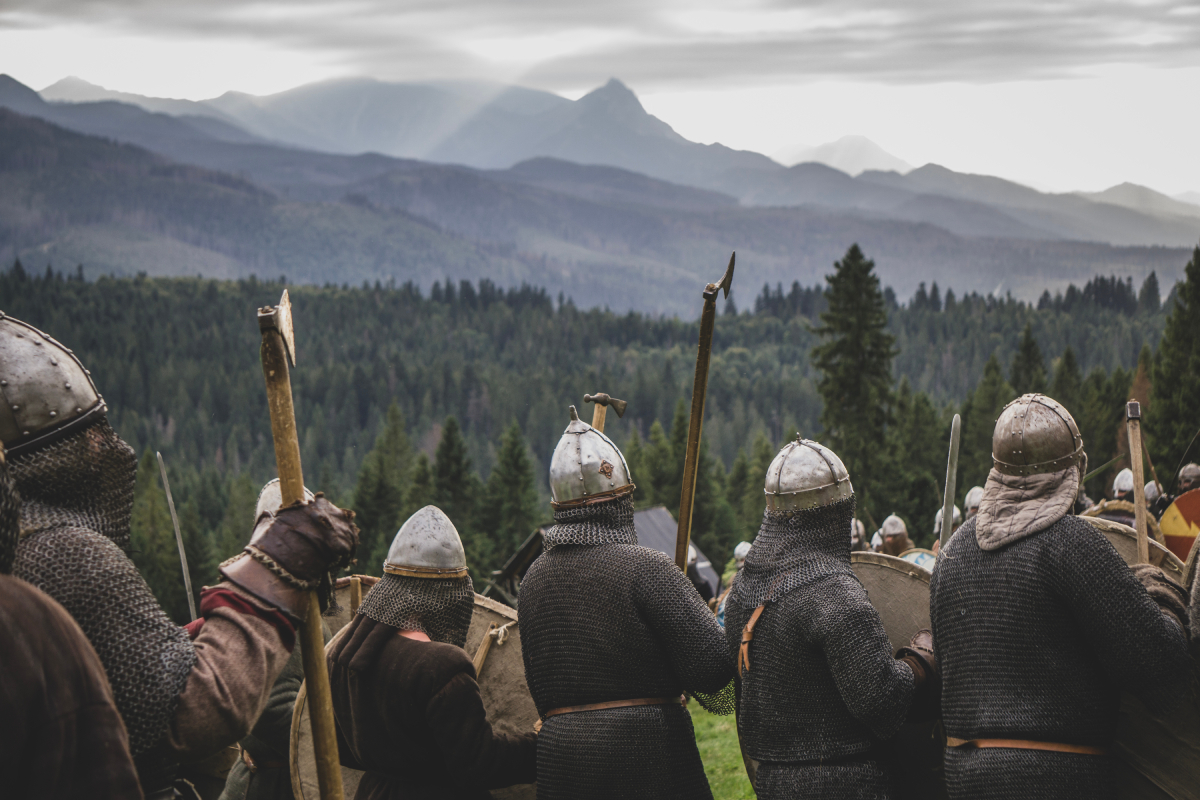
After the Danelaw was agreed between the Great Heathen Army and Alfred the Great in the 880s, the Vikings were permitted to govern the five boroughs of Derby, Leicester, Lincoln, Nottingham, and Stamford, and many Scandinavian visitors settled in the area.
"Later, we found many variations of the name in old documents, including Thynghou, Thingaw, Thinghough, and Thingoe. This suggests that Thynghowe was an assembly point in the Viking Age," explains the Friends of Thynghowe chair Steve Horne.
"Its location at the point where three parishes meet today also indicates it may have been 'neutral ground' between lordships."
Indeed, some experts believe that the site may even provide a clue to the boundary line of the ancient Anglo-Saxon kingdoms of Mercia and Northumbria.
Backed by funding from Forestry England and the National Lottery, the group organized a topographical survey, two invasive archaeological investigations, and two geophysical surveys.
"We are awaiting a report on the latest phase of the investigation," says Steve.
"Unsurprisingly, there have been no artifacts found that confirm Viking Age activity on the site, but the strength of place-name evidence has led to a wide acceptance that the site was used for assemblies during the Viking Age."
Getting involved
The Friends of Thynhowe also regularly run events and other activities.
"We hold an annual perambulation to Thynghowe each April and a Winter Solstice assembly, as well as other walks with either a historical or an ecological theme," recounts Steve.
"One day a month, we also support Forestry England with the management of the woodlands around Thynghowe. Tasks include maintaining the site of Thynghowe, clearing 'haloes' around ancient oaks, and removing invasive species like rhododendron."
"As part of our 2013 project, funded by the Heritage Lottery Fund, we also promoted the first 'Viking Spring Thing' at the Forestry Commission's Sherwood Pines site. The re-enactors of Regia Anglorum entertained the public with battles in the arena and their living history camp. This event was designed to share the story of Sherwood's Vikings without impacting on the site of Thynghowe."
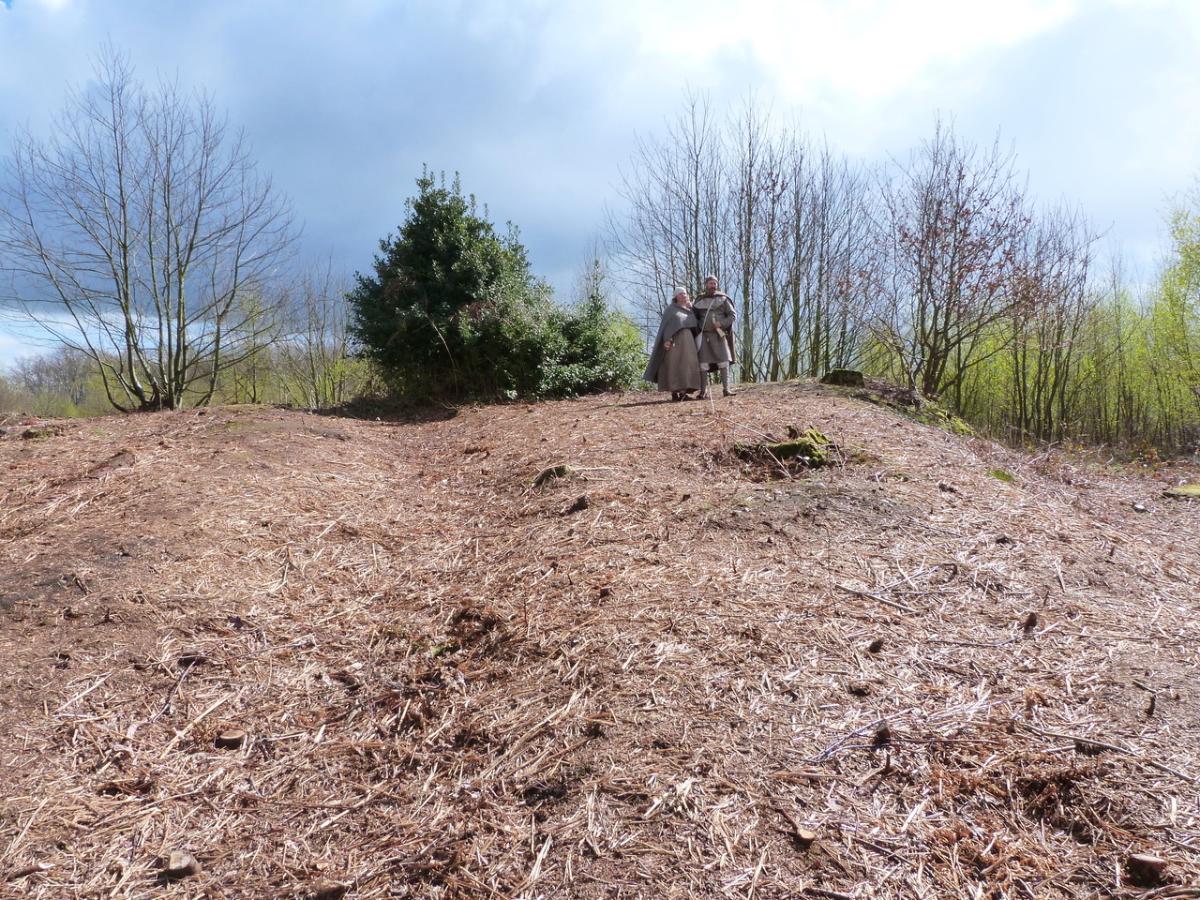
A couple of Anglo-Saxons on Thynghowe. Photo: Lynda Mallett
From the Bronze Age to Robin Hood
The Viking Age assemblies on Hanger Hill are thought to be just one phase of the site's fascinating story.
The group's investigations have revealed evidence of late Bronze Age or Iron Age activity there, while in the 19th century, the local folk was said to have kept to an "ancient custom" by pausing on the hill to consume bread, cheese, and ale, and to hold races.
Steve also suggests that the other famous (though largely fictitious) dweller of Sherwood Forest, Robin Hood, could even have been descended from the Vikings.
"If Robin Hood originated from the Sherwood area (and was not of Norman descent), it is very likely that he had Danish blood. The warriors that invaded with the Great Army were granted land in the Danelaw and enjoyed the privileges of freemen. The Domesday Book recorded a high proportion of freemen in the area around Thynghowe, and these men would have resented the restrictions imposed under Forest Law. This could provide the context for the legends of the outlaws of Sherwood."
Still wild after all these years
Though the area retains the charm and intimacy of a secret spot known to only the chosen few, there is also growing awareness and appreciation in the local area.
"When we started the group," Steve continues, "Very few people had heard of Thynghowe, and even fewer realized that there was any significant archeology here. Now a lot of folk are aware of the Sherwood Vikings, and many have attended our events, volunteered for the excavations and surveys, participated in a school visit, or simply followed our waymarked trail. Many local people, myself included, have developed a close affection for the assembly site of Thynghowe."
In many ways, it is remarkable that an obscure hill on the edge of a forest with an evocative name could have inspired so much interest.
Yet some of the best history is a potent mix of hard facts and unsolved mysteries that leaves space for our imagination.
Anyone who embarks on the Thynghowe Trail into the depths of Sherwood Forest will surely find plenty of both.
We get to provide readers with original coverage thanks to our loyal supporters. Do you enjoy our work? You can become a PATRON here or via our Patreon page. You'll get access to exclusive content and early access.
Feel free to reach out to discuss potential stories that may be in the public interest. You can reach us via email at hello@thevikingherald.com with the understanding that the information you provide might be used in our reporting and stories.