


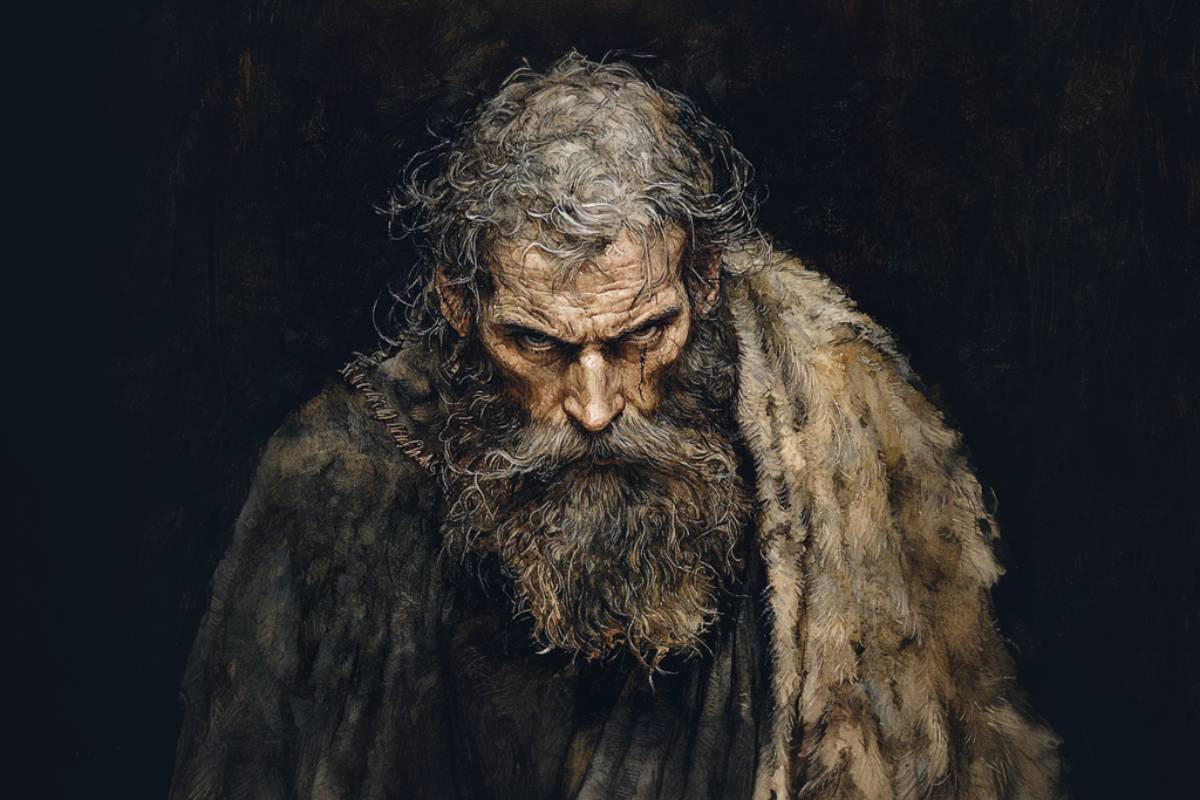
Breaking these meant social ostracization, punishment, or a fate even worse.
Viking law and order
History is said to be written by the victors, but Viking history is an exception.
Much of our modern perception of Viking societies comes not necessarily from their word, quill, or runestone, but from the biased accounts of the societies that they were battling, brawling, raiding, and ravaging.
We often think of Vikings as mere brainless barbarians, and can thus be excused for thinking their communities must have lacked law and order, ruled only by some sort of early-medieval chaos theory.
Whatever historical mud scholars like Adam of Bremen may fling at Viking societies, we know that these societies were remarkably law-abiding and orderly.
We have written widely about the debt many in the Western world owe these societies in their development of representative assemblies and democracy, their highly codified and complex legal rulings and judgments, and their general adherence to the rule of law... at home, if not certainly abroad.
Yet what happened when a member of a Viking community broke the law or wanted to live beyond the law? They became an outlaw.
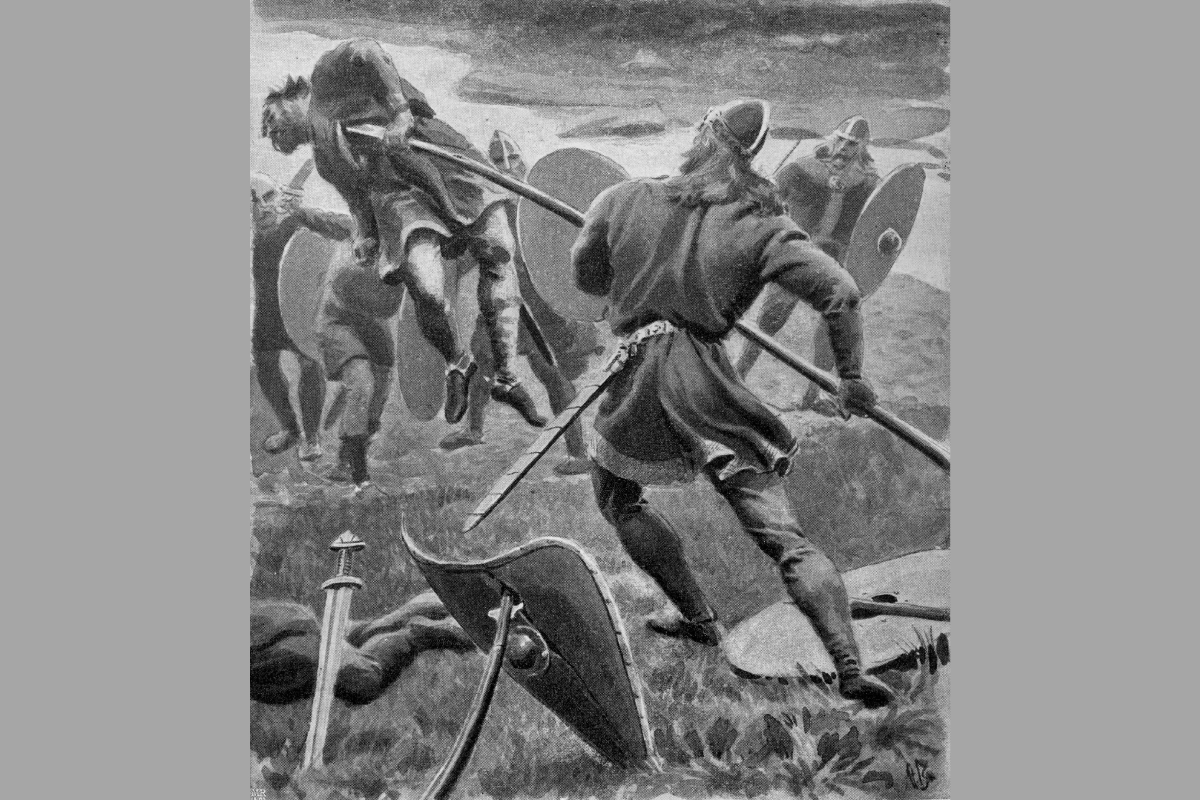
An illustration from "Njal's saga" shows Gunnar á Hlíðarenda in battle after he was made a full outlaw for refusing a three-year exile. Author: Andreas Bloch (1860–1917)
Short-term exile versus a skógarmaður
People in Viking societies lived in the early medieval period, a time of widespread political instability and violence.
Unlike in the modern world, there was no executive branch, such as a police force, to enforce and uphold the rule of law. One of the most profound punishments that could be imposed on an individual was outlawry, i.e., being deemed literally "outside the law" and thus having no protection from it.
This was often a punishment for the most heinous crimes involving serious theft, murder, breaches of honor or oaths, and/or political crimes, like assassination or conspiracy.
Robert Cook explains the two types of "outlawry" that Norse people enforced in the 2001 English translation of Njal's Saga. The first type, which was dubbed "lesser outlawry," saw the person "only banished from society for three years."
The outlaw was forced to "...leave the country and begin [their] sentence within three summers after the verdict, but once abroad he regained normal rights." Money was communally put aside for their family to support them in their absence.
The second type, dubbed "full outlawry," not only meant permanent banishment from the community, but also that the person had "...also lost all goods and all rights. Wherever he went, he could be killed without legal redress."
What made matters worse was that all property and wealth were taken from the outlaw.
They were often referred to as skógarmaður, which literally means "forest man" in Old Norse, as these outlaws were forced to live beyond society's boundaries, including places like the forest.
We also know of another famous outlaw who was forced to live in the forest with his merry men, but, alas, Robin Hood was no Viking.

Exiled under the law, Erik the Red sought safety to the west and returned with news of Greenland and a plan to populate it. Author: Paul Hardy (1862–1942)
Erik the outlaw
The most famous example of a Viking outlaw is the man who is credited with the biggest real estate marketing swindle of the pre-modern period, Erik the Red.
Erik grew up in Jæren, Norway; his family was forced to flee to Iceland when his father killed a man. Following in his father's lawless footsteps, Erik's story is told in the Saga of Erik the Red. Using an online version of the 1880 English translation by J. Sephton, we find that:
"...Eirik's thralls cause a landslip [landslide] on the estate of Valthjof, at Valthjofsstadr. Eyjolf the Foul, his kinsman, slew the thralls beside Skeidsbrekkur (slopes of the race-course), above Vatzhorn. In return Eirik slew Eyjolf the Foul; he slew also Hrafn the Dueller, at Leikskalar (playbooths). Gerstein, and Odd of Jorfi, kinsman of Eyjolf, were found willing to follow up his death by a legal prosecution; and then was Eirik banished from Haukadalr." [Chapter 2]
Like his father before him, having committed manslaughter (but doubled up from the body count from his old man), Erik underwent legal prosecution and was exiled as an outlaw.
Following his banishment, he went on to kill a man and two sons in a fight, and soon "Eirik and his people were outlawed at Thorsnes Thing."
With nowhere else to hide, he was forced to seek a safe place by sailing westward from Iceland and ended up an unintentional explorer. Returning to Iceland to spread the news of his discovery, Erik:
"...went to live in the land which he had discovered, and which he called Greenland, 'Because,' said he, 'men will desire much the more to go there if the land has a good name.'" [Chapter 2]
This is seen as the traditional story of the founding of the Norse settlements in Greenland. These settlements would outlive the Viking Age itself and last until the early 15th century CE.
The two examples of outlawry that Erik the Red suffered show us not only the very personal toll and the familial impact that outlawry has on an individual, but also how the harsh realities of Viking law could inadvertently lead to a reshaping of the Viking world through exploration and settlement.
Life beyond the law
People from Viking societies were renowned for their resilience, and outlawry was the ultimate test of this.
For individuals cast out of Viking society for a heinous crime, outlawry meant solitary exile, personal hardship, and the ever-present threat of death. However, for some, like Erik the Red, outlawry led to a more positive experience, full of discovery and exploration, which led to his eventual return to polite society.
Whereas Erik the Red survived and thrived in his life beyond the law, most outlaws had a far more dangerous and depressing existence.
For more information on the Viking settlements in Greenland, visit BBC History Extra here.
We get to provide readers with original coverage thanks to our loyal supporters. Do you enjoy our work? You can become a PATRON here or via our Patreon page. You'll get access to exclusive content and early access.
Feel free to reach out to discuss potential stories that may be in the public interest. You can reach us via email at hello@thevikingherald.com with the understanding that the information you provide might be used in our reporting and stories.




.jpg)