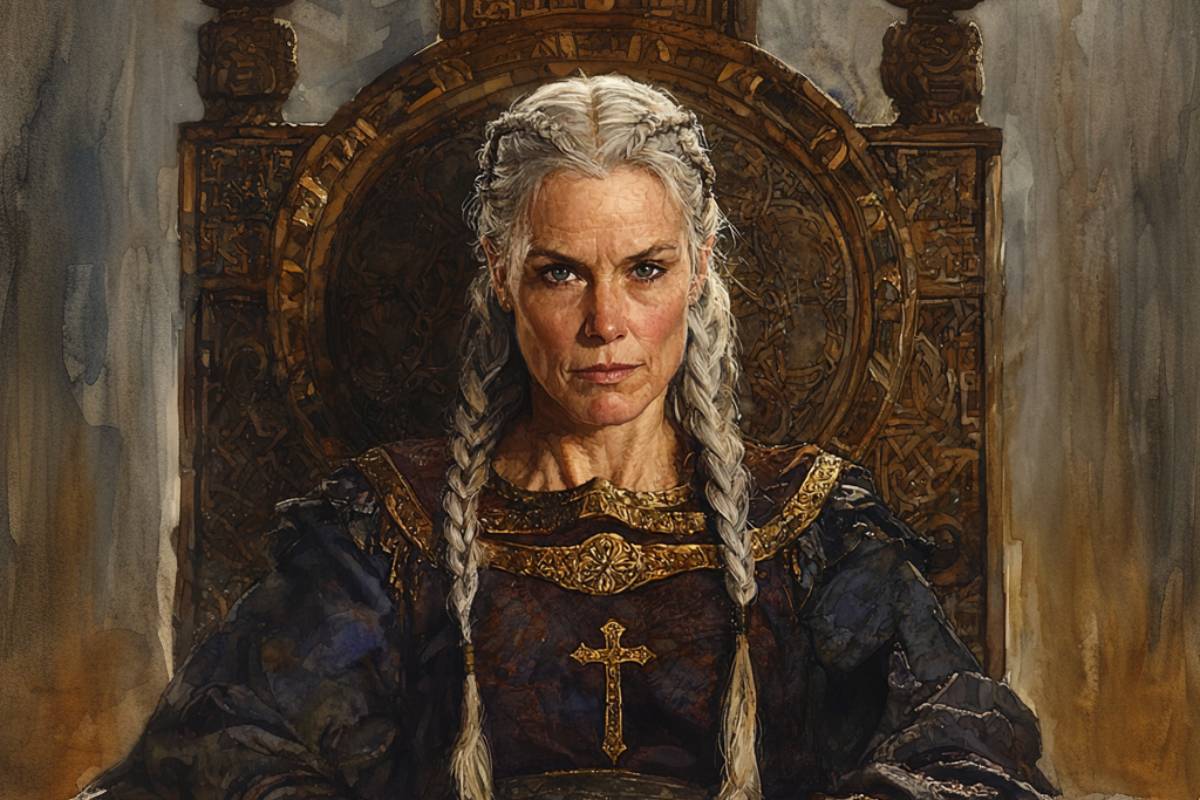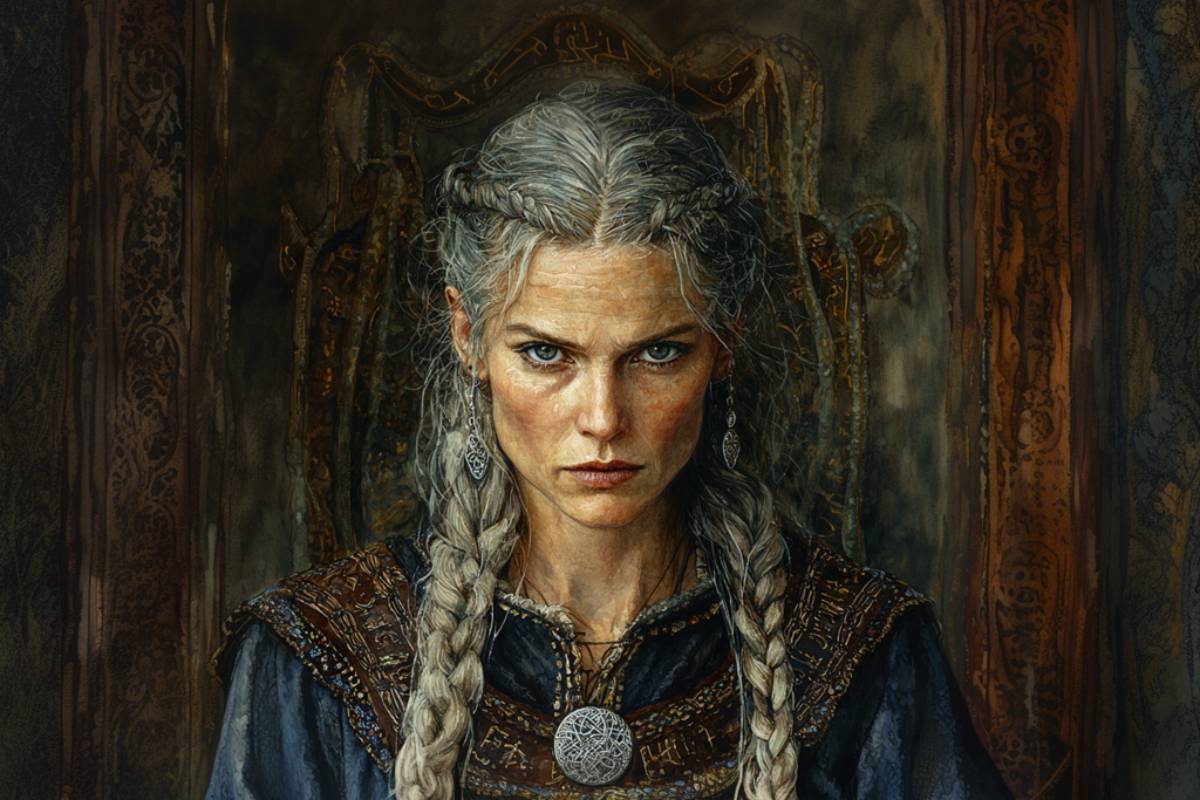


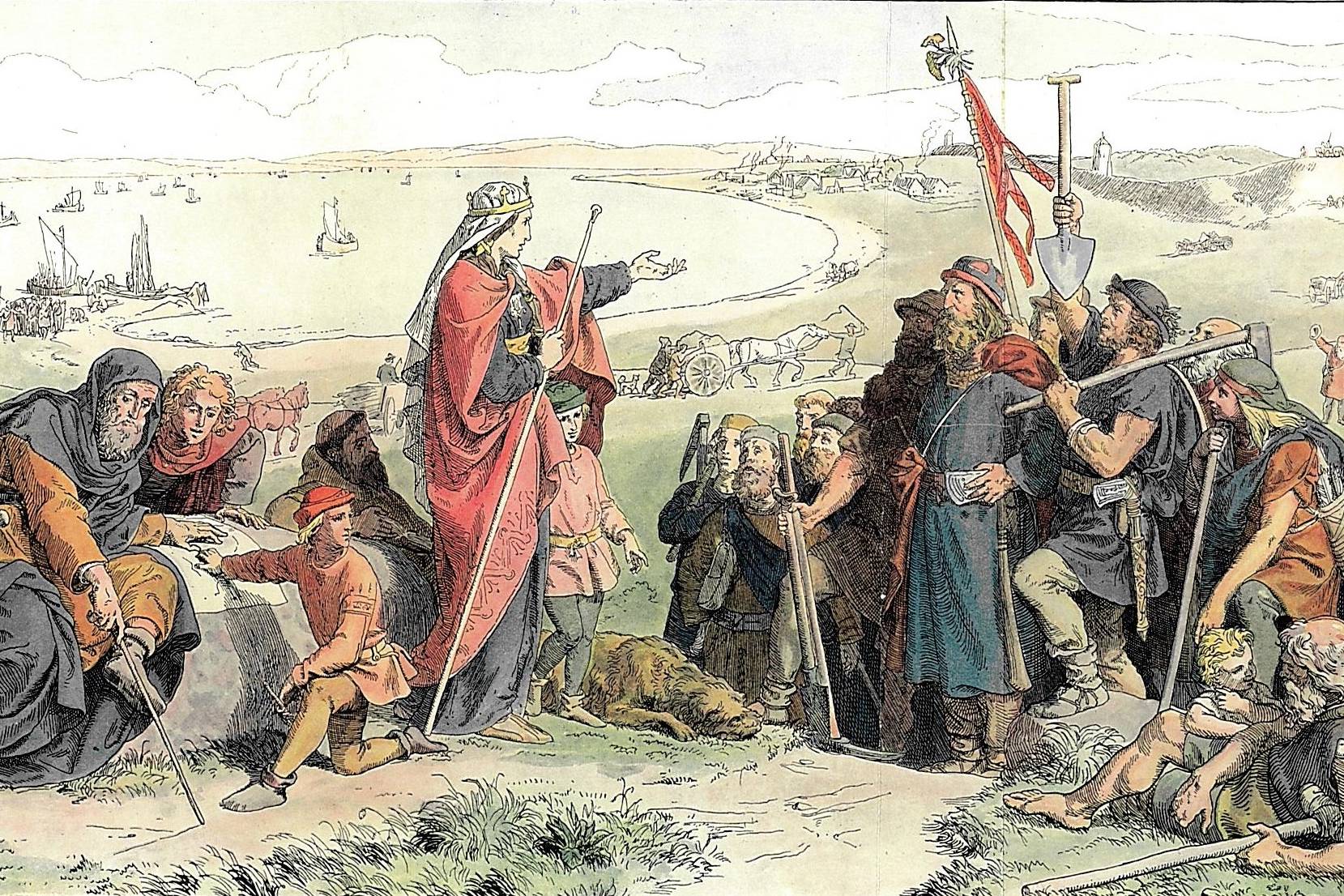
The OG matriarch of Denmark, however, Queen Thyra, was partly responsible for the creation of the nation itself way back in the early medieval period.
Though much myth surrounds this legendary Danish queen, we explore the history behind this mighty monarch.
When was Europe born? Around the early medieval period!
So many nations that make up Europe today have their origins in the early medieval period.
From England to Estonia, Spain to Sweden, the messy historical period we lump together between Classical Antiquity and the Early Modern period truly is the birthplace of many a European nation.
In many ways, Europeans still live in a world that was formed, shaped, and molded during the early medieval period.
Gazing up on the northern frozen fringes of Europe, we find Denmark.
Nowadays, it is a sophisticated Scandinavian country full of uber-chic design, not many hills, one particularly overrated beer (not the opinion of everyone here at The Viking Herald, just the current author), and Vikings!
Yes, back in the early medieval period these warriors were so synonymous with what is now Denmark that the term used by many other cultures and civilizations for Vikings and Danes was often interchangeable.
As Barbara Yorke writes in the foreword of the 2015 book Danes in Wessex: The Scandinavian Impact on Southern England c. 800–1100, "When did aggressive Vikings morph into more acceptable Danes...?"
When did they indeed?!
Seen as one of the birthplaces of Viking warriors, Denmark has a history that stretches back thousands of years. Yet its formation as a unified nation under a single monarch can be directly traced back to the very beginnings of the Viking Age (c. 750–1100 CE).
Whilst Gorm the Old is traditionally credited as having founded a royal dynasty and forging a Danish kingdom, his wife and consort, Thyra, played a significant role in this early medieval nation-building.
Her story has been largely overlooked, and we are happy to illuminate the hidden history of Queen Thyra, Denmark's royal matriarch.
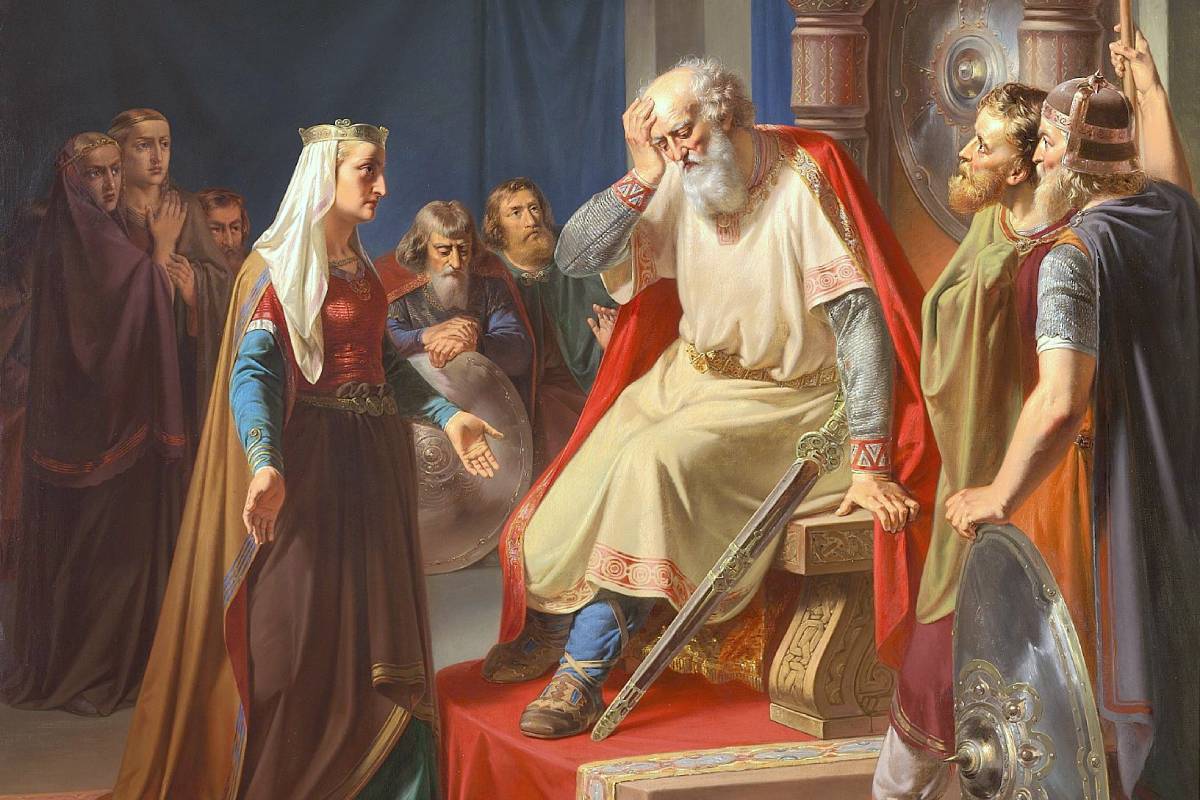
This 19th-century painting depicts Queen Thyra delivering the news of their son Knut’s death to Gorm the Old. Source: August Carl Vilhelm Thomsen (1815–1886)
Gorm the Old
As with many historical figures from the early medieval period—that millennium roughly wedged in the Western mind between the fall of the Western Roman Empire and the Renaissance—we have scant information about this queen's early life.
We know little of when or where she was born, and what little we do know is from later medieval sources written centuries after her life.
Later medieval sources and sagas offer conflicting accounts of her origins. Some claim she was a noble from the Kingdom of Wessex, others that she was born in Denmark or in the region that is now Germany.
Despite this muddled background, we can see that wherever she was born, all sources seem to suggest she was of high birth.
We know little of her courting (pun intended) with Gorm the Old, but the two appear to have been married sometime before or after Gorm became king of all Denmark in 936 CE.
With Thyra's life story possessing more holes than a piece of Swiss cheese, it is here we turn to medieval sources.
According to the Gesta Danorum, a 12th-century chronicle of the early medieval history of the Danes written by Denmark's first historian, Saxo Grammaticus, Thyra was indeed of royal blood.
Using the 1960 English translation by Oliver Elton, it is in Book Nine, we find that Gorm:
"...wooed Thyra, the daughter of Ethelred, the king of the English, for his wife. She surpassed other women in seriousness and shrewdness, and laid the condition on her suitor that she would not marry him till she had received Denmark as a dowry..."
So, some could argue that the whole formation of the medieval Danish kingdom was just a bit of bravado for Gorm the Old.
If we are to believe Saxo Grammaticus, then Gorm did it—in the words of that great 20th-century philosopher and musician Fred Durst: "all for the nookie"!
This is reinforced later in the chronicle when Grammaticus claims that she put off marital relations in an attempt to convert Gorm the Old to her Christian religion.

The younger Jelling stone was raised by Harald Bluetooth to honor his parents, Gorm and Thyra. Photo: Roberto Fortuna / National Museum of Denmark (CC BY-SA 3.0)
A royal matriarch
Eventually, though, it appears that Thyra gave in. Their marriage produced two sons: Harald Bluetooth and Knut Danaást.
According to the Historia Norwegiae, again a later medieval chronicle, their marriage also produced a daughter named Gunnhild.
She is sometimes referred to as the Mother of Kings and was the wife of Eric Bloodaxe. However, their daughter is, at best, a semi-historical figure shrouded in the mystery and legend of the sagas.
For her son Harald, however, we know that he was a genuinely historical figure and quite literally left his mark.
Not only did he succeed his father as the king of Denmark when Gorm died in c. 958, but both his parents seem to have left a deep impression on the man brilliantly nicknamed (though not for your dentists out there) Bluetooth.
Harald was responsible for erecting the larger of the two runestones at Jelling, the royal court, honoring both his parents and commemorating his role in the early Christianization of the Danish realm.
Recent scientific analysis of the runestones has cast new light on the power and influence of Thyra as a monarch of this newly formed nation.
The runestones at Jelling are not the only mention of Thyra, as she is named on two more, which, as Lisbeth M. Imer, Laila Kitzler Åhfeldt, and Henrik Zedig write in their 2023 article in the journal Antiquity, is "unparalleled [for a woman] in Viking Age Denmark."
It should also be noted that Thyra was the matriarch of a powerful royal family that included her descendants Harald Greycloak, Sweyn Forkbeard, and Cnut the Great.
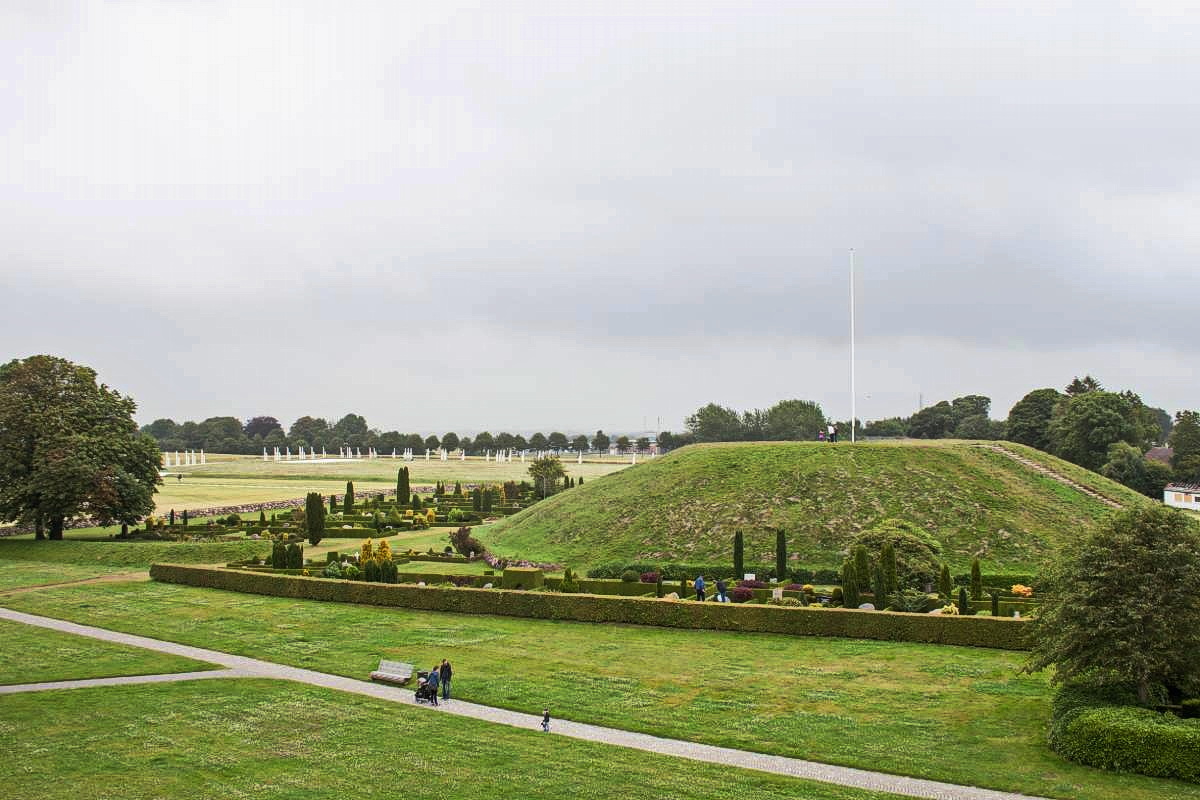
Thyras Hoj is a barrow at Jelling traditionally believed to be Queen Thyra's grave. Photo: Szilas
Sexist smears and the Danevirke
Despite being overshadowed by her husband and son, both powerful figures in Danish history, Thyra appears to have been quite a formidable figure in her own right.
We have countless references to her guile, cunning, and intelligence in the Norse sagas—some of this portrayed as a great asset, whilst much of it could be part of the usual medieval sexist smear campaign against women possessing anything more than a few brain cells.
Intelligent women were seen as devious and untrustworthy; therefore, we do not know how much of Thyra's cunning guile was truthful and how much was just a sexist trope.
Thyra ruled, with Gorm, as the queen consort of Denmark from c. 936 until his death in 958. We know almost nothing of this time when she was at the very height of her power.
Yet we have one powerful anecdote from this time: Thyra is said to have been responsible for the construction of the Danevirke, a huge series of fortifications on the kingdom's southern border that separated it from what was then the Holy Roman Empire.
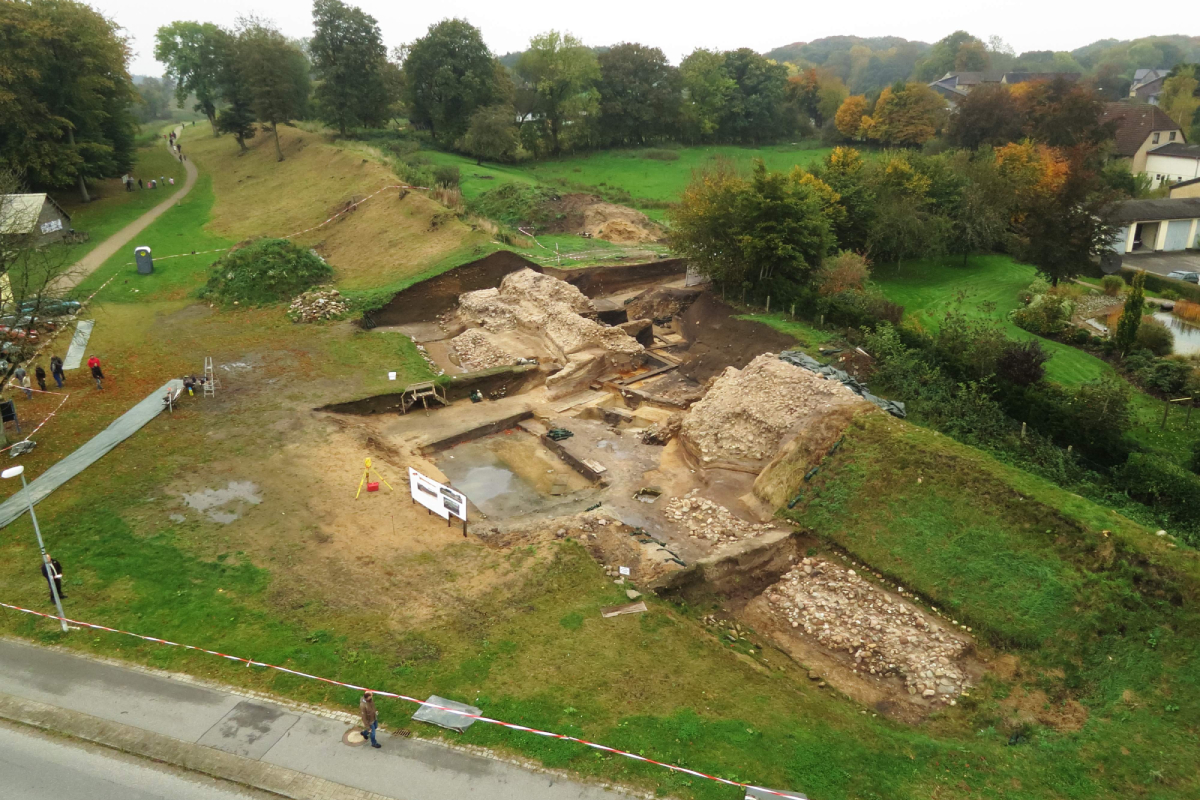
Scientific analysis of the archeological remains of part of these fortifications—a section called Danevirke 3—roughly corresponds with her time as queen consort, c. 940, so there may well be a shred of historical truth in this tale.
That a woman in this era would be responsible for this military venture speaks to Thyra's unique and powerful role in this early stage of Danish history.

The first Jelling stone, the smaller one, was carved by Gorm the Old to commemorate Queen Thyra. Photo: auralaura / Shutterstock
Her legacy is etched in stone
So then, what do we make of all these conflicting reports about Thyra, Denmark's first queen? Was she a devious and cunning woman or a powerful queen who oversaw infrastructure projects of national importance?
We do not know exactly when she died. The sagas say she outlived her husband, but the runestone at Jelling says she died before he did, around c. 963.
Perhaps the best word should be left to what is written in stone at Jelling.
In medieval Denmark, it was traditional for women to sponsor the erection of runestones rather than men, and thus, of the ten dedicated to women, four honor Thyra.
Chiseled into the large rock at Jelling is a title that befits this mysterious but probably powerful figure.
For her son, and all Danes ever since, Thyra was "Danmarkaʀ bót," which roughly translates, in English, to "Denmark's strength" or "Denmark's salvation."
With so much of her life shrouded in mystery, this title remains a powerful indication of Thyra's role and influence in the very early stages of the Danish nation.
For more information on the recent scientific analysis of the Jelling runestones, visit National Geographic here.
We get to provide readers with original coverage thanks to our loyal supporters. Do you enjoy our work? You can become a PATRON here or via our Patreon page. You'll get access to exclusive content and early access.
Feel free to reach out to discuss potential stories that may be in the public interest. You can reach us via email at hello@thevikingherald.com with the understanding that the information you provide might be used in our reporting and stories.