


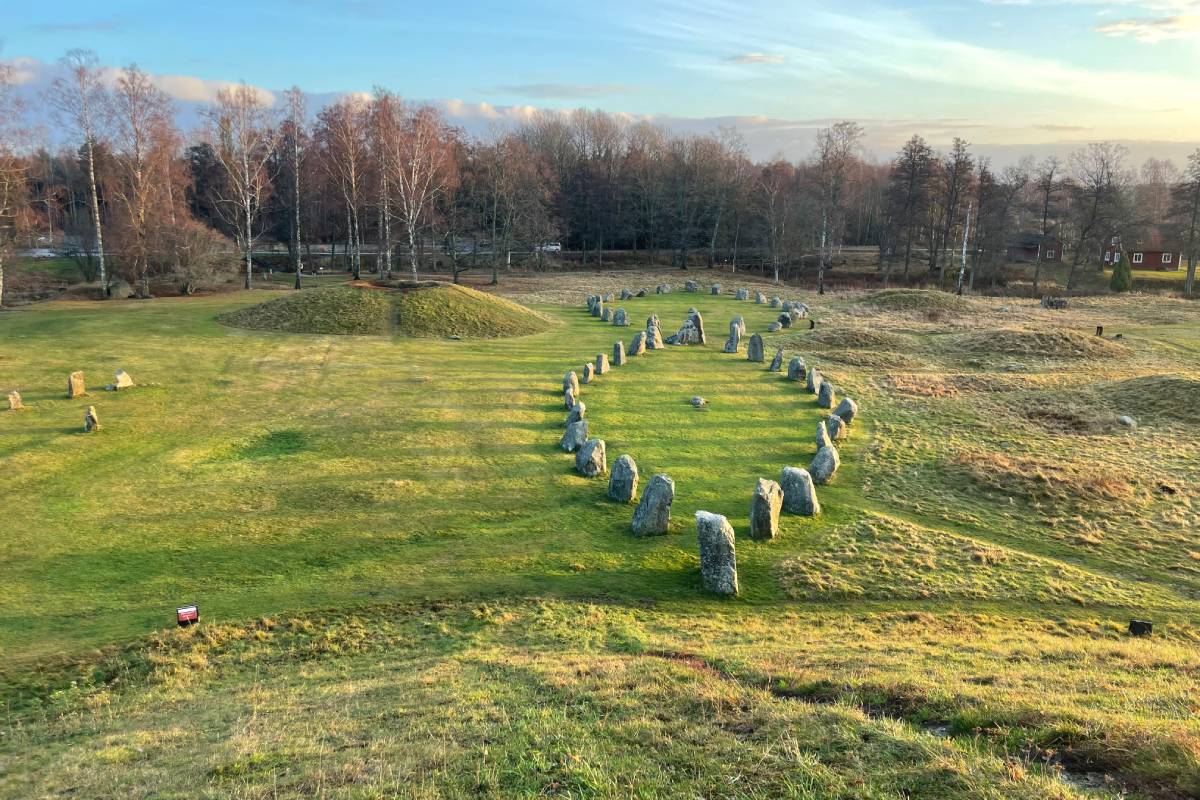
The people who raided Viking graves at the Anundshög site near the city of Västerås in central Sweden have still not been found. The crime has shocked both the staff at the site and local residents.
The Viking Herald speaks to Emily Becker, an archeologist and cultural heritage educator at the site, about her dismay at discovering the crime, the ongoing police investigation, and the importance of preserving our cultural heritage.
An unpleasant shock
As Sweden's largest burial mound, Anundshög is a site of national importance.
The area around the mound itself is also significant and contains a number of stone settings and Viking graves.
As reported by The Viking Herald, the looting took place not at the mound itself, but in the adjacent graves, with nearly 60 pits dug by unknown perpetrators in an apparent attempt to extract ancient treasures.
Emily Becker was at the site when the crime was discovered on Tuesday, May 6.
"There are two archeologists working here at Anundshög, myself and my colleague, Sarah. One of the main things we do is invite school classes to the site so we can teach them about the prehistory and archeology here," Emily explains.
"Sarah was out in the grave area with the schoolchildren, and when they were in the ship setting, she spotted something. It wasn't a hole per se, because whoever had done it had put the earth back together, but she could see an unusual circle in the grass."
"Sarah tried to distract the kids and did her best to wrap up the talk as soon as possible," Emily adds.
"She came and got me, and we started to investigate together. We carefully lifted up the turf and pretty quickly realized what had happened. We started to look for more pits and discovered one more, then two, then three. Within the hour, we were up to nearly 50."
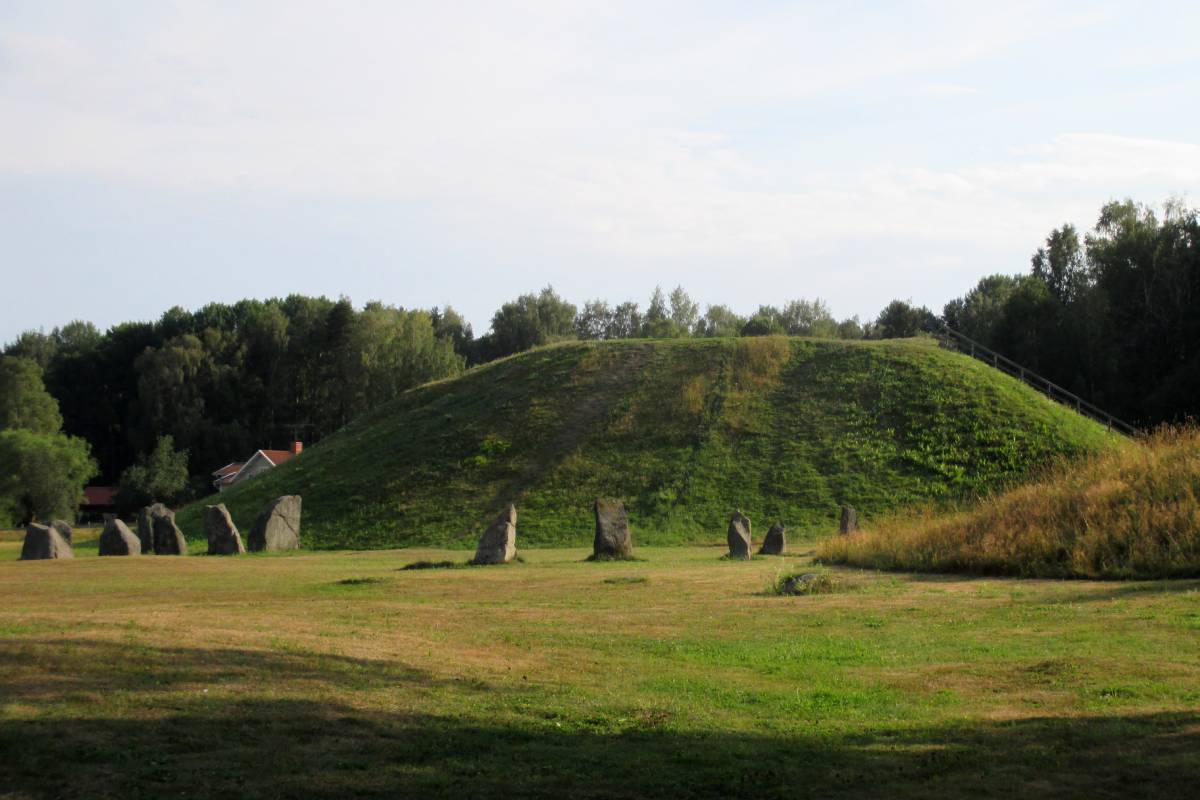
The looters avoided the main mound and focused on the surrounding Viking graves. Photo: Gunnar Creutz (CC BY-SA 4.0)
A thorough theft
Emily believes the raid was likely carried out by professionals.
"I think they knew what they were doing. They were experienced metal detectorists," Emily informs us.
"It was also pretty neatly put together afterwards. The looters had deliberately placed the grass back so it wouldn't show as much. They had gone over the area with metal detectors and would have been trying to take anything of possible value."
"The holes were pretty varied in size," Emily adds. "Some of them were very small, and others were bigger—like frozen pizzas, as I think my boss Nina Eklöf put it."
"They were also different shapes. Some of them were completely round, and others were squares or rectangles. They had a depth of something like 8 centimeters to 20 centimeters."
"Here in Sweden, that is enough because our layers are very shallow, especially in a place like this, where the soil hasn't been cultivated."
Unsurprisingly, both Emily and the rest of the team have been left bereft by the crime.
"It's kind of hard to describe because it didn't really sink in at first," Emily admits. "Well, it still hasn't, I can't really believe what happened here. It was frustrating that someone could do something like that to a place like this."
"You became very sad and angry and everything in between. But mostly, we just focused on trying to figure out the extent of the looting."
- READ MORE: The Viking history of Sweden at a glance
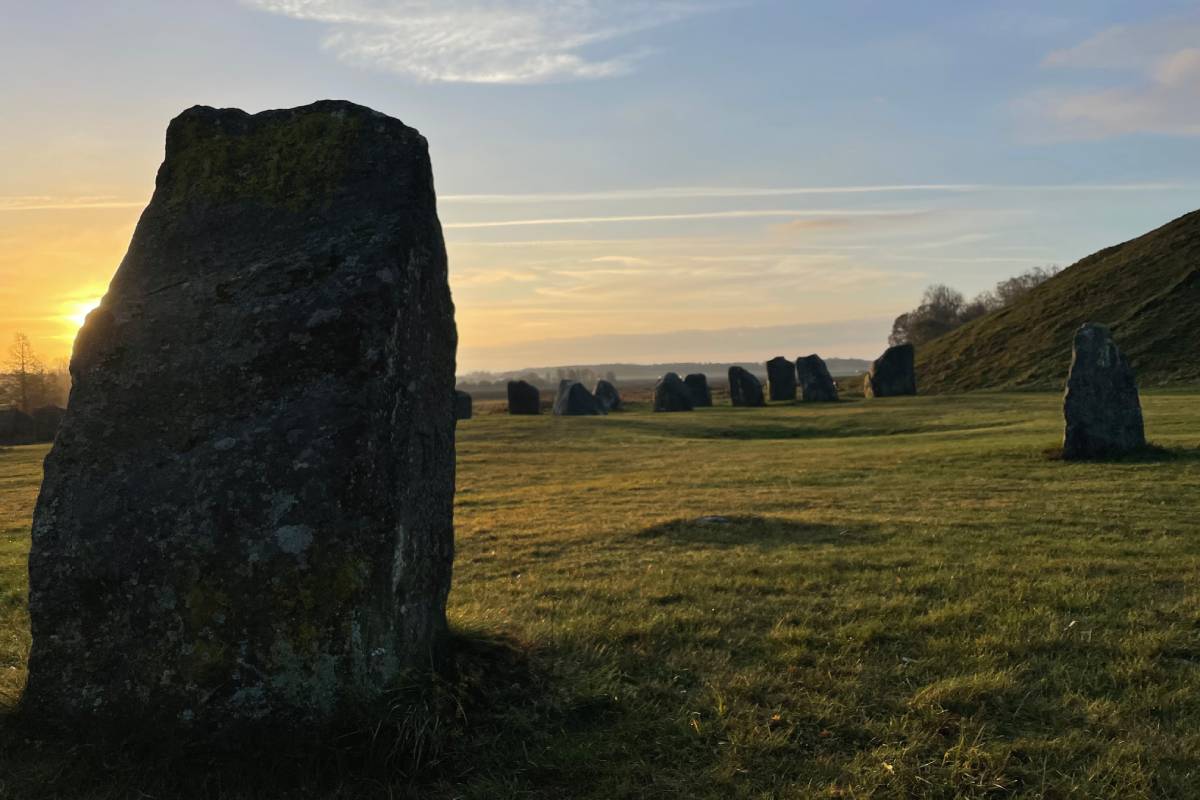
With only minor excavations ever done, Anundshög remains largely untouched, making the recent disturbance all the more serious. Photo: Västerås Museums
Against the spirit of conservation
Naturally, the archeologists were soon in touch with the authorities.
"The next step was to tell our bosses, and they contacted the county unit for assistance and also the police, who came to the site," Emily informs The Viking Herald.
"A lot happened—we also talked to the media, and it was a bit of a circus at times!"
Nearby residents were also left upset by the violation of this ancient site. "The locals were especially distraught," Emily admits. "Though they were also curious and had a lot of questions about it, and about who might have done it."
As Emily explains, the attack was particularly painful given how much effort has been made to preserve the site. For centuries, experts have strongly emphasized the importance of protection and conservation at Anundshög.
"There have only been a few archeological excavations in this area, and always smaller ones, never a large one," Emily points out.
"Everything here is pretty much untouched. With archeology here in Sweden, we always work mainly to preserve our heritage and ancient remains."
"We try to keep everything undisturbed, because archeology is very destructive. Once you start digging, it's gone forever, so whenever possible we try to leave it be."
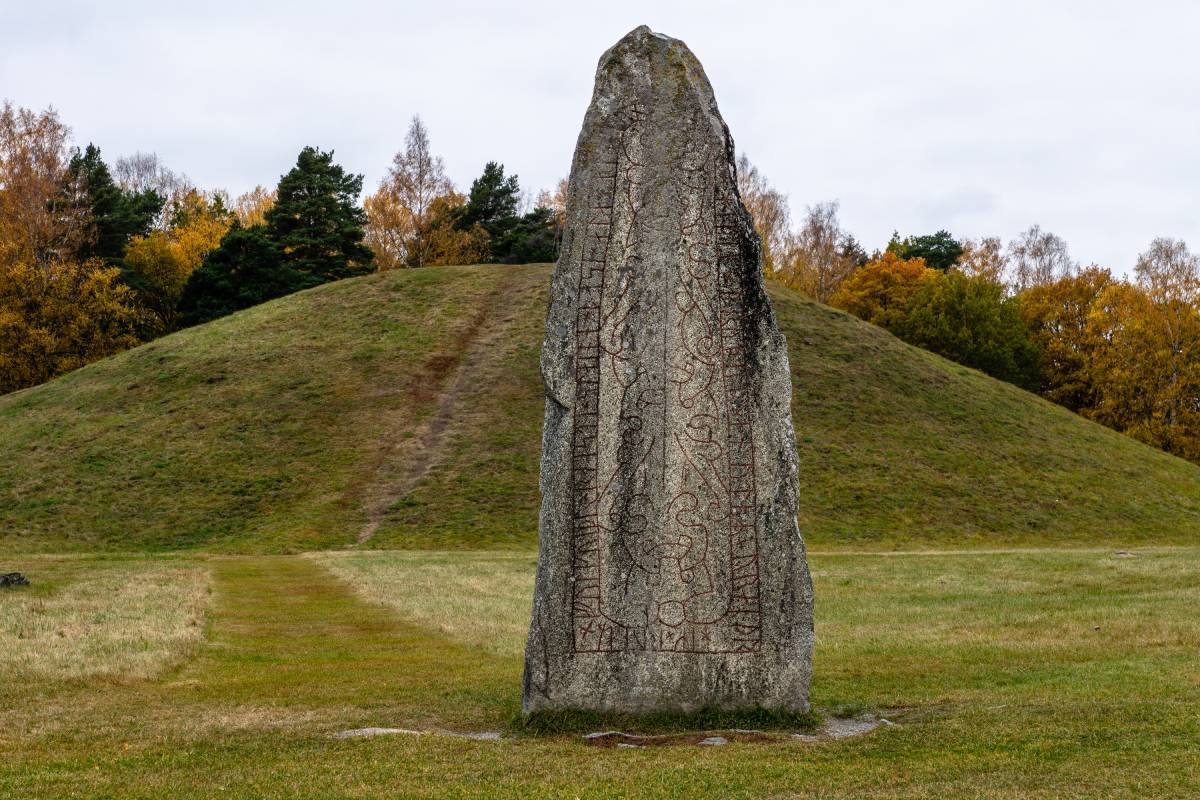
The nearby runestone may reference Amund, whose name lives on in Anundshög ("Amund’s Mound"). Photo: Magnus Binnerstam / Shutterstock
A unique part of Sweden's history
As Emily tells The Viking Herald, Anundshög is a truly special site.
"It is a place with a very long and rich history. This area was a power center for 1,000 years. We believe that petty small kings used to rule over this area and had their headquarters here."
"We have the largest burial mound in Sweden, one of the largest ship settings, and also a pretty unique runestone," she explains.
"The runestone is located on the road that used to pass through here during the Viking Age," Emily adds.
"The inscription said that the stone was erected as a monument to honor Heden, the son of Folkvid, a powerful local ruler. It also states that Heden is the brother of Amund. This could be linked to the name Amundshög, which means 'Amund's Mound.'"
"The motif on the runestone is unique. It appears to show a man and a woman intertwined," Emily explains.
"We have not seen this anywhere else. Usually, on runestones, you have patterns of dragon heads, boats, or perhaps Christian crosses. Overall, we can say this place has a lot of mystery."
"We also don't know what's in the big burial mound or why they have such large ship settings. The one thing we can say for sure is that this was a center of power for a very long time."
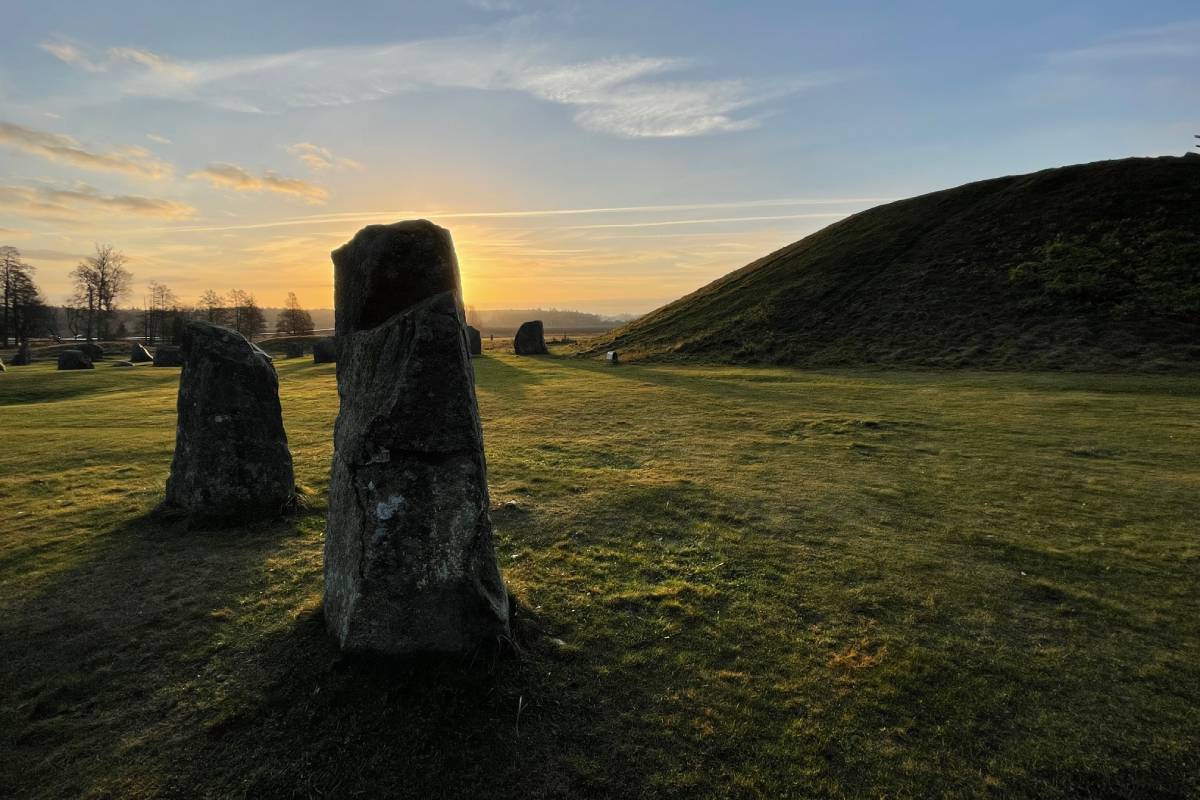
Few past excavations make it difficult to know whether the looters took valuable artifacts. Photo: Västerås Museums
The search goes on
Unfortunately, the decision to keep the site intact means it is far from easy to ascertain what may have been stolen.
"We actually have very few findings from Anundshög," Emily tells The Viking Herald.
"There was one burial mound in the local area that was excavated a long time ago and contained lots of precious gold items. So we do know they could have found gold artifacts or similar objects."
"But they didn't target the burial mound specifically this time," Emily adds.
"Hopefully, there was no gold or silver or anything like that to be found. I hope they only found nails instead."
"There's still an active police investigation. Indeed, there is hope among locals that the raiders might reveal themselves in the coming weeks." Emily, however, knows how difficult it will be.
"I think it could be really hard to catch the people or the person who did this, because there is no surveillance in the area," Emily admits.
"And if they did it in the middle of the night, it means there were no people around either. But I hope they do find them. It's in the hands of the police."
We get to provide readers with original coverage thanks to our loyal supporters. Do you enjoy our work? You can become a PATRON here or via our Patreon page. You'll get access to exclusive content and early access.
Feel free to reach out to discuss potential stories that may be in the public interest. You can reach us via email at hello@thevikingherald.com with the understanding that the information you provide might be used in our reporting and stories.



_4665.jpg)