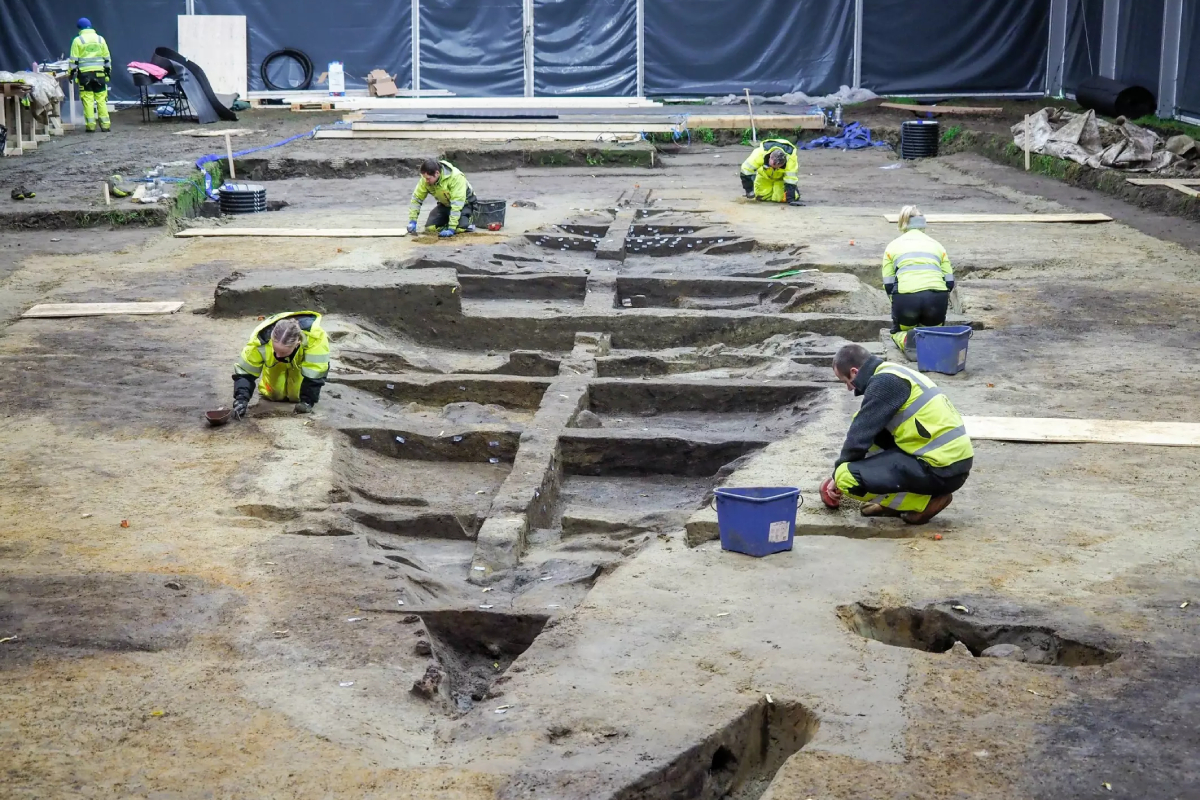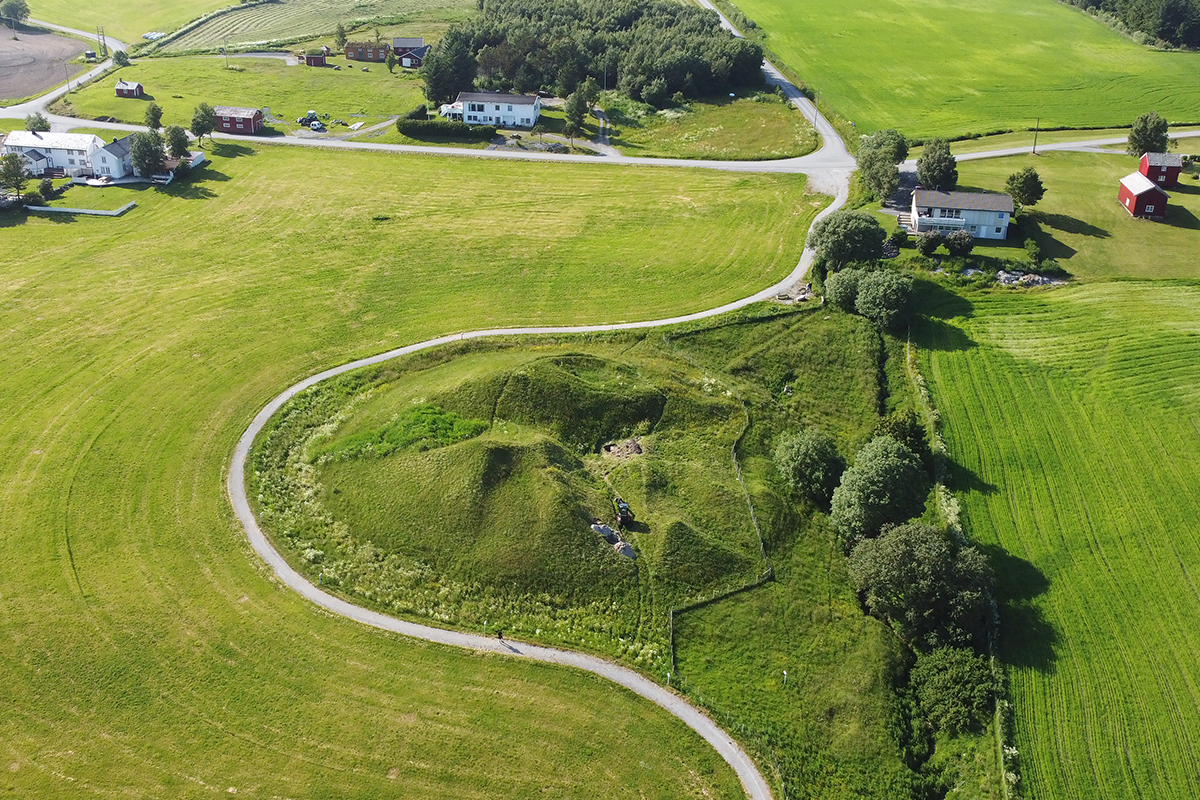


Recent analysis of archeological investigations in Oslo, Norway, have suggested that a 13th-century royal manor was built on a Viking Age boat grave. Experts from the Norwegian Institute for Cultural Heritage Research (NIKU) believe these findings could challenge the traditional narrative of the foundation of Oslo.
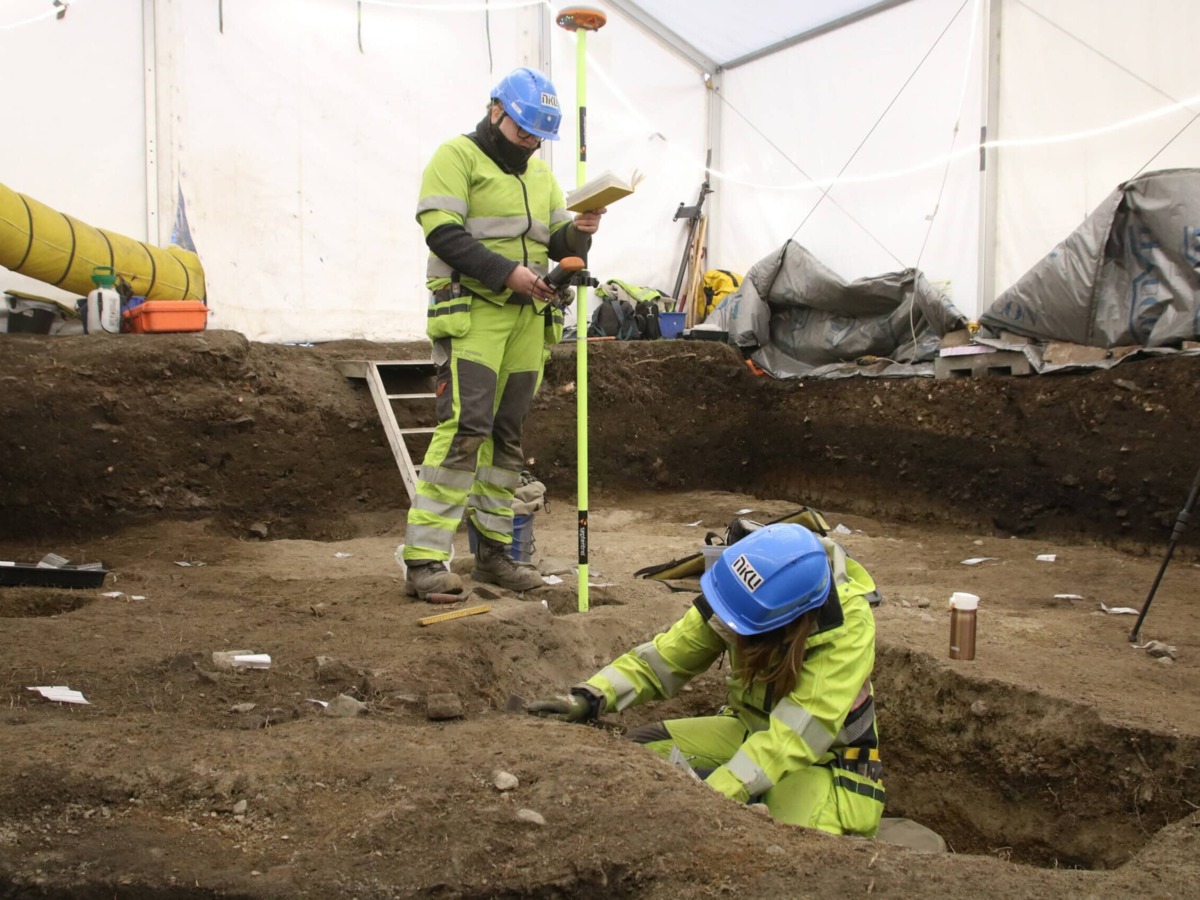
Excavations at the royal manor in 2023, Source: Sara Langvik Derrick, NIKU
The motte-and-bailey theory
The ruins of a 13th-century royal estate lie just below the Ekeberg Hill in Norway’s capital. In the 1960s, the archaeologist Oluf Olsen uncovered evidence of an earthen mound and surrounding ditch when excavating the remains of the manor.
The dig also revealed a small hoard of coins that was dated to the mid-11th century. The dating indicates the hoard was placed there in the period when Harald Hardrada is said to have established the town.
Olsen and his team believed the mound and ditch were part of typical medieval fortifications. With this theory, the mound helped form a motte-and-bailey construction, a wooden or stone keep place on a raised area of ground (the motte), accompanied by a walled courtyard (the bailey), and surrounded by a protective ditch and palisade.
Together, these findings appear to support the idea that the history of Oslo begins in the Hardrada era. Further excavations carried out in 2023 and extended subsequent research, however, have brought this assumption into question.
Changing the narrative?
“If you examine the construction itself, you find a great deal that does not fit the motte-and-bailey theory,” Michael Derrick, a NIKU archaeologist and researcher who worked on the 2023 digs, commented in a recent press release.
“The ditch is shallow, only about half a meter deep, and the mound is small compared to known motte and bailey sites in Europe. There are no known examples of such structures in 11th‑century Scandinavia; motte‑and‑bailey castles appear in Denmark only much later, during the 12th and 13th centuries.”
The hoard of coins also presents a challenge to the original theory. The coins were found in a small pit that had been dug in the top of the mound. This would suggest the mound almost certainly existed prior to when the coins were placed there in the 11th century.
In addition, lab analysis from the 2023 excavations indicated activities related to a possible settlement in the area as far ago as the 6th-8th centuries CE. As they analyzed the available evidence, Derrick and the rest of the team began to realize that the mound may have been made earlier, and likely served a different purpose entirely – a boat burial.
A riveting clue
The reason for this assumption is based on another find at the site – the presence of more than a thousand rivets – a form of clinker nail used in boat building in Scandinavia for many centuries. The archaeologists on the 2023 dig found hundreds of rivets, while the records show there were many more collected during the 1960s excavations – though many were later discarded.
Derrick notes that metal rivets were not used in the construction of houses in Oslo at this time. Most of the rivets also appear to have been left largely intact. Together, these two facts appear to suggest the nails belonged to one or more vessels that were deliberately buried in the mound – a common form of burial for important people in the Viking Age.
“In total, more than 1,100 nails and nail fragments were recovered from the mound, many of which were clinker nails,” Derrick noted on the NIKU website. “Such quantities found in such a confined area are very difficult to explain in any other way than as the remains of a vessel.”
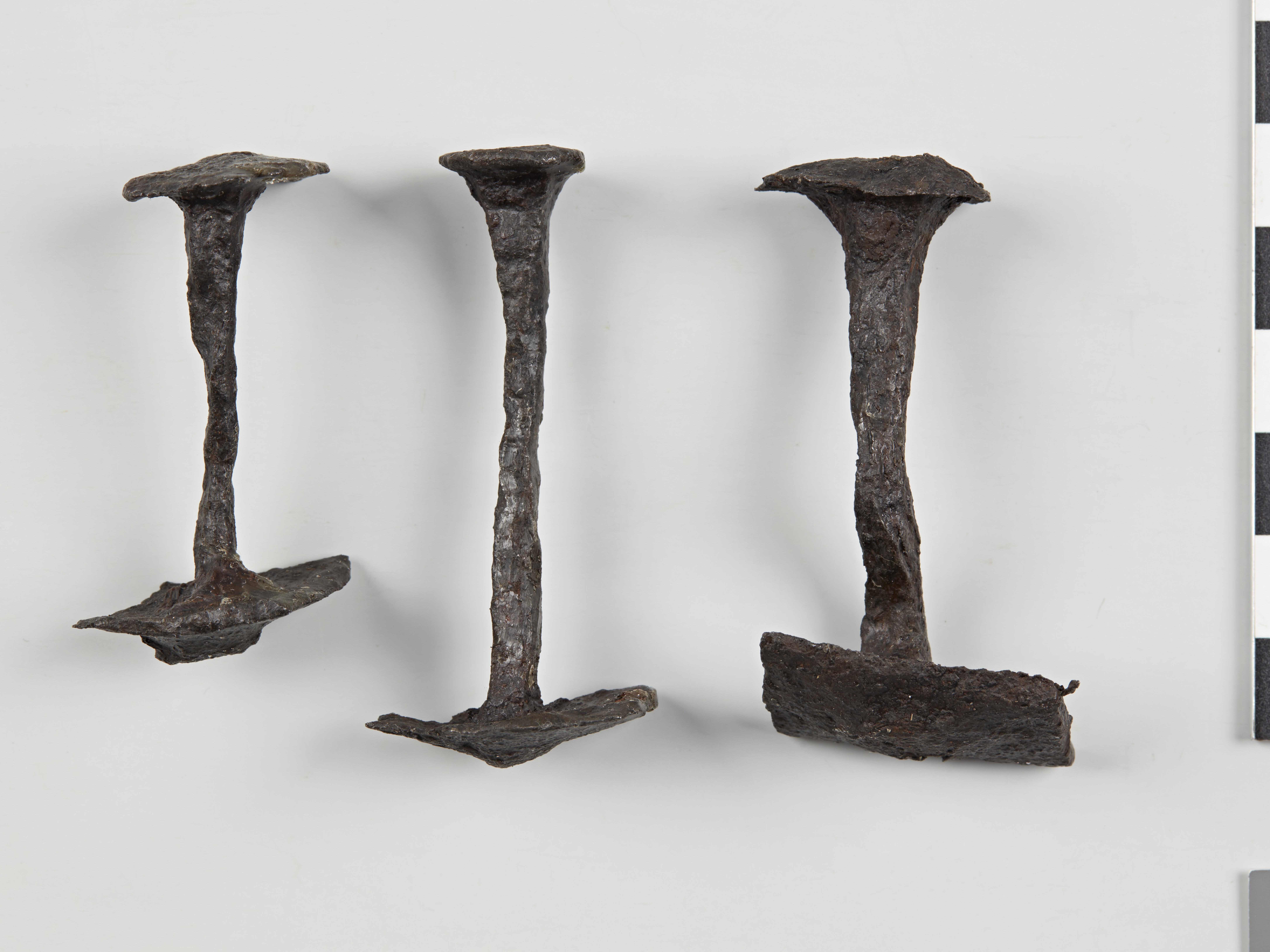
Clinker nails found at the site. Source: Sara Langvik Derrick, NIKU
Testing the hypothesis
As Derrick further investigated this theory, he asked Knut Paasche, an expert on Viking ships and head of the Digital Archaeology Department at NIKU, to examine the nails in detail. Paasche was able to confirm the rivets were indeed used in boat construction, and belonged to one or more vessels.
Significantly, radiocarbon dating also indicates that the mound was made in the late Viking Age, towards the end of the 9th or the beginning of the 10th century. Paasche indicates that the location of the mound would also fit with the boat burial theory.
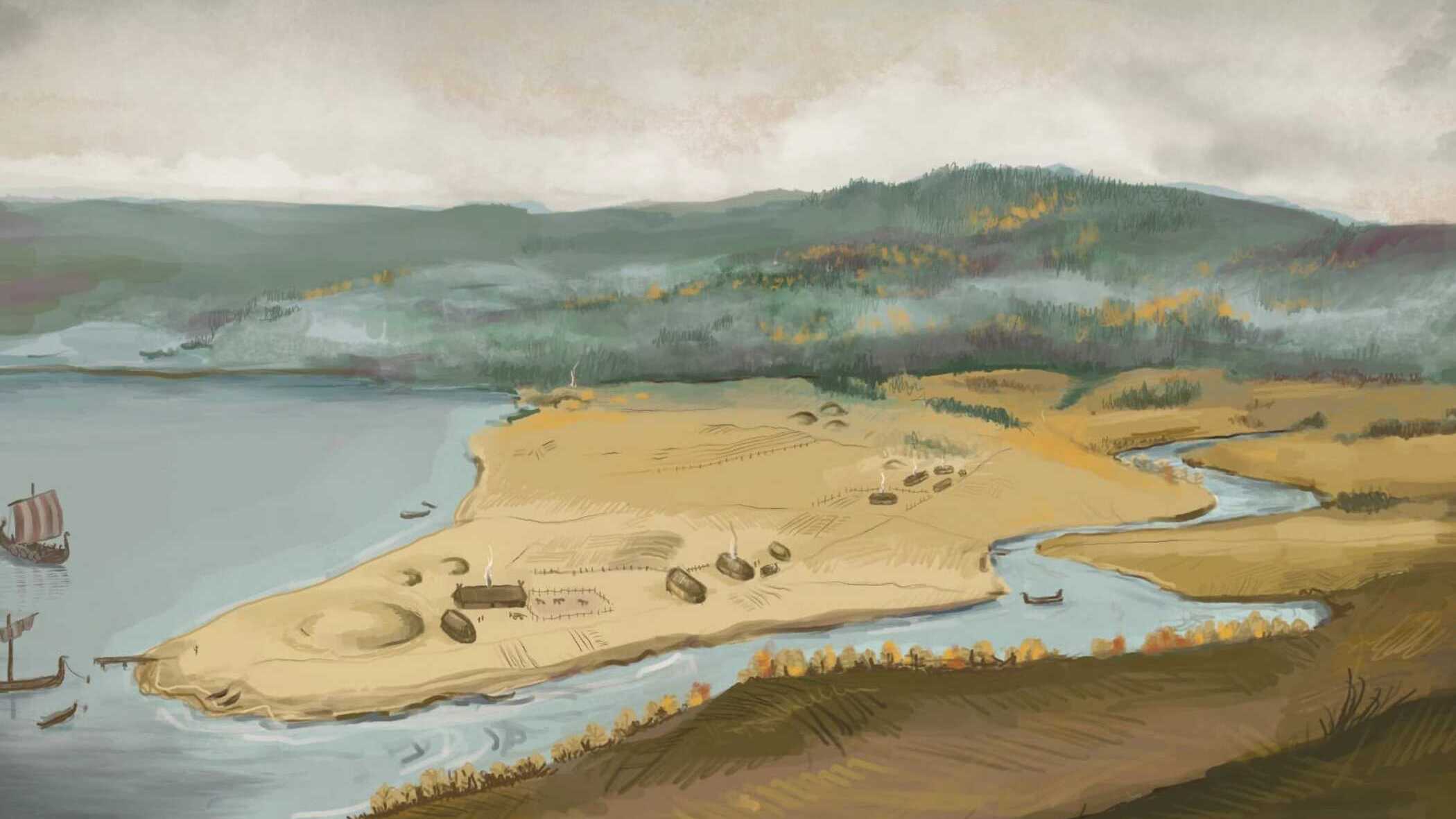
“The location also makes sense. In the Viking Age, the area lay close to the shoreline,” Paasche commented in the press release. “A burial mound lying on a promontory, facing the fjord would have been highly visible to passing traffic and functioned as a clear statement of power, belonging and control over the landscape and communication routes.”
Beyond Hardrada
If correct, the mound theory would suggest the settlement at Oslo predates Harald Hardrada – a challenge to the traditional story of the Norwegian capital. With this hypothesis, Hardrada did not create the town from scratch, but instead built on the work of others.
“Evidence indicates that the town founded by Harald Hardrada in the mid‑11th century was established on a site which already had a well‑developed settlement. This settlement was founded by local elites who utilised the land and sea and practiced their rituals,” Derrick commented to NIKU.
This theory also fits with a pattern seen throughout Scandinavia, where the old makes way for the new again and again. “New powerholders reuse old monuments, consciously or unconsciously, and assign them new functions,” Derrick added. “The coins deposited in the mound during the 11th century may have marked a transition from grave and memorial to defence and trade.”
We get to provide readers with original coverage thanks to our loyal supporters. Do you enjoy our work? You can become a PATRON here or via our Patreon page. You'll get access to exclusive content and early access.
Feel free to reach out to discuss potential stories that may be in the public interest. You can reach us via email at hello@thevikingherald.com with the understanding that the information you provide might be used in our reporting and stories.