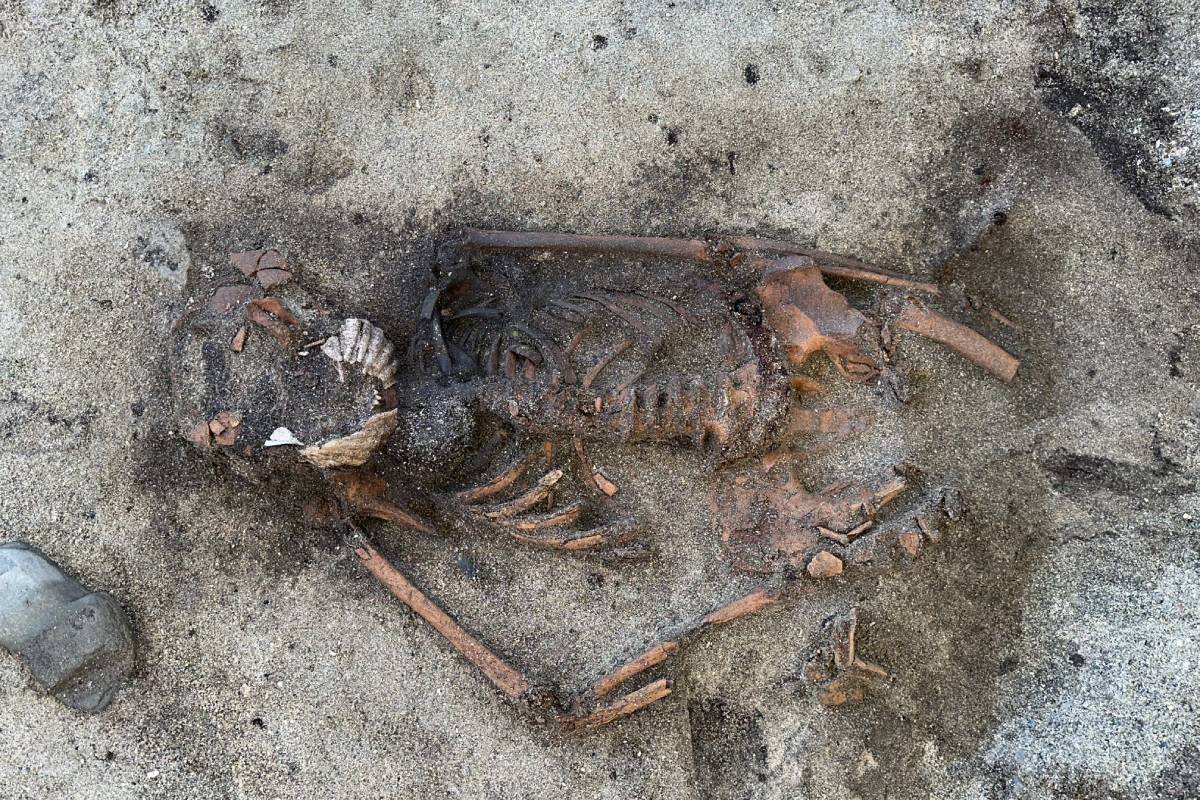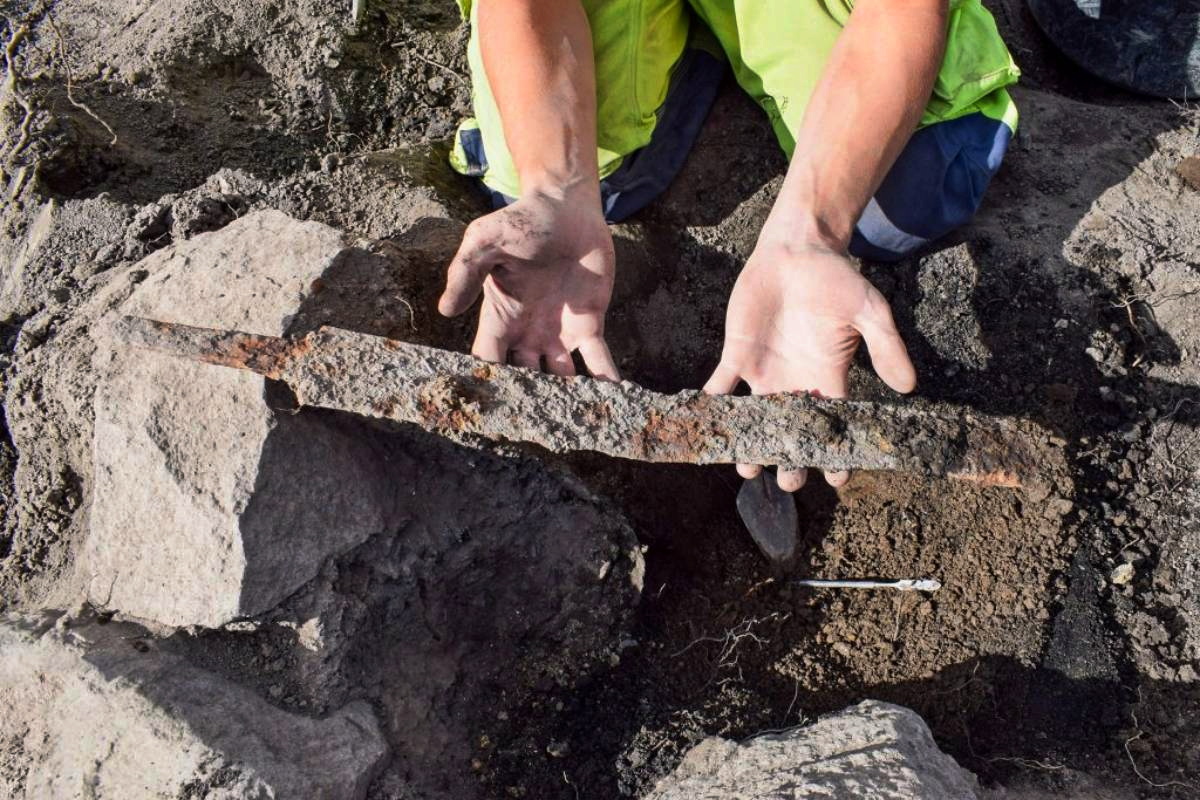


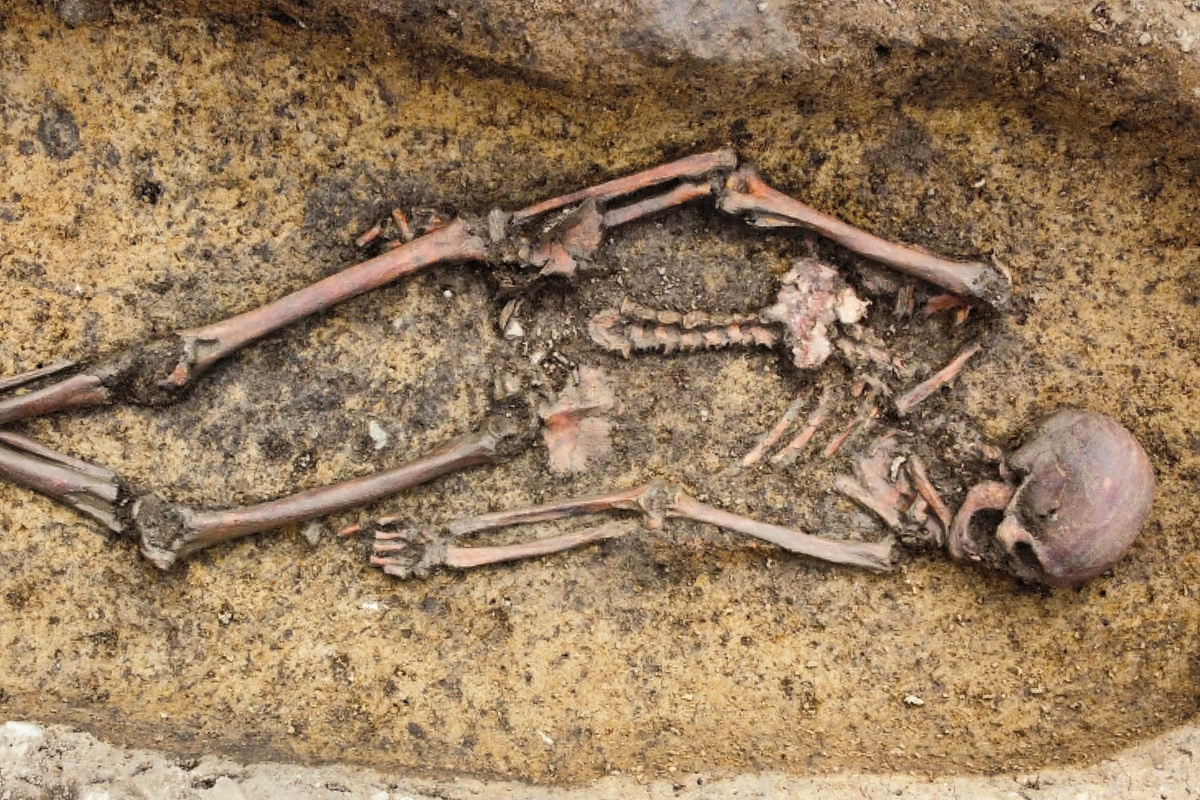
A gravesite containing more than 50 skeletons from the Viking Age has been found in Denmark. The graves, uncovered during an archeological excavation near the village of Åsum, just east of Odense, contain a wide range of artifacts from all over Scandinavia.
An unprecedented find
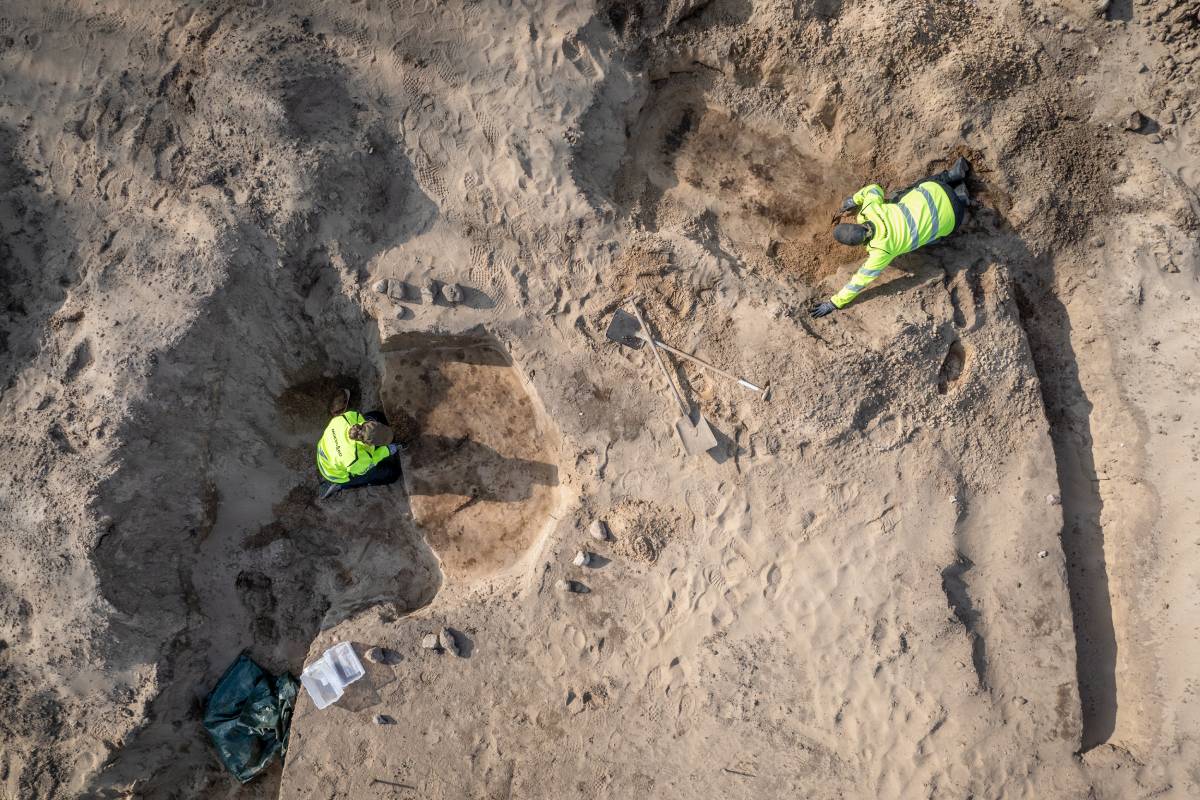
The graves have been gradually revealed by a team of archeologists from Museum Odense over a six-month period.
"The site was discovered during an archeological survey, which took place before the installation of a large section of electrical air cables," Michael Borre Lundø, an archeologist and museum curator at Museum Odense, explains to The Viking Herald.
"The Danish Museum Act states that any prehistoric remains must be excavated in advance of this kind of work, with the work paid for by the developer."
However, the archeological team had no inkling of what they were about to discover.
"A local detectorist had surveyed the entire field and found many artifacts from the Bronze Age to medieval times," Michael tells us. "But we had no idea there would be a burial site from the Viking Age."
As the archeologists began to explore the site, it quickly became clear they were on the verge of an unprecedented discovery, as more than 50 skeletons were revealed.
"There have, of course, been many other graves uncovered from that era," Michael admits. "But the sheer scale of the find and the excellent condition of the items are truly impressive and potentially important."
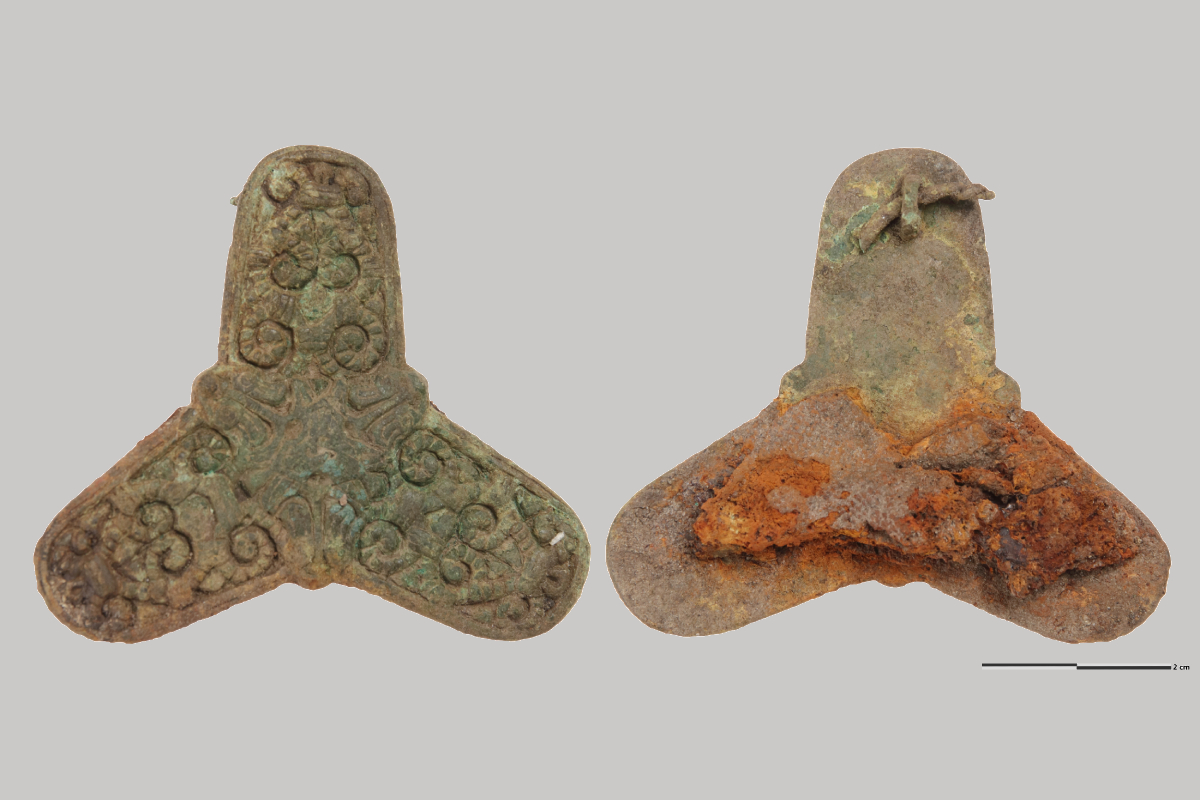
Artifacts in the graves suggest pagan customs, but some without goods may reflect a transition to Christianity. Source: Museum Odense
Signs of paganism
In addition to the skeletons themselves, the excavations have also uncovered a series of grave goods that help provide some context to the individuals buried here.
The initial analysis of some of these objects enabled archeologists to date the graves to the 9th and 10th centuries.
These items also indicate the religious beliefs of the people found at the site. "I would say the graves are primarily pagan since we see quite a few artifacts in most of them," Michael says. "Normally, when the graves are Christian, we see no artifacts."
It is also possible that the religious persuasion of the people who lived in the area may have changed during the period of its use, with much of Denmark converting to Christianity in the 10th century.
"We do have some graves containing nothing but the skeleton," Michael tells us, "but it is still hard to say if this means it is a Christian burial."
Signs of conspicuous wealth
It is also clear that several individuals found at the site were of high status. One particularly notable find was a woman buried in a wagon, with part of a cart used as the coffin.
"The woman was buried in the wagon she likely traveled in," Michael commented in a separate interview with Museum Odense. "We must imagine that she was buried with her finest clothes and belongings."
"This woman was given a beautiful glass bead necklace, an iron key, and a knife with a silver-threaded handle. Most notably, she also had a small shard of glass that may have served as an amulet."
"At the foot of the wagon, there was a finely decorated wooden chest, the contents of which we still do not know."
Another grave contained a bronze brooch, a glass bead, an iron knife, and a rock crystal that provided a clue to the widespread nature of Viking trade in this era.
"Rock crystal does not occur naturally in Denmark and was likely imported from Norway," Michael commented to Museum Odense.
"Several items from the many graves in Åsum indicate the buried Vikings were connected to international trade networks that developed during the Viking Age."
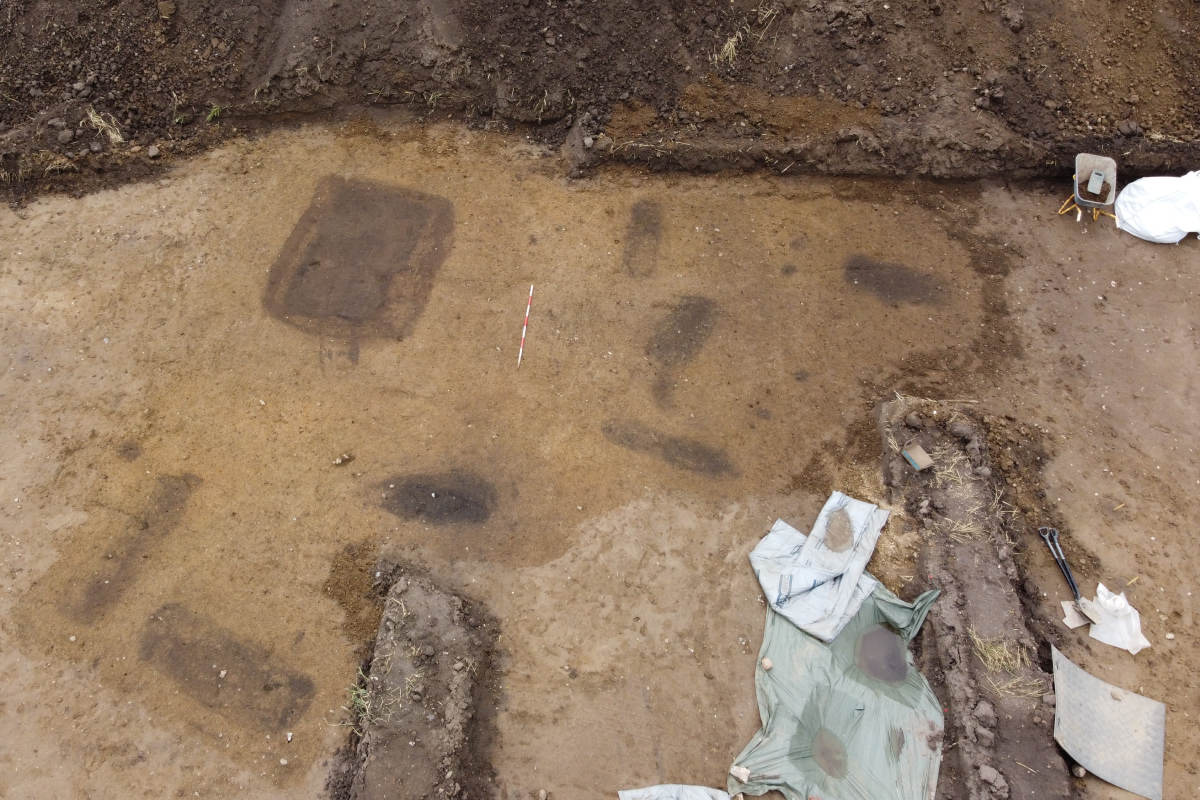
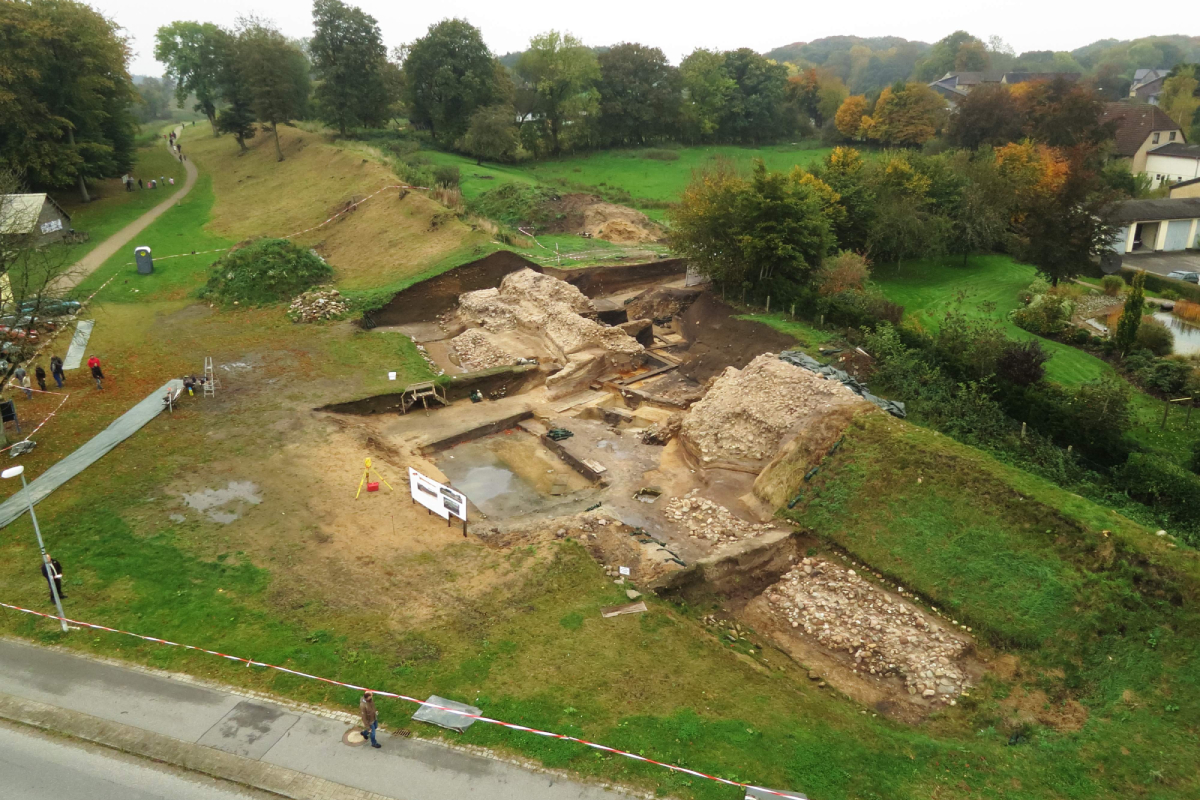
Archeologists believe the burial site shows that Åsum, on Funen, was a key Viking Age settlement linked to Gorm the Old and Harald Bluetooth. Source: Museum Odense
The birth of a city
Indeed, the archeologists believe the burial site demonstrates that Åsum – found on the island of Funen – was likely an important settlement during the Viking Age.
The island is known to have had close ties with Gorm the Old, who ruled much of Denmark from Jelling to the east, and later his famous son Harald Bluetooth, who became king of both Denmark and Norway.
One settlement close to Åsum would eventually develop into what is now Odense, one of the largest cities in Denmark.
"It's fascinating to imagine that the Vikings buried here were undoubtedly aware of the nascent urban development that took place just five kilometers west of where they lived," Michael commented to Museum Odense.
"The settlement was then known as Odin's VI – today it is Odense. Their descendants witnessed the cementing of Odense as a town, while Harald Bluetooth constructed one of his ring forts – Nonnebakken – south of the river as part of his effort to unify the kingdom."
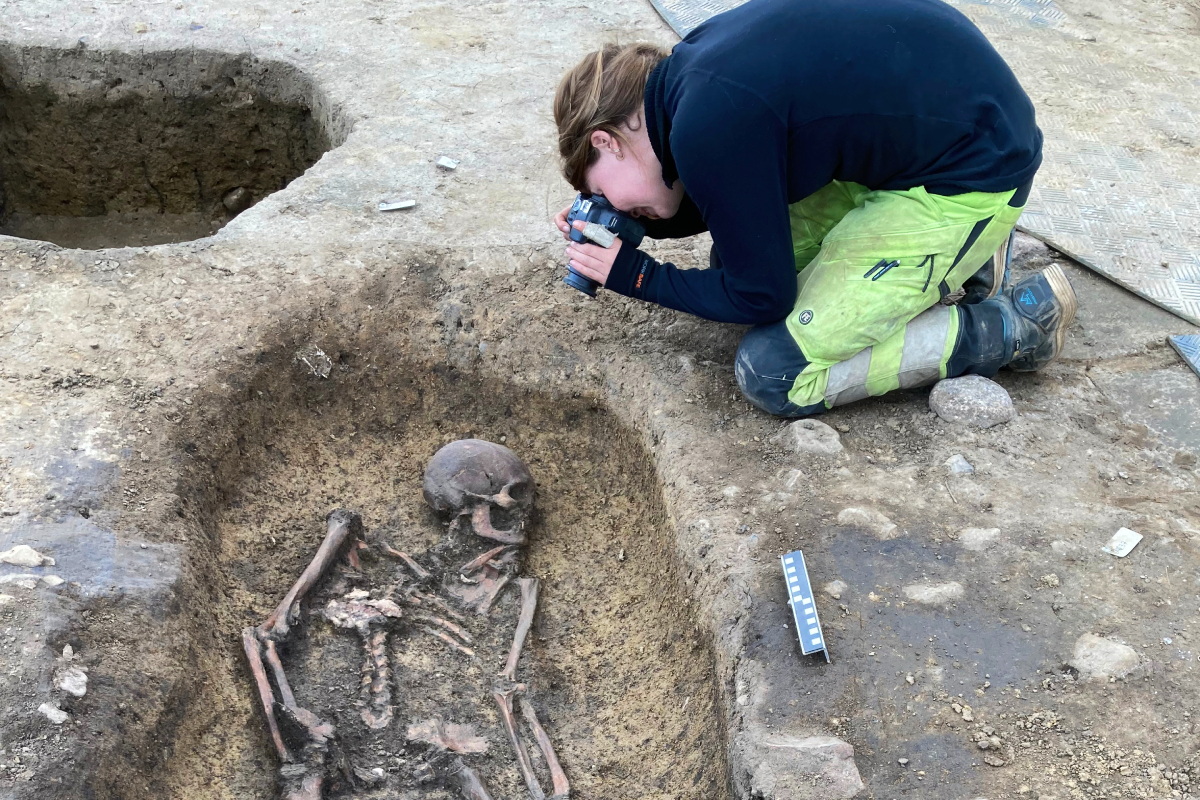
Further research will involve DNA testing, isotope analysis, and artifact examination to learn more about the buried Vikings' lives. Source: Museum Odense
Further research and DNA
With the period of excavation now coming to an end, Michael stresses that there is still plenty of work to do, with one part of the burial site still not fully excavated.
"For now, the developers need to do their thing," Michael tells The Viking Herald. "But come spring, I hope we will be able to do minor trenches both north and south of the site to see whether or not the burials continue."
"We also did quite a few block lifts containing metal artifacts and organic artifacts, and these will also be subject to all kinds of analysis."
"We will perform a wide range of analyses on the skeletons regarding DNA and stable isotopes, as well as radiocarbon dating."
"We have taken lots of samples from the pelvic area to look for food remains (macrofossils) and pollen. Tests will also be carried out on artifacts such as glass and iron to see where they come from."
Indeed, it is hoped that the analysis of the graves will also help us learn more about the everyday lives of people who lived in Denmark during the Viking Age.
"This discovery offers extraordinary opportunities to perform a wide range of scientific analyses," Michael concludes. "These can reveal more about the general health, diet, and origins of those buried."
We get to provide readers with original coverage thanks to our loyal supporters. Do you enjoy our work? You can become a PATRON here or via our Patreon page. You'll get access to exclusive content and early access.
Feel free to reach out to discuss potential stories that may be in the public interest. You can reach us via email at hello@thevikingherald.com with the understanding that the information you provide might be used in our reporting and stories.