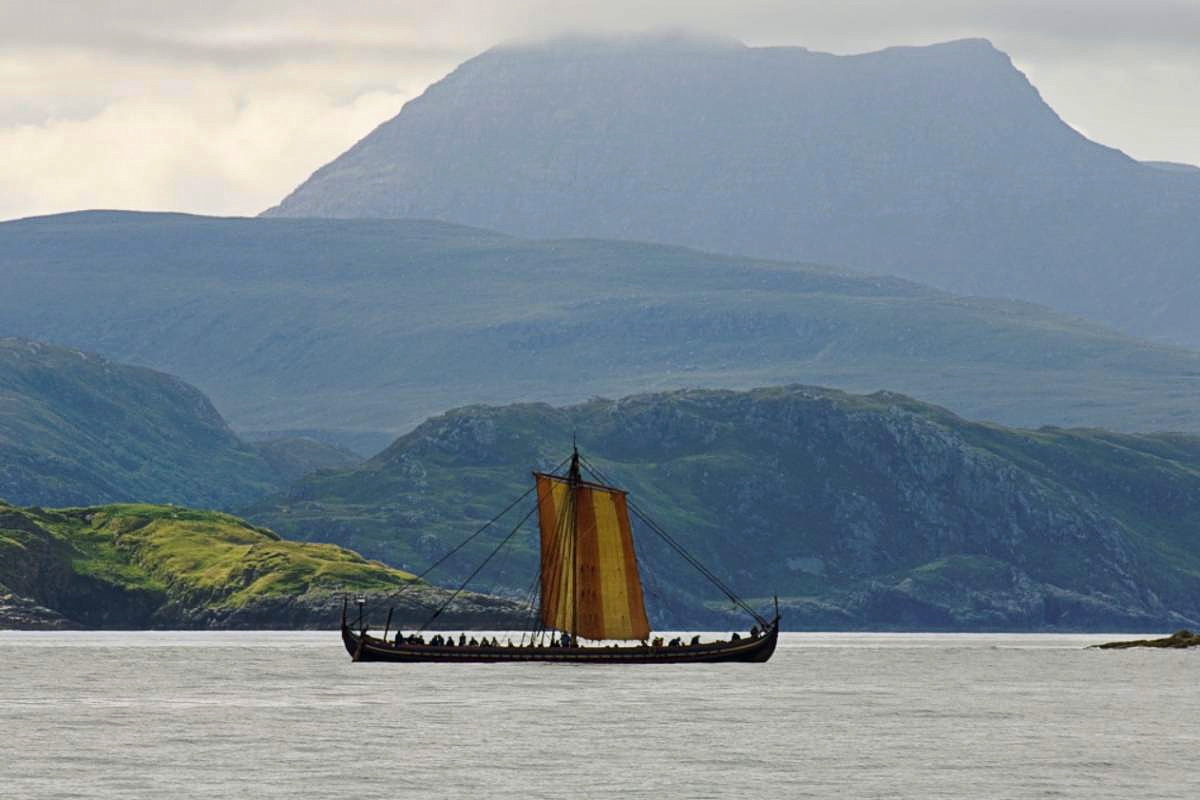


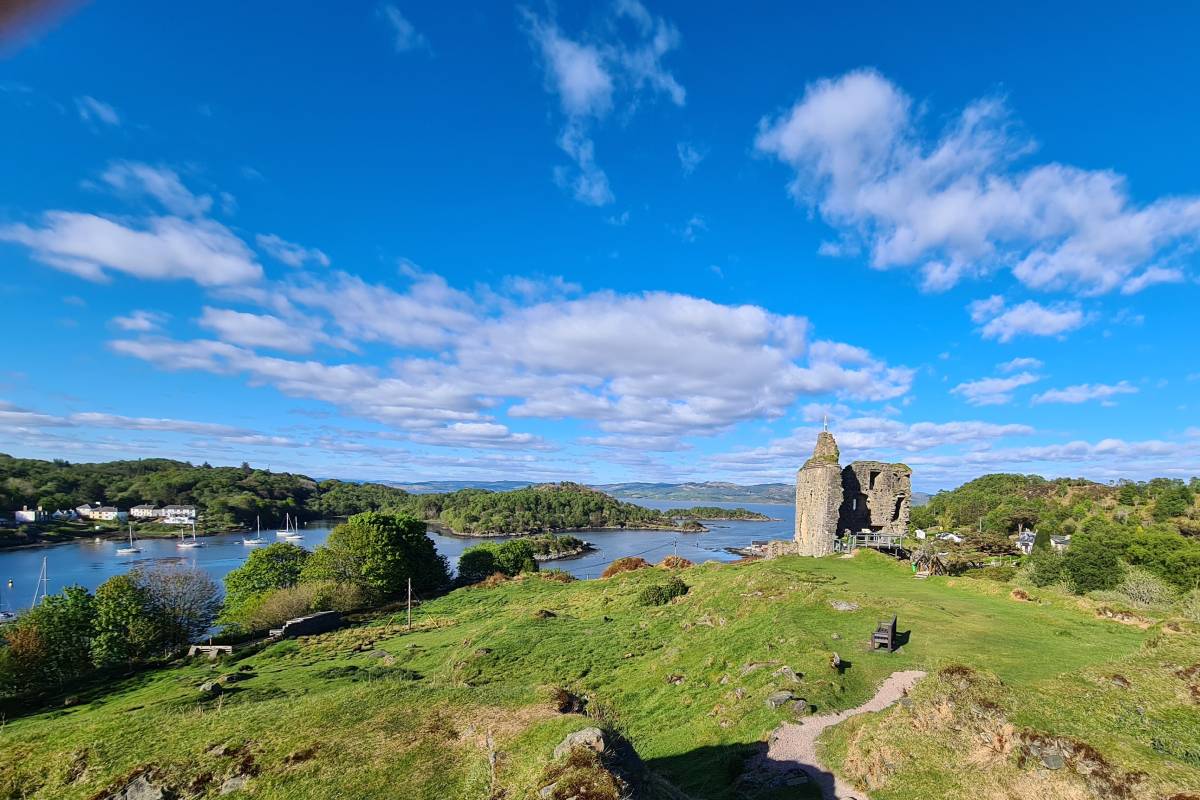
Through place names, archeology, folklore, and on-site investigations, The Norse and the Sea project explores how the Vikings used networks and local knowledge to navigate the waterways and trade routes of Scotland.
The Viking Herald speaks to archeologists Alexandra Sanmark and Shane McLeod about their work so far and the next stage of the research.
Delving into the maritime culture of Viking Scotland
The Norse and the Sea project is led by the Institute for Northern Studies of the University of the Highlands and Islands (UHI) in Perth, Scotland.
"I've been working on Scotland in the Viking Age for some time," project leader and UHI professor Alexandra Sanmark tells The Viking Herald.
"I was looking at assembly sites, settlements, and the landscape across Scotland and realized we know very little of the communication between these places."
"There's a lot of descriptions about the Viking Age and how they sailed here and there and crossed the ocean, of course," Alexandra explains.
"There is also a lot of research about the boats themselves. At the same time, we do not know so much about how they actually moved around, the navigation itself, landing places, and the harbors. I felt there is a gap in our knowledge here."
In other words, we know which vessels the Vikings used and where they traveled, but our knowledge of how they dealt with the difficulties of navigating and trading in unfamiliar lands is limited.
"I decided to approach some colleagues in Germany who have been working on identifying historical harbors and landing places," Alexandra adds.
"Harbor research is quite a new area, but they carried out a massive study in this field a few years ago and have developed expertise in identifying temporary harbors from the Middle Ages."
"After creating a proposal together with German colleagues, we successfully gained funding from the Arts and Humanities Research Council and the German Research Foundation."
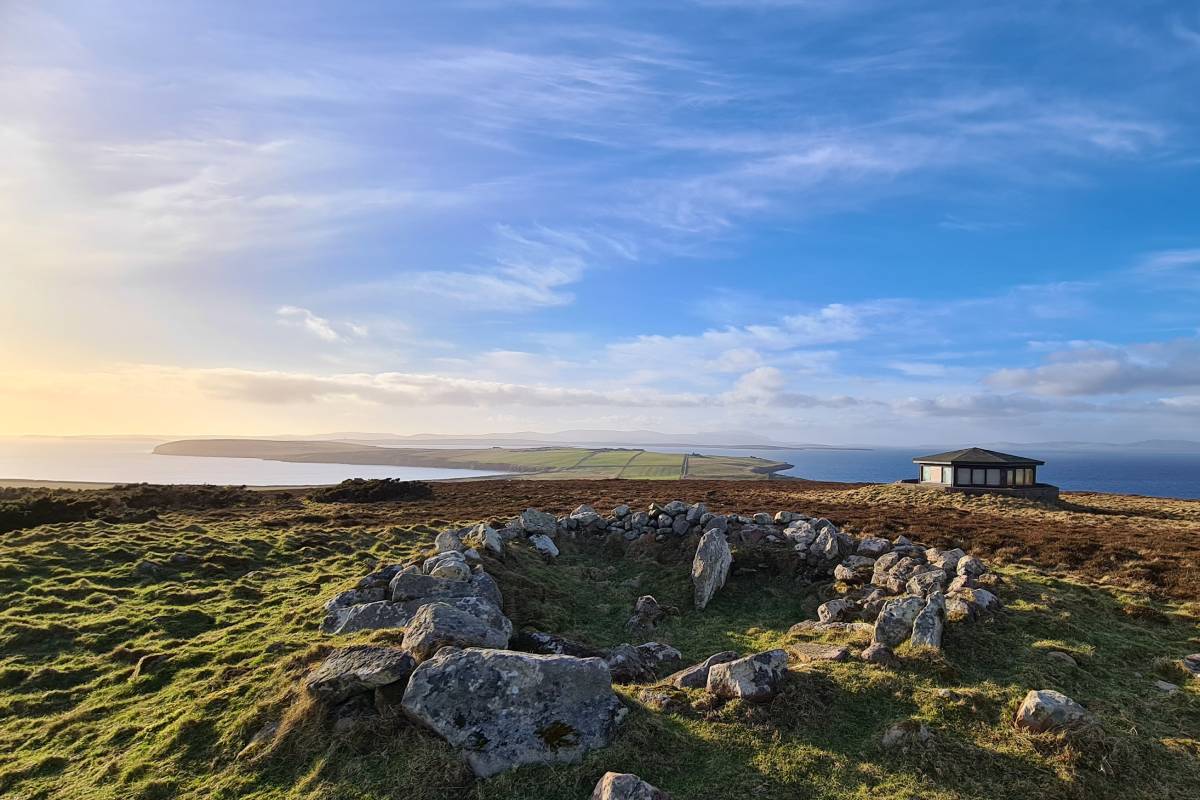
Hoxa Head, a former military observation point on South Ronaldsay, overlooks the sea routes around Orkney. Photo: The Norse and the Sea / UHI
A path less traveled
The Norse and the Sea looks at Scandinavian maritime connections across Scotland between 790 and 1350. In this second phase, the team is placing particular emphasis on the west coast of Scotland.
"So much has been done on Orkney, and to a lesser extent Shetland, but the west coast is much less researched," Shane explains. "We are also seeing how that links into the wider Viking Age travels."
The Vikings first arrived in Western Scotland around the end of the 8th century, soon settling down and establishing intricate trade networks.
But how were they able to negotiate the unfamiliar and hazardous coastline, full of rocks, islands, and jutting peninsulas?
"You need to look not only to the sea but also on land," Alexandra tells us. "You need to find everything, including place names, traditions, and archeological remains. In order to understand the sea, you need to understand all of it."
"Things like place names, profiles of mountains, and navigation markers help us learn how and where they sailed," Shane adds. "There are often clues—like Cape Wrath, for example, in the northwest Scotland mainland."
"It's very clear—it means 'turning point,' and it's an old Norse name. Obviously, that's where they knew they had to turn, and this is where the name came from."
"We have been looking for anything that was visible from a boat, and that would give you clues as to where you were and where you have to go."
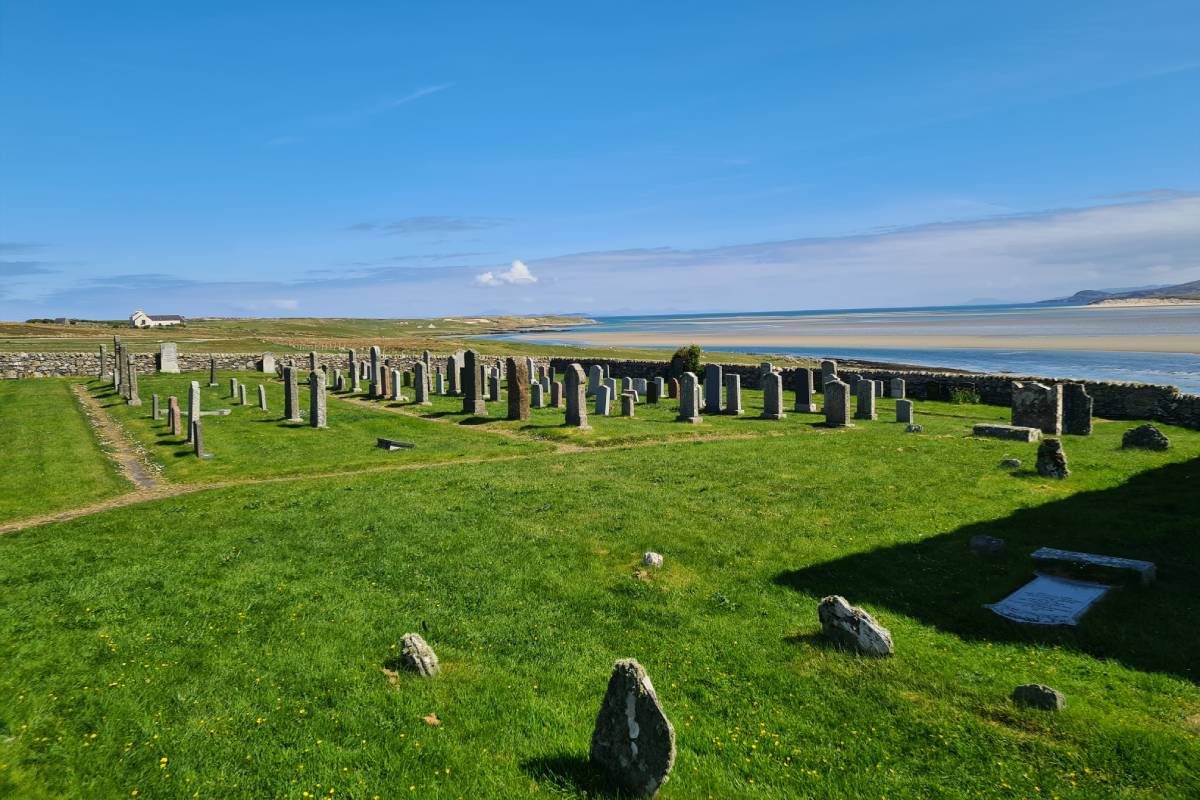
View across Loch Gruinart from Kilnave chapel, Isle of Islay. Photo: Alex Sanmark
Portage prominent
The researchers have also highlighted the importance of portage—the practice of dragging boats or goods across land to avoid dangerous or longer journeys by sea.
"They usually dragged the boat itself across, but not always," Shane informs The Viking Herald.
"If you've got a small neck of land with water on either side and you're a trader, for example, you might just carry your goods across to another boat that's already waiting there. It depends on how well set up the system is."
The team has been visiting the sites in person to try and determine if they were likely used by the Vikings or locals to transport goods and boats, including Loch Lomond, the Kintyre peninsula, and Islay.
As the pair explain, portage was likely a very useful tool in Viking Age maritime travel and trade, particularly when negotiating hazardous parts of the shoreline.
"Portage is definitely something that they did," Alexandra asserts. "Going around a big headland, for example, can be really, really dangerous in a boat. You could avoid that by using portage to pass across on land."
"Many of these places look very similar in the landscape, in the sense that they are narrow isthmuses," Alexandra adds.
"Still today, they typically have really very low-lying land and wetlands. Kintyre seems to be a very good example of that—it is a really long peninsula and quite dangerous at the bottom."
"We recently went and traced some of these routes, and it certainly looks feasible in terms of the landscape."
- READ MORE: All you need to know about Viking ships
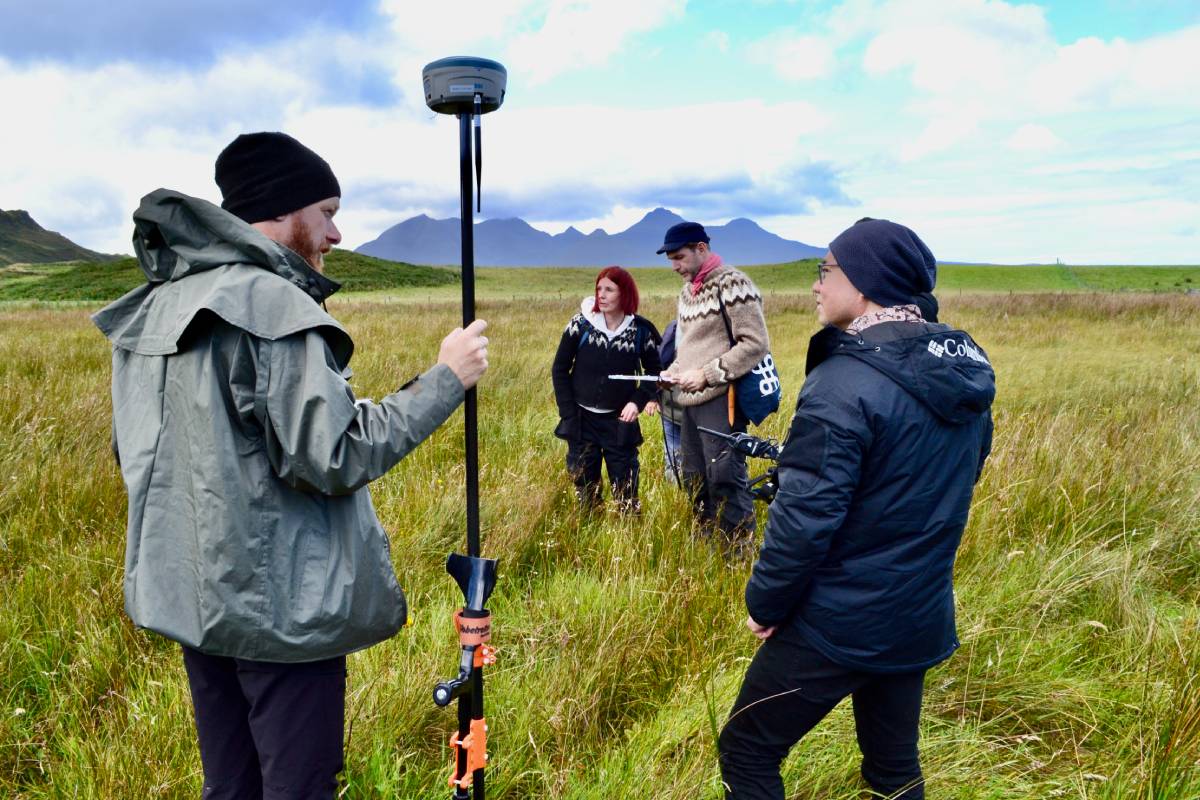
"The Norse and the Sea" team on fieldwork in the Isle of Eigg, Inner Hebrides. Photo: Steven D. P. Richardson
"A Viking thing"
The place names in Western Scotland also appear to suggest that portage was carried out in Viking Age Scotland.
"There are lots of 'Tarberts' in western Scotland, which means 'over-bringing' in Gaelic," Shane tells The Viking Herald.
"There are also some other place names that appear to reference Old Norse names for portage sites. They are really quite frequent, which indicates portage seems to be a relatively common thing at this time."
"At the same time, they may not have always used portage at these places," Alexandra admits. "Sailing from A to B could vary slightly, depending on the tide and the winds."
"It seems likely that they had portage sites along the way, and perhaps whether they used them or not depended on the weather conditions, the type of boat, or how much cargo they had. But portage was definitely an available option."
As Alexandra and Shane tell us, portage was practiced by the Vikings not just in Scotland but also in Scandinavia and beyond.
"It's definitely a Viking thing," Alexandra tells us. "You can see it in Scandinavia and also the Viking expansion in the east, for example."
"This is quite well-documented. There were rapids and other obstacles along the Russian rivers, so they needed to stop, take the boat out, go around the obstacle, and then stick it back in again. Otherwise, they could never have made it as far as Constantinople."
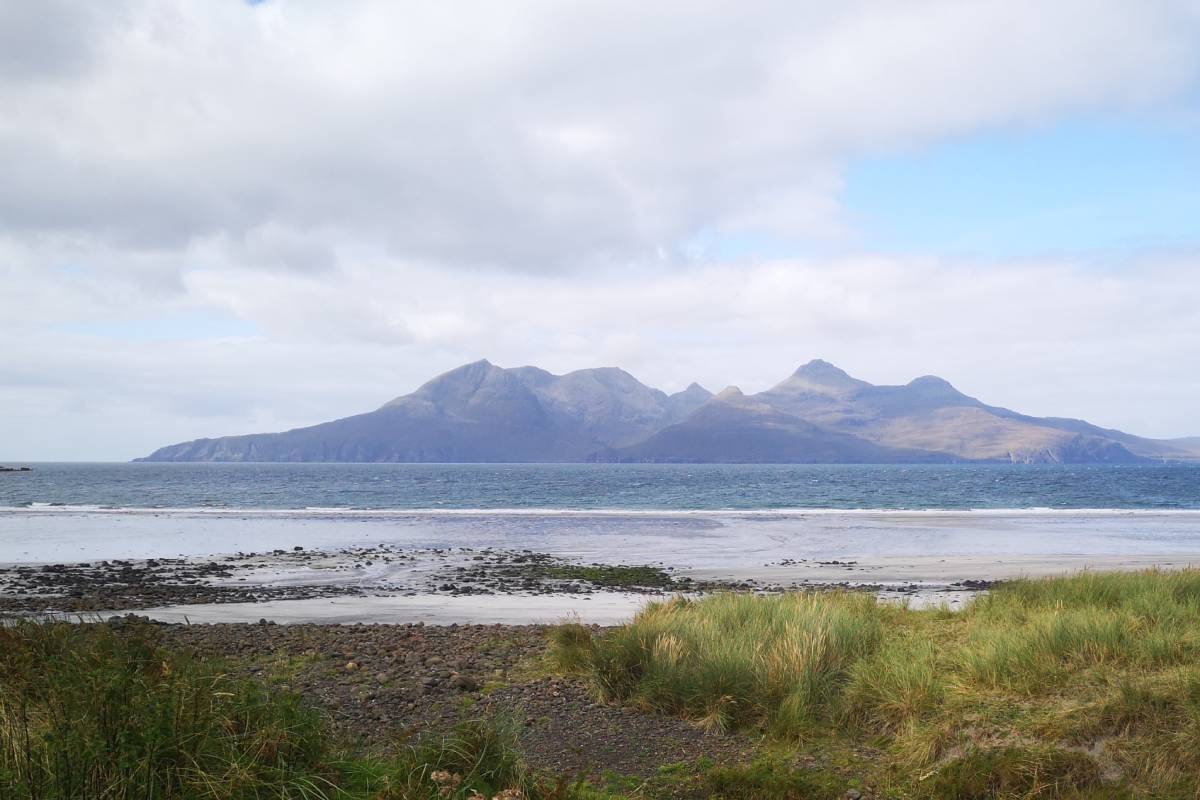
View of the Isle of Rhum from the Bay of Laig in the Isle of Eigg, Inner Hebrides. Photo: Alex Sanmark
Sharing and storing knowledge
The team believes that local knowledge and assistance—be it Gaelic-speaking natives or Scandinavians who had settled in the area—would have been invaluable.
"In Scandinavia, and Denmark in particular, there's a notion that some of these portage sites were well-established places," Alexandra tells us.
"It was so common that there would be people who worked there on a regular basis. They knew what to do, and there would be horses trained to help pull the boats across."
Knowledge of the area would also have been vital when dealing with other aspects of navigation, Alexandra adds.
"The knowledge would have been handed down, whether it relates to the practice of portage or how to navigate a particular sound or a headland."
"You need to be skilled, and you need to know what to do. As the Vikings gradually settled and explored new areas, they would note these striking hills or landmarks."
"We have found that people would have used a kind of mental mapping process," Alexandra continues.
"There would be oral traditions and mythology tied into that. There would be stories told that when you sail along this route, you will see the peninsula where a particular person perhaps settled."
"You'll see it in place names like Troll Hill or Sandy Bay, as well as whirlpools or other dangerous places. These stories would get told and passed on to other sailors."
"That traditional knowledge that's being passed between people is really, really important," Alexandra adds.
"There's a notion that if you're going to an area that you're not familiar with, you need to get a local to help guide you. Because they know where you can land, where the freshwater is going to be, or when you need to replenish supplies."
"You don't need a pilot when you're crossing the open sea because that's relatively easy, but once you get into these island areas, you need local knowledge."
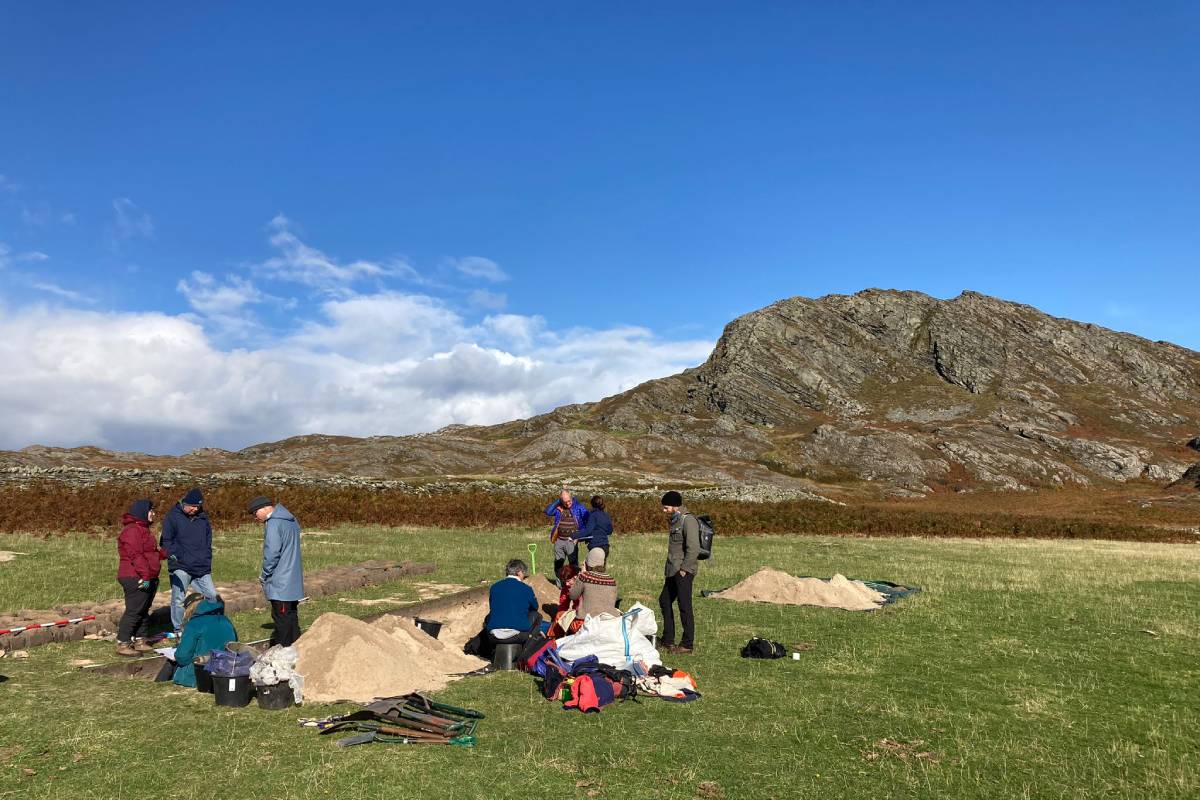
"The Norse and Sea" team on excavation at Machrins on the Isle of Colonsay. Photo: Sven Kalmring
Finding the circle
The work of the Norse and the Sea project has also helped make it clear that seafaring in the Viking Age was about far more than simple, one-way travel.
"One thing that's been said quite a lot lately is that maybe it's not a one-directional movement," Alexandra explains.
"Traditional history tells us that the Vikings came from Scandinavia straight across to Orkney, Shetland, and then Ireland. But the research is really showing us that it was probably much more of a circular movement."
"I think that both the ships and the people were moving around a lot. There are also different types of maritime travel," Alexandra continues.
"If you're traveling across the ocean, then you will have big ships. But if we zoom in a little bit and think about Western Scotland and how many smaller settlements there were, you really need smaller boats—it's more like island hopping."
"And these small boats are something that we've come across a lot on the west coast. This is also where portage would be most common."
As the pair explain, this movement would have been driven, above all, by a thirst for resources.
"First, the monasteries had lots of nice shiny stuff you could take," Shane points out.
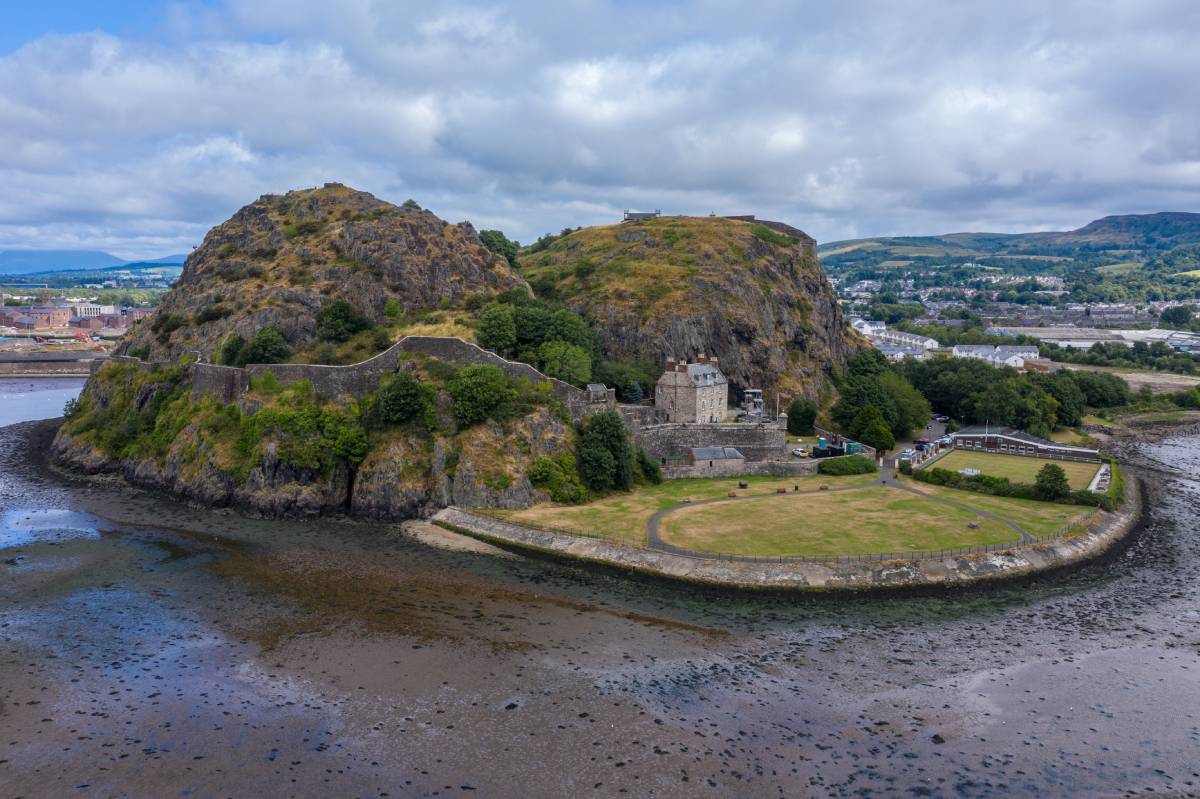
"Then there was also the trading of people. The Irish Annals tell us that when the Vikings attacked Dumbarton, they came back with 200 ships full of captives."
"These were sold throughout Europe and beyond—it was a lucrative trade. The Norse were also after goods and land, of course, with many of them settling in Scotland."
The hidden Viking legacy
Indeed, this mix of cultures is still evident today, as several genetics-based studies on both Scotland and Scandinavia have shown.
"There's lots of DNA evidence that some of the Scottish clans do seem to be descended from Scandinavians," Alexandra notes.
"Even despite all of the Gaelic culture and records that come later, if you go back further, many of these people were actually Scandinavian—or at least partly Scandinavian."
"Based on the archeological records, we think of certain settlers as Scandinavians, but perhaps these people have been traveling for parts of their lives," Alexandra adds.
"Many of them may have been born elsewhere, not necessarily in Scandinavia. Instead, they may have added material culture that allows us to identify them as Scandinavian."
"But in the end, you can't really separate the two," Alexandra concludes.
"A hybrid culture developed. This is more obvious in Orkney and Shetland, where the Norse were quite distinct for a few hundred years, but on the west coast, it's very different—they soon became bilingual, and there was lots of intermarriage."
"We're also trying to trace the history of the West Coast from this point of view, but there are all these different dynasties. It's remarkably complex."
You can read more about the next stage of The Norse and the Sea project here. The final findings are due to be published by the end of 2026.
We get to provide readers with original coverage thanks to our loyal supporters. Do you enjoy our work? You can become a PATRON here or via our Patreon page. You'll get access to exclusive content and early access.
Feel free to reach out to discuss potential stories that may be in the public interest. You can reach us via email at hello@thevikingherald.com with the understanding that the information you provide might be used in our reporting and stories.