

A new piece of research from the National Museum of Denmark has uncovered some unusual and often brutal burial rituals from Iron Age Scandinavia.
Among other things, the research team identified a child’s skull that had been buried in the floor and human bones kept elsewhere in Norse dwellings.
While the study focused predominantly on deaths that occurred around 2,000 years ago, the research could also provide insight into Norse attitudes in later periods of history.
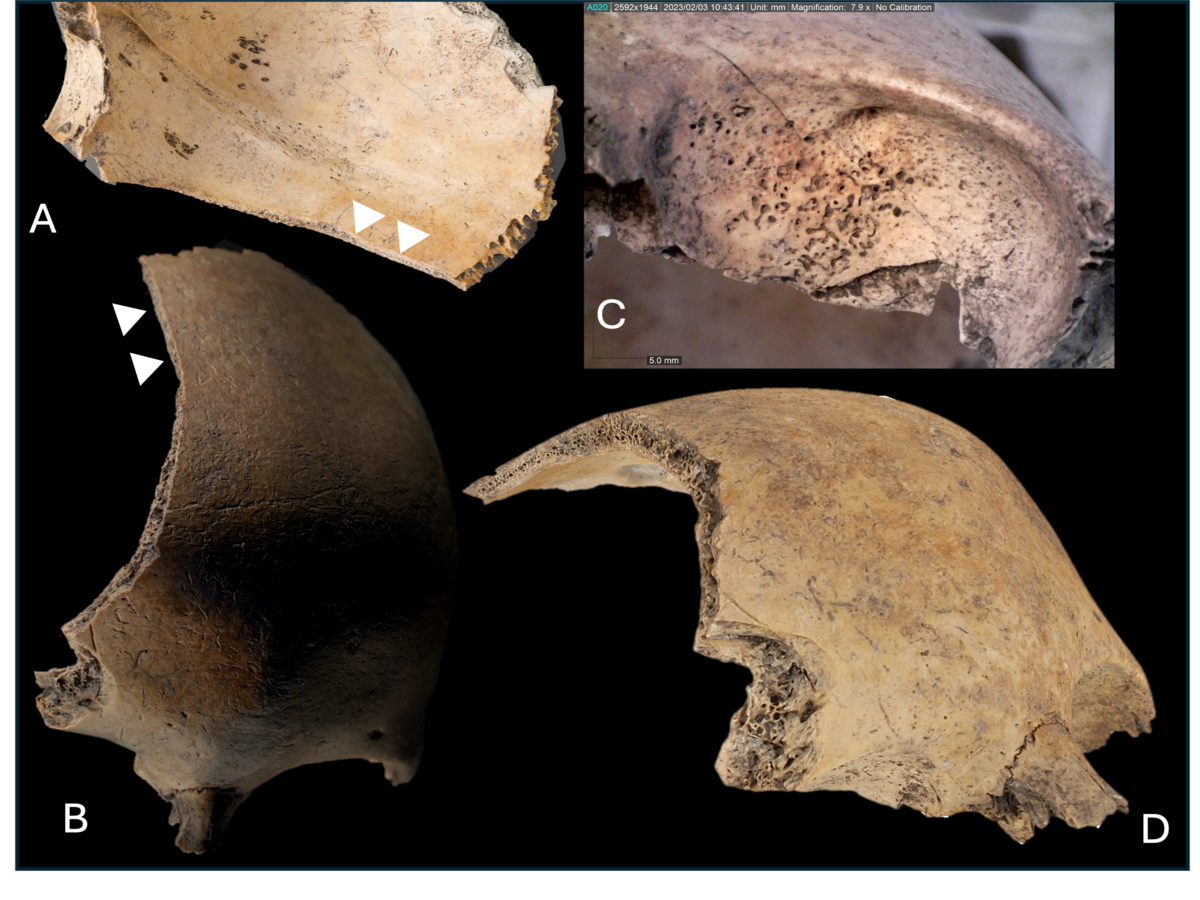
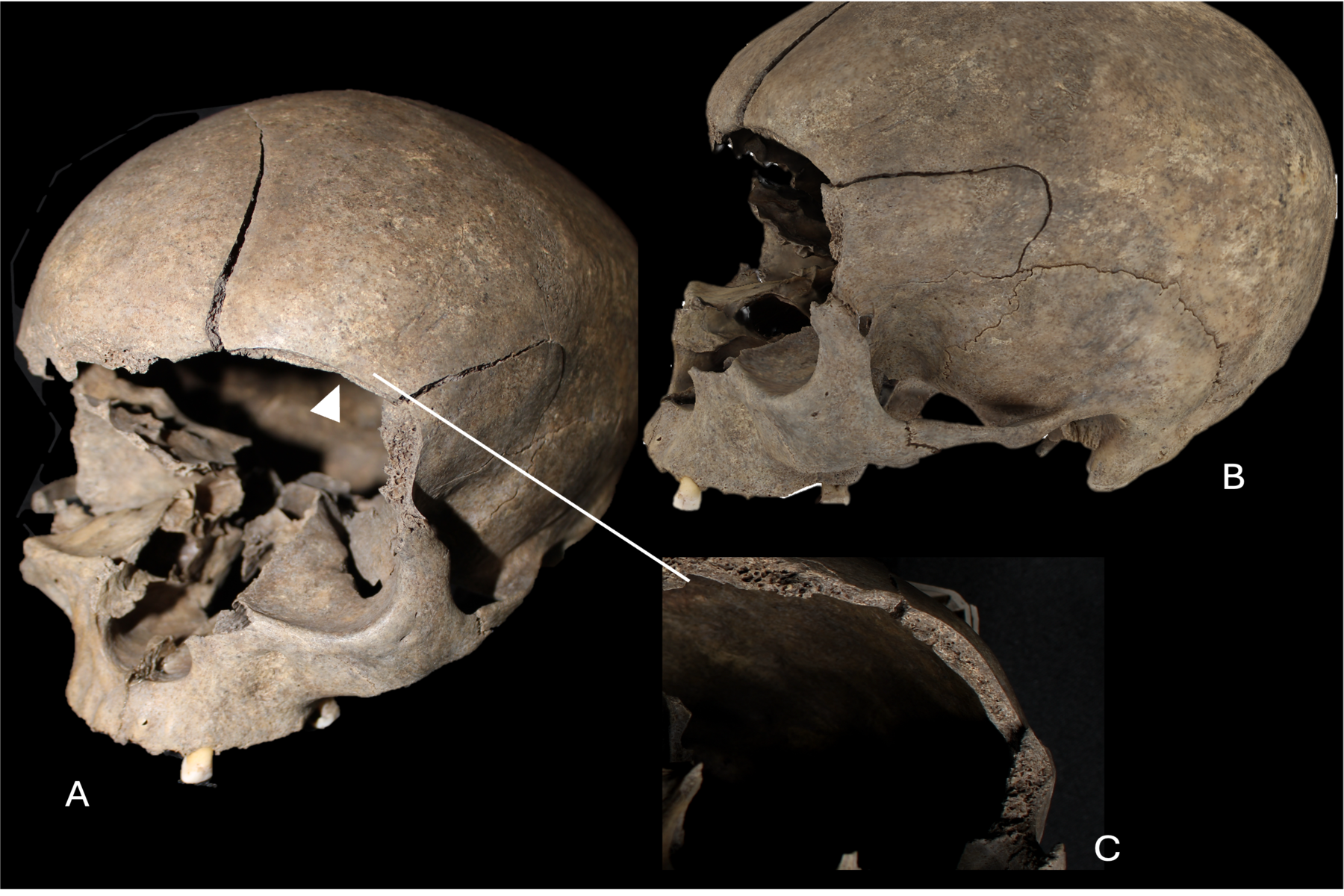
Skull of a child aged 2–4 from Aalborg, showing injuries caused by sword blows. Source: National Museum of Denmark
Macabre details of ancient culture
The analysis was carried out by researchers from the National Museum of Denmark, University of Leicester and the University of Cambridge, among others. The team examined a group of Iron Age individuals found by archeologists in Scandinavia.
With this study, the researchers decided to focus on individuals who had experienced unusually high levels of violence and traumatic injuries, and whose remains were handled in unusual ways.
"The individuals we have found include a child between two and four years old from an area near Aalborg, Denmark in the centuries before the birth of Christ,” commented Marianne Hem Eriksen of the National Museum of Denmark in a recent press release.
“Our DNA analyses show that it is a small boy who has been cut with a sword. The child's skull was placed on the floor of a house where people continued to live. This means that someone was walking over a child's skull day after day.”
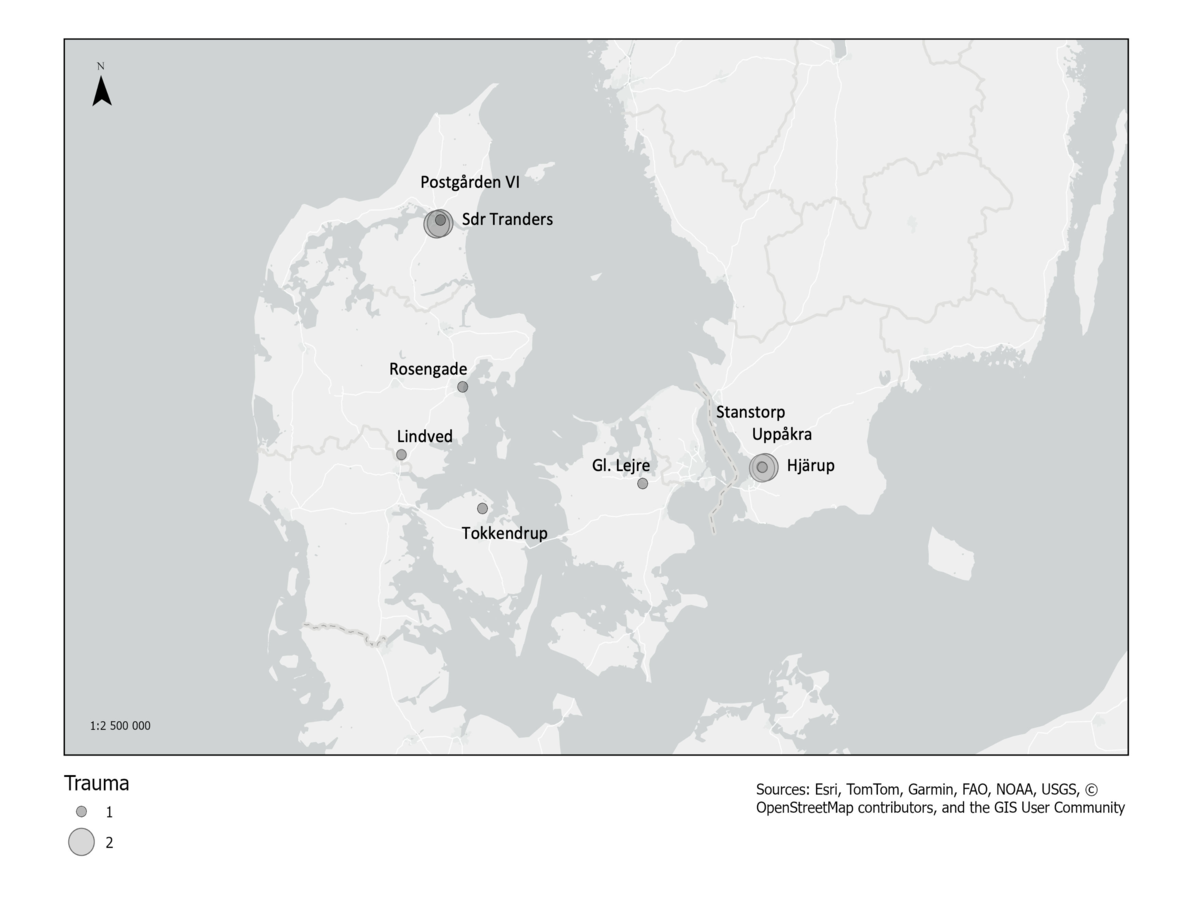
Map showing locations where the individuals included in the project were found. Source: National Museum of Denmark
The symbolic value of human bones
The team also identified other instances where human bones were built into the structure of a building long after they had passed away. In other words, it appears the Iron Age Norse sometimes conserved the bones of their family members and deliberately placed them in their homes, presumably for their symbolic or sentimental value.
The researchers argue that the study shows how violence in Iron Age Scandinavia can be examined not only on an individual basis, but as part of more complex social processes and rituals.
"It opens up a completely new understanding of Iron Age society, of the occurrence of violence and of the handling of the dead,” commented Marianne Hem Eriksen. “The results show a much greater complexity in the everyday life and world of imagination of the time than we often attribute to Iron Age people.”
Details of the research has been set out in an academic paper, Broken bodies in Domestic Spaces: Direct and Structural Violence in an Atypical Mortuary Dataset from Iron and Viking Age Scandinavia.
The paper was recently published in the journal Journal of Archaeological Method and Theory, and can be found at the following link: https://link.springer.com/article/10.1007/s10816-026-09817-w
The Viking Herald has contacted the research team for further information.
We get to provide readers with original coverage thanks to our loyal supporters. Do you enjoy our work? You can become a PATRON here or via our Patreon page. You'll get access to exclusive content and early access.
Feel free to reach out to discuss potential stories that may be in the public interest. You can reach us via email at hello@thevikingherald.com with the understanding that the information you provide might be used in our reporting and stories.