

There has long been speculation about drug use in Viking times, but until now, there has been little genuine information to go on.
A Slovenian ethnobotanist, however, may have made a breakthrough that provides valuable insight into the battlefield behavior of the berserkers. The Viking Herald speaks to Karsten Fatur about his ideas and research.
Ancient drug use
Drug taking is not a recent phenomenon. In centuries past, people would have had to rely solely on more natural substances, of course, but there were certainly plenty of those to go about.
The Egyptians and ancient Greeks were fond of opium, and the Romans are said to have used cannabis to treat earaches and insomnia.
Meanwhile, the Aztecs frequently experimented with psychedelics (allegedly), while alcohol, of course, has been a cross-cultural favorite for several millennia.
As for the Vikings, in addition to ale and that sweet-tasting mead, there has also long been speculation they smoked or ingested marijuana.
However, as The Viking Herald reported, archeologists have only identified the use of hemp for practical uses, such as making tapestries and clothing.
However, one other persistent belief is that the famous berserkers were huge fans of magic mushrooms as a kind of performance-enhancing fighting aid. But is this idea accurate?
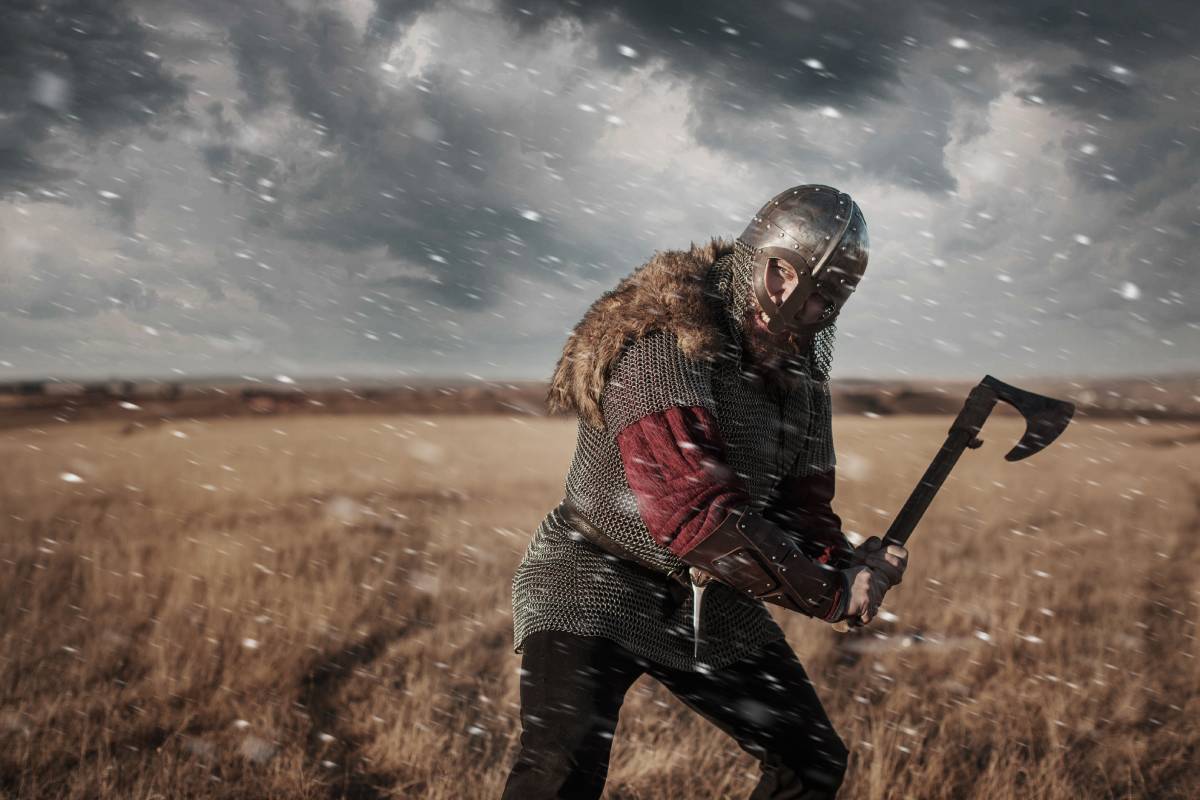
The berserker state, characterized by heightened strength, delirium, and an apparent immunity to pain and fear, has long intrigued historians and researchers. Photo: Fotokvadrat / Shutterstock
The berserker state
The berserkers were intimidatingly fierce warriors who often appeared invincible in battle.
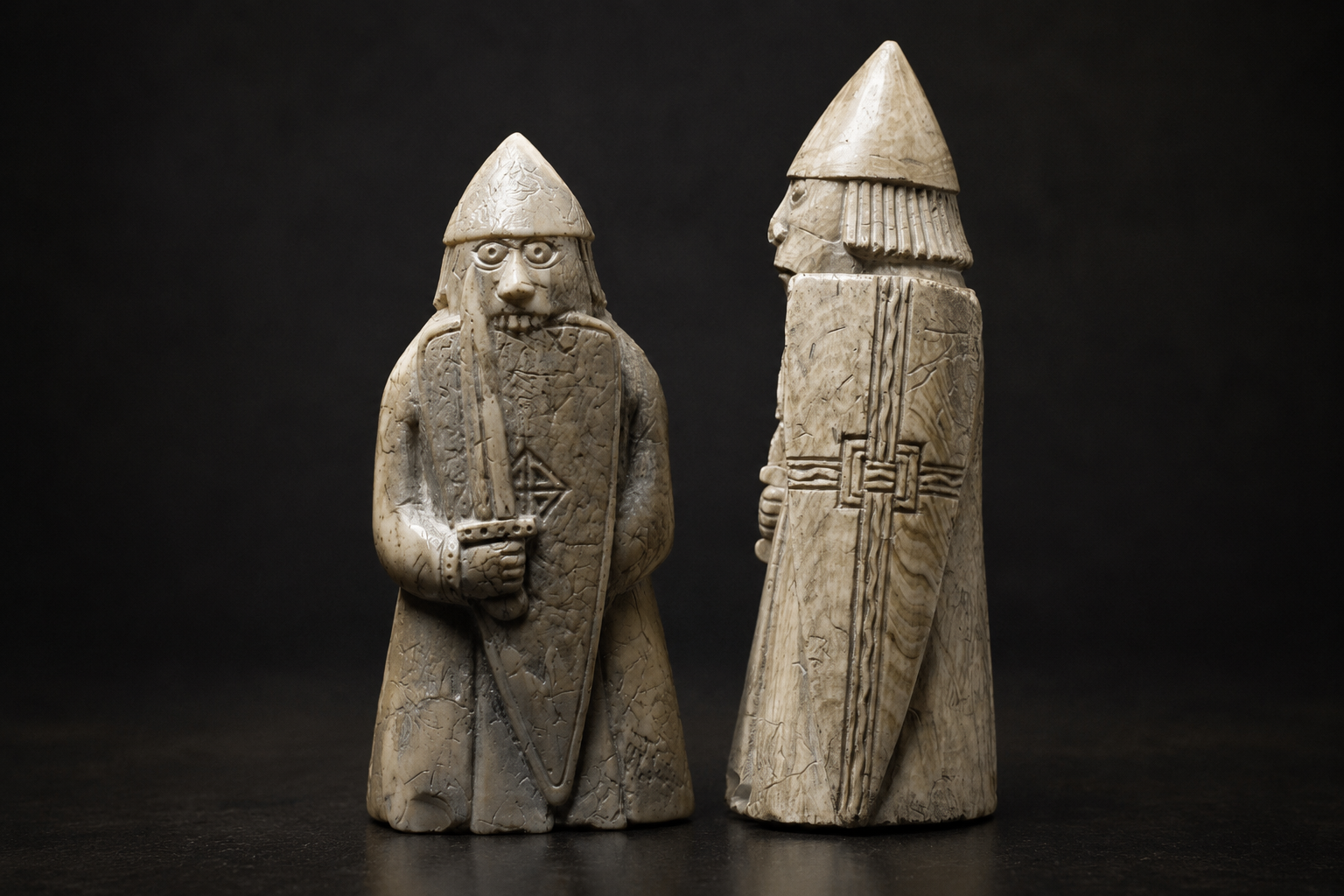
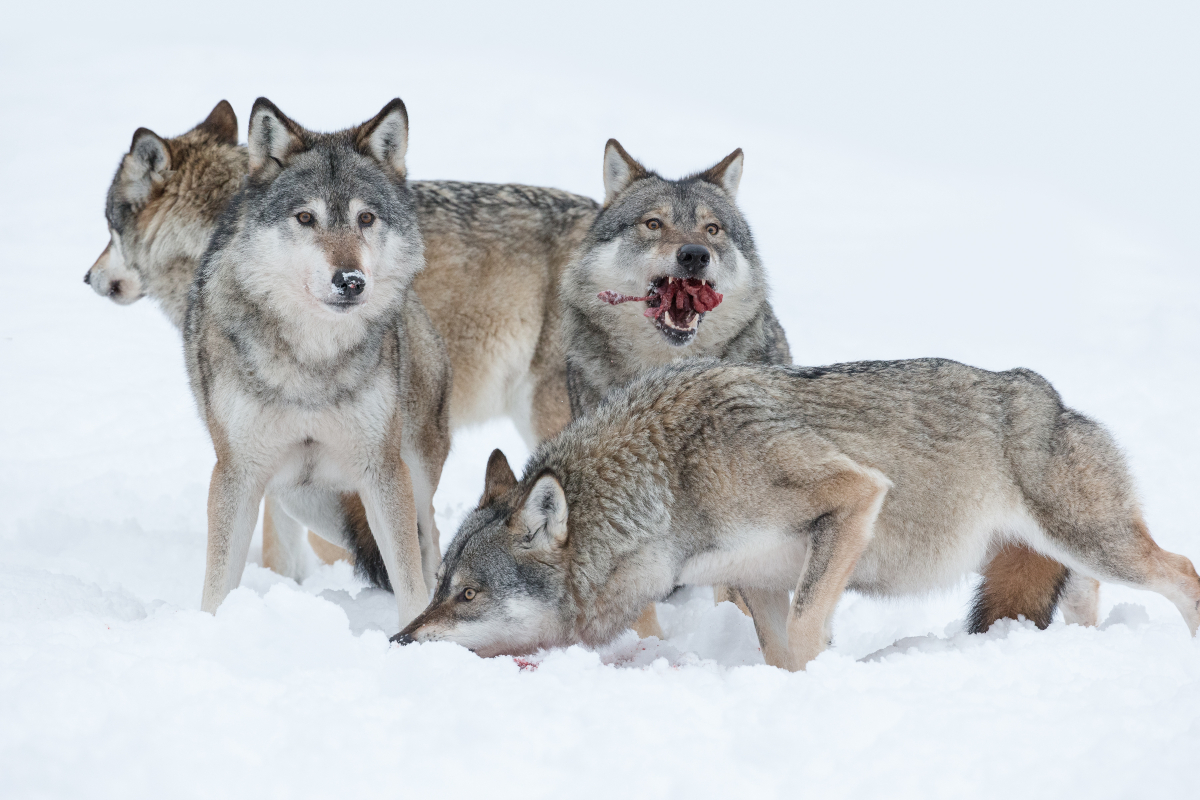
Their name is thought to mean 'bear skin' or 'bare skin,' and they are believed to have often removed armor and dressed up in the pelts of bears or wolves.
They also enjoyed a bit of shield-biting, as the Volsung Saga describes:
They went without armor, were as mad as dogs and wolves, bit their shields, were as strong as bears or oxen, they killed everybody, and neither fire nor iron bit them; this is called going berserk.
Yet this apparent invulnerability and apparent superhuman strength of the berserkers did not last forever, as reported in Egil's Saga:
It is said of shape-strong men, or men with a fit of berserk fury on them, that while the fit lasted, they were so strong that naught could withstand them, but when it passed off, then they were weaker than their wont.
Strange symptoms
Some historians have speculated that this behavior was simply due to the frenzy of war or perhaps a self-induced hypnotic trance.
Others, however, swayed by accounts of berserkers with chattering teeth, chills, and swollen red faces, were convinced they must have been on something.
And that something was Amanita muscaria, commonly known as fly agaric, a striking red and white mushroom with toxic and hallucinogenic properties.
Yet Karsten Fatur, who was inspired to become a botanist after reading Wade Davis's One River and has studied in Ljubljana, Kent, and New Brunswick, had other ideas.
"My doctoral dissertation was focused on the group of plants that contains black henbane and their uses in Europe," Karsten tells us.
"I was also involved in various other research projects on the side, including a broader look at the uses of hallucinogenic plants and mushrooms in Slovenia."
"Through this, I ended up reading quite a bit about Amanita muscaria and its association with the Vikings."
"I began to realize the berserker state sounded much more like it was caused by black henbane or one of its close relatives than Amanita muscaria."
"This eventually led to me writing an article theorizing the use of black henbane by the berserker."
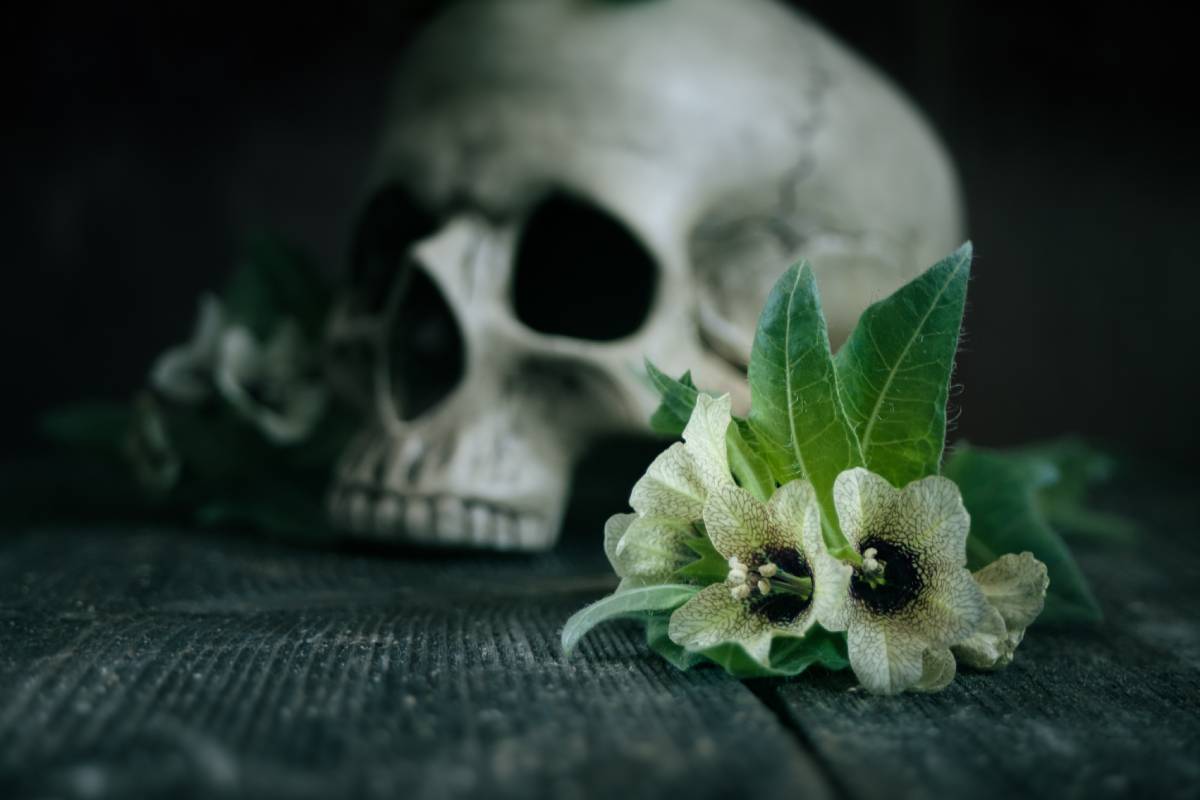
Black henbane was not only embraced for its potential mind-altering properties but also valued for its role in treating respiratory ailments and as an anesthetic in Europe during the Iron Age and Middle Ages. Photo: mutie / Shutterstock
Hyoscyamus niger
As Karsten describes in his paper Sagas of the Solanaceae: Speculative ethnobotanical perspectives on the Norse berserkers, Amanita muscaria has the potential to induce some of the events associated with the berserkers, including increased strength, delirium, shivering, and a reddened face.
It is not, however, known to encourage decreased pain sensitivity, rage, removal of clothing, or days of brain fog.
On the other hand, black henbane is known to cause all of the above. (Though Karsten's paper does highlight the fact that there have been no modern reports of shield-biting or invulnerability to sword attacks.)
Black henbane, otherwise known as Hyoscyamus niger, was popular throughout Europe in the Iron Age and Middle Ages.
"In addition to being used as a ritual and recreational substance," Karsten explains, "black henbane and its close relatives were extensively used for treating respiratory ailments and as anesthetics."
"Despite its toxicity, its recreational use was also likely widespread."
Signs of use
There are also some material indications of a Viking penchant for the substance.
"Direct evidence can often be difficult in historical situations, but there are findings that are highly suggestive of the use of mind-altering plants."
"There was an archeological site in Denmark dating to about 980 that included the remains of a woman thought to be a priestess or shaman, based on her clothing, jewelry, and grave goods."
"She was buried with a pouch containing black henbane seeds. The find suggests their great importance and that they may have been used ritualistically to induce visions or enter altered states of consciousness for divination, healing, or communicating with supernatural forces."

The discovery of a Viking woman's burial, complete with black henbane seeds, implies their profound importance, hinting at their use for vision-inducing rituals and communication with the supernatural. Photo: KonyannaPhotograpy / Shutterstock
Awaiting the next discovery
Though Karsten is quietly confident that his theory may be proved correct, he cautions against making too many assumptions or bold statements.
"I have not yet looked at Norse drug use more broadly and have really only focused on a select group of plants."
"Within my research, I would hesitate to call anything 'proof,' exactly. My own work on the use of hyoscyamus niger by the Viking berserkers is theoretical. We may never know if it is factual or not."
"That being said, it is a theory that fits very closely with the historical records, and we do have chemical, medical, and archeological evidence to support it."
Karsten also stresses that even though he believes his ideas have solid grounds, most theories are eventually replaced or improved upon as our understanding develops.
"Maybe someday there will be a new discovery that shows my theory is incorrect – that would be fascinating!"
We get to provide readers with original coverage thanks to our loyal supporters. Do you enjoy our work? You can become a PATRON here or via our Patreon page. You'll get access to exclusive content and early access.
Feel free to reach out to discuss potential stories that may be in the public interest. You can reach us via email at hello@thevikingherald.com with the understanding that the information you provide might be used in our reporting and stories.