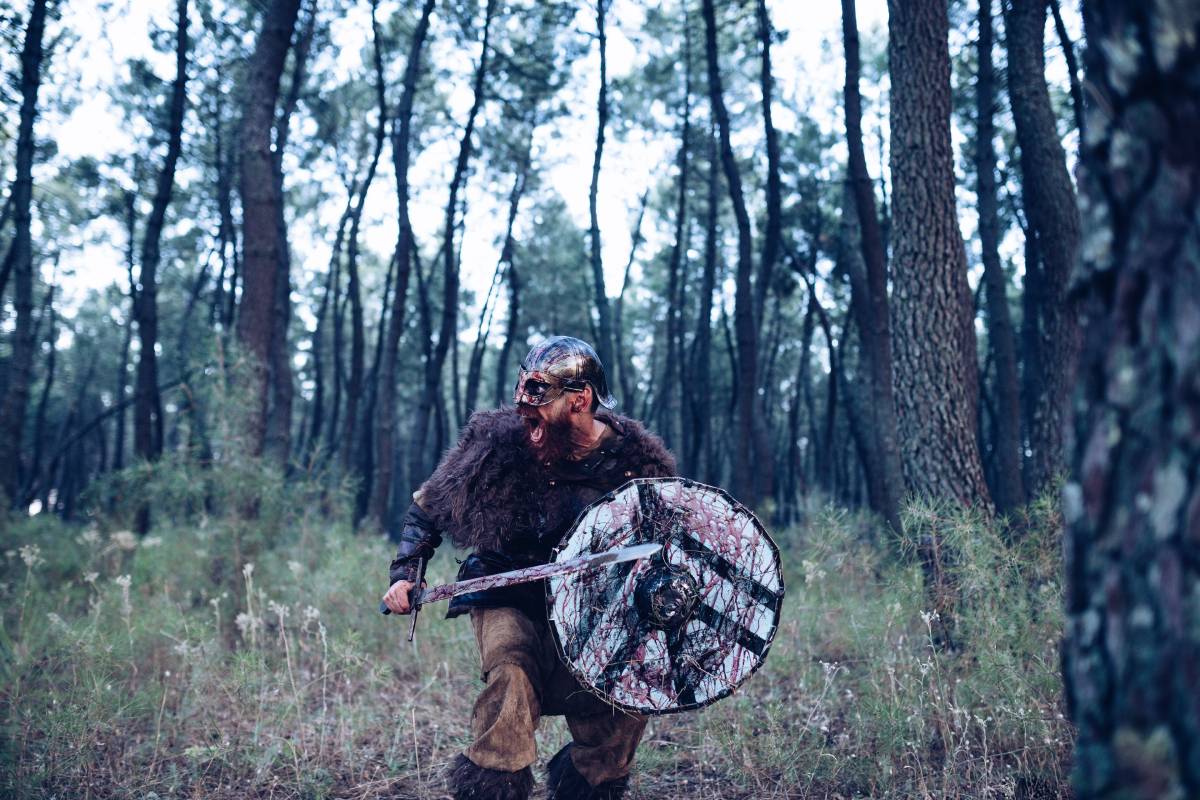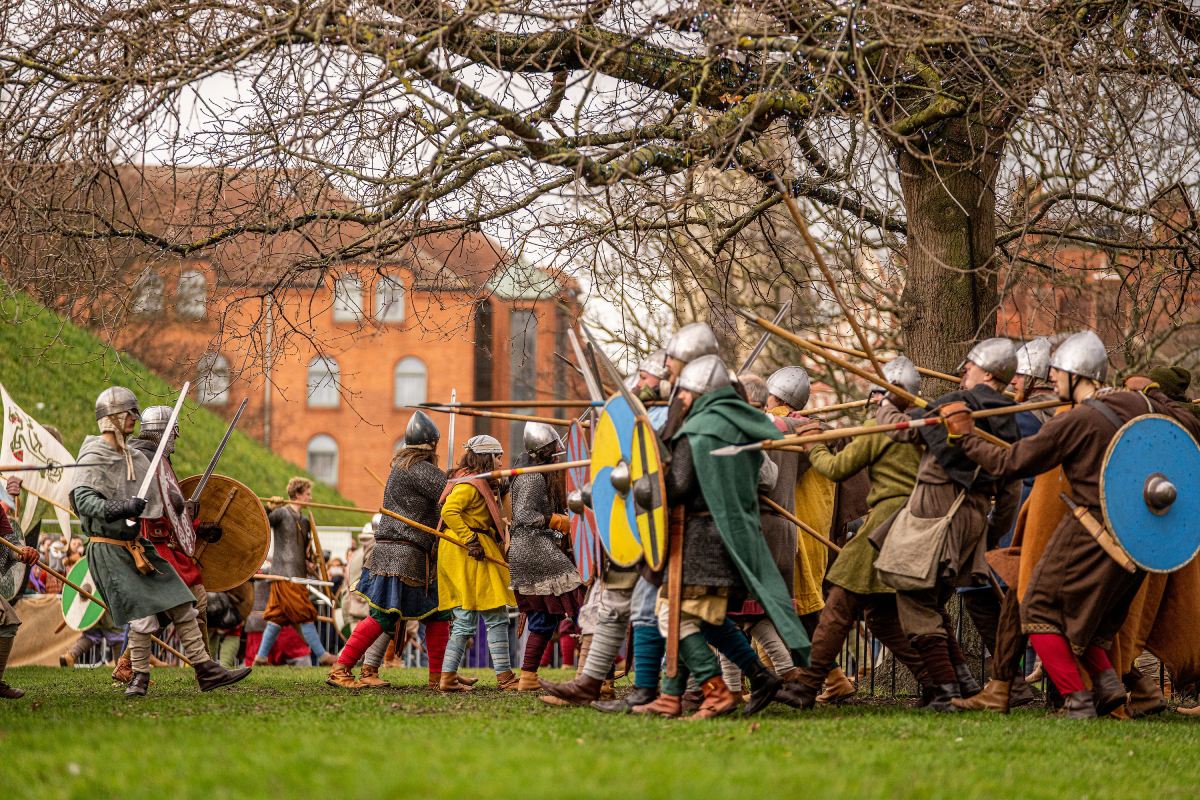


In the middle of the Irish Sea, halfway between Ireland and England, lies the Isle of Man (or Mann), a self-governing region that is home to the Vikings of Mann, a long-running historical reenactment group that celebrates the 350-year presence of the Nordic invaders on the island.
Inspired revivalists
The Vikings of Mann was formed during a 2003 project that revived a popular Viking festival held in the seaside town of Peel during the 1960s and 1970s.
"We had a series of large festivals that featured a village on the beach, Viking longships, and re-enactors from all over the world," recalls secretary Richard Corlett.
Though The Vikings, a major, UK-wide organization, was asked to come and run the new festival, local residents were inspired to continue exploring their passion for the Norse era long after the event was over. In fact, they show no signs of stopping yet.
"Reenactment is a very niche hobby, and it takes a particular kind of person to want to do it," continues Richard, "But we have people from all walks of life, including teachers, bankers, builders, people who work in Manx National Heritage, and retirees. We've been filmed for documentaries, assisted in major events like the Commonwealth Games, and are regularly hired for local events."
Authentic approach
The group tries to portray the Vikings as accurately as possible, with members even taking on their own Viking persona.
"Some people take this way more seriously than others, and in some cases, I only know them by their Viking name. Mine is Fiac Mac Thorliotr. 'Mac Thorliotr' ('Þorljótr') is the Norse origin of my own surname, while 'Fiac' is a name taken from a rune found on the Isle of Man. It's actually a Gaelic name, which shows there was a lot of crossover between the Vikings and the Celts they ruled."
Indeed, while the group is all about entertainment and enjoyment, Richard also sees it as a way of preserving local traditions.
"Viking history is very important to me. I am proud to be Manx, and the Vikings had a huge influence on the Isle of Man during their rule of the island, which lasted from 800 CE to 1265 CE."
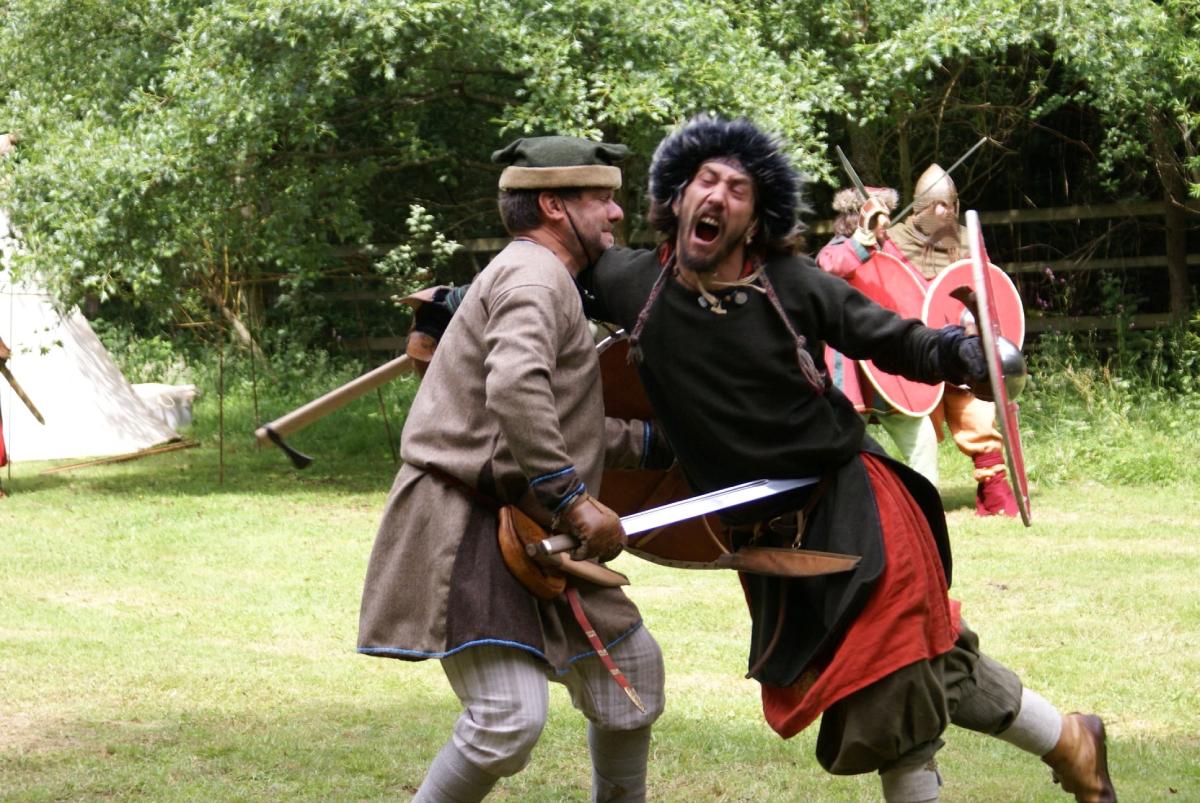
A crowd-pleasing grisly death performed by the Vikings of Mann reenactors. Photo: Vikings of Mann / Facebook
All for show
Just like all serious fighters, the Vikings of Mann practice their combat skills regularly, with sessions usually held once a week.
"We follow the combat rules of The Vikings Darkage Reenactment Society, which is best described as tag with steel swords. We aim to hit the opponent in the target area (just the torso and shoulders, or above the knee).
"We're not actually aiming to hurt anybody, so we have a two-hit rule where the first strike is just a touch, and the second should be a showy kill to impress the public. There are always bruises because we're hitting each other with steel weapons, but we try to keep it as safe as possible.
"I do train hard to get fitter and faster because there's no better feeling than beating an opponent you've never fought before, but I wouldn't say we take it super seriously – it's fun!"
Striking friends across the sea
The Vikings of Mann are no strangers to overseas raids, either, often organized by The Vikings society.
"There are several different, large reenactment societies that have groups all over the British Isles," explains Richard. "We have always been part of The Vikings and have a lot of friends among them.
"It's like a big family, and you always meet people you know. A few of us try to get to a large show in England at least once a year so we can meet all of our friends across the sea and hit them."
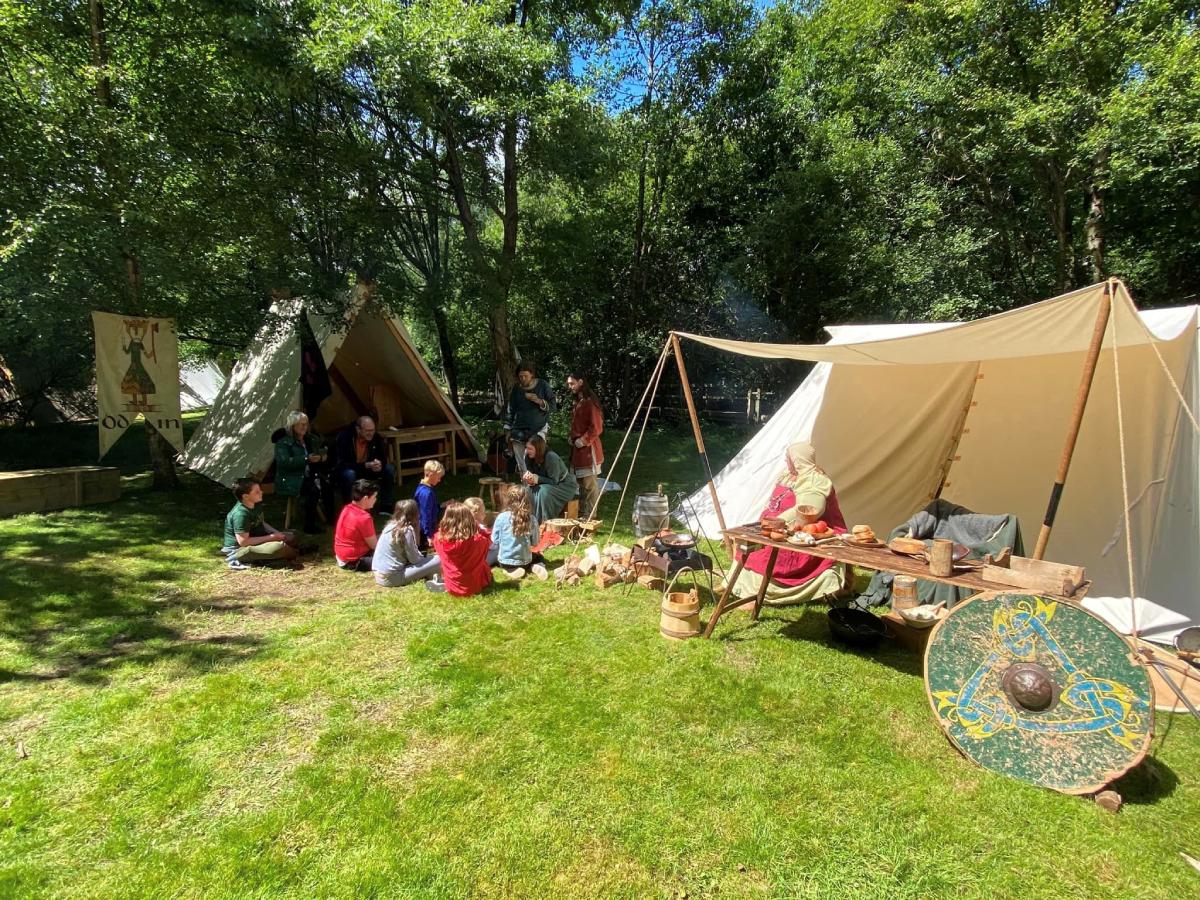
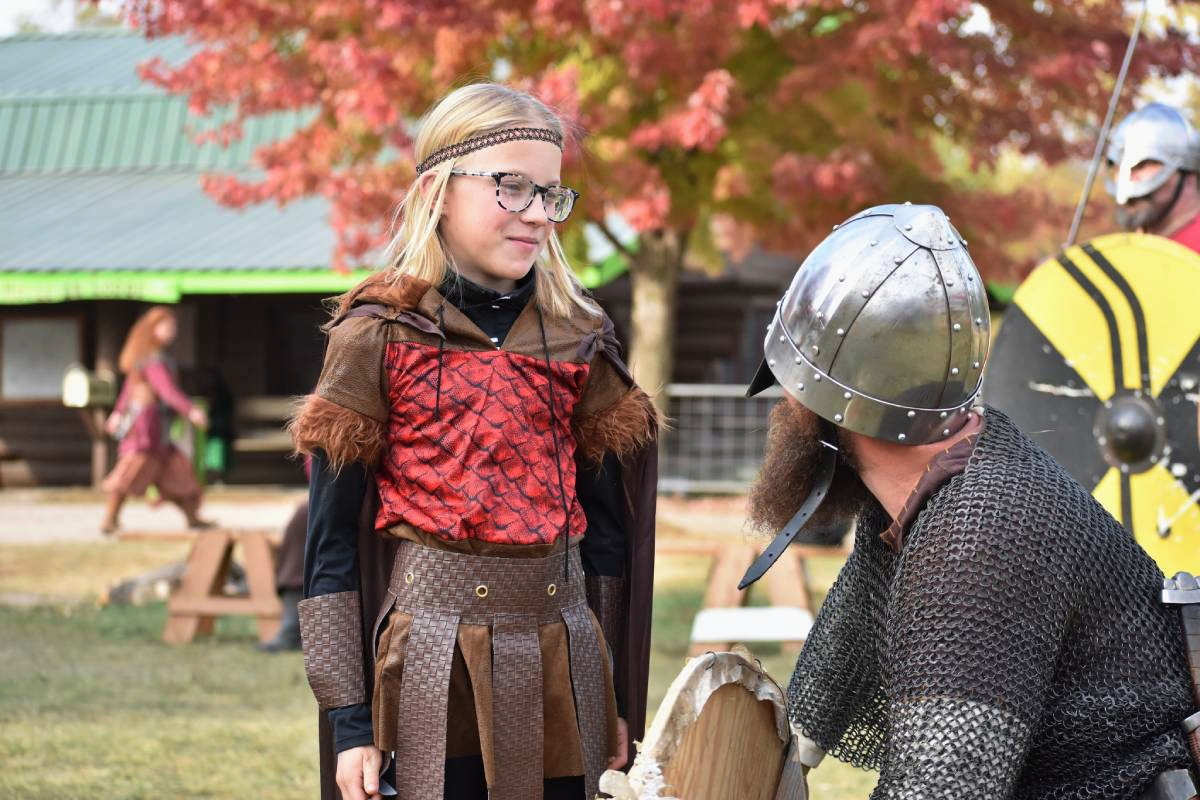
Children exploring a Viking encampment. Photo: Vikings of Mann / Facebook
Tynwald – the oldest parliament in the world
The biggest event in the Vikings of Mann calendar, however, is unquestionably Tynwald Day, usually held on July 5, the National Day of the Isle of Man. Tynwald lays a legitimate claim to being the oldest parliament in the world.
Every year, the laws of the semi-autonomous island are read out and ratified at Tynwald Hill in the tiny village of St. John's. Though some people believe the tradition began earlier, with the Celts, the custom was fully established by the Vikings during their occupation.
"There were many 'Things' ('þing', in Old Norse, meaning 'assembly' or 'gathering') that people attended to hear the laws and raise grievances," explains Richard.
"Tynwald has existed continuously in some form or other for well over 1,000 years. Our camp is set up in a beautiful little nook behind Tynwald Hill, where the public can wander around the trees, tents, and campfires and learn all about Viking life."
For anyone interested in getting up close and personal with some vicious Vikings, Tynwald Day on July 5 is the perfect time to do it. For more information and updates, please see the website of the Manx parliament or The Vikings of Mann Facebook page.
We get to provide readers with original coverage thanks to our loyal supporters. Do you enjoy our work? You can become a PATRON here or via our Patreon page. You'll get access to exclusive content and early access.
Feel free to reach out to discuss potential stories that may be in the public interest. You can reach us via email at hello@thevikingherald.com with the understanding that the information you provide might be used in our reporting and stories.