

A Viking sword unexpectedly found in a Polish river is to be placed on display at the Białystok Army Museum in northeast Poland.
The Viking Herald speaks to Łukasz Makowski, a specialist in the museum's education and exhibitions department, about the sword's fortuitous discovery, the process of conservation and analysis, and plans for a special display at a new museum building.
A chance encounter
"The sword was actually found in the Polish countryside near Białystok two years ago," Łukasz tells The Viking Herald.
"A museum employee, Szczepan Skibicki, was on holiday near the Supraśl River and took his wife to the waterside for some sunbathing.
"Szczepan got a snorkel and was just diving around in the river when, at a depth of about 1.2 meters, he found something that looked and felt like iron," Łukasz continues.
"It took him a few seconds to think about what it was before he realized, 'Okay, it's a sword!' It was completely unexpected. Szczepan later told me it was like winning the big prize in the lottery – the find of his life."
Szczepan took the sword to the director of the museum and also reported the find to the local authorities. "In Polish law, everything you find in the ground is the property of the state," Łukasz explains.
"The authorities had to decide which institution to give it to. In the meantime, we were able to start the conservation process."
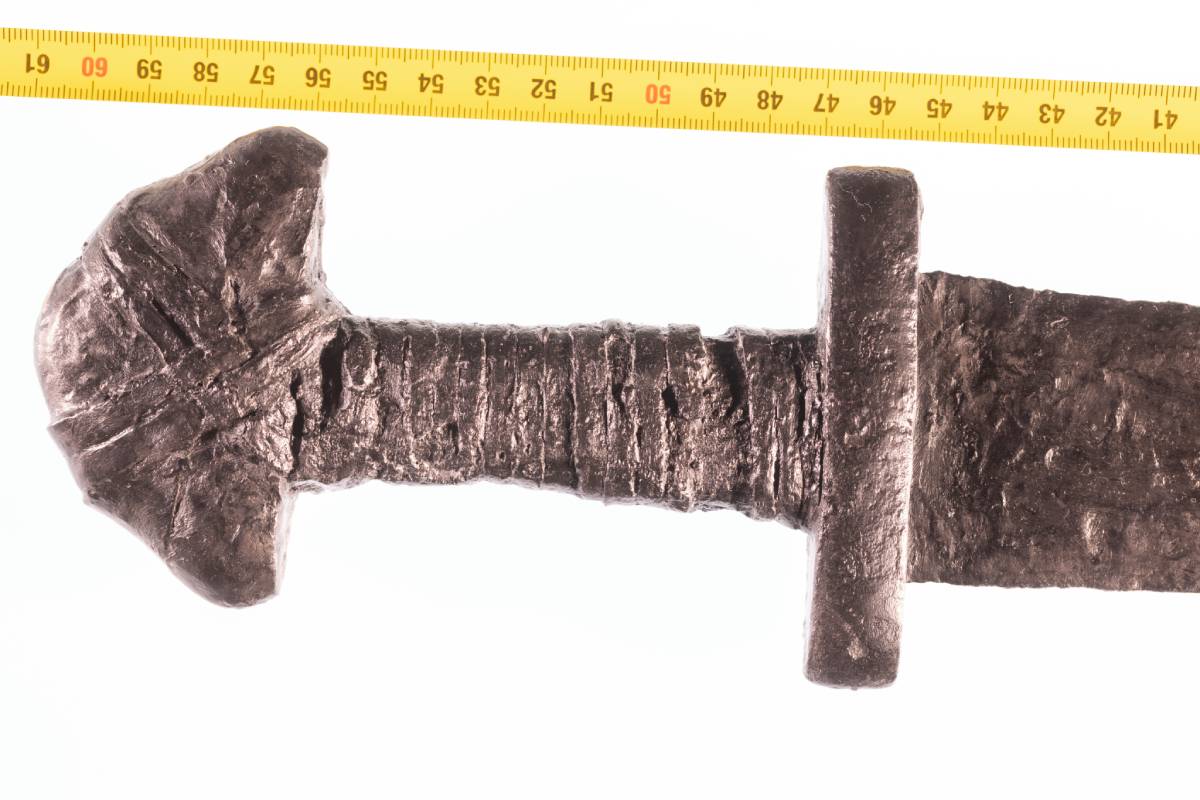
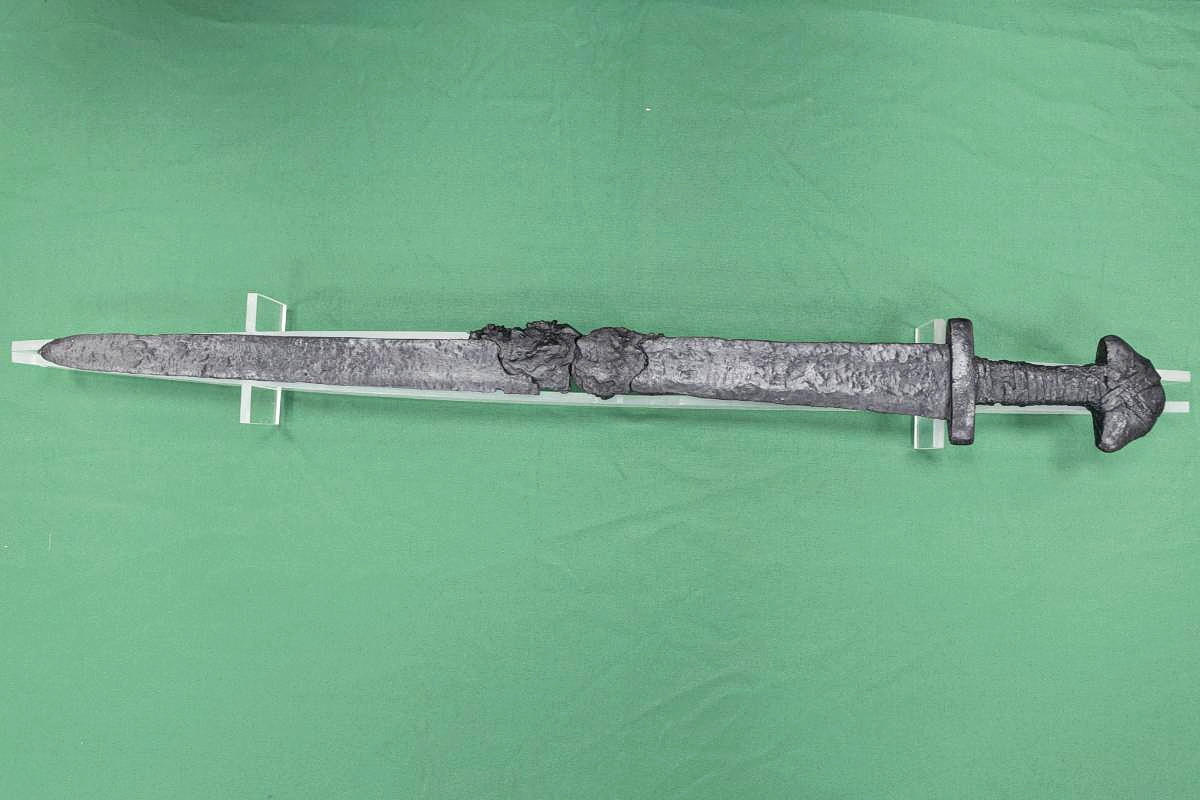
The sword's unique leather wrapping around the pommel surprised experts, as such a feature is rarely seen on similar artifacts. Photo: Białystok Army Museum
Careful conservation
"We asked a specialist at the Nicolaus Copernicus University in Toruń to begin the analysis," Łukasz adds.
"The sword was cleaned of layers of corrosion and mineral deposits and protected from further degradation."
"What they found was incredible: the sword had a unique handle with a wrapping around the pommel. We had never seen a solution like it before – it blew our minds!"
It was also found that the middle section of the sword had eroded away, but the examination of the blade revealed the remnants of ornate decoration and inscriptions.
"Unfortunately, it is not really possible to read the inscription," Łukasz admits. "If we had discovered legible lettering in the Cyrillic alphabet there, for example, it could have told us a lot about the origin of the weapon."
Archeologists from the Institute of Archeology at the University of Warsaw also conducted research at the site where the sword was discovered.
Unfortunately, however, these particular investigations proved fruitless.
"No other relics from the same historical period were found," Łukasz tells us. "At the same time, we plan to carry out research at this site again and check a larger area in the future."
- READ MORE: A complete guide to Viking weaponry
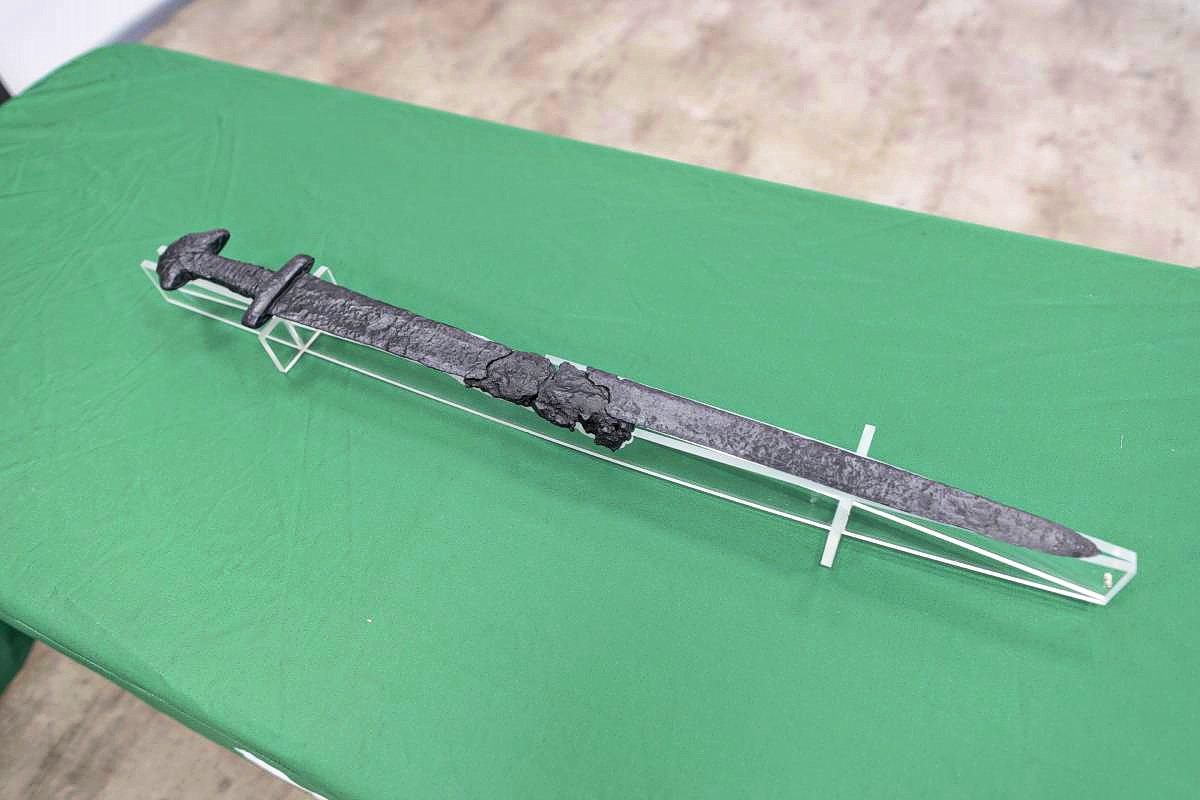
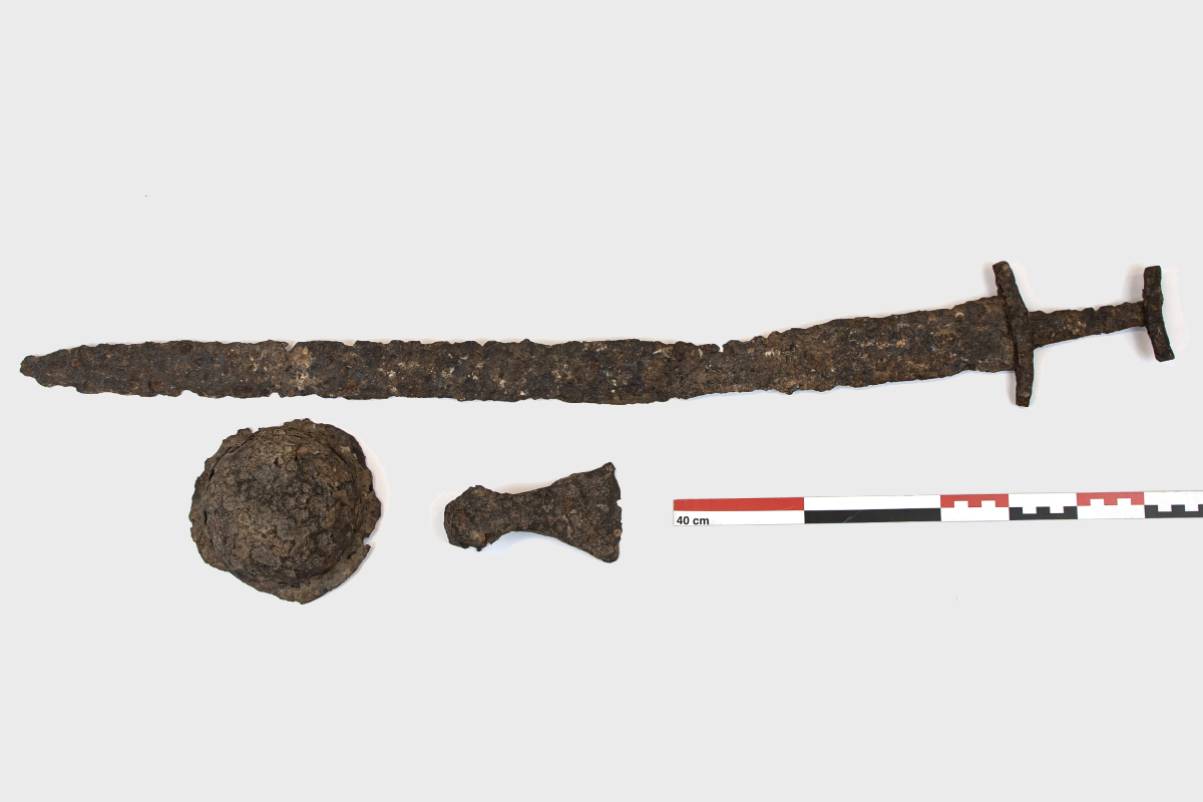
Experts believe the sword may have been manufactured in the Rhineland or brought to the region by a Scandinavian mercenary. Photo: Artur Reszko / PAP
Property of a Viking?
The sword has now been dated to the 9th or 10th century, and certain elements of the design suggest it may have been of Norse origin.
"The hilt is the most interesting aspect," Łukasz says. "In our opinion, it appears to be a Petersen Type E."
"There are some interesting elements – the hilt contains a notch that is probably a trace of some kind of decoration, perhaps made with bronze alloy."
"The head was also covered with bronze alloy, confirmed by small preserved fragments on the cover," Łukasz continues.
"The CT scan also showed that the pommel had three parts, with the dividing lines obscured by a narrow strip of skin wrapping the pommel."
"That strip of leather around the pommel was a huge surprise to us," Łukasz admits.
"We looked for a long time for a similar feature in other swords. We found the Ulfberht sword from Grossenwieden has a comparable strip of leather around the pommel, though the knot on the pommel of our sword is more complex."
"Could our sword have belonged to a Viking? I would like to think so, but it is not as certain as we would like."
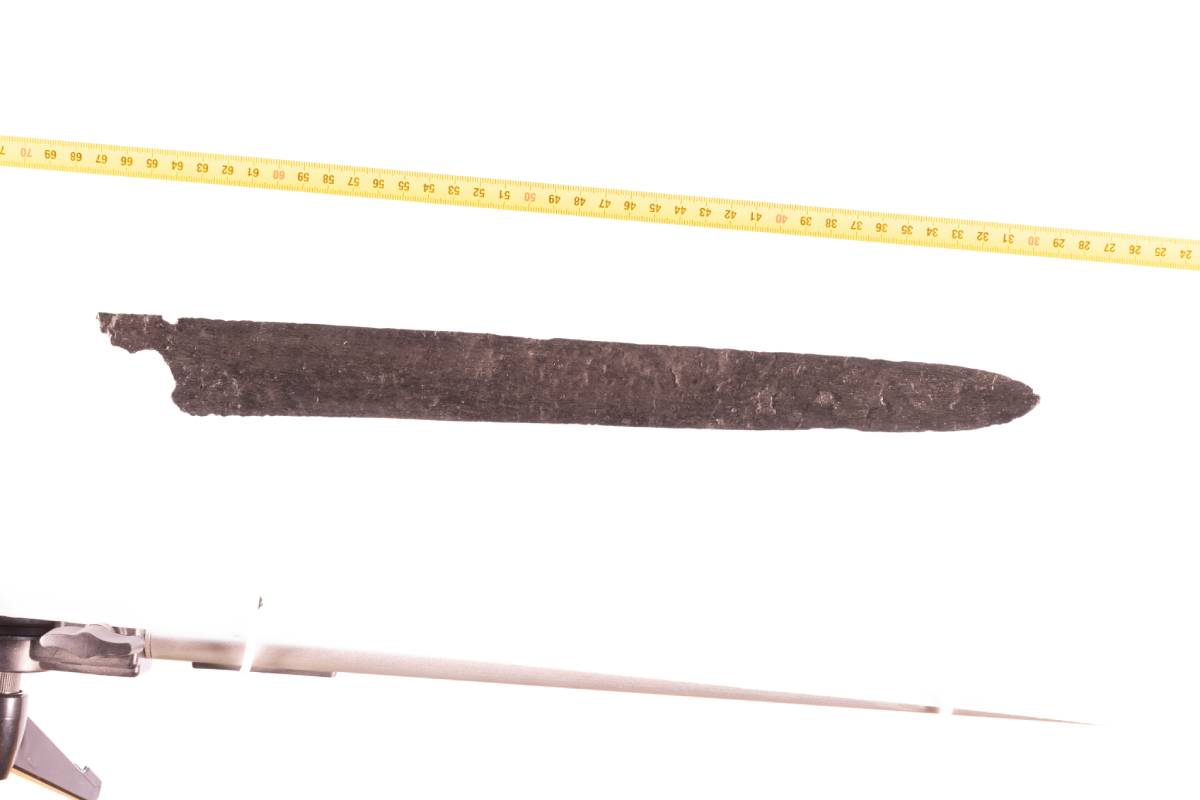
Historians suggest the sword might have connections to both Scandinavian trade networks and Rus Viking influences from the East. Photo: Białystok Army Museum
Norse links to the east and west
As Łukasz points out, there were several links between Scandinavia and the kingdoms of Poland during the Viking Age.
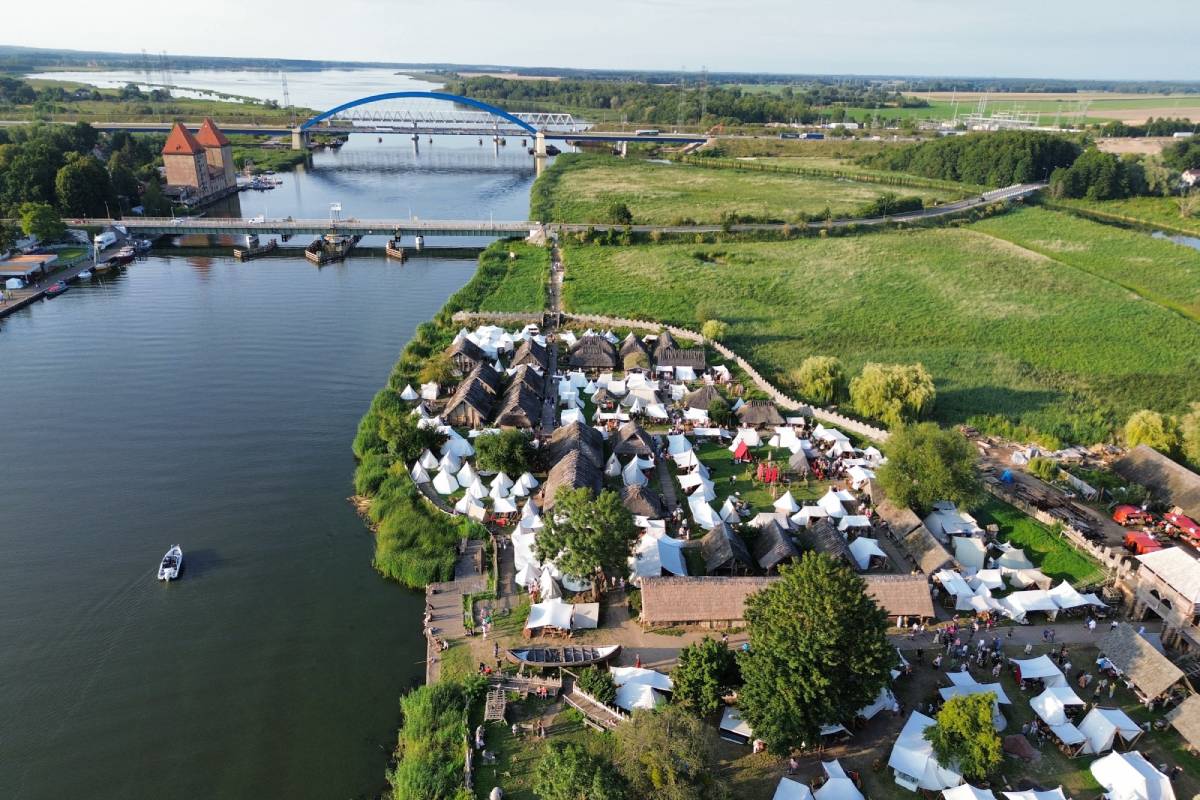
"Białystok is 300 kilometers from Janów Pomorski, which archeologists have recognized as the location of Truso, a major Viking trading port in this region," Łukasz tells The Viking Herald.
"The sword could have been manufactured in the Rhineland and sold to a local warrior, or it may have been owned by a mercenary from Scandinavia."
Yet it is also possible that the sword arrived from the east. "We can speak of the influence of the Rus Vikings and the Grand Duchy of Kyiv, which was in operation at that time," Łukasz states.
"The presence of the Vikings and their influence on the establishment of this country has been confirmed by historians."
"But I should also point out that our region, Podlaskie, was on the border between the lands of Duke Mieszko I (which later became Poland) and those of the Baltic tribes."
"In other words, there are still many possibilities open when it comes to the origin of the sword."
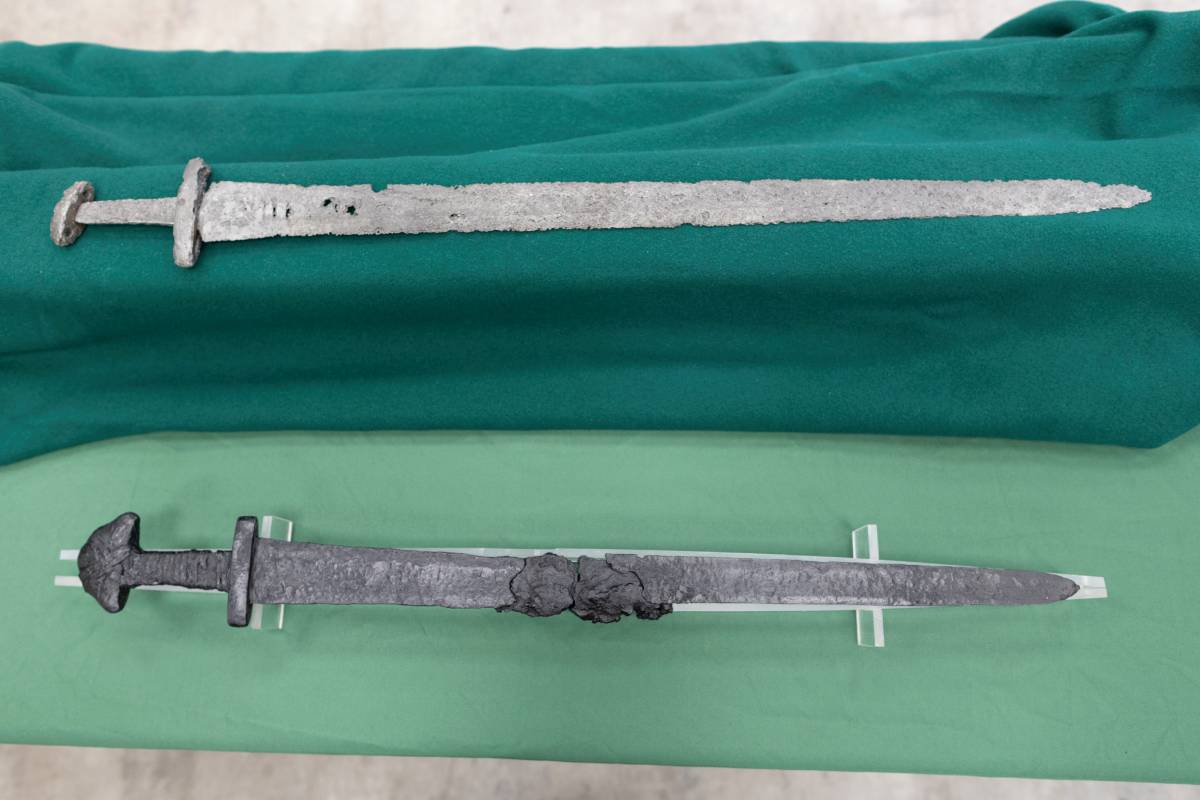
The sword will eventually be displayed alongside another sword found in the Supraśl River in the museum's new building. Photo: Artur Reszko / PAP
Ready for viewing
It is hoped that further analysis of the sword in the future may help confirm where it may have come from.
"We have taken various high-quality photos in a different light to try and capture the inscriptions," Łukasz explains.
"We will also try to do more examinations, but we need more funding for greater analysis."
"One way to get more information from the sword would be to remove a piece of it. But that would be a little tough on our hearts – to destroy part of this unique artifact!"
The good news is that Viking experts and members of the general public alike will now have the chance to see the sword and decide for themselves.
"The Podlasie Provincial Conservator of Antiquities has handed over the sword to the Army Museum as a deposit. After two years, the sword has officially become the property of the museum and joined our collection," Łukasz confirms to The Viking Herald.
"We are working on integrating the sword into our permanent collection."
"We will also be moving to a new building over the next two or three years and have plans to exhibit the weapons alongside another sword that was also discovered in the Supraśl River."
"I am sure the two swords would look great together in a special display in the new museum!"
We get to provide readers with original coverage thanks to our loyal supporters. Do you enjoy our work? You can become a PATRON here or via our Patreon page. You'll get access to exclusive content and early access.
Feel free to reach out to discuss potential stories that may be in the public interest. You can reach us via email at hello@thevikingherald.com with the understanding that the information you provide might be used in our reporting and stories.