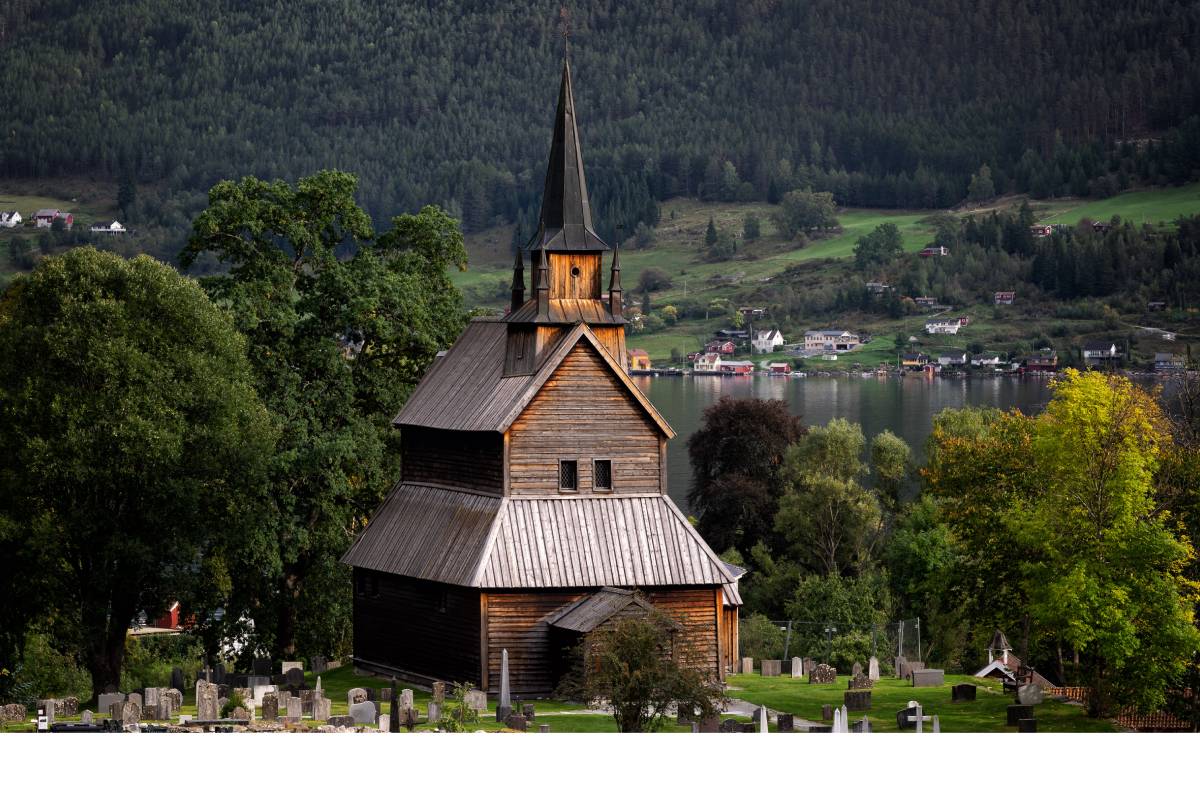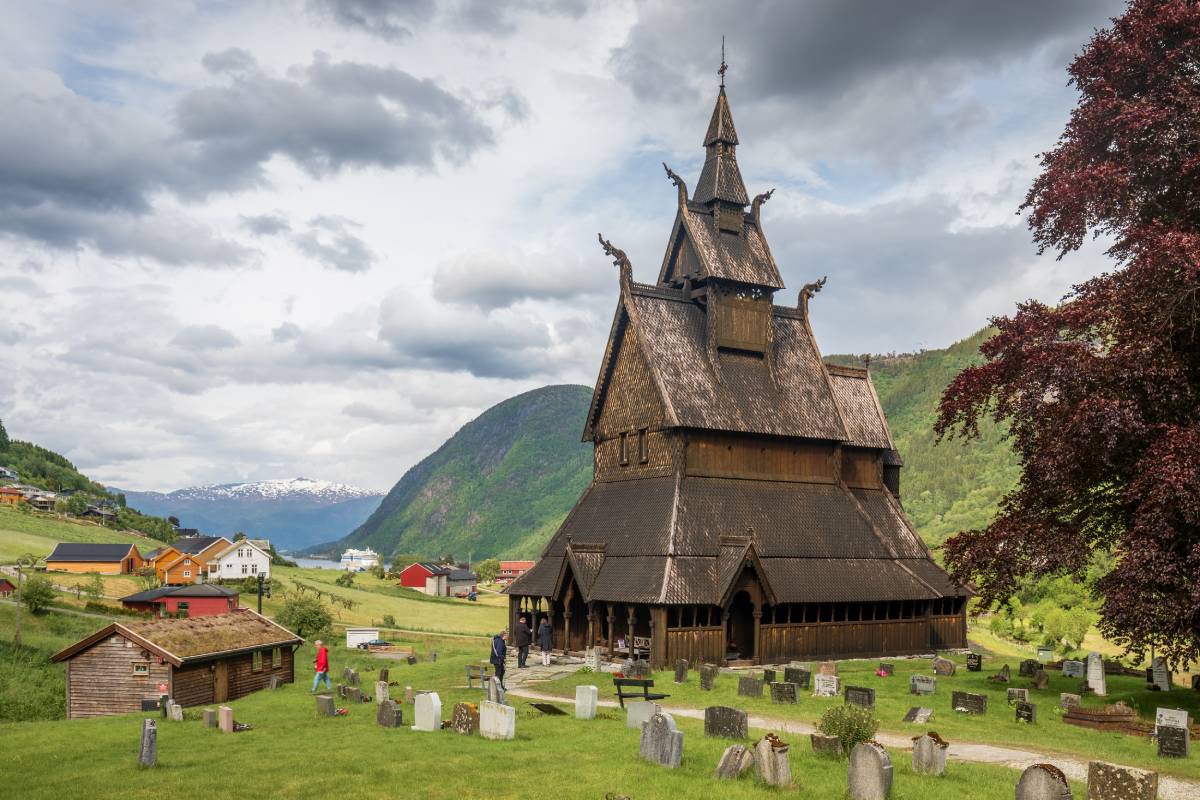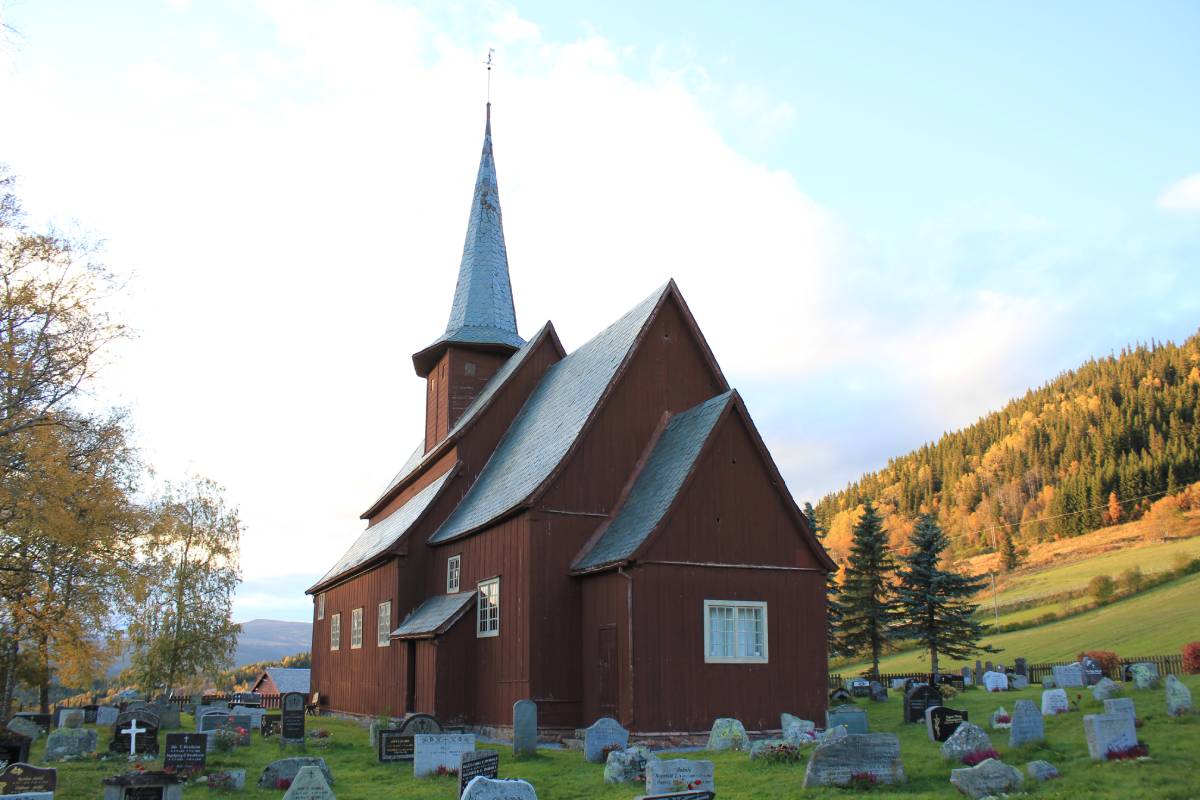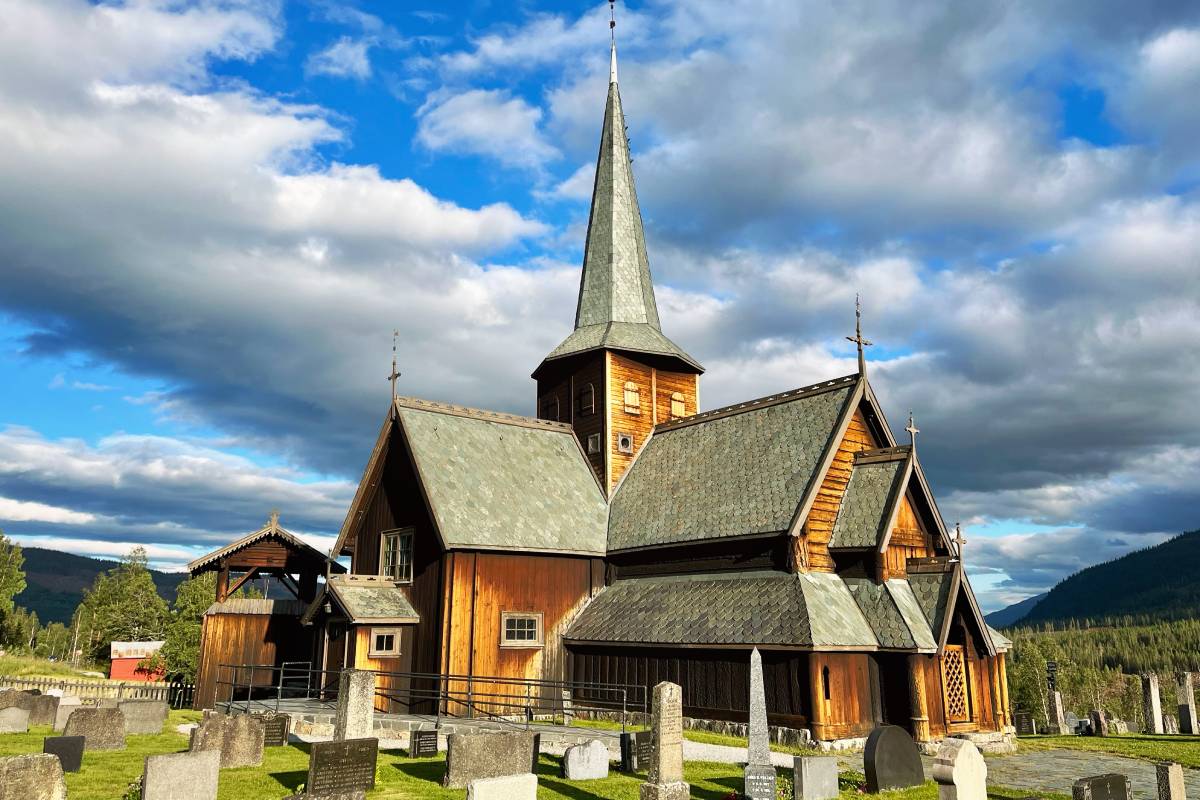


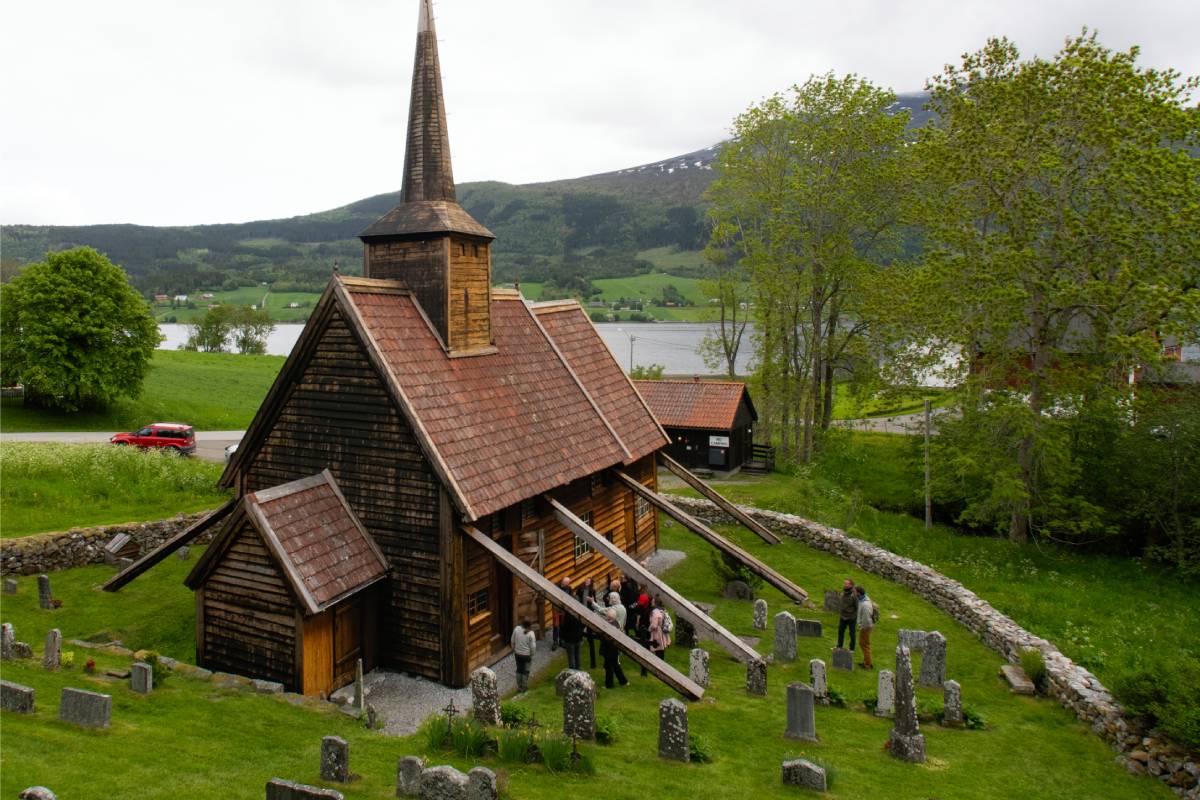
Collectively, the stave churches of Norway constitute one of Scandinavia's most valuable archeological treasures.
More than a thousand churches of this kind were built during the medieval period, yet just a few of these stout wooden buildings have survived through the centuries.
One of these churches, located in the Western Norway village of Rødven, possesses a portal whose unusual design has perplexed many onlookers. Some experts, however, believe it could have been carved by an Anglo-Saxon in the retinue of the Viking king Olaf III.
To find out more about this theory, The Viking Herald speaks to researcher Kjartan Hauglid.
The North Sea church
Thought to have once been found throughout Northern Europe, stave churches are characterized by a unique design where load-bearing posts, or staves, support an often intricate wooden structure.
"We know about more than 1,200 stave churches that were built here in Norway," begins Kjartan, a researcher at the Norwegian Institute of Cultural Heritage Research (NIKU). "However, only 28 survive today."
"I work with all the stave churches and surviving masonry buildings from the Middle Ages in Norway," Kjartan explains to The Viking Herald.
"I've been to Rødven several times. Three years ago we had a seminar and also did new dendrochronological investigations to try to find new dates for the church."
As Kjartan explains, Rødven, which is categorized as a Møre-style stave church, reveals several intriguing archeological features that set it apart from many other stave churches.
"I worked on the structure of the building during these investigations," Kjartan informs us. "It's built with special beams, known as 'skordene', that support the building," he explains.
"This is unique in Western Norway, though we can also find it in Iceland and several other places. For this reason, I argue that it is a kind of North Sea church."
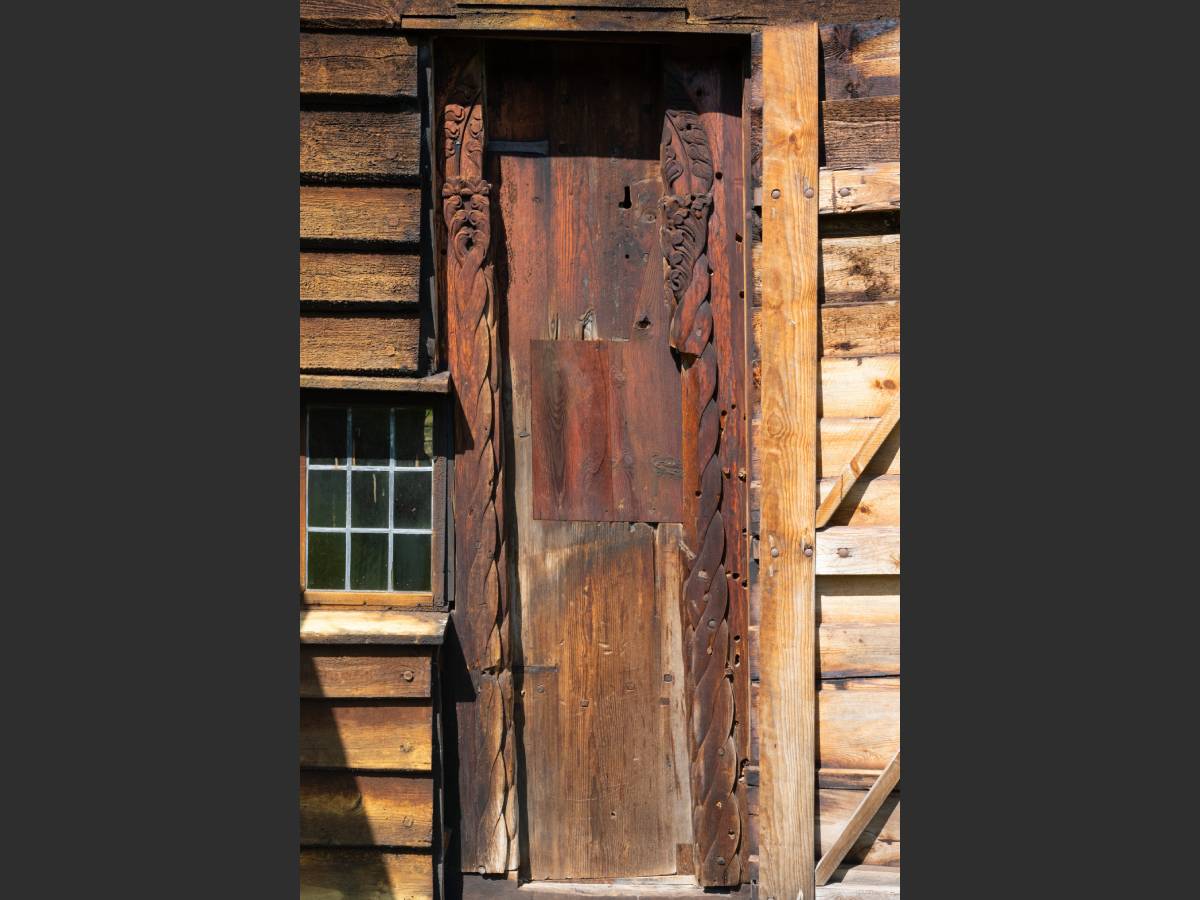
Rødven's portal features spiraling columns and leafy forms not found in typical Scandinavian designs. Photo: Kjartan Hauglid
A portal to another culture
Rødven also contains another curiosity, an ancient portal. Though the church was built in the 13th century, it is believed the portal could date to the end of the 11th century and may have been taken from an earlier church built on the same site.
The portal is usually obscured from view by the building's wooden cladding. During the investigations, however, the team examined its unusual design up close—twisted columns wrapped in distinctive foliage.
As the researcher Martin Blindheim had also commented in 1965, Kjartan and other experts observed a significant contrast between the style used here and that found on other stave church portals.
"If you compare it to the Urnes style, which was common all over Scandinavia, it's completely different," Kjartan comments to The Viking Herald. "The Rødven portal has these twisted columns that we don't find at all in the Urnes style."
"There is also no visible influence from Romanesque architecture in the Rødven portal," Kjartan adds. "In other stave church portals, you can see a strong influence from Romanesque architecture."
"This could have come from the Normans, or also Germany, where you have columns that imitate stone architecture. In Rødven, on the other hand, there are no traces of stone architecture at all."
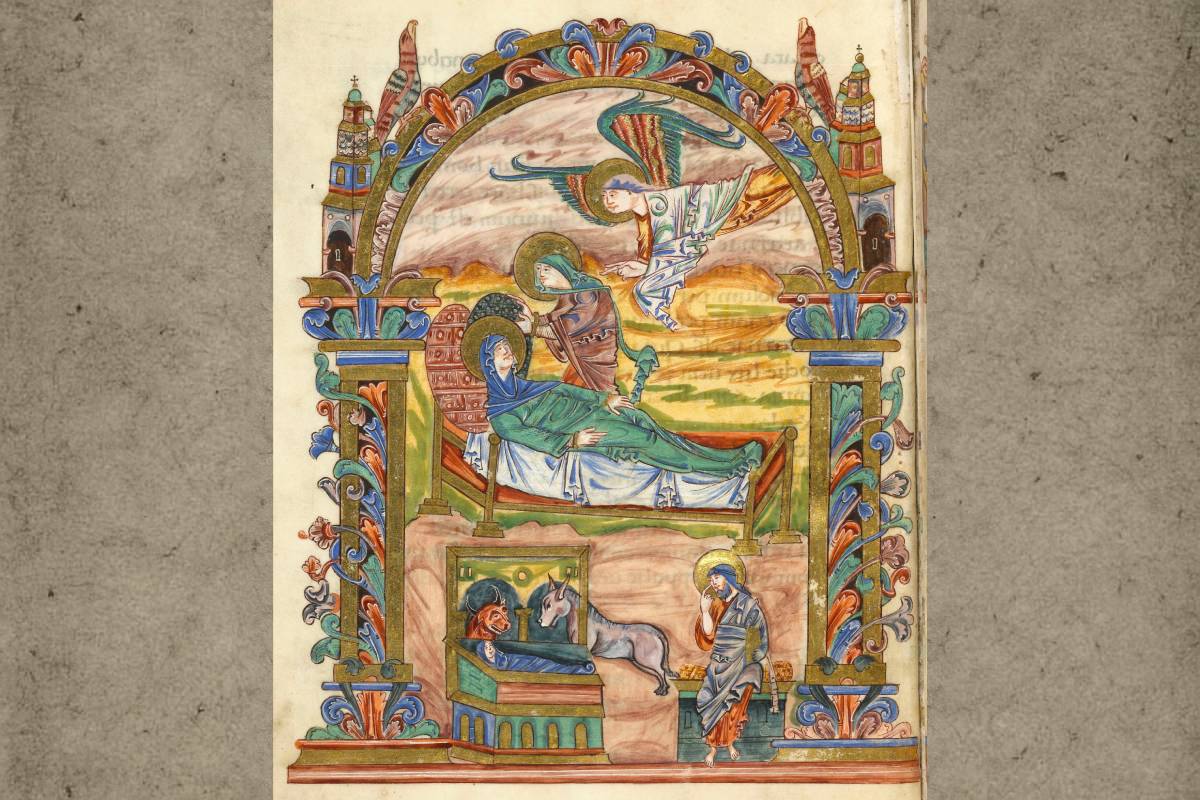
The floral framing in this image from the Sacramentary of Robert of Jumièges closely resembles the carved portal at Rødven. Source: Bibliothèque nationale de France
Hints of Winchester
Even more intriguing, however, is the foliage depicted on the twisted columns. Kjartan and other researchers, such as Margrete Syrstad Andås, have noted a clear similarity between the Rødven portal and the Winchester school in England.
The Winchester school refers to a style of painting found in illuminated manuscripts produced primarily in the English cathedral city of Winchester. The definition also encompasses some manuscripts produced at Canterbury and other monasteries in the south of England.
Unfortunately, while elements of the Winchester style may also have been used in Anglo-Saxon architecture, our knowledge today of the style is largely limited to the paintings themselves.
"Sadly, nothing survives of architectural sculpture from this period," Kjartan admits. "Everything in England is lost. There is just one church in Greenstead, but it has no surviving architectural ornamentation."
Even so, Kjartan is convinced of the connection. "It's closely linked," he states.
"The Winchester school is very characteristic or distinctive. If you look at how the foliage is built up with the columns, how they fold and the stems and the foliage interact, everything points to the Winchester school."
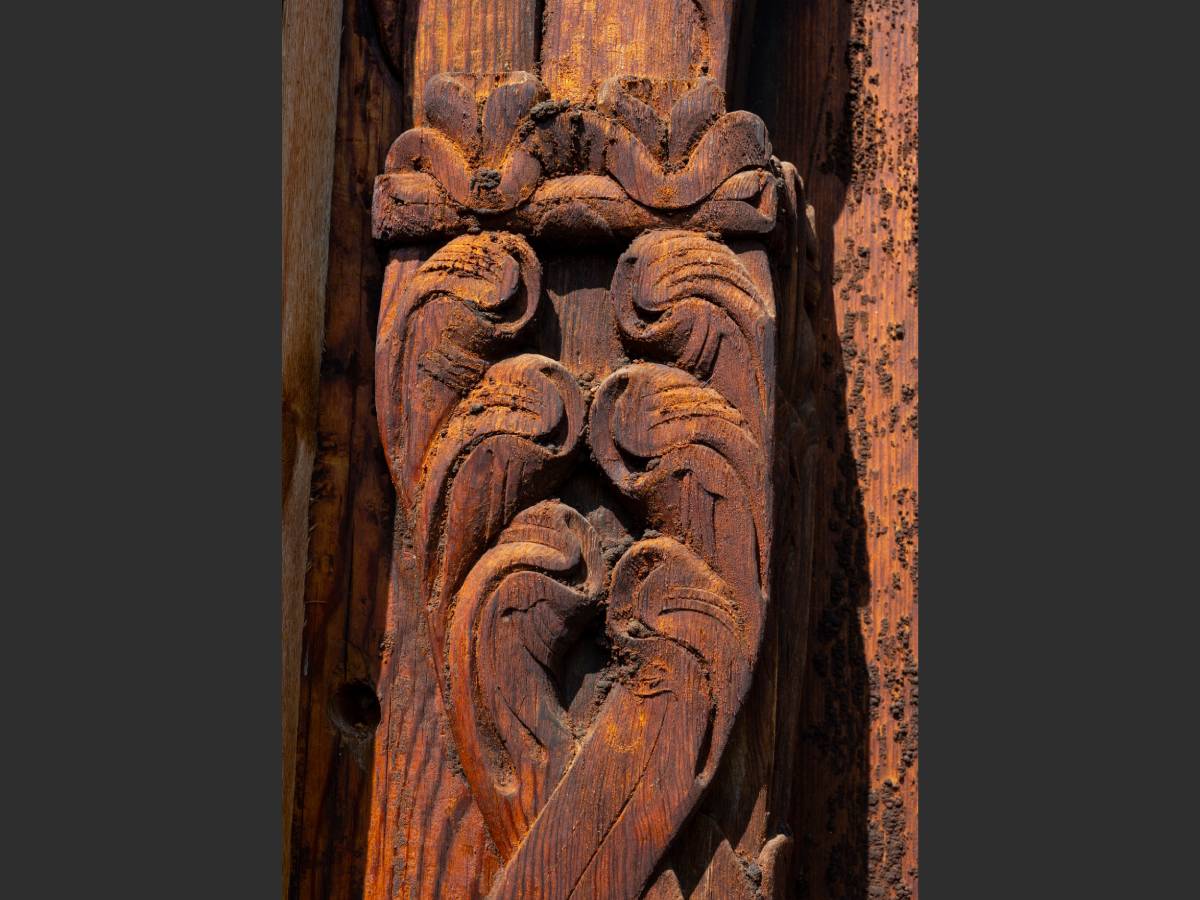
At Rødven, the carved stems and leaves appear to fold into the column itself, creating a fluid, organic structure. Photo: Kjartan Hauglid
The historical connection
The possibility of an Anglo-Saxon cultural influence in Norway also has a clear basis in historical fact.
"We know there was a close link between Norway and England at this time," Kjartan continues. "King Olaf Kyrre, the son of Harald Hardrada, lived in England for several years."
"After the death of his father in 1066, Olaf returned to Norway and claimed the throne. He also brought with him a lot of Anglo-Saxons who wanted to leave England when the Normans arrived."
"Our main theory is that there was a strong cultural impulse from England at that time, and that this is the only surviving result of that in architectural sculpture," Kjartan asserts.
"You can easily see that this work is part of the Anglo-Saxon world. Winchester was a significant school, and there would have been important master illuminators."
Kjartan notes that this influence from England would have been developed in the period prior to the ascension of William of Normandy to the English throne.
"It's how the Anglo-Saxons did it before the Normans arrived in England," he explains. "After 1066, everything changed. The type of columns, and the way they are completely covered by foliage—you don't find this in later architecture."
- READ MORE: What are the six major styles of Viking art?
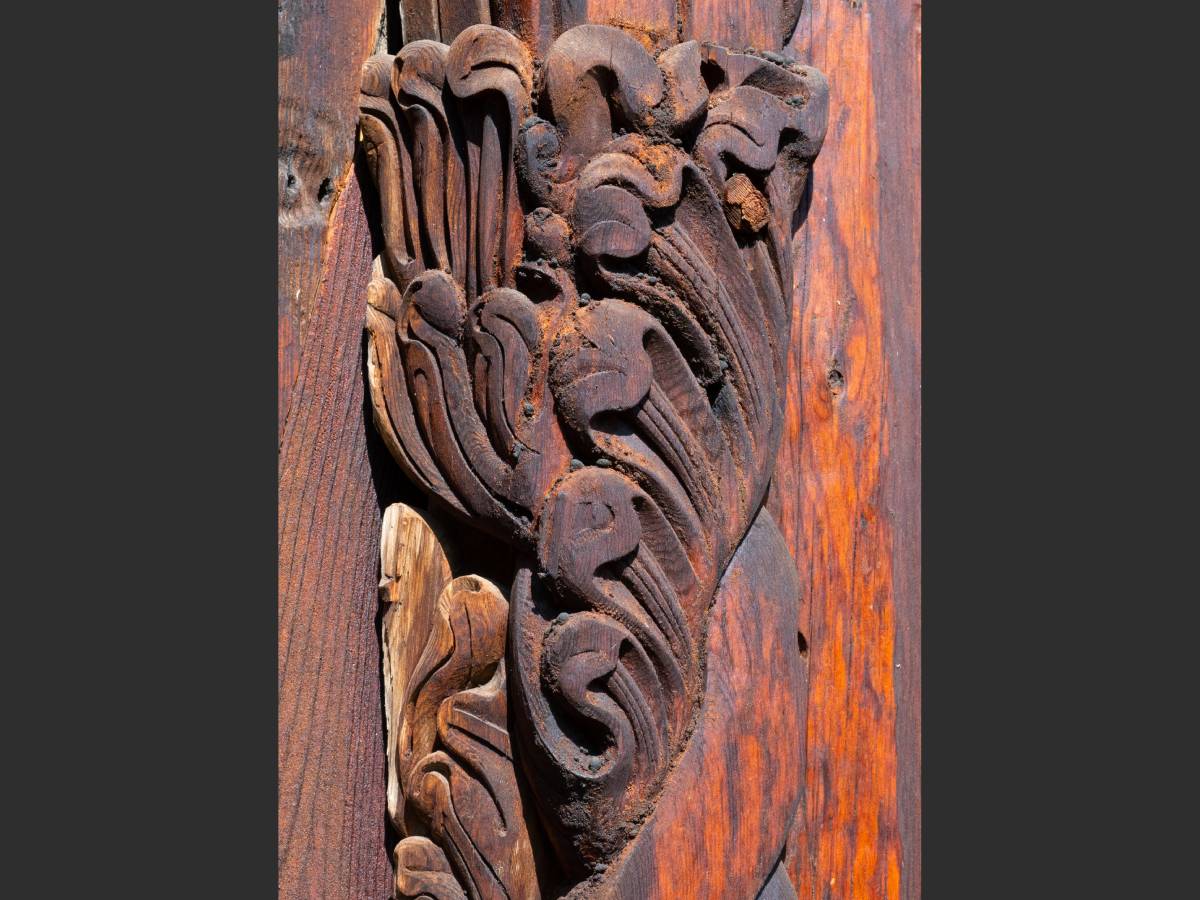
The crisp folds and confident carving of the portal have led some to suspect the hand of an English-trained craftsman. Photo: Kjartan Hauglid
Second-hand or direct knowledge?
If Kjartan and his colleagues are correct, and the Rødven portal design does indeed originate in Anglo-Saxon England, a second question arises: Was the idea simply borrowed from an English manuscript found in Norway, or did the carver have direct knowledge of the Winchester style?
Kjartan points out that illuminated manuscripts from England were actually common in the region at this time, as Norway transitioned from a pagan to a Christian society.
"All churches in Norway needed books to celebrate mass," Kjartan explains to The Viking Herald.
"This means they had to import books, especially from England. We have thousands of surviving fragments that point to a huge import of books from England in the 11th century."
"Sadly, we don't have anything that matches the design of the portal in the fragmentary material, but we do know there were many English books in the churches."
Even so, Kjartan believes the quality of the craftsmanship signals the portal was made by someone who had a more direct connection with the Winchester style.
"I think it's more probable that it was a skilled craftsman from England," Kjartan states. "Because of the very high quality of the woodwork, I believe it is more likely that it was a trained English woodcarver who came to Norway."
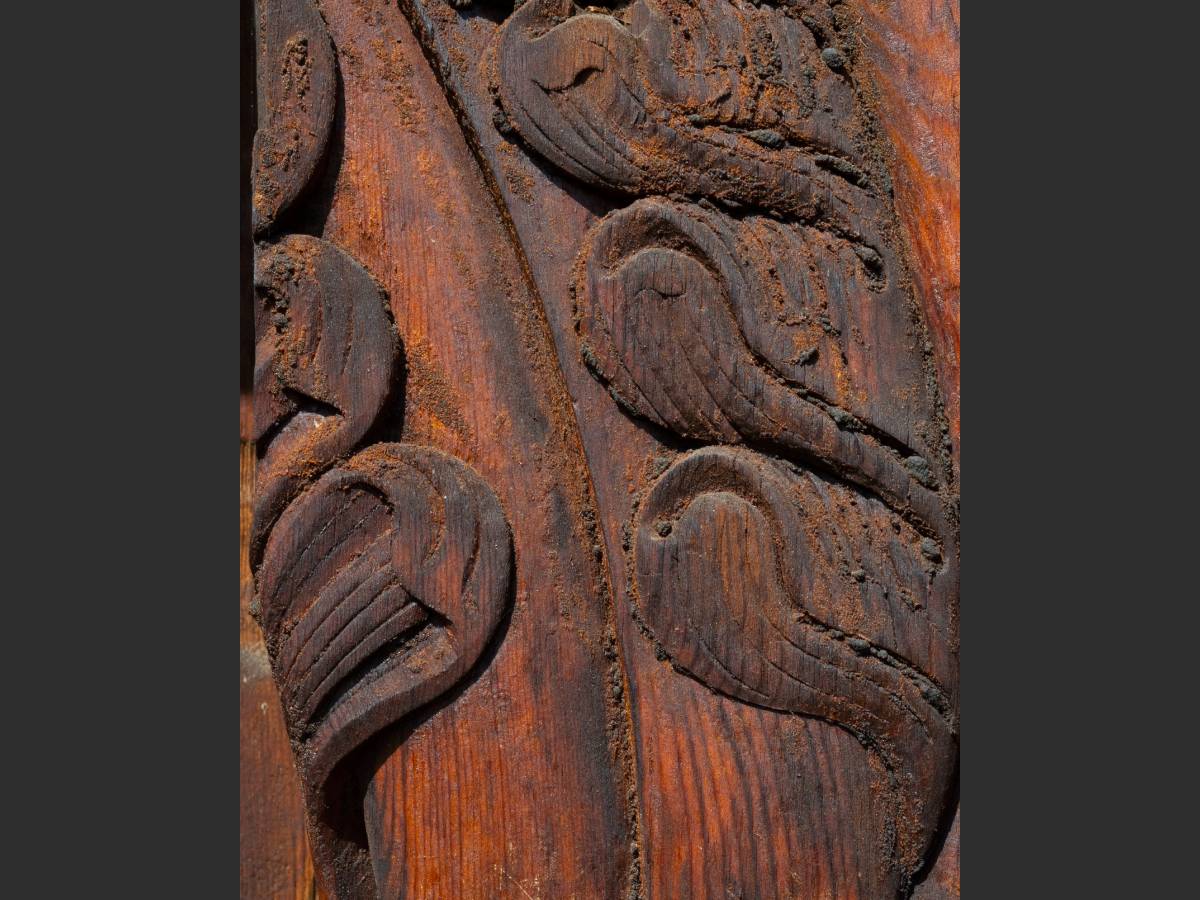
The Rødven portal may be one of the last surviving traces of a once widespread design tradition. Photo: Kjartan Hauglid
One of a kind?
It is also possible that there were once many more examples of the Winchester style in Western Norway.
"I do believe this is the only surviving portal of this Anglo-Saxon style," Kjartan admits. "However, when we looked at the church accounts of this area in the 17th century, we found there were 25 stave churches in the region slightly to the north, in Sunnmøre."
"They were built in the exact same manner, the same style as Rødven. This design could have been on hundreds of churches, but we just don't know—it can only be speculation. In any case, I do believe it was more common."
As Kjartan explains, many of these local churches were lost in the 19th century.
"The population grew, and they had to build new churches to house the congregation," Kjartan tells The Viking Herald. "There was a law in the 1820s that said that 10% of the population should fit into the church."
"There was a move to conserve some of the churches, but they only began buying them up in the late 19th century. Rødven was purchased by this preservation society (today known as the National Trust of Norway) in 1907."
"The local people had built a new church close by and wanted to tear the old one down. Fortunately, it was bought by the society and preserved for the future."
With so few stave churches left, Kjartan believes it is vital to cherish the ones that remain.
"There are very few people actually working with these old churches," Kjartan admits. "We hope to get them better known. Rødven, for example, is actually very little visited, even though it's one of the most important and best preserved stave churches in Norway."
"It stands as a monument from the Middle Ages and beyond—the chancel, for example, was only added in the 17th century. It is a true time capsule."
We get to provide readers with original coverage thanks to our loyal supporters. Do you enjoy our work? You can become a PATRON here or via our Patreon page. You'll get access to exclusive content and early access.
Feel free to reach out to discuss potential stories that may be in the public interest. You can reach us via email at hello@thevikingherald.com with the understanding that the information you provide might be used in our reporting and stories.