


The Norwegian University of Science and Technology (NTNU) has brought together several strains of research that indicate Norwegian society during the Viking Age was far more violent than the present day.
The various studies include examinations of osteological remains, grave goods, and monuments from Norway and Denmark.
Analysis of blunt trauma
While there is a tendency in modern archeology and history to look beyond the violent nature of the Vikings and stress other aspects of Norse society, such as trade and culture, this does not mean violence played no part in everyday life.
In fact, the evidence appears to indicate that physical clashes were a common occurrence, at least in Norway.
As reported by The Viking Herald last year, the study Violence as a lens to Viking societies: A comparison of Norway and Denmark suggests that the scale of the violence was truly notable.
Published by the Journal of Anthropological Archaeology in September 2024, the article outlined an examination of blunt force trauma suffered by Viking Age skeletons found in Norway and Denmark.
While trauma was present in both countries, the team found that the incidence of violence was significantly higher in the skeletons found in Norway.
Now, through an article in Science Norway and a discussion on the NTNU podcast 63 Degrees North, the university has presented the findings in the context of other research into the level of violence in this era.
Together, the experts paint a picture of a society where violence was more rule than exception.
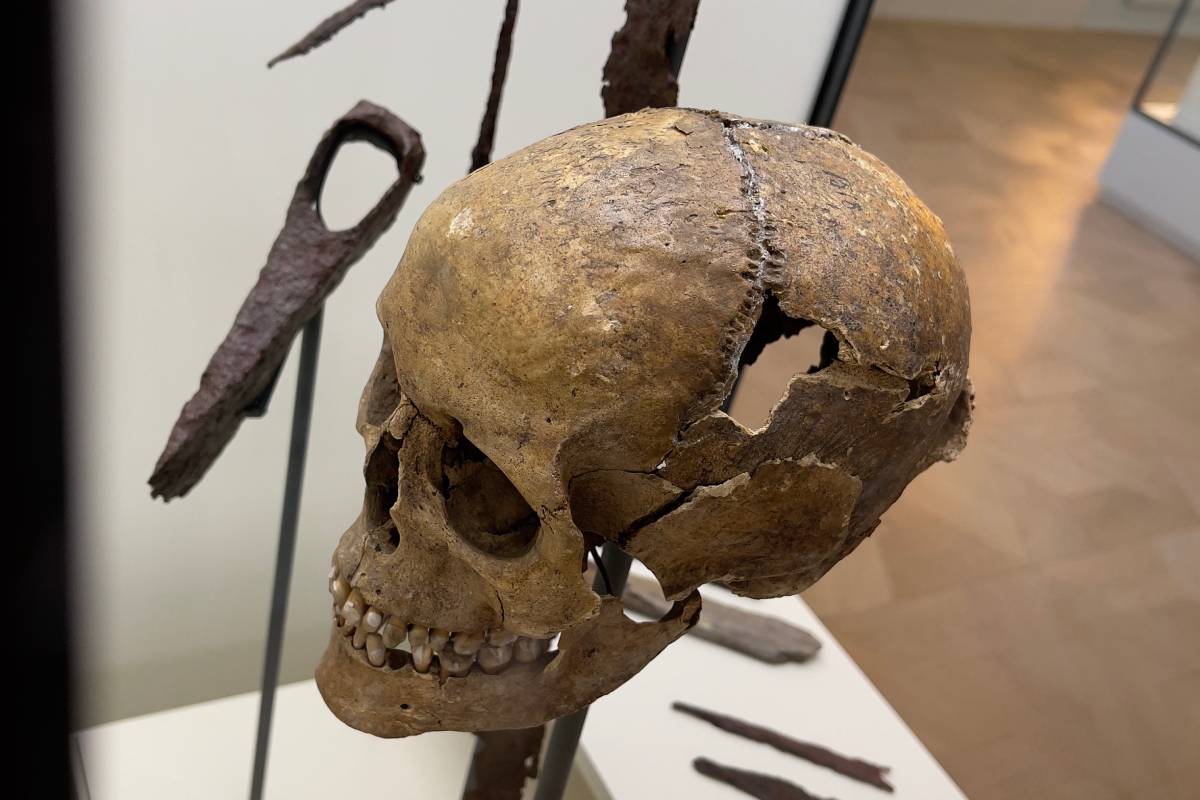
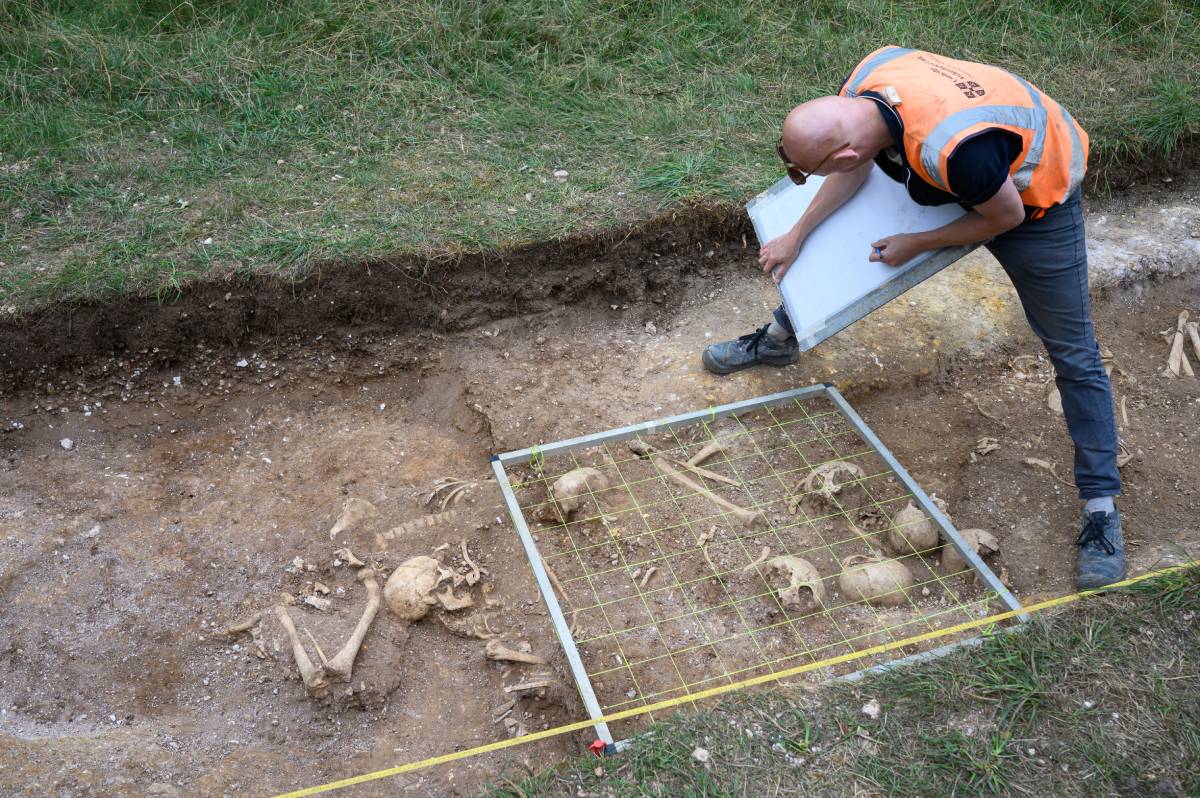
Osteological studies reveal that most Viking Age skeletons in Norway suffered blows from violent encounters. Photo: Wolfman (CC BY-SA 4.0)
A dangerous time to be alive
In the podcast episode, NTNU PhD research fellow Lisa Mariann Strand, Jan Bill, an archeologist at the University of Oslo, and David Jacobson, a sociologist at the University of South Florida, discuss their research with host Nancy Bazilchuk.
Strand, an osteologist, has studied Viking remains as part of her PhD work, identifying the marks and cracks that signify blows from trauma.
While some of the people were killed outright by these blows, she notes that others had severe injuries that had healed well before their death.
All told, more than 60% of the skeletons had suffered severe trauma. Naturally, this suggests a significant level of violence in Norway during the Viking Age, something that Jan Bill notes could reflect its particular social structure and hierarchy.
As a means of comparison, they decided to look at a similar study that had taken place in Denmark.
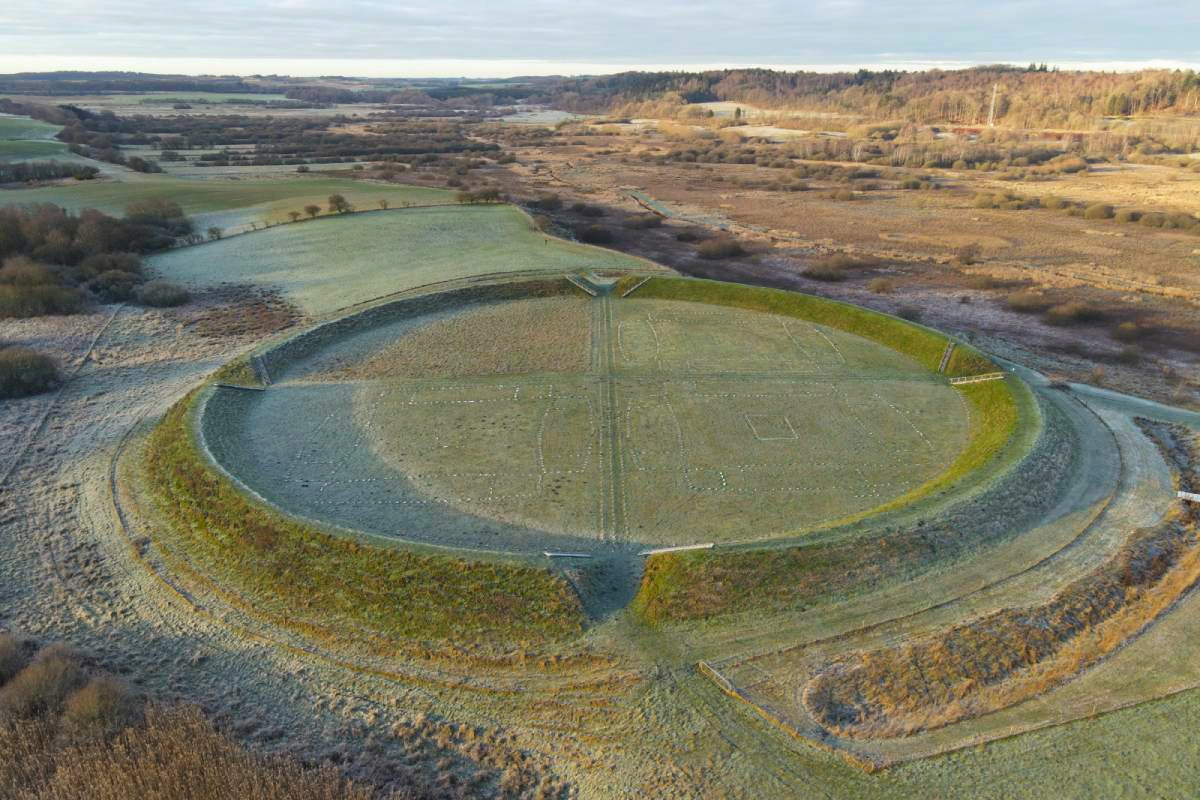
Signs of formal executions in Denmark reveal the presence of strong rulers and a more controlled society. Photo: Jesper Bylov / Shutterstock
Centralized executions
The researchers found that in Denmark, only 7% of skeletons studied showed evidence of a violent death, compared to around 40% in Norway.
As David Jacobson points out, broadly speaking, the rate of violent death in ancient societies was approximately 25%. In the modern world, however, the same figure is generally well below 1%, with Honduras the highest, at 7% among males—the same as Denmark.
In other words, society in Denmark would appear to have been on a path to a more peaceful existence, perhaps reflecting a different kind of social make-up.
Also notable was the main cause of death among the skeletons studied in Denmark—their heads had been cut off, indicating an execution rather than a death in an impromptu fight or a battle.
This fact appears to suggest that in Denmark during the Viking Age, there were strong and powerful leaders capable of ordering an execution.
Norway, on the other hand, appears to present a more chaotic or less structured society.
- READ MORE: A Viking history of Norway – Part 1
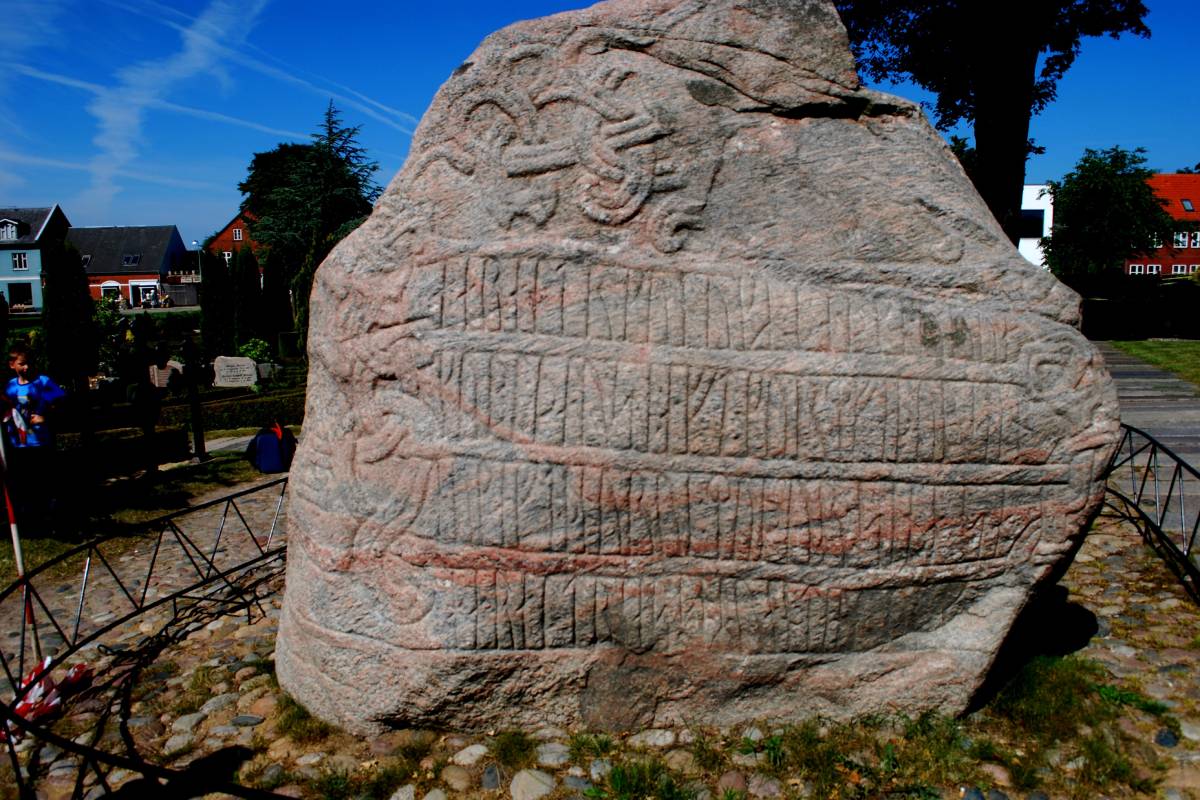
Runestones and monuments suggest that social status was more important in Viking Age Denmark than in Norway. Photo: Erik Christensen (CC BY-SA 3.0)
Runestones and monuments
Further evidence came from runestones—in Norway, the inscriptions in runestones from the Viking Age typically only mention the family relations of the deceased.
In Denmark, on the other hand, in addition to family members, it is much more common to find references to the position of the deceased in the wider social structure.
Although this evidence is inconclusive, it does suggest that titles or social positions were more significant in Denmark than in Norway.
Another clue comes in the form of burial mounds. While burial mounds were prevalent in Norway during the Viking Age, Jan Bill found that the size of the largest burial mounds actually decreased during the Viking Age.
In Denmark, on the other hand, there are not only many larger mounds but also large-scale building works such as the Danevirke, a long line of fortifications to protect a significant area of land.
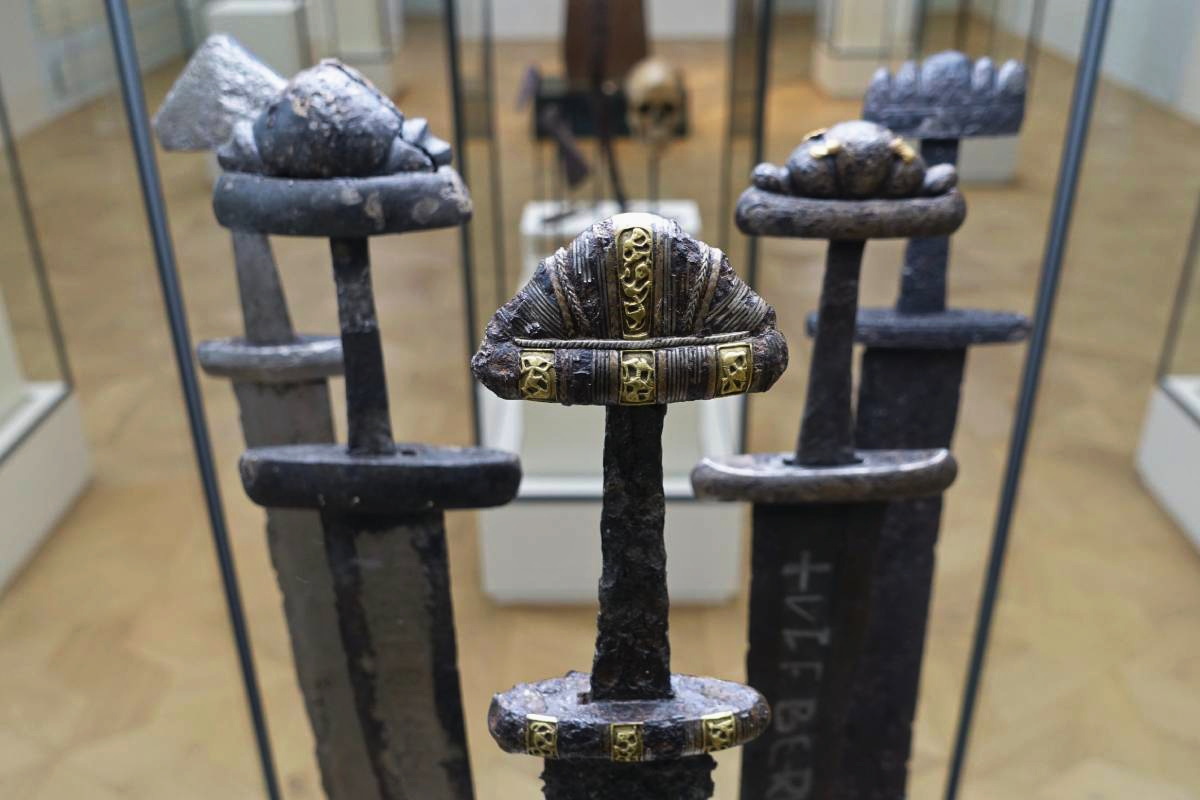
Researchers believe the greater number of weapons in Norway's graves reflects both resource availability and a higher level of violence. Photo: Wolfmann (CC BY-SA 4.0)
The path forward
The researchers were also able to analyze the graves of the people during the Viking Age in both countries—in these graves, they found that swords and other weapons were much more common in Norwegian graves than Danish ones.
As Jan Bill argues, this is likely partly because the raw materials used to produce iron were much more prevalent in Norway than in Denmark.
Nevertheless, the higher number of weapons in Norway again seems to indicate a greater level of violence.
Finally, David Jacobson notes that while it is clear that Scandinavian culture during the Viking Age was undoubtedly more violent in nature than today, this is an issue that each society has to grapple with.
In fact, it could be argued that in the Viking Age, Denmark was slightly further ahead in its development than Norway toward a more centralized society.
Norway, of course, would soon also move toward greater centralization, and today, the two societies are broadly comparable.
You can listen to the episode of the 63 Degrees North podcast here.
We get to provide readers with original coverage thanks to our loyal supporters. Do you enjoy our work? You can become a PATRON here or via our Patreon page. You'll get access to exclusive content and early access.
Feel free to reach out to discuss potential stories that may be in the public interest. You can reach us via email at hello@thevikingherald.com with the understanding that the information you provide might be used in our reporting and stories.



_Museum_Oslo._VIKINGR_Norwegian_Viking-Age_Exhibition_14_Grave_find_Nordre_Kj%C3%B8len,_Sol%C3%B8r._Sword_Spear_Axe_Arrows_Skull_(woman_155_cm_18-19_years_old._Female_warrior%3F_Kvinnelig_kriger%3F)_Late_10th_c._IMG_699.jpg)

_Museum_Oslo._VIKINGR_Norwegian_Viking-Age_Exhibition_11_Elaborate_swords,_decorated_hilts,_ornated_blades,_home-forged_and_foreign-made,_ca_800-1000._Found_in_Telemark,_Nordland,_Hedmark._4706.jpg)