

This summer, Viking Herald reporter Brian Talgo took advantage of an opportunity to visit the Draken Harald Hårfagre Viking replica ship at its temporary mooring in Oslo.
There were plenty of visitors to the dock, especially after the ship’s recent taste of international fame through its starring role in the blockbuster movie The Odyssey.
Among the hustle and bustle, however, Brian found time to speak to members of the crew about life on board, preparations for the movie, tarring the rigging, braving storms and how to get a good night’s sleep in an enormous wooden ship.
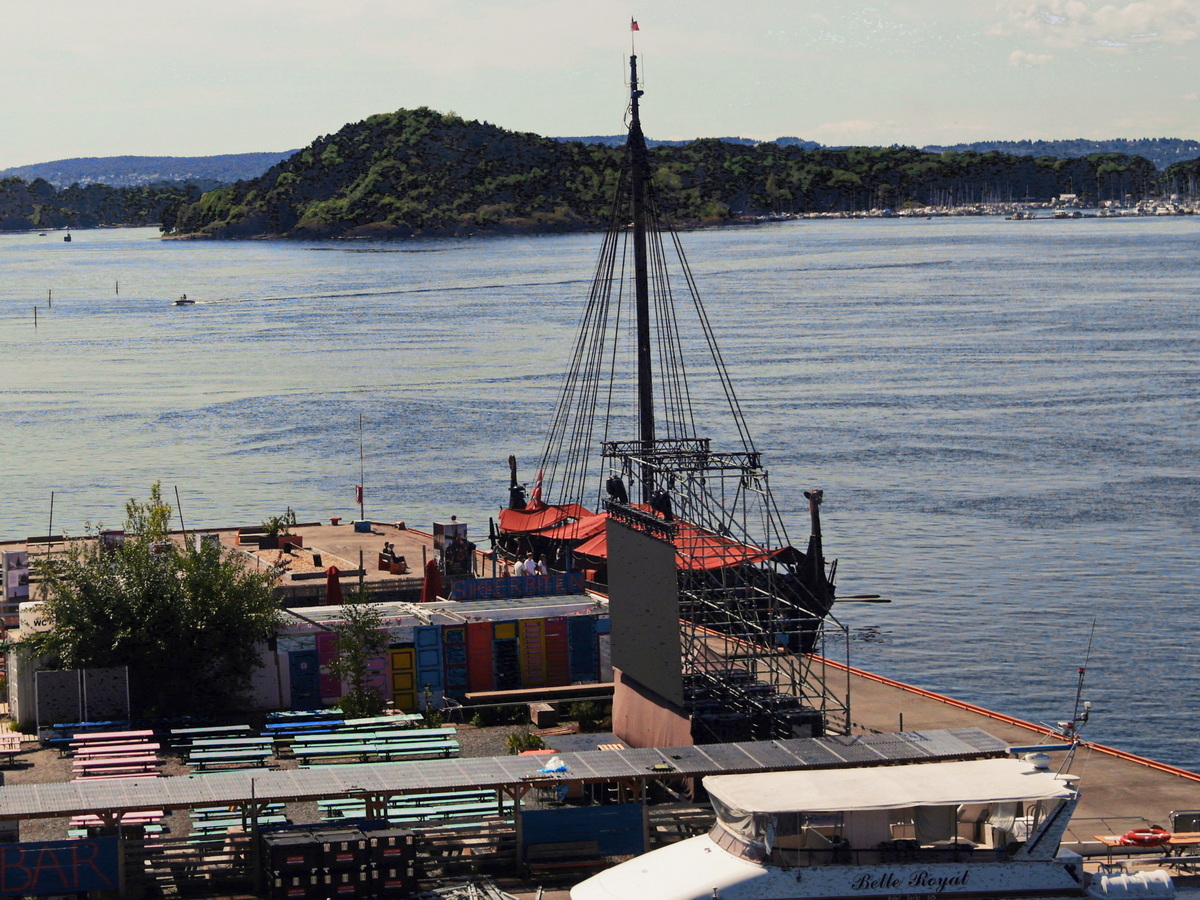
The Draken at Bjørvika Dock. Source: Brian M. Talgo
From lightning and Hollywood to everyday maintenance
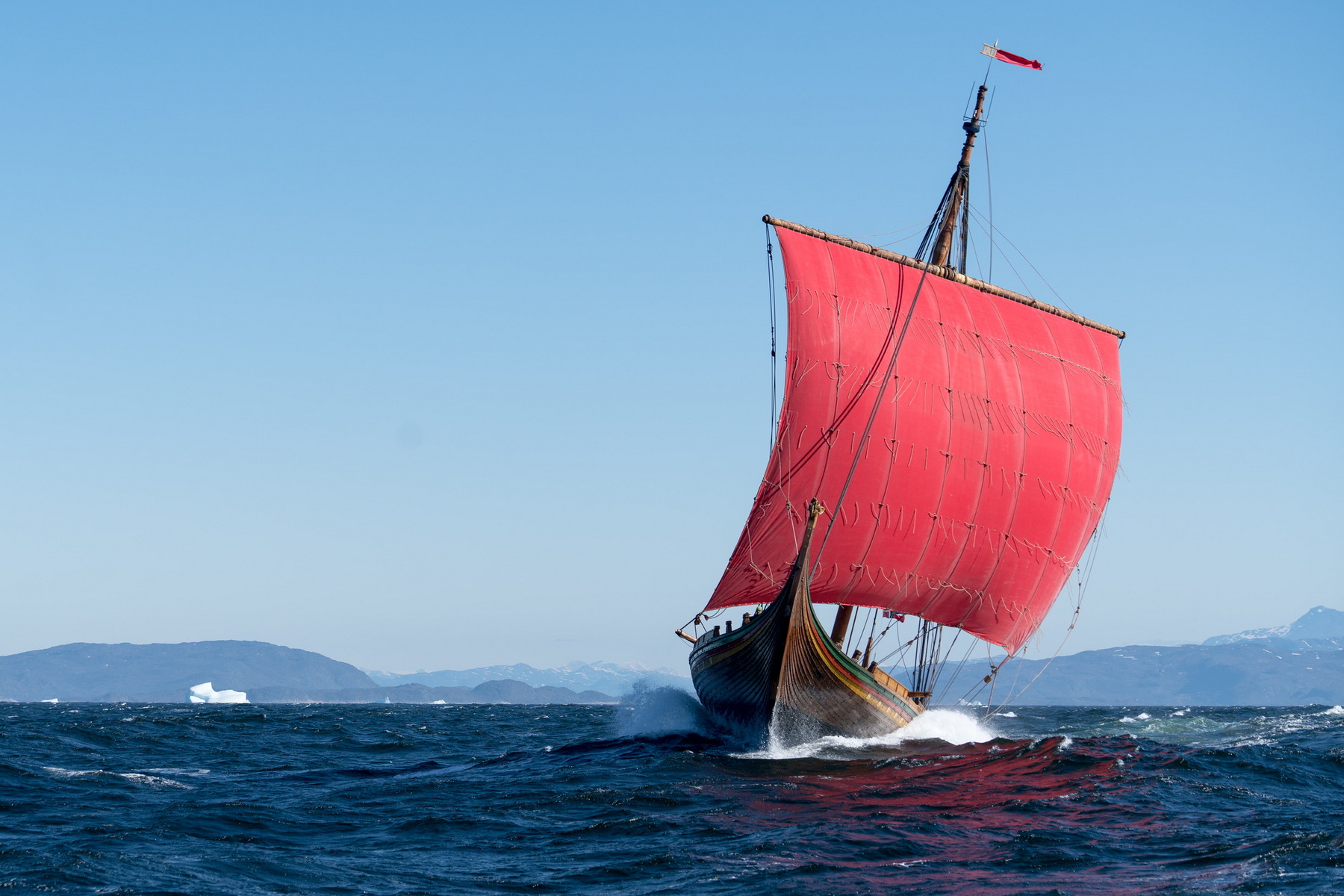
The Draken Harald Hårfagre (Dragon Harald Fairhair, in English) is a 35-meter longship that was built and then launched in Haugesund, Norway, in 2012. It has since completed a series of voyages, travelling as far afield as Newfoundland in Canada and New York in the United States.
This year, it has also been in demand in Hollywood, too. Film director Christopher Nolan commandeered the vessel to represent an ancient Greek warship in his 2026 film, The Odyssey. After the premiere, however, the vessel returned to Norway and Bjørvika Dock in Oslo.
Although the ship’s crew does have some more permanent members, many others join the vessel for shorter periods. The Viking Herald first spoke to Benjamin, an American from Colorado, USA, who was welcoming visitors onto the ship and told us of an opportunity he just couldn’t bear to turn down.
“My brother sailed it a couple times, including for the movie, but he wasn't able to make it this time,” Benjamin reports. “He asked me if I wanted to take his place. I just said, ‘Sure!’
"I did maintenance in May, and then got to join in the sailing for the premiere of The Odyssey. We sailed through lightning and rainstorms, though I wouldn’t say it was scary. I know the captain and the past crews have been through harder stuff, so I wasn't overly concerned. We've got great sailors with years of experience.”
Kat, another American, has been a part of the crew on and off for the best part of a decade. “I'm from upstate New York. I joined in Portland, Maine in 2018, around eight years ago,” Kate informed us.
“I've done all kinds of maintenance on the ship,” Kate adds. “I spent three months on the East Coast tour going up and down the coast, and I've been doing maintenance ever since. In Greece, I did a lot of maintenance to make sure it was safe for everyone to get on board and row it and sail it for The Odyssey.
“Before I had only done canoeing,” Kate adds. “This is the first ship I've ever sailed. I really love this style, though I would say Viking ships are a little bit scary sometimes if you’re going through open sea. But it's an incredible ship.”
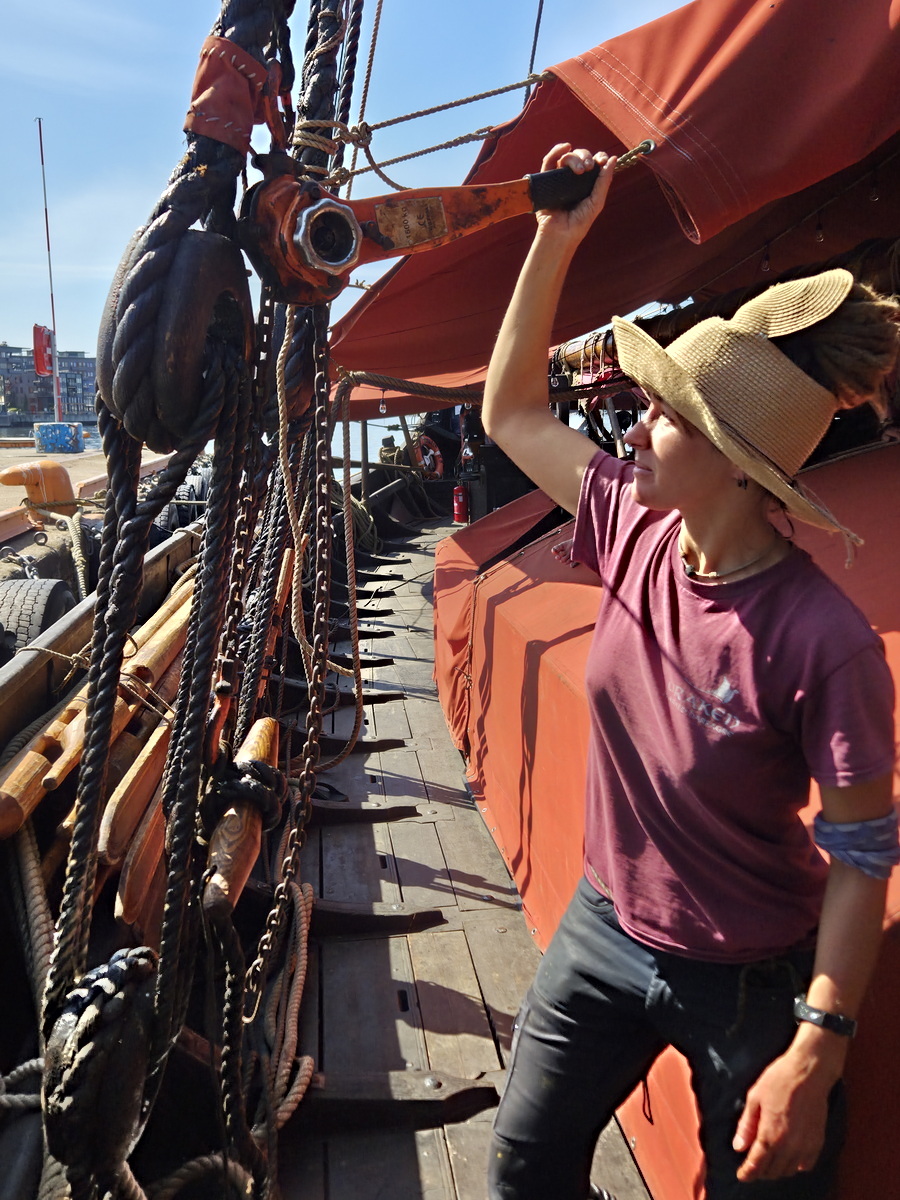
Camille tightening the rigging. Source: Brian M. Talgo
Swapping walruses for hemp
The Viking Herald also spoke with Camille from France as she set to work on greasing the rigging. “I'm working as a watch leader on the ship,” Camille told us. "I used to work on tall ships, mostly square riggers – I’ve been doing it for around eight years.”
As Camille informs The Viking Herald, however, she had to take a break during the filming of The Odyssey in the name of historical accuracy. “I'd been sailing with some other sailors who had been on this ship, and when the project started up they asked me if I can help to rig up the ship, to get ready for the movie.
"However, when the movie started only men were allowed on board the ship, so they kindly asked the females not to be a part of it. I helped prepare the ship for the film, and then I went off. But I came back here to prepare the ship again, rig it again, and be here for the premiere in Oslo.”
Camille has enjoyed gaining fresh insights into the workings of ancient ships. “The Norse originally used walrus hide to make the rigging," she points out. "There was a very robust trade up into Russia to harvest the walruses. We are recreating these conditions and obviously wanted the ship to be authentic, but at the same time we're not going to kill walruses.
“Instead, there was hemp grown specifically for the ship. All the standing rigging and some of the running rigging as well is using hemp. But since that's a natural material, you have to tar it with 100% tar. And then we use linseed oil and pine tar. In general, we use a 50-50 mix for actually treating all of the wood, all the planks.”
Mastering the process
As Camille points out, however, preparing the ship for sailing is a painstaking process. “As part of the team in May, I worked on all the standing rigging, the shrouds, and the stays. We take down the mast, and all the shrouds. These are all connected, so it's really quite a pain. Then everything ws elevated from the ground a few feet and you then tar it by hand.
“We currently use a crane to get everything down. It's an all hands-on deck system – you have a maneuver leader and there's rules around it so that only the maneuver leader gives directions. Anyone can stop If they feel it's unsafe, but you definitely have to remember speak up loudly so they actually hear you!
“We know that the Norse also had to take the mast down, though I don't know the details of how they would have done it in the past,” Camille adds. “But the strange thing is that the mast actually just sits in the ship. It's not connected permanently in any way. This meant that when we once lost the mast, when it snapped, it just sprung out of the ship like a bow.
“But there is a special kind of connection, too, on the bottom where it's sitting in some kind of holder. It chambers into the ship. That’s something that I was surprised about when I first learned it. You think that it doesn't make sense, but after some time you realise the logic.”
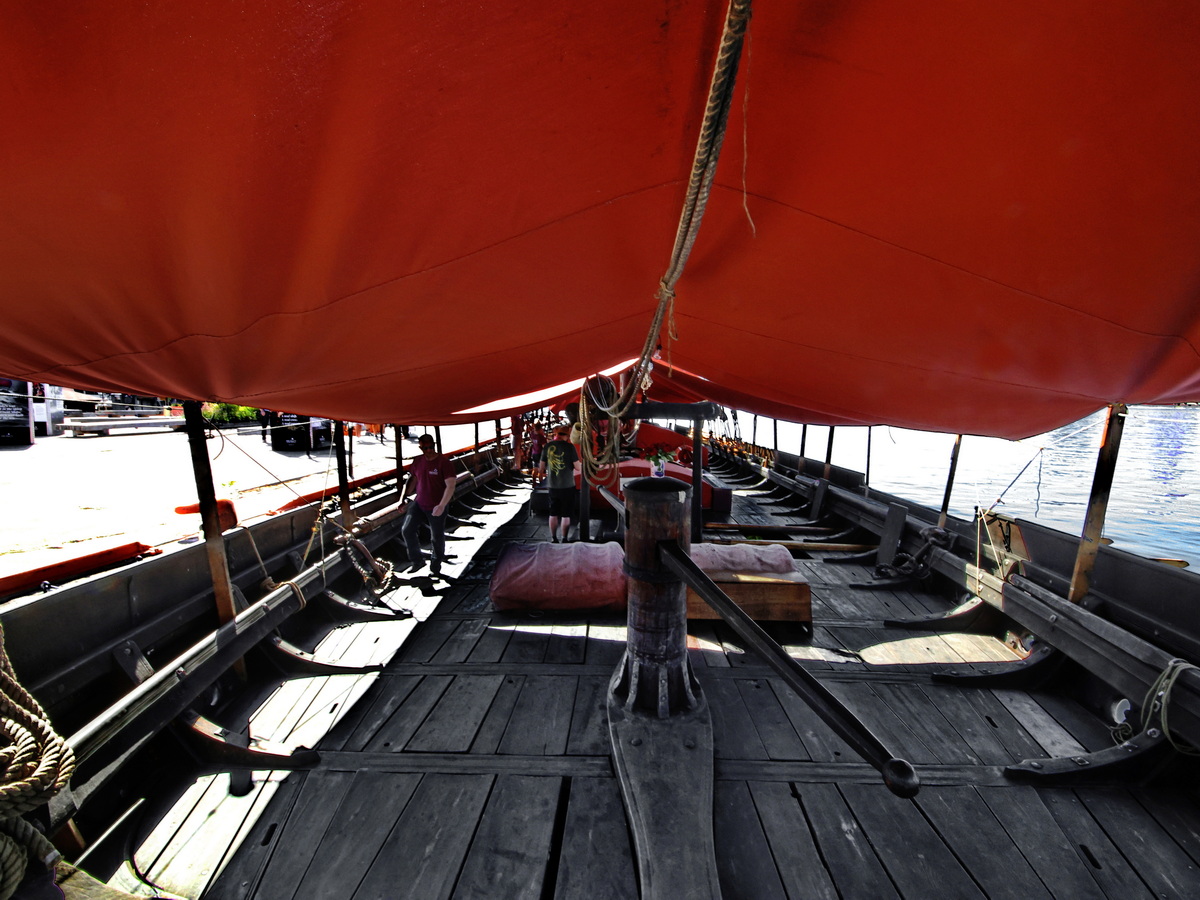
The deck of the Draken. Source: Brian M. Talgo
Sleeping arrangements
Finally, The Viking Herald spoke to Amy from Belgium about nighttime arrangements on board a Viking vessel. “There is room for 20 people to sleep, while another ten will be on deck,” she explains. “When after four hours the watch is done, ten people will be awoken from the top of the bottom layer of the tent. Then the people that were on deck will sleep in the beds of the people that just woke up.
“We are hot bunking, in other words. So you're always sleeping in the warm bed of someone else. And then when the people that just got woken up after four hours go to sleep, they wake up like the bottom layer of the tent. And that's how we rotate.”
Naturally, the ship is not the height of comfort, but everyone finds a way to get their much needed rest. “We always have a wooden plank with a mattress on top of it,” Amy adds. “Everyone just sleeps shoulder to shoulder. If you have a lot of big guys, that means spooning because everyone needs to sleep on their side to have enough space.
“The watch leaders and the captain have their own spot. So the captain is one of those people that always sleeps in the same place because we need to be able to wake him up instantly if something goes wrong. The engineer and the cook also have a fixed spot.
“When we go to ports a lot of people decide to sleep on deck, especially in summer. So I always bring my hammock and I hang it between the capstan and the first bulkhead, and I just sleep there. Some people do go inland and get a hotel if they have the finances for it.
"But a lot of us are a bit younger, a bit tighter on money maybe, and end up spending it on other things. So we just sleep onboard. You get used to it after a while – we just sleep on deck and enjoy the stars.”
At the conclusion of the interviews, one of the crew members asked The Viking Herald about joining up as a crew member. A younger version of the author probably would probably have jumped at the chance. In this case, however, we thanked them all, packed up our camera, and bade the Draken Harald Hårfagre farewell!
If you are interested in contacting the Draken Harald Hårfagre team, they can be reached through the following link: https://www.drakenhh.com/contact
We get to provide readers with original coverage thanks to our loyal supporters. Do you enjoy our work? You can become a PATRON here or via our Patreon page. You'll get access to exclusive content and early access.
Feel free to reach out to discuss potential stories that may be in the public interest. You can reach us via email at hello@thevikingherald.com with the understanding that the information you provide might be used in our reporting and stories.