

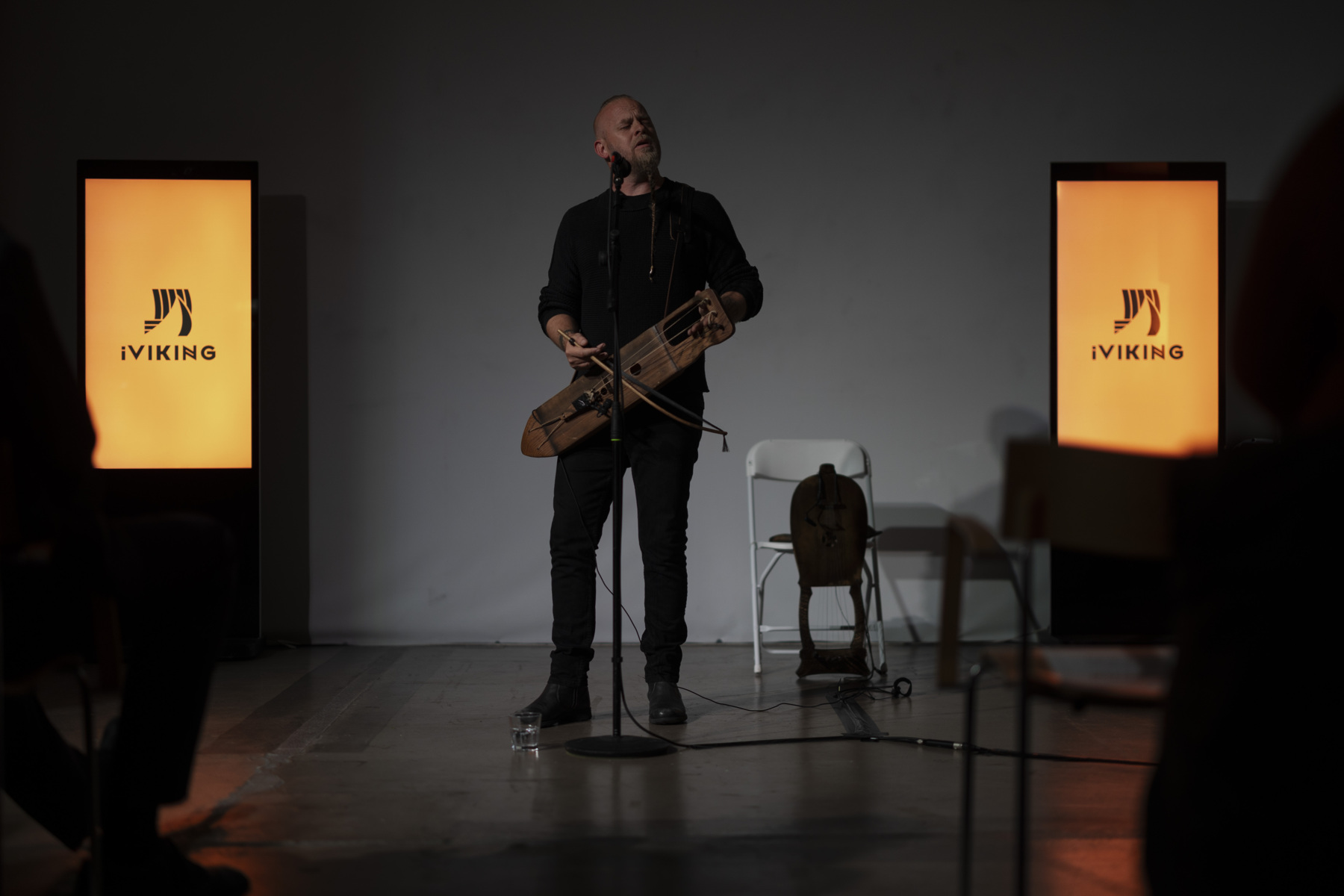
University College Cork in Ireland has published a new app designed to map out contemporary interpretations of the Vikings. Part of the NorseMap project, iViking was launched last week with a special event at St. Peter's Church in Cork featuring Scandinavian songwriter Einar Selvik.
To find out more about both the launch party and the app itself, The Viking Herald speaks to project leader Tom Birkett.
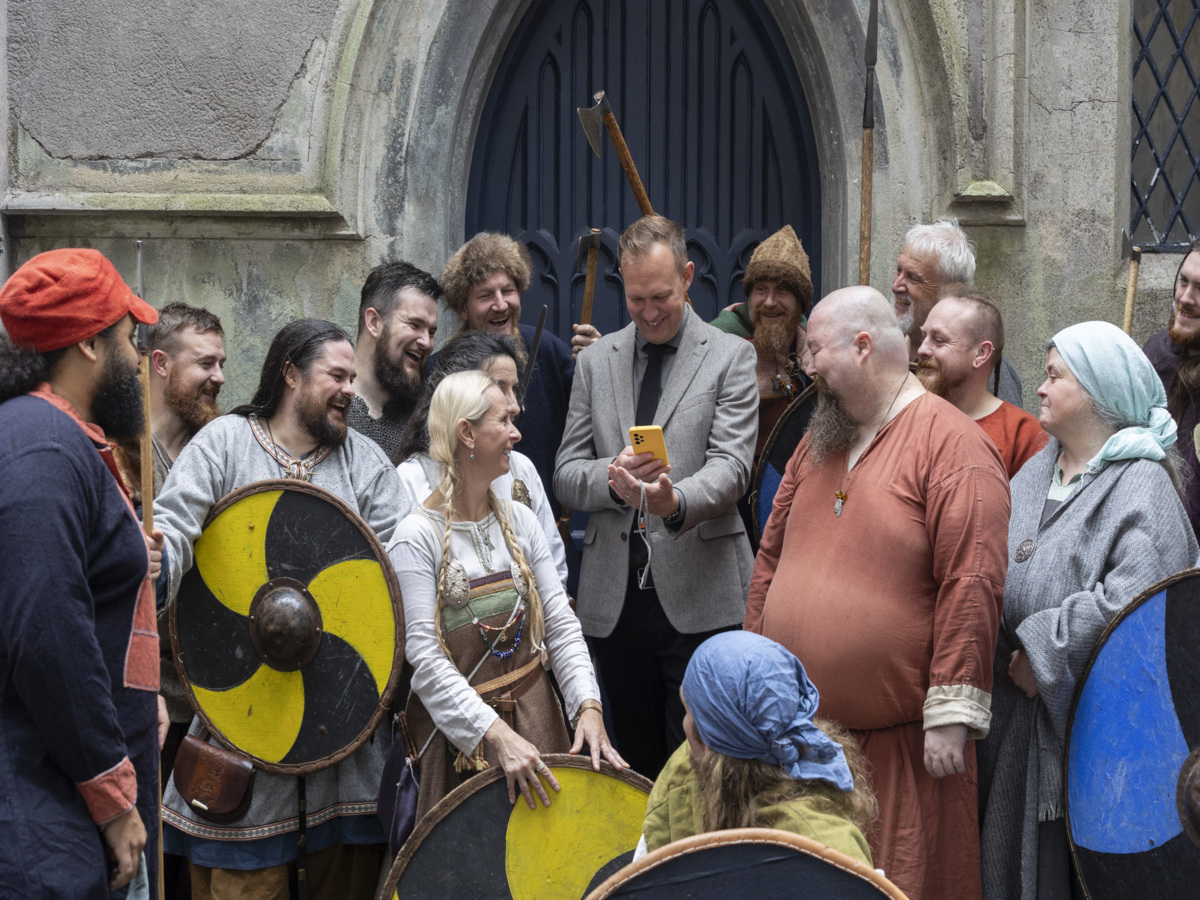
Tom trials the iViking app surrounded by Vikings. Source: NorseMap / University College Cork
Crowdsourcing Viking fandom
"The project is focused on the legacy of the Vikings,” Tom confirms to The Viking Herald. “The Viking past has been used and reinterpreted over the past 200 years, and we want to understand the different meanings it has in different parts of the world. We're looking at everything from tourism and the cultural economy to company branding, arts and music.”
“We developed the app, iViking, to enable contributors to send in photos of anything related to the Vikings,” Tom explains. “By doing that, people provide us with a snapshot of how the Vikings are being interpreted in different places and help us to build this crowdsourced map."
As many Viking Herald readers will be aware, there can sometimes be significant differences between the image presented of the Vikings – or, to put it another way, the Norse of the Viking Age – and the picture we have been able to form through historical and archeological research.
“We've kind of reinvented the Vikings,” Tom admits. “With this project, we are interested in how much they are today a product of identity-making and ideas of nationhood and Europeanness, and how much is based on verifiable history. We're expecting there's going to be quite a gulf between those two things, but of course that remains to be seen.”
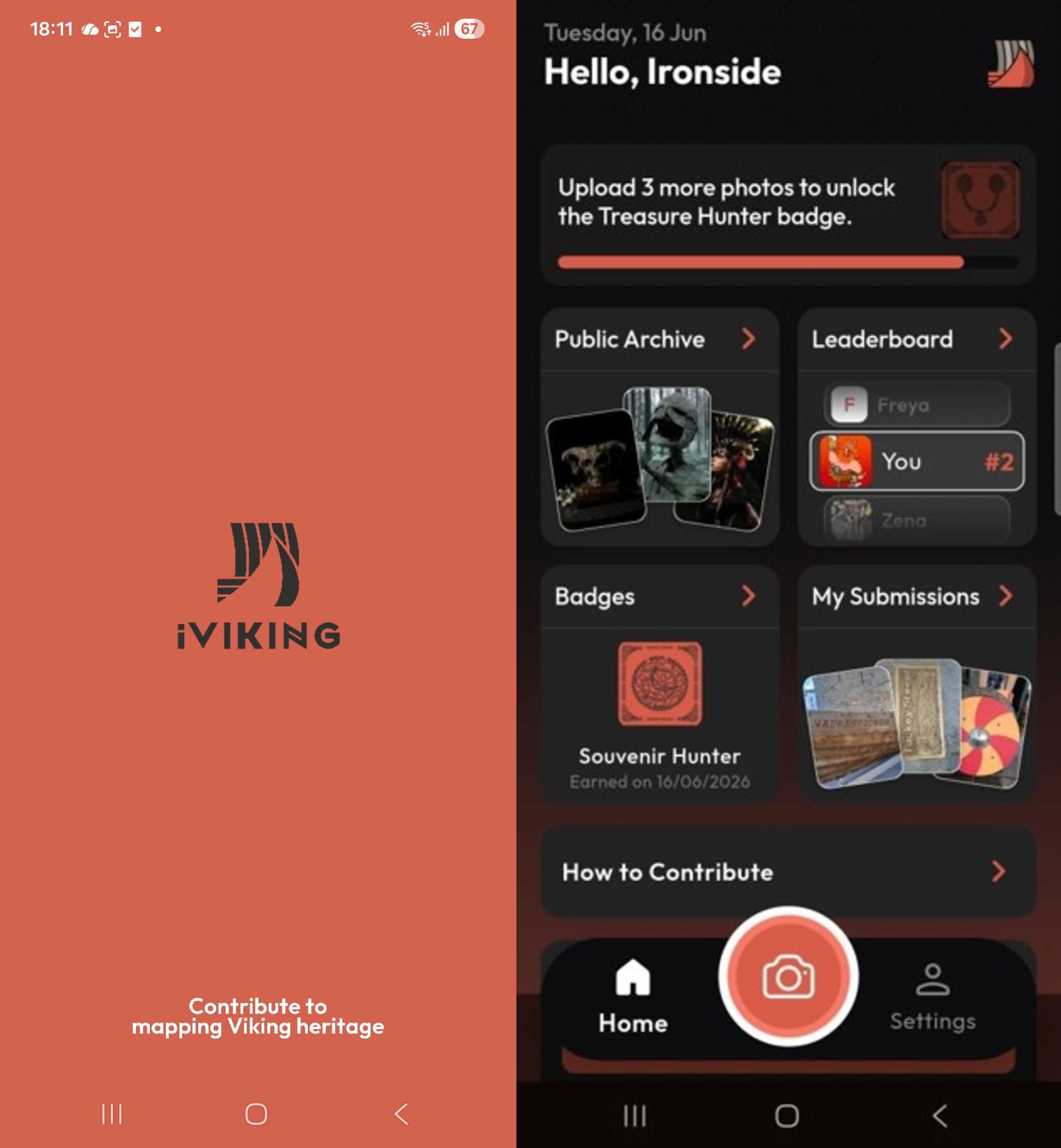
The iViking interface. Source: NorseMap / University College Cork
Submissions underway
Users can submit images for the project either via the iViking app or on the NorseMap website. Each submission should contain a description of what the image shows and details of its location. If approved, the image is then placed on a global map of all submissions, which can be viewed by both researchers and the general public.
“People are sending in things like replicas of Viking artifacts, graffiti, or public monuments that reference the Vikings,” Tom tells The Viking Herald. “We hope that when we get all the material together, we can start doing things like making walking tours of the heritage of a particular city.
“We began the project with Waterford, which was one of the main hubs of the Vikings in Ireland. We’ve already got dozens of things plotted on that map, so people can go around and look for plaques, for example, or a replica ship on display – it can take you around the city. We're hoping to replicate that for most places in Europe so that we get a really dense map of things."
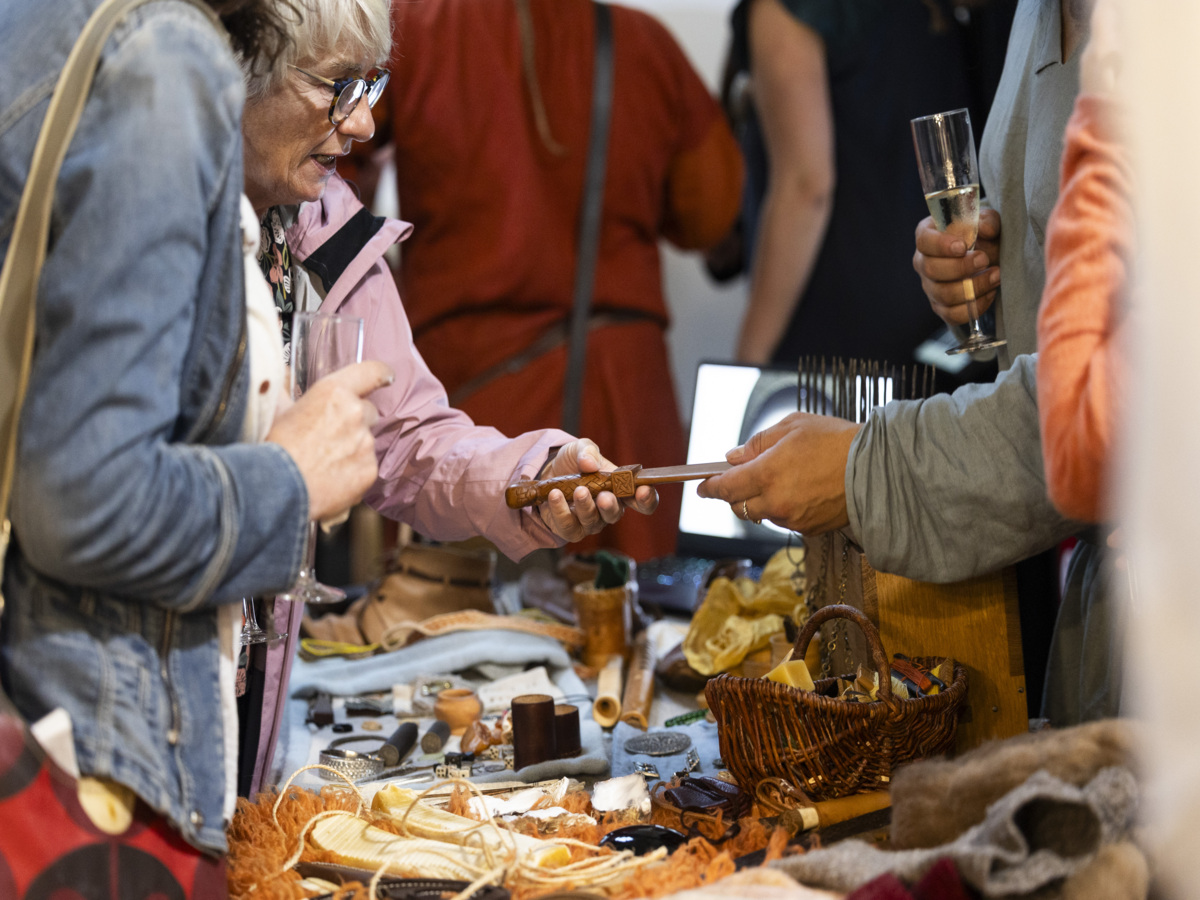
Investigating replica Viking Age objects at the launch. Source: NorseMap / University College Cork
Give and you shall receive
“There's also a two-way exchange with this project,” Tom adds. “We didn't want it to just be about asking people to help and that’s it. So we developed this thing where if you submit an image, you tag it, and then you're given an image from somewhere else in Europe of a similar object.
“You also receive a little fact – if you submit a shield from a reenactment event, for example, it will show you a shield with a different design from somewhere else, and it'll tell you something about it, too.”
As the project progresses, the research team hopes to learn more about perceptions of the Vikings not only in Europe, but around the globe. And as Tom tells The Viking Herald, there are early signs of success. “We have seen there is this huge, Viking reenactment scene in Brazil, for example. I had no idea about it before, but we're already getting quite a few submissions from there.
“I'm also hoping that academics will be on board as well,” Tom adds. "We've already got quite a few submissions already from academics actually, so they seem to be enthusiastic so far.”
Viking fever and indifference
As Tom tells The Viking Herald, the idea for the map and app came from observing the stark differences in how the Viking presence is perceived and presented in the Irish cities of Cork and Waterford.
“I'm from Cork,” Tom notes. “We are technically a Viking city, founded by the Norse, but there's nothing in the city to recognize that. It's just not part of the heritage. Whereas up the road in Waterford everything is Viking. There's a Viking kebab shop, a Viking snack bar, Viking cycles, everything.
“I'm very interested in how that's come about. How different local areas have this particular connection with the Vikings. In Scotland, Shetland has Up Helly Ah, which I suppose could be seen as performative heritage. Orkney, on the other hand, seems to have a very developed tourist industry, with a lot of products, like runic knitwear or runic souvenirs at the airport.”
“Then there are differences on a national scale, such as between Sweden and Norway. To me, it almost feels like Sweden couldn't care less about its Viking past. They have other things they prefer to promote, like technology, or even social democracy.
“But Norway, as we saw with the World Cup, is more invested in the Vikings. All this is probably a reflection of what's happening on a local level. There might be different priorities, and tourist boards are driving some of this. But it must also be to do with public engagement and cultural memory.”
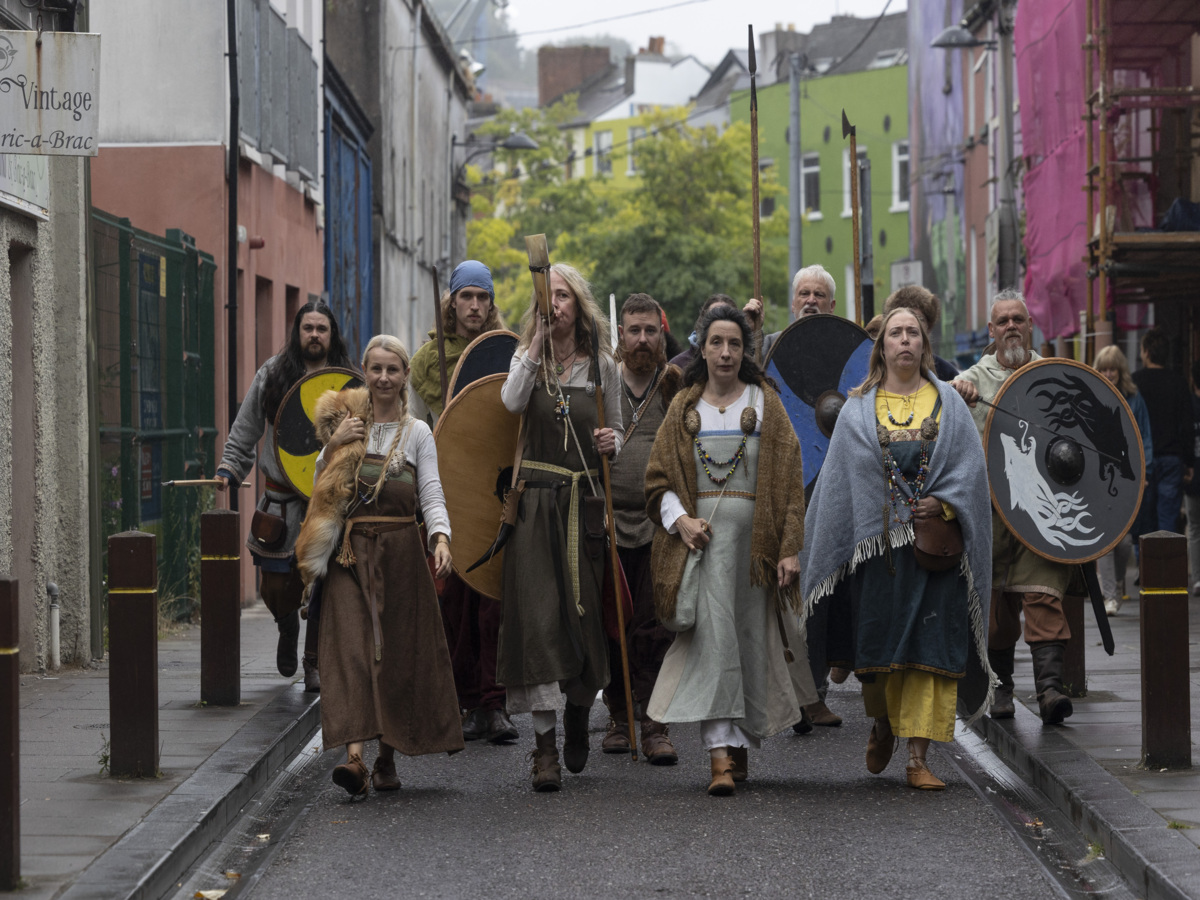
Vikings on North Main Street. Source: NorseMap / University College Cork
Product launched
The official launch of the app took place on September 5, 2026 at St. Peter's Church in Cork. “The event was just as exciting for me as the venture itself,” Tom tells The Viking Herald. “It was fantastic. The church is located in North Main Street, which as far as we know is right where the Viking settlement in Cork was. We chose that venue very purposely – one of the things I wanted to do was bring the Vikings back to the city.
“We had displays from living history groups, so people could come along and engage with people and handle living history objects. We had a group from York who brought lots of Viking Age artifacts from the city – they called their mission “From York to Cork!””
“We also had Einar Selvik, the Norwegian multi-instrumentalist musician who wrote some of the music for the Vikings TV series,” Tom adds. “His performance was really atmospheric; some people were quite emotional.
“I think about half the audience were superfans of Einar, but the other half didn't know what to expect at all. Seeing their reaction and how moved they were by this music was quite special. It was a great way to start the project off.”
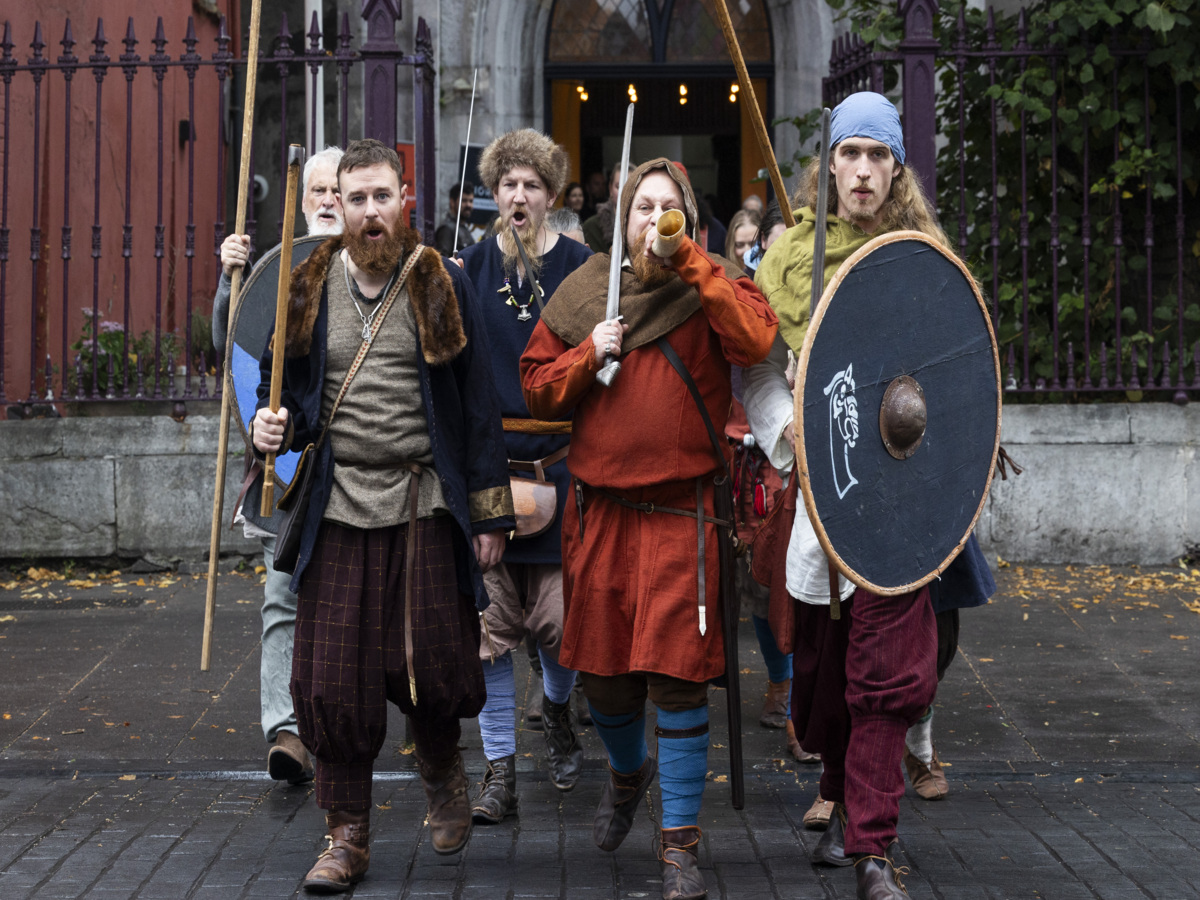
Vikings in Cork. Source: NorseMap / University College Cork
Telling a new history
With people all round the globe already downloading the iViking app, Tom has high hopes. “We are only one year into a five-year project,” he admits. "We're aiming to have at least 10,000 submissions, or 10,000 plots on the map. We want to get a very comprehensive view of things. We want to come out of the project with a very developed map that shows how heritage is being used across Europe in the context of the Vikings.
“We would like to tell a kind of new history about the legacy of the Vikings that is much more nuanced and takes into account local flavors. We also hope that in the future, when new phenomena happen – like the Norway Viking row celebration we saw at the World Cup – people will be able to refer back to this map and to understand more about where that comes from, and how that's very much in keeping with a Norwegian approach to heritage.
“We are also interested in where misuse of the Vikings comes from, and how that spreads,” Tom adds. “If we can start to see where different ideas are emerging from, and where the different influences originate from, we can perhaps better understand how history is kind of getting misused, or misapplied.
“We are also going to make all of this open source. This means other heritage projects can use our data – whether they’re collecting information about local history or the Ancient Egyptians. We also want to build a permanent archive that can still be used after the end of the project itself.
“You see Vikings everywhere in popular culture, but it’s taken as a given that it's just something that people are interested in. We want to ask why they are interested. Why are the Vikings still so fascinating to us, and what is the historical basis for that?”
We get to provide readers with original coverage thanks to our loyal supporters. Do you enjoy our work? You can become a PATRON here or via our Patreon page. You'll get access to exclusive content and early access.
Feel free to reach out to discuss potential stories that may be in the public interest. You can reach us via email at hello@thevikingherald.com with the understanding that the information you provide might be used in our reporting and stories.