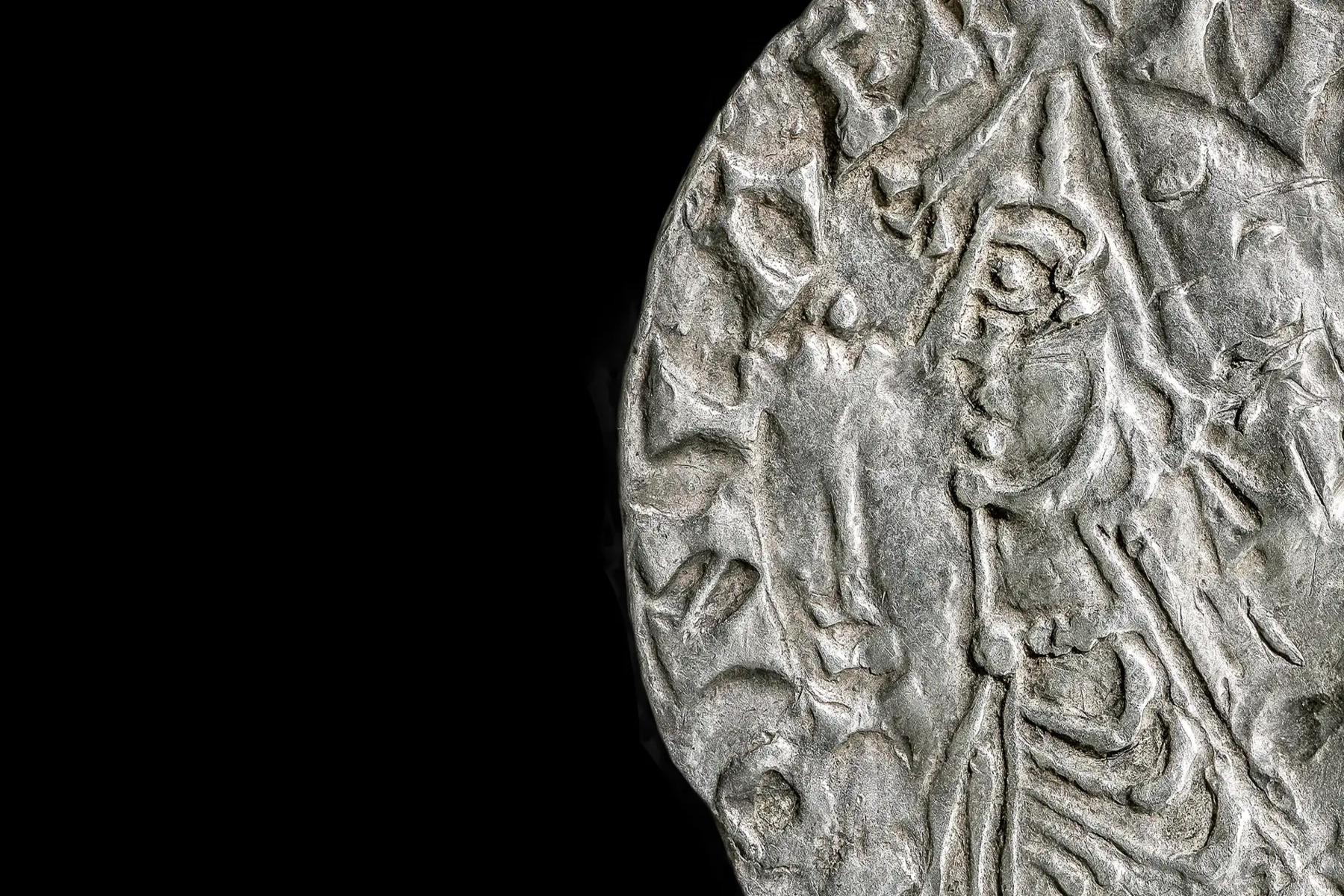


On loan from the National Museum in Copenhagen, a rare medieval drinking horn has been used by thirsty Scandinavian royals and nobles for hundreds of years.
It will be the stand-out exhibit of HERITAGE – Our Place in History, set to open at the Historical Museum in Oslo on Friday, October 13.
The very process of borrowing the item in the first place raises issues that the exhibition is now hoping to address.
What is a drinking horn?
Beautifully preserved after 700 years, the King's Horn was crafted by a Norwegian goldsmith in the 1300s and has passed through the hands of monarchs and lords in Norway, Sweden, Denmark, and Iceland.
Drinking vessels, usually fashioned out of the horn of a bovine creature, have been part of the cultural fabric since Classic Antiquity. Germanic tribes began to copy this Roman tradition, and the further north it spread, the more they became part of Nordic social interaction, too.
By the time of the first recorded Viking raid in the late 700s, drinking vessels were totemic objects across the Nordic countries.
They were often made from animal horns – most commonly from a goat or cow – having been cleaned out and meticulously polished.
These were then shaped into a drinking vessel whilst keeping a pointed tip at one end.
To add a personal touch, carvings or engravings were added, as well as metallic intricacies, while symbols of Norse mythology or the sagas could also be etched onto the horn.
Crests and shields line the rim of the King's Horn, for example, indicating the convoluted nature of its ownership.
The drinking horn's use as a vessel for liquid indulgence was not its only function. A common sight at any Viking feast or festival, these were often passed around and consumed by several people.
This practice helped foster a sense of fellowship amongst the drinkers, especially important if the feast was held for political reasons.
Furthermore, the consumption of alcoholic drinks was an integral part of Viking hospitality.
Passing an honored guest a drinking horn was seen as a symbol of friendship, harmony, and perhaps history's most delicious act of welcoming.

Viking drinking horns, often fashioned from animal horns and adorned with intricate carvings or metalwork, were symbolic vessels used in feasts and ceremonies to foster fellowship and celebrate Norse traditions. Photo: Historiska museet / Åhlin, Christer, SHM (CC BY 4.0)
Originated in Norway, owned by Denmark
The question still remains, however: who does it belong to?
The most straightforward answer is that it belongs to the Danish National Museum in Copenhagen, which is why the Historical Museum in Oslo needed to borrow it.
But this temporary move, whose arrangement will terminate once the artifact is returned, has already sparked debates between Norway and Denmark about the horn's rightful ownership.
Surely, if a Norwegian jeweler was responsible for such detailed gold and silver metalwork, its rightful place should be Norway?
These delicate questions of heritage, inheritance, and ownership are explored by HERITAGE, whose title in Norwegian, ARV, has more tangible connotations of legacy and evokes deeper associations.
Inheritance brings to mind sudden wealth or familial conflicts over property and possessions. Perhaps treasured objects passed down from past generations.
Heritage brings to mind history, culture, and identity. Legacy is about remembrance, tradition, and what we leave behind.
Controversial items such as the Elgin Marbles and Benin Bronzes in the British Museum have long been at the center of dispute between their current owners and their place of origin.
The King's Horn will share museum space in Oslo with figures from Ancient Egypt. Traditional musical instruments from India and Norway sit side by side.
By mixing objects from different times and places, the museum hopes to draw attention to things we all have in common in the way we relate to the past.
How should museums treat these collections today? Should they be exhibited? Should they be returned? Can we make amends for past injustices?
One final point to ponder: The horn in question belonged to an aurochs, a type of cattle once prevalent across Eurasia. Its long, finely curved horns were particularly prized for drinking purposes.
Excessive hunting and the clearing of forests saw it disappear from Central Europe in the Middle Ages, and the last aurochs cow died in Poland's Jaktorów Forest in 1627.
If museums don't collate and take care of precious items such as these, who will?
Exhibition: HERITAGE – Our Place in History
Location: Historical Museum, Fredriks gate 2, 0148 Oslo
Open: Tue-Wed, Fri-Sun: 11 am-4 pm; Thur: 11 am-8 pm
Admission: NOK 120, students/seniors NOK 90, under-18s free.
We get to provide readers with original coverage thanks to our loyal supporters. Do you enjoy our work? You can become a PATRON here or via our Patreon page. You'll get access to exclusive content and early access.
Feel free to reach out to discuss potential stories that may be in the public interest. You can reach us via email at hello@thevikingherald.com with the understanding that the information you provide might be used in our reporting and stories.