

Rich in Viking history, the city of Nottingham will host its week-long annual History Festival starting on Monday, October 23, and ending on October 28. The event is organized by the Department of History at the University of Nottingham.
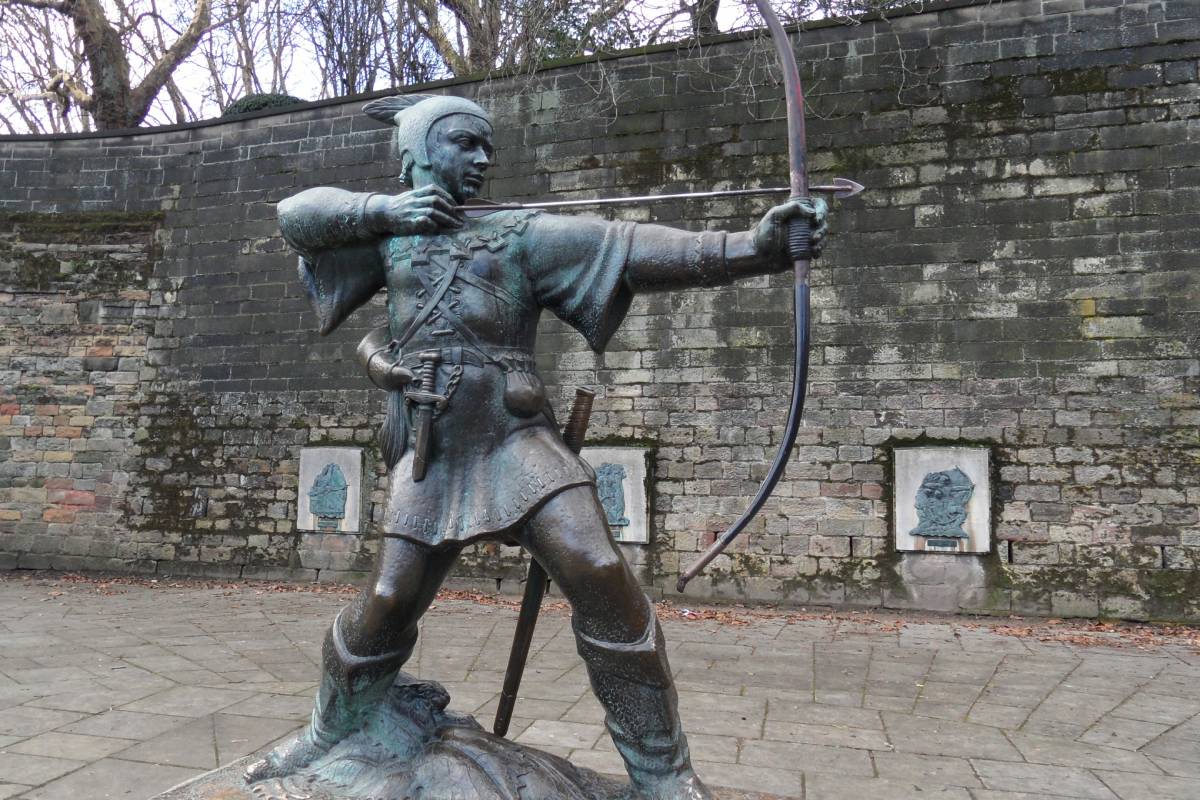
Robin Hood, the legendary figure of Sherwood Forest, where the Viking-era site Thynghowe was rediscovered by Stuart Reddish in 2005. Photo: Laurence Goff / Wikimedia Commons (CC BY-SA 3.0)
Nottingham, under the Danes
Nottingham was one of the Five Boroughs of the Danelaw, the Northeastern half of England under Viking rule after the Great Heathen Army in 865.
The Danes captured Nottingham in 868, which remained under Norse control until 918, when Anglo-Saxon King Edward the Elder, son of Alfred the Great, occupied the city.
Place names around Nottinghamshire ended in –thorp ("hamlet") and –by ("village") reflect this heritage, as do street names in Nottingham itself, such as Barker Gate, Castle Gate, and Fisher Gate, referring to roads (the Old Norse gata) rather than urban gateways.
Another Norse place name is Thynghowe, "thyng" being the Viking-era term for a place of assembly.
As recently reported by The Viking Herald, its discovery by professional researcher Stuart Reddish in 2005 at a hidden spot deep in the Sherwood Forest led to the creation of a group of local history enthusiasts that organizes themed walks and other events.
Back in Nottingham, the annual History Festival starts on Monday, October 23, with a guided tour of the Lace Market, a historic district closely associated with the city's lace-making heritage.
Later that afternoon, a walk above ground takes in the city's historic caves and cellars, describing their use back to Viking times and beyond.
However, the visit doesn't involve any actual spelunking.
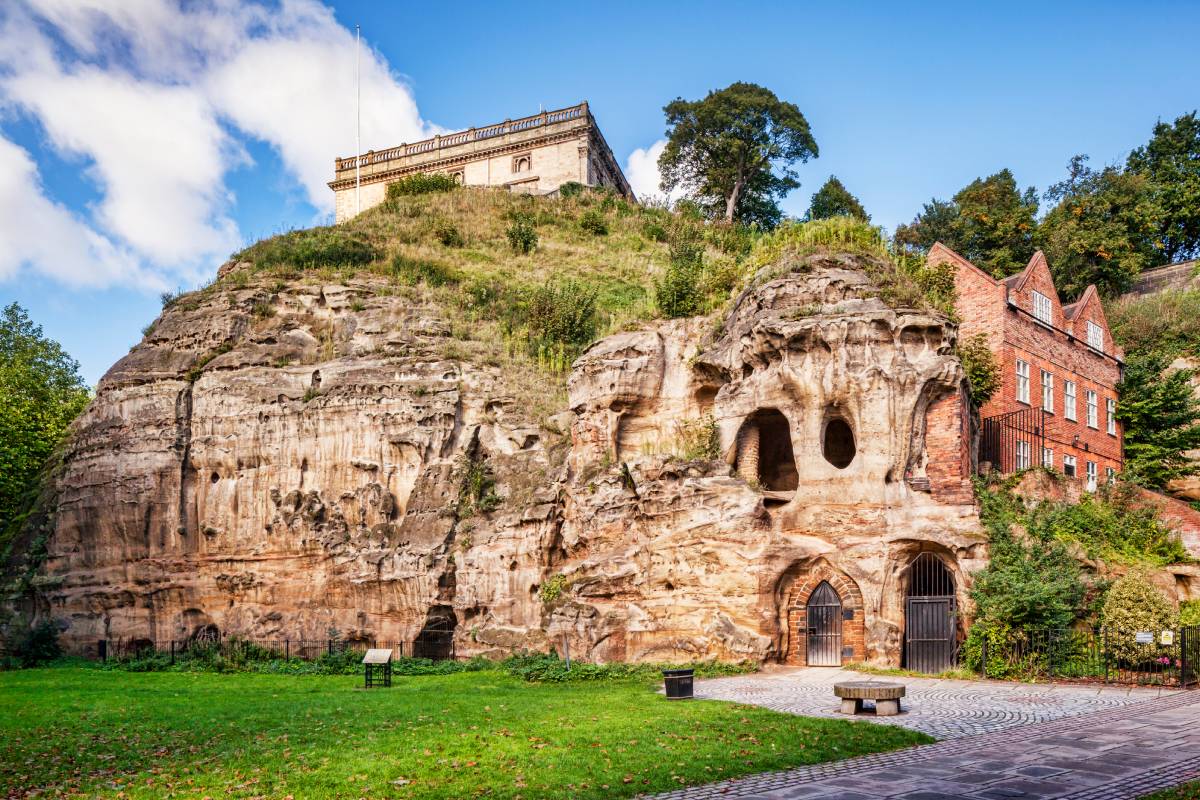
The Nottingham caves, a network of man-made tunnels and chambers, offer a fascinating glimpse into the city's ancient history and underground heritage. Photo: travellight / Shutterstock
Create Viking coins and jewelry
Events on Wednesday, October 25, are centerpieced by a two-hour Viking Treasure Workshop, in which visitors can craft their own designs for jewelry and coins from the Norse era under the supervision of Elaine Winter.
The session should allow participants to appreciate the artistry of Viking craftspeople and the metals and materials they used.
This, in turn, will shed light on the movements of the Viking peoples, their trading routes, and their beliefs.
The event takes place at the Department of Humanities at the University of Nottingham, University Park Campus West, on Beeston Lane, starting at 2 pm.
Again, admission is free, and no registration is required. Activities are suitable for those aged seven and up.
On Wednesday, there will be a private tour of a new exhibition highlighting the enduring importance of letter-writing from medieval times to the present day.
Attendees can drop in to view activities by the Medieval Combat Society, Archaeology Society, and other local groups. There will also be a short film about women in Imperial Rome.
Don't miss the festival's most unusual event, a presentation of the bloody history of Lenton Priory and the role that night and darkness played in medieval life.
The event takes place in the garden of the Boat Inn on Priory Street – bring warm clothing!
Visitors can go behind the scenes of the university's Manuscripts and Special Collections, home to 3.5 million archive documents, and then take a walking tour of medieval Nottingham, themed around the subject of health, medicine, and pollution.
Nottingham History Festival, October 23-28. Admission free.
We get to provide readers with original coverage thanks to our loyal supporters. Do you enjoy our work? You can become a PATRON here or via our Patreon page. You'll get access to exclusive content and early access.
Feel free to reach out to discuss potential stories that may be in the public interest. You can reach us via email at hello@thevikingherald.com with the understanding that the information you provide might be used in our reporting and stories.