

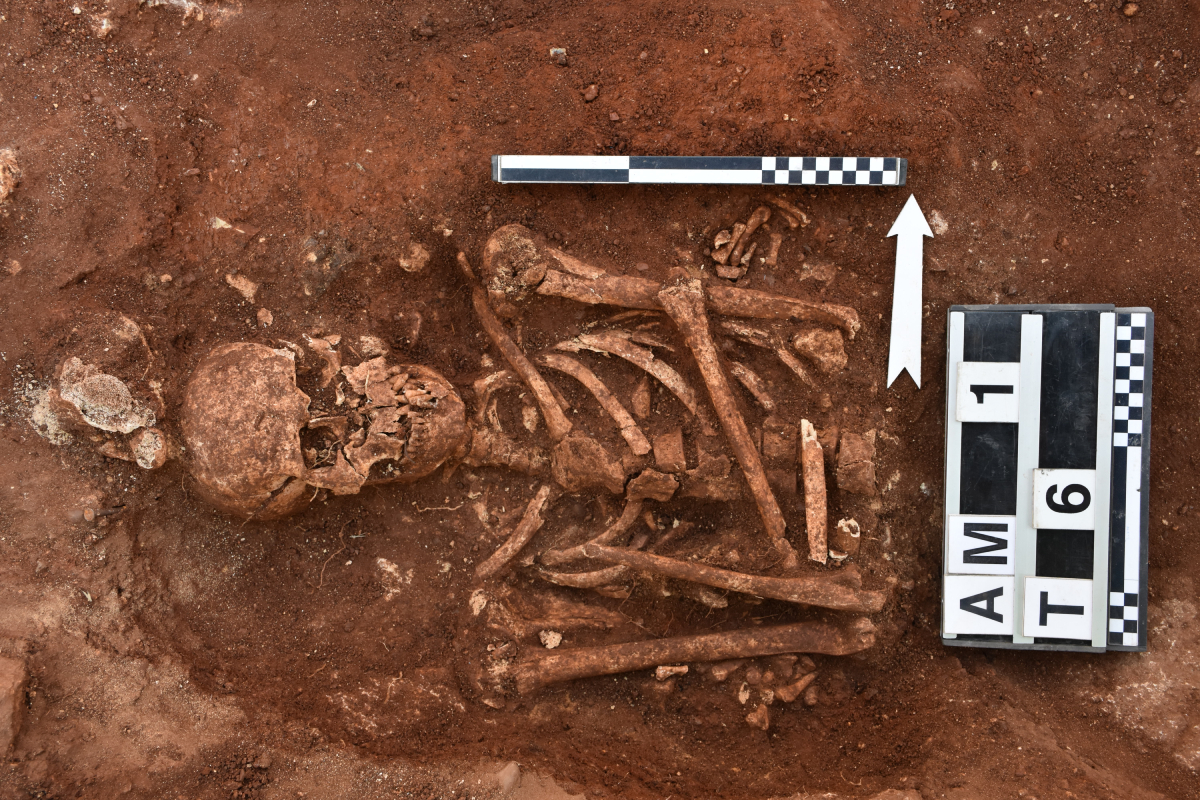
In part one of our look at the possible Norse skeletons found at the Santa Maria di Campogrosso church site in Sicily, we examined the original discovery and the archeological team's initial ideas.
Now, The Viking Herald speaks to Polish archeologist Sławomir Moździoch about the successes and limitations of the subsequent dating analysis and DNA testing and also explores the historical influence of the Vikings and Normans in the area.
Vikings in the south
As we mentioned in part one, precious little material evidence has been uncovered of Viking activity in the south of Europe.
It is, perhaps, worth mentioning some examples of recorded history that indicate early Vikings may have spent some time in Sicily.
One notable source comes from the Annals of Saint Bertin. Published in France in the 9th century, the annals state that after fighting in France, Viking forces spent time in Iberia and Pisa before exploring areas in both Sicily and North Africa.
Similar claims were made by the monks Ermentarius of Noirmoutier and Dudo of Saint-Quentin, with the latter stating that a Viking fleet came to Sicily and conquered it in the 10th century.
More recently, in addition to some isolated archeological finds, there have also been several scientific papers that suggest the Vikings may have made it as far as Madeira and even the Azores.
Indeed, given their propensity for exploration, it does seem likely that the Norse explored further south on more than one occasion.
- READ MORE: The Viking history of Italy - A primer
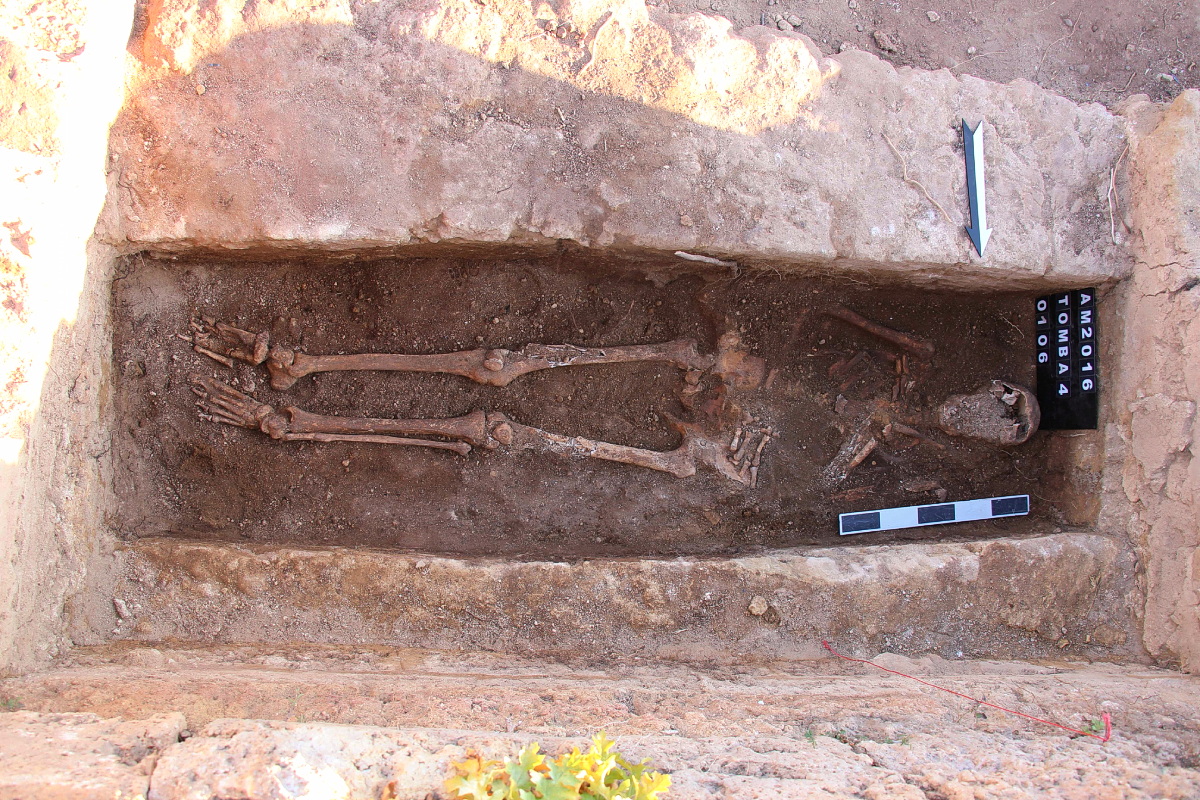
Archeologists uncovered 35 intact graves at Santa Maria di Campogrosso, revealing notably tall male skeletons that indicated the individuals were likely from outside Sicily. Photo: Sławomir Moździoch / Polish Academy of Sciences
Beyond the Vikings
At the same time, given the evidence we have, there is little chance that the discovery of exceptionally tall skeletons at Santa Maria di Campogrosso was directly related to any expeditions of marauding Vikings from Scandinavia.
The archeological team did believe, however, that it was possible, or even likely, that they came from Normandy – the area of northern France where, of course, many of the leaders and warriors were descended from the Norse.
Indeed, Sławomir explains that after the initial discovery, his team was keen to explore the origin of the skeletons.
Unfortunately, the results did not prove beyond doubt that any of the bodies were Norman or Scandinavian, though they did suggest many were of foreign extraction.
"The research mainly concerned the precise dating of the site and the bones themselves," Sławomir tells us. "C14 dating analysis allowed us to determine the deceased were buried in the cemetery from the 11th century to the 14th century.
"Strontium isotope analysis in teeth also allowed us to identify two groups of individuals: those from outside Sicily – mainly older graves from the 11th-12th century, and those born on the island – these were mainly younger graves from the 12th-14th century."
The earlier dates coincide with the period of known Norman influence in Sicily and also coincide with the team's assertion that the church was originally built in the Norman style.
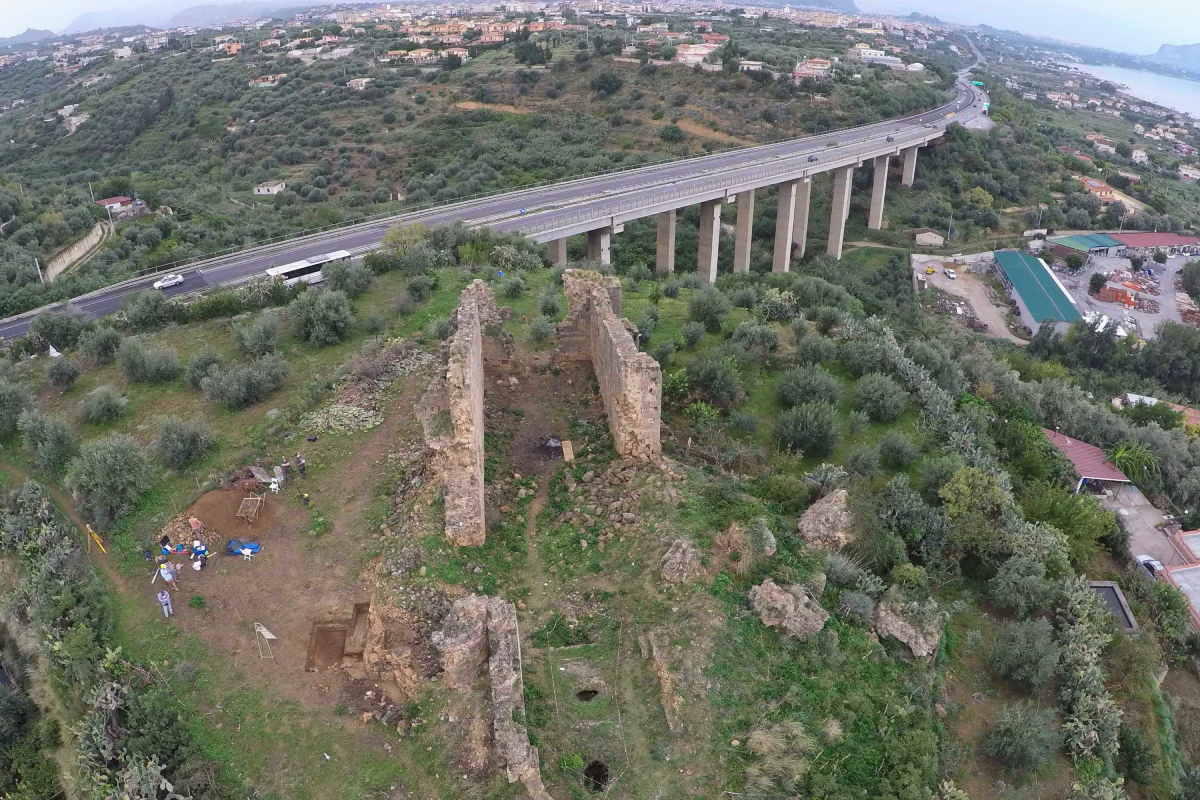
Constructed during the Norman conquest of Sicily, the church of Santa Maria di Campogrosso, built around 1068-1072, shares architectural similarities with churches in Normandy. Photo: Sławomir Moździoch / Polish Academy of Sciences
Minor Norman nobleman turned Sicilian ruler
In their research, the archeologists found the site may well have been founded by the Norman nobleman Roger de Hauteville, known to history as Roger I of Sicily.
Roger first came to Sicily in the middle of the 11th century.
He would spend several decades trying to overcome the Muslim rulers, winning a famous victory at the Battle of Cerami in 1063 and naming himself Grand Count of Sicily in 1071.
It was not until 1090, however, that he was finally able to subdue all opposing forces and exert absolute control.
Today, the influence of the period of Norman rule in Sicily can be felt in a number of areas, from its architectural styles to the local dialect, language, and cultural heritage.
Naturally, Roger's campaign and subsequent reign in Sicily would have necessitated a significant influx of his fellow Normans, while his son, Roger II, also made a marked impact on the architecture and culture of the region.
Given all of the above, it does seem entirely plausible that the skeletons found at Santa Maria di Campogrosso were of Norman origin. But if so, would it follow that they were originally from Scandinavia?
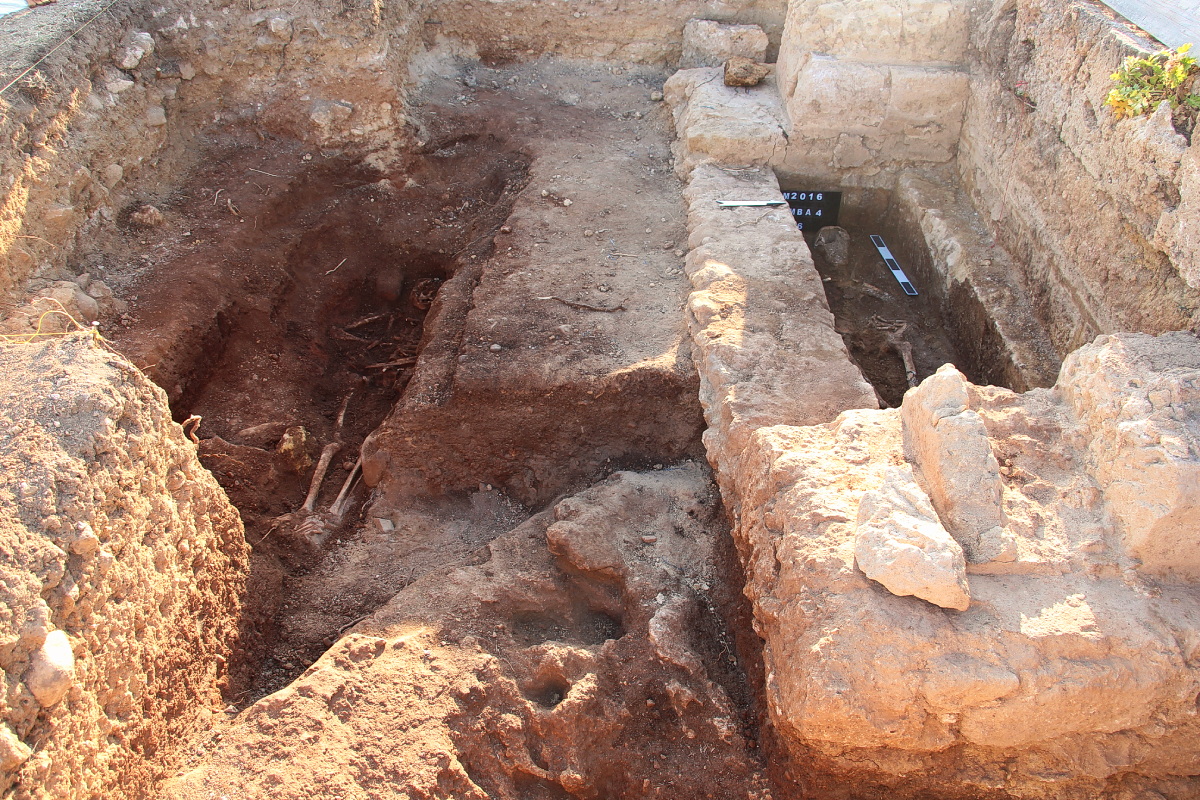
Poor preservation of the bones has prevented definitive genetic analysis, but the tall skeletons and Norman-style church indicate a probable Norman origin rather than Scandinavian. Photo: Sławomir Moździoch / Polish Academy of Sciences
A mystery unresolved
Unfortunately, Sławomir informs us that it remains difficult to draw any firm conclusions.
"Due to the poor preservation of bone material, ancient DNA studies have not yet allowed us to determine the deceased's haplotypes or other genetic characteristics, which would confirm their Scandinavian or Northern European origin with a high degree of certainty," he tells us.
"The fact that they could be newcomers from Normandy seems to be confirmed by the characteristic plan of the church, which has strict analogies in Normandy and neighboring areas of present-day France."
"The dimensions of most of the discovered skeletons also indicate they were tall individuals, and therefore most likely came from outside Sicily," Sławomir confirms.
"Yet even if they were Normans from Normandy, which would not be surprising given the information in the written sources, those of Norse extraction were still several generations removed from their Scandinavian ancestors," Sławomir explains.
"If we consider the Vikings to be a specific socio-professional group, then yes, in the initial phase of the conquest of southern Italy, the Normans undoubtedly constituted such a group, united by ties of blood and origin."
"At the same time, we can also safely say that they were far from being the Vikings of legends, novels, and films."
To find out more about the finds in Sicily, you can read this extensive research paper detailing Sławomir Moździoch's team's research on the church and burial site.
We get to provide readers with original coverage thanks to our loyal supporters. Do you enjoy our work? You can become a PATRON here or via our Patreon page. You'll get access to exclusive content and early access.
Feel free to reach out to discuss potential stories that may be in the public interest. You can reach us via email at hello@thevikingherald.com with the understanding that the information you provide might be used in our reporting and stories.