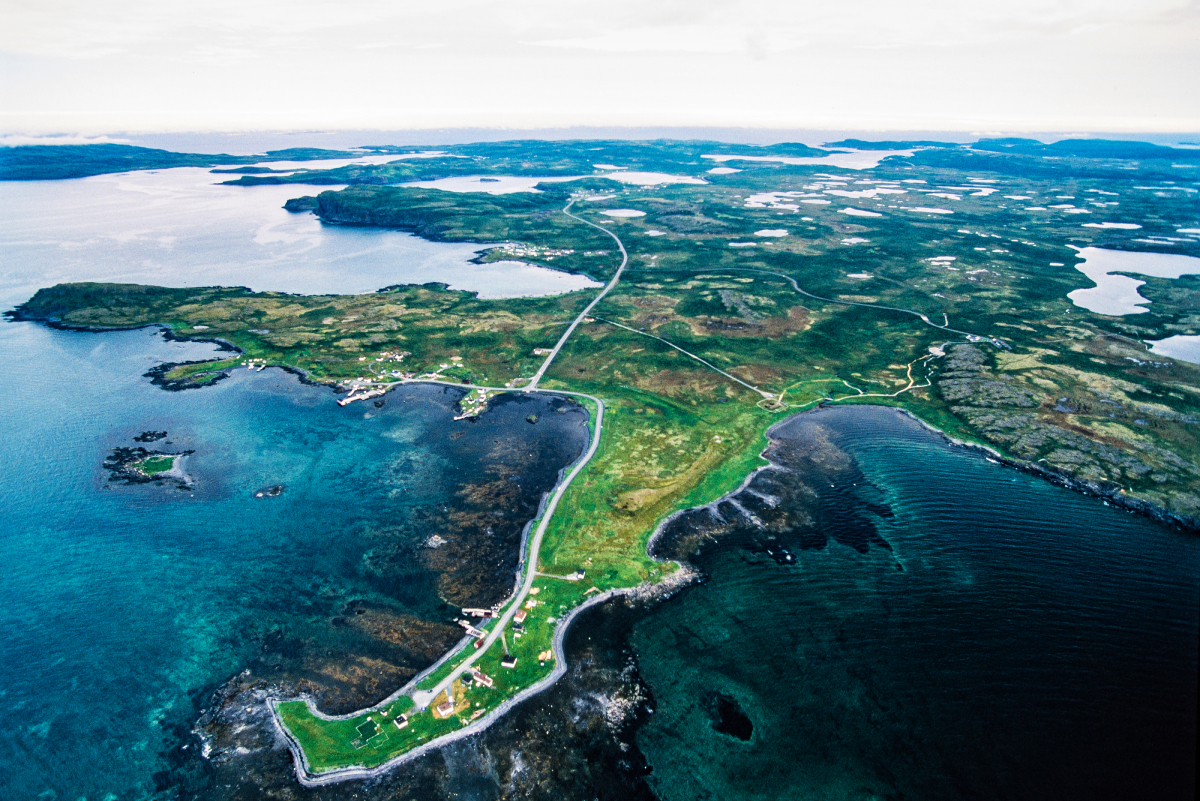


Archeologists and historians have long been aware that Viking ships made their way to North America. Some recent research, however, has indicated the Norse may also have made two other pioneering Atlantic journeys: to the islands of Madeira and the Azores.
To find out more, The Viking Herald speaks to Jeremy B. Searle, a British evolutionary biologist and professor emeritus at Cornell University in the US.
Secrets of the common house mice
As the Viking explorers themselves would doubtless admit, some of the best discoveries are entirely fortuitous.
Indeed, when Jeremy B. Searle first decided to study the genetic markers of the mice population of the Portuguese island of Madeira, he had absolutely no expectation of identifying anything other than Portuguese origins.
"As a professor of evolutionary biology, I'm interested in questions of genetic diversity and trying to answer questions like how new species evolve and how they might be subdivided."
"I also work on colonization history, where you can use genetic markers to elucidate key information."
"House mice show incredible chromosome variation. Whereas most mammals have just a single chromosome number, house mice have a standard of 40, but some populations have as few as 22."
"Madeira is particularly fascinating: there are seven separate populations of house mice, and the number of chromosomes ranges from 22 to 40."
Living artifacts
Jeremy tells us that this variation and other genetic markers can help indicate the origin of mice populations.
And because house mice tend to travel alongside people, they can sometimes serve as a kind of "living artifact" that indicates human migration.
Intrigued by the possibilities of Madeira, Jeremy and his colleagues flew out to investigate the set of four islands, which lie some 669 miles from the Portuguese mainland.
"The question was, which humans brought the mice there?"
"The obvious answer for Madeira, of course, is the Portuguese, given that they discovered it. So we performed a study using genetic markers to compare the mice on Madeira with data on mice from other parts of Europe."
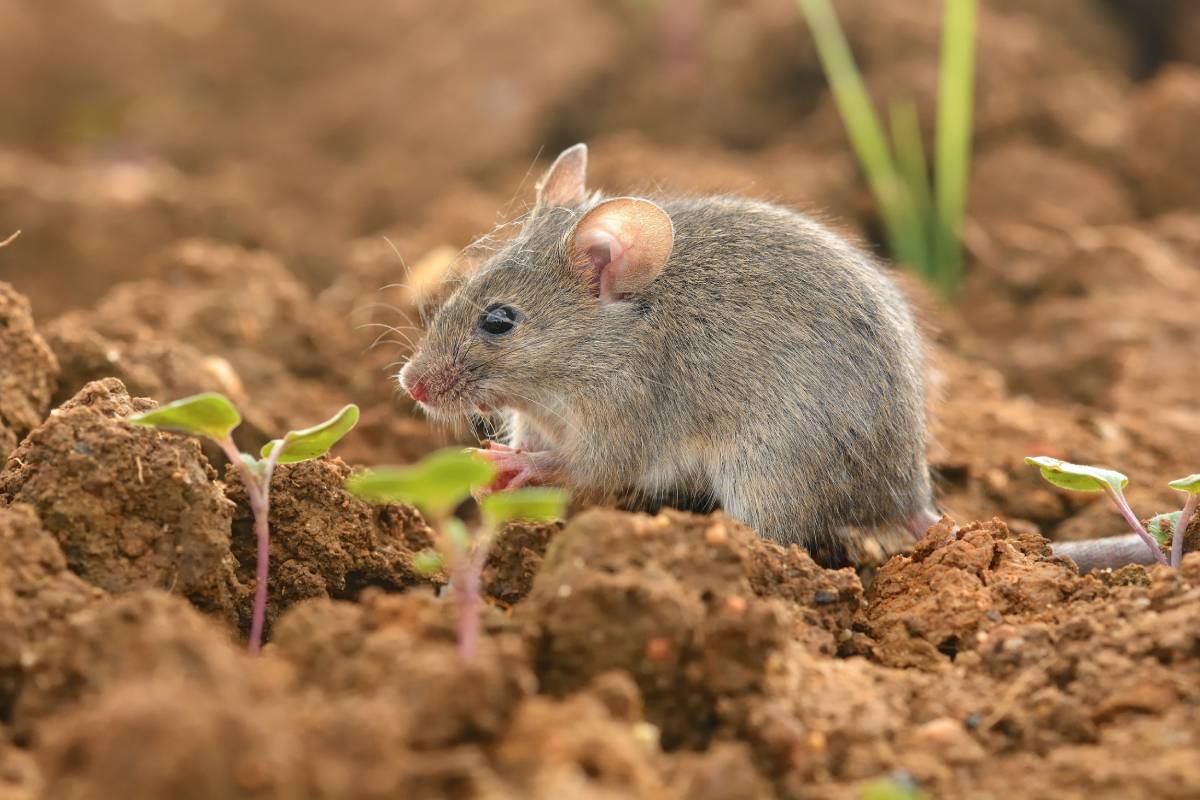
House mice, having journeyed alongside ancient seafarers, now serve as unique living artifacts, revealing patterns of human migration. Photo: Martin Pelanek / Shutterstock
Danish influence
"I had a clear expectation that the mice would show a genetic signal demonstrating they were from Portugal. And they didn't. Instead, the data indicated they were from Northern Europe."
"This led us to a hypothesis that they were brought there by Danish Vikings."
The study analyzed mitochondrial DNA, a very small circular chromosome found in every mammalian cell.
"The key thing about mitochondrial DNA is that it is maternally inherited. We came to the conclusion that the first colonizing mice were brought there from Denmark and came to occupy the whole island."
"It then became difficult for other mice to displace them, especially female mice. On the other hand, genetic markers that can come in on the male side show evidence of the later Portuguese colonization."
"Genetically, it was as if you had taken a cookie cutter, cut out a piece of Denmark, put it into the Atlantic, and called it Madeira. In terms of the mouse population, they were that similar."
"And given this astonishing similarity, we couldn't see any other explanation. Later, a genetic dating study was also carried out, and the results were consistent with colonization via Viking boats."
Further exploration
The team also spoke to Viking scholars, who, despite poring through the ancient Norse sagas, were unable to find any sign of Madeira.
"They suggested that a ship may have been blown off course when traveling around the coast of Iberia and ended up in Madeira. They probably landed, took out some goods, left a few mice, then went their merry way."
Next, the team studied house mice from the British Isles. It identified a lineage on the Orkney Islands, the Outer Hebrides, the Isle of Man, and the Shetland Isles that matched up to the realm of influence of the Norwegian Vikings.
The same lineage has also been found in Iceland and Greenland, further reinforcing the Norwegian Viking link.
Jeremy has also traveled to Newfoundland to investigate an area close to the L'Anse aux Meadows Viking site, but the search for the Norwegian Viking type of house mouse has so far proved fruitless.
"There were very few people there," Jeremy admits, "And even if some mice did travel, they may not have even lasted the winter. Mice generally prefer warmer places."

In a 2015 paper, the genetic lineage of house mice in the Azores led researchers to tentatively suggest that the islands might have been unwittingly discovered by Norwegian Vikings. Photo: Tim de Waardt / Shutterstock
Next stop: The Azores!
The next port of call was the Azores, nine islands some 948 miles from Portugal and more than 2,000 miles from Norway.
"We had two expectations for the house mice here: a Portuguese genetic signal and a signal of the Danish Viking type from Madeira, as Madeira was a stepping stone from Portugal to the Azores."
"And we did find mice with those two types of genetic signals. But on three of the islands, we also found house mice of the Norwegian Viking type."
Again, the mitochondrial DNA appeared to indicate that these mice were the first colonizers.
As a result, in a 2015 paper, Jeremy and his team made the tentative but potentially significant suggestion that Norwegian Vikings may have visited – and therefore unwittingly discovered – the Azores.
"We didn't know of any material evidence, yet the mice did provide a sign, even if it wasn't as strong as the Madeira case. We didn't make a big splash of what we found. We just put it out there as a possibility."
Further proof?
The plot grew thicker in 2021.
A team headed by Pedro Raposeiro, an ecologist at the University of the Azores, published a paper indicating further potential physical evidence of settlers in the archipelago long before the arrival of the Portuguese.
Again, there was an element of luck to the discovery, which occurred during a relatively routine investigation into lake sediment on Pico Island.
In a layer dated to around 700-850, the researchers came across an organic compound, 5-beta-stigmastanol, which suggested human activity.
They also identified an increase in charcoal particles and fewer native tree pollens, indicating the possible formation of grazing lands for livestock.
Similar signals were then found on Corvo Island, dated slightly later, and also on the largest island, São Miguel.
"They cited our work, of course, as it provided additional evidence to their own finding," confirms Jeremy.
"Their evidence is of a human presence contemporary with the beginning of the Viking Age."
"We anticipated that if the Vikings had gone to the Azores, they would have done the same as in Madeira – arrive there, drop the mice off, and return to where they came from in the North Atlantic."
"But the 2021 study suggests the Azores may have been occupied for a longer period."
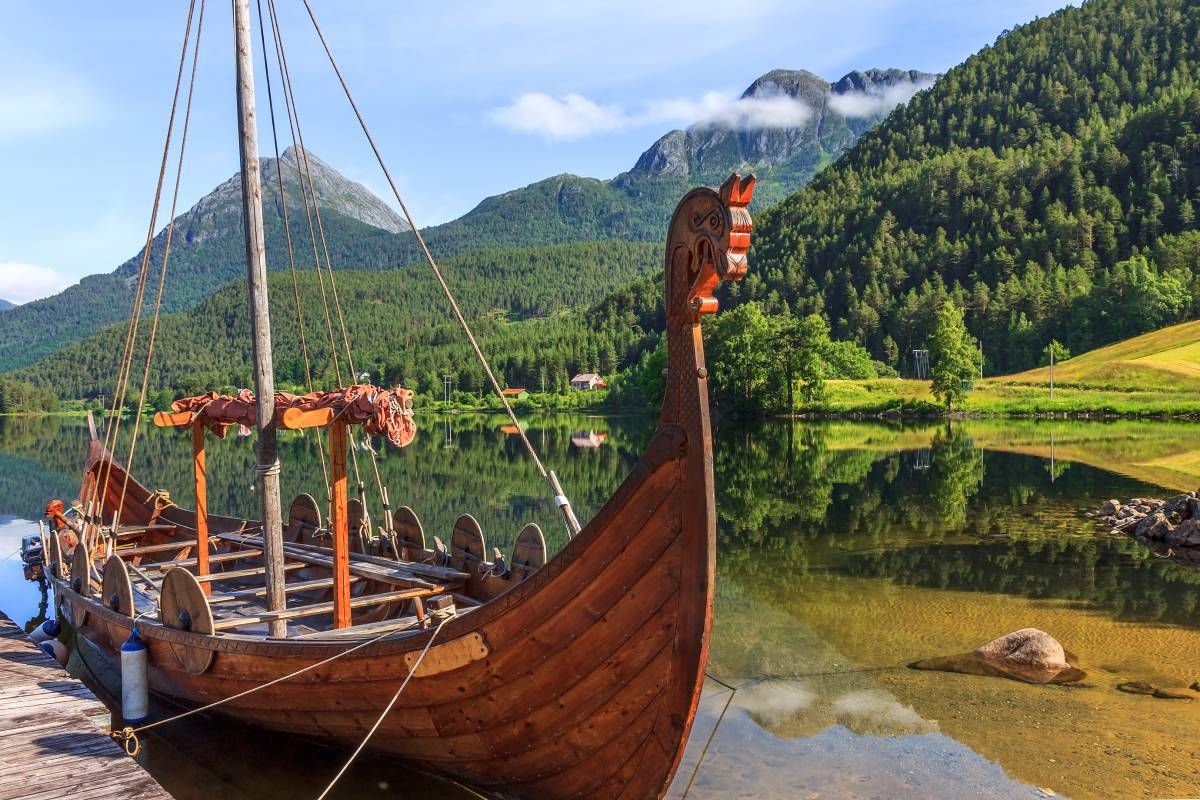
The recent study challenges previous assumptions, suggesting the Azores weren't just a fleeting stop for the Vikings but a longer-term settlement. Photo: Zimneva Natalia / Shutterstock
Over to the archeologists
Jeremy looks forward to archeologists further exploring the tantalizing possibility of an extended Norse presence in the Azores.
"I think the way our data should be viewed is that there is this surprising genetic lineage in house mice on the Azores and that one should take seriously the possibility that Norwegian Vikings visited the area."
"But to try and get too much more of the historical intricacies of that is probably unwise. I think the main job that needs to be done is by archeologists."
"The 2021 paper has suggested settlement by people before the Portuguese, so you may well expect material artifacts."
"We may also learn more from deeper genetic studies of the house mice for both the Azores and Madeira. There are still possibilities in North America, too."
"But unless it's somewhere like New Brunswick, I'm not sure that would add anything to what the archeologists already know. With Madeira and the Azores, on the other hand, we seem to be finding something entirely new."
We get to provide readers with original coverage thanks to our loyal supporters. Do you enjoy our work? You can become a PATRON here or via our Patreon page. You'll get access to exclusive content and early access.
Feel free to reach out to discuss potential stories that may be in the public interest. You can reach us via email at hello@thevikingherald.com with the understanding that the information you provide might be used in our reporting and stories.