

So much of what we know about the Viking world, be it medieval chronicles or ripping fictional yarns, has an extremely Anglocentric view.
In the Western world, the history of people from Viking societies – even though their societies were based in Scandinavia and surrounds – is often told via their interactions on the British Isles.
The entire Viking Age is bookended by events in Britain. The start date of 793 is traditionally considered the year of the first Viking raid, although modern archeology has proven this incorrect – it happened decades earlier in Estonia.
The end date is 1066, when Harald Hardrada fell at Stamford Bridge, failing in his attempt to seize the English crown.
Given, then, that the whole history of the Viking world seems to be viewed from a British (and even then a very English) perspective, it is refreshing to see a Viking story that is NOT set amongst the smoldering ruins of a raided British village.
Blood Feud, by S.J.A. Turney (available on Amazon here), is unique in that, for once, the focus of Viking exploits and adventures is not on the British Isles but in regions that have little fictional focus, including the Arctic Circle and across Eurasia to as far afield as the eastern shores of the Black Sea to medieval Georgia.
Finally, we here at The Viking Herald breathe with a sigh of relief: a Viking story not featuring Anglo-Saxon villagers or Irish monks fleeing before a deadly raid.
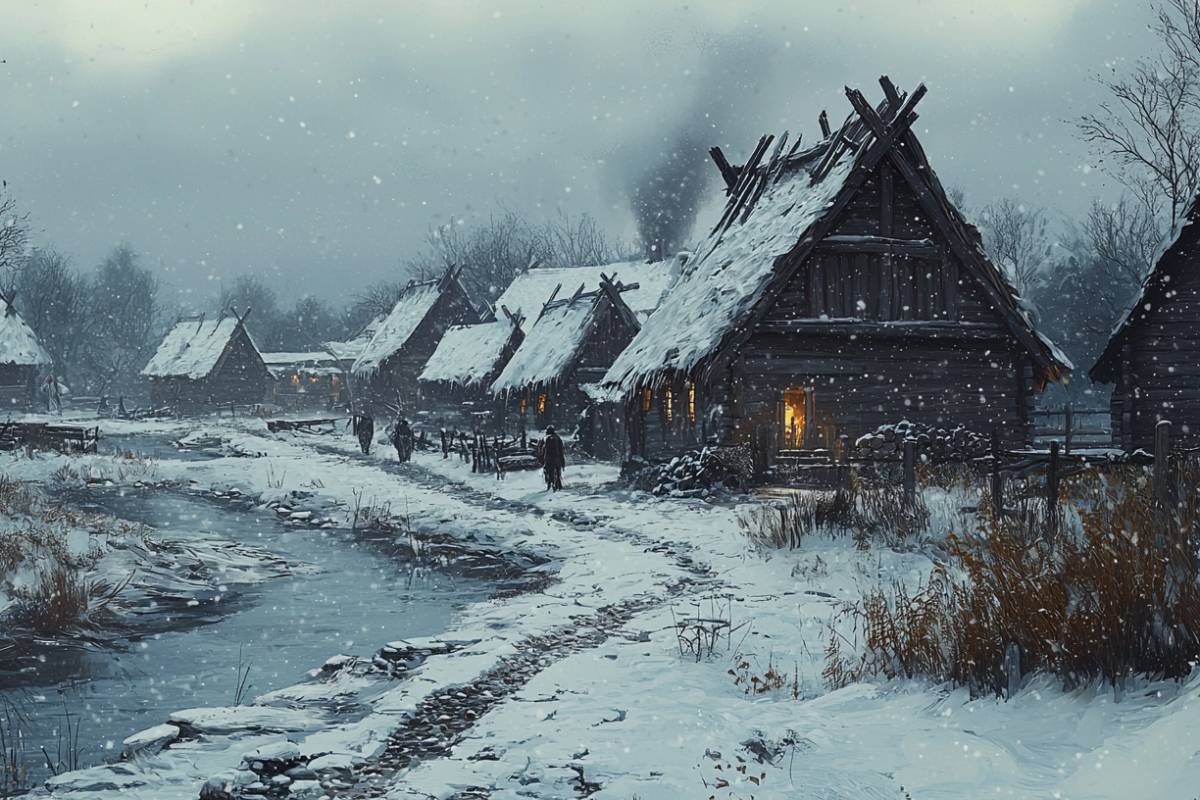
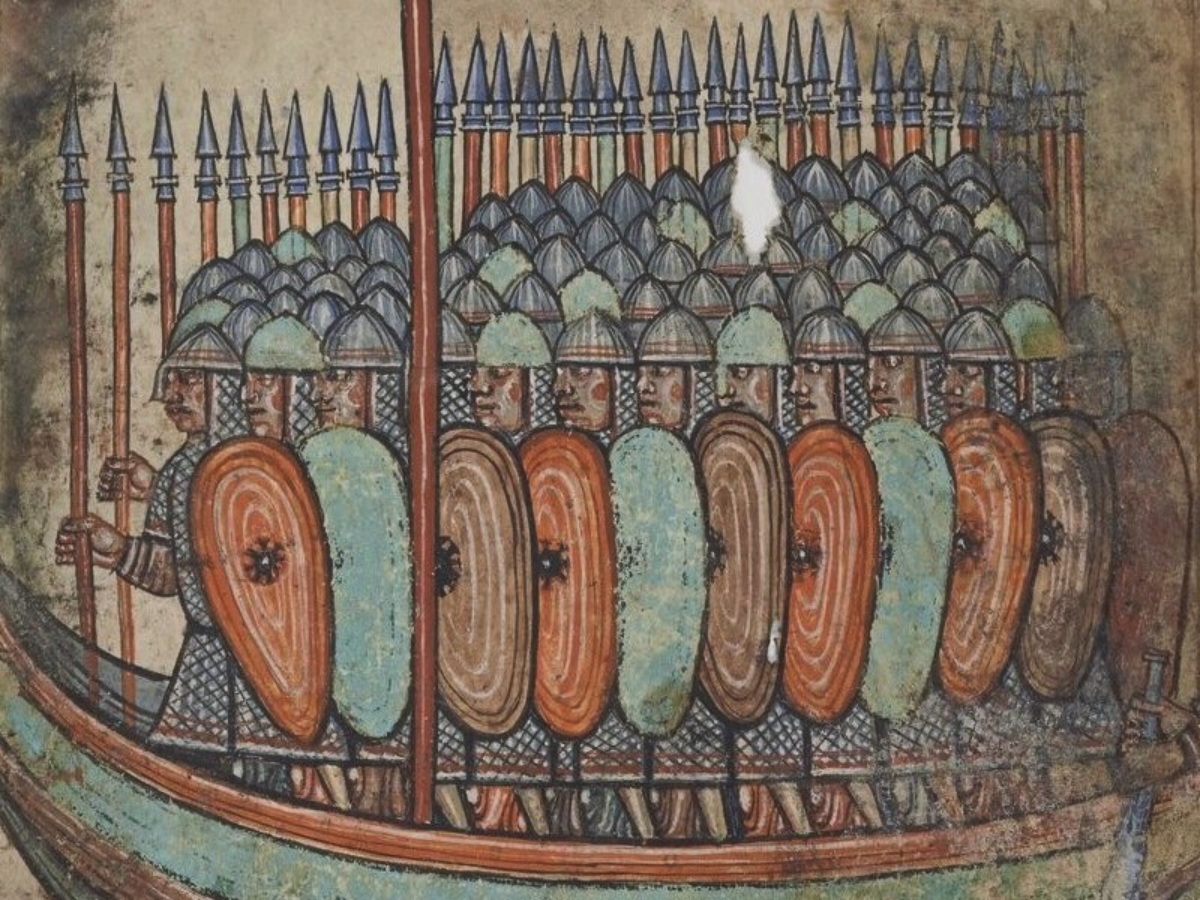
The novel stands out for its unique settings, spanning the Arctic Circle, Eastern Europe, and medieval Georgia. Illustration: The Viking Herald
A deadly feud in a society ripped apart by religious strife
Given its unique geographic setting, Turney also masterfully places Blood Feud in a time of great inner anguish in the Viking world, the late 11th century.
Despite Christianity having been a presence in the Scandinavian Peninsula since the very early medieval period, the Old Norse religion had not died out.
Much of the 11th century was a literal and figurative battle for the hearts, minds (and souls) of the inhabitants of Viking societies.
It is in this milieu that we follow Halfdan, who witnesses firsthand the "charity" of recent Christian converts and has a score to settle.
From his hometown in rural Sweden, he sets out to fulfill a blood debt against Yngvar, the man who slew his father.
Halfdan and a few of his fellow Swedes are just a handful of characters in the story who follow the old ways – the Norse gods, adherents of what modern historians call the Old Norse religion.
We see how Christianity has been used (some may say abused) by the ruling elite, by Viking warriors and kings, to justify and solidify their grip on power.
Halfdan's traumatic experience at the hands of Christians – the violence they deal out in a very unchristian-like manner – is Turney's attempt at explaining the societal upheaval and very personal violence that was evident in this late stage of the Christianization of Scandinavia.
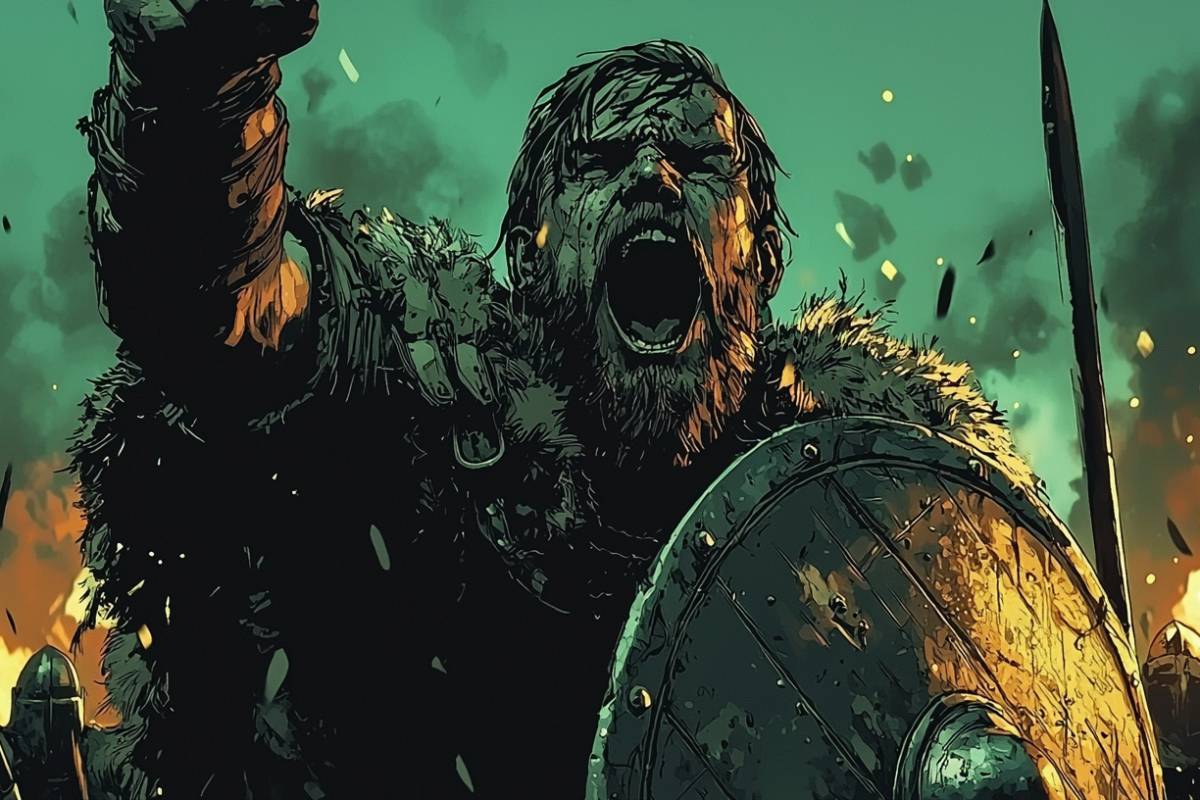
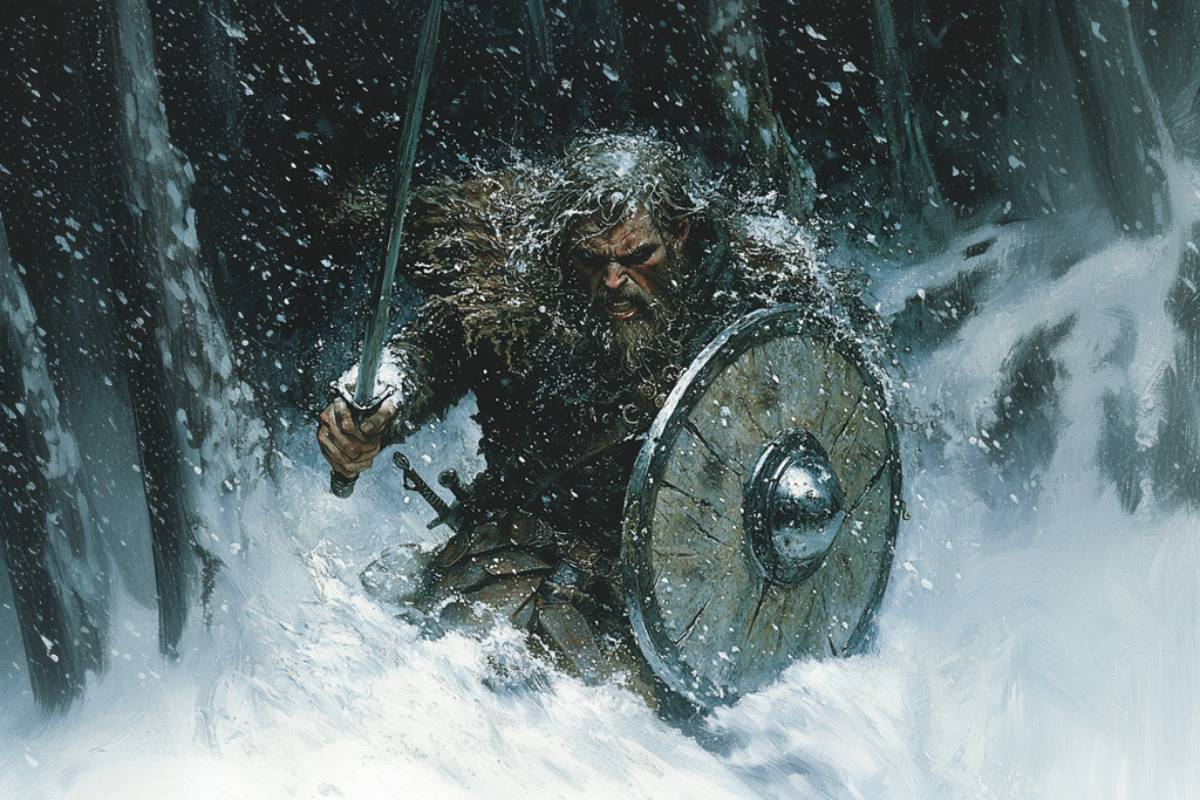
The story contrasts the brutality of Viking raids with the inner struggles of characters grappling with faith, revenge, and morality. Illustration: The Viking Herald
Exotic locations with morally ambiguous characters
It is, however, the geographic and temporal settings that steal the show in Blood Feud.
While the characters are full of moral ambiguity and inner turmoil – such as the question of what Halfdan will do when he meets his father's murderer – it is the "exotic" locations (when compared to the abundance of other Viking fiction) that make this novel exceptionally engaging.
These locations – whether voyaging across the Black Sea to the narrow streets of medieval Georgia or trekking across the vast cold expanse of northern Scandinavia – help breathe new life into what could have been a hackneyed Viking story if it had been set elsewhere.
As to be expected with a title like Blood Feud, there is, well, a lot of battling and brawling.
Turney does his best to make every swing of the sword, clash of shields, and bloody duel exciting and enthralling with graphic descriptions of blood, sweat, and a fair amount of testosterone swilling around.
S.J.A. Turney deserves much credit for breathing new life into what could be, in lesser hands, a clichéd tale: the "revenge for killing my father/father figure" arc that has been the bread and butter of many a work of fiction – from Batman to Spiderman, from Harry Potter to Michael Corleone in The Godfather.
For those wanting a page-turning Viking saga full of excitement and color, S.J.A. Turney has your back.
Blood Feud by S.J.A. Turney is the first installment in the Wolves of Odin series, available on Amazon here.
We get to provide readers with original coverage thanks to our loyal supporters. Do you enjoy our work? You can become a PATRON here or via our Patreon page. You'll get access to exclusive content and early access.
Feel free to reach out to discuss potential stories that may be in the public interest. You can reach us via email at hello@thevikingherald.com with the understanding that the information you provide might be used in our reporting and stories.