


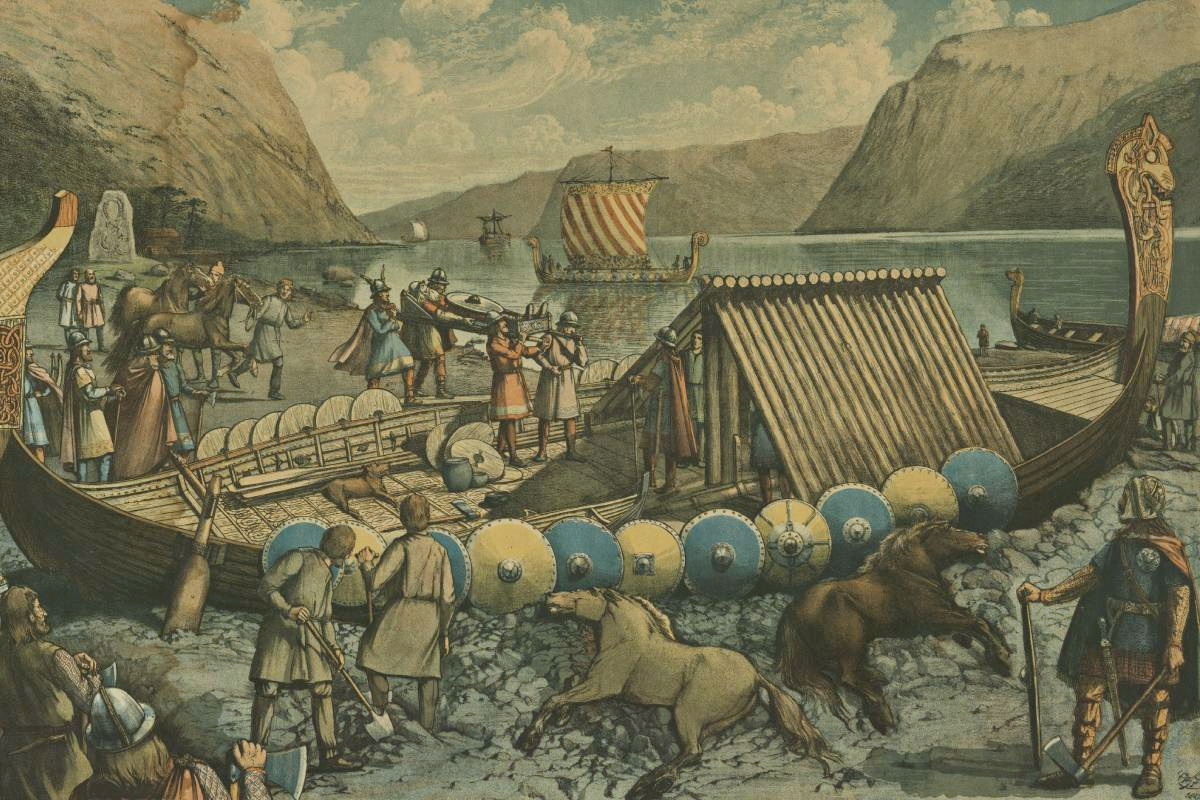
As a modern science, Archeology goes far beyond tales of Harrison Ford with a hat and a whip. Long before any Indiana Jones film graced the silver screen, archeology captivated people.
Yet it is only in the past century and a half that this vital field has truly evolved and come into its own.
Since time immemorial, people have been finding lost treasures of ages past.
In the 5th century BCE, Xenophon – a Greek historian, soldier, and mercenary – and his comrades passed through the abandoned Assyrian cities of Kalhu (Nimrud) and Nineveh, two prominent capitals of the ancient Neo-Assyrian Empire.
Tourists from the Roman Empire flocked to see the ancient pyramids in Giza two millennia ago. Some of the pyramids were already two and a half millennia old then!
The Scientific Revolution and the Age of Enlightenment, spanning the 17th to 19th centuries, laid the foundation for the Industrial Revolution.
These transformative periods saw advances in science and technology that kickstarted the study of human culture through the analysis of material remains – what we now call archeology.
Take to the seas... and oceans, rivers, lakes...
Just as modern archeology was taking shape, there was plenty of hidden treasure lying around the former Viking homeland of the Scandinavian Peninsula.
These hidden treasures were the remains of mighty Viking ships that ferried goods, livestock, warriors, and enslaved people throughout the Viking world, from the Arctic Circle to the Adriatic Sea, from the British Isles to the Black Sea, and seemingly everywhere in between.
With the advent of modern archeology, a genuine desire arose in areas of the former Viking world to better understand their ancestors – the people of Viking societies.
Many were aware of the rich cultural heritage buried in the soils of Scandinavia, and in 1880, the first significant archeological treasure was unearthed on a farm near Sandefjord, Norway.
This discovery would help revolutionize our understanding of the Viking Age (c. 750–1100 CE).
- READ MORE: All you need to know about Viking ships
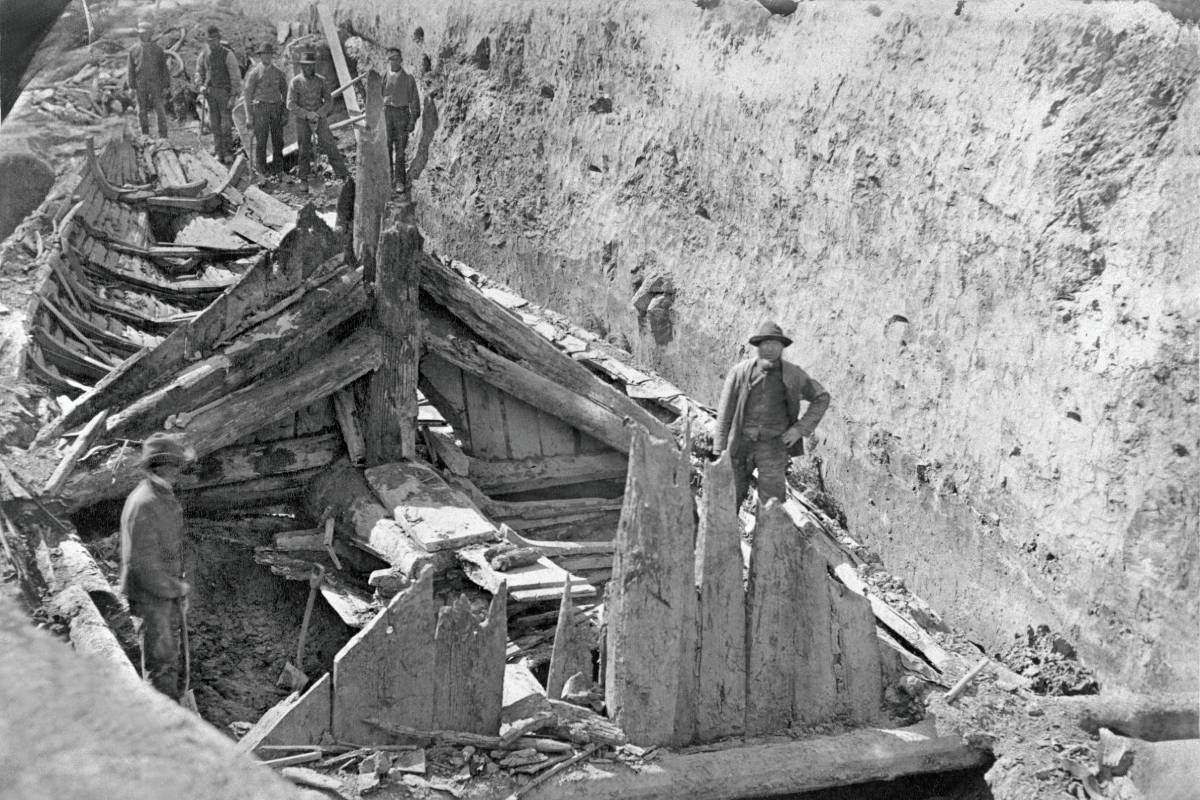
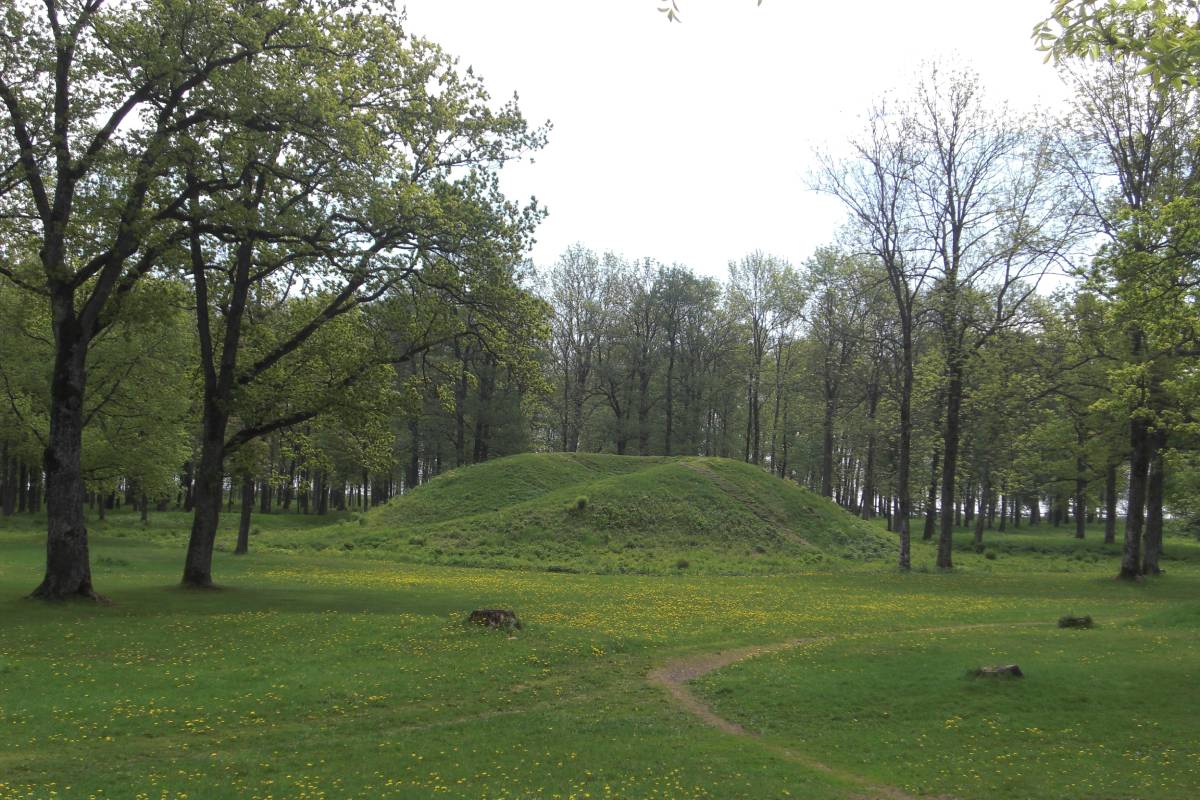
The sons of a Norwegian farmer discovered the Gokstad ship in 1880 while exploring a burial mound on their land. Photo: Kulturhistorisk museum, UiO (CC BY-SA 4.0)
The Gokstad Ship: Down on the farm
One day in 1880, the sons of the owner of Gokstad farm – near Sandar in Norway – heard about a legendary mound on their property and decided to investigate.
Digging into the cold ground, they eventually uncovered what appeared to be the bow of a ship.
Word spread that this could be a Viking burial mound, attracting the attention of the recently founded Society for the Preservation of Ancient Monuments.
In February 1880, excavations began, and a huge Viking ship – named the Gokstad Ship – was uncovered.
The Gokstad Ship was built sometime in the early 9th century, at the very start of the regional expansion of people from Viking societies.
Made of oak, the ship measured 23 meters (78 feet) in length and 5 meters (17 feet) in width. It was a karve designed to transport Vikings, goods, and livestock across the Norwegian Sea and surrounding waters.
Built to carry 32 rowers and equipped with a sail, it could traverse vast distances quickly for its time.
Yet the Gokstad Ship isn't just admired for its sleek design; it is also famous for what was buried alongside it.
A human skeleton – the remains of a powerfully built man believed to be 40–50 years old – was found in a bed inside a carefully constructed burial chamber within the ship.
Alongside this man – who may have been a powerful Viking chieftain, as Per Holck suggested in his 2009 article in the Norwegian Archaeological Review – were the skeletal remains of 12 horses, six dogs, and a peacock.
This macabre collection indicates the long-deceased man was one of power, wealth, and influence.
A replica was constructed in 1893 and sailed to the United States to take part in a World Fair, whilst a more modern replica, the Gaia, was built in 1990.
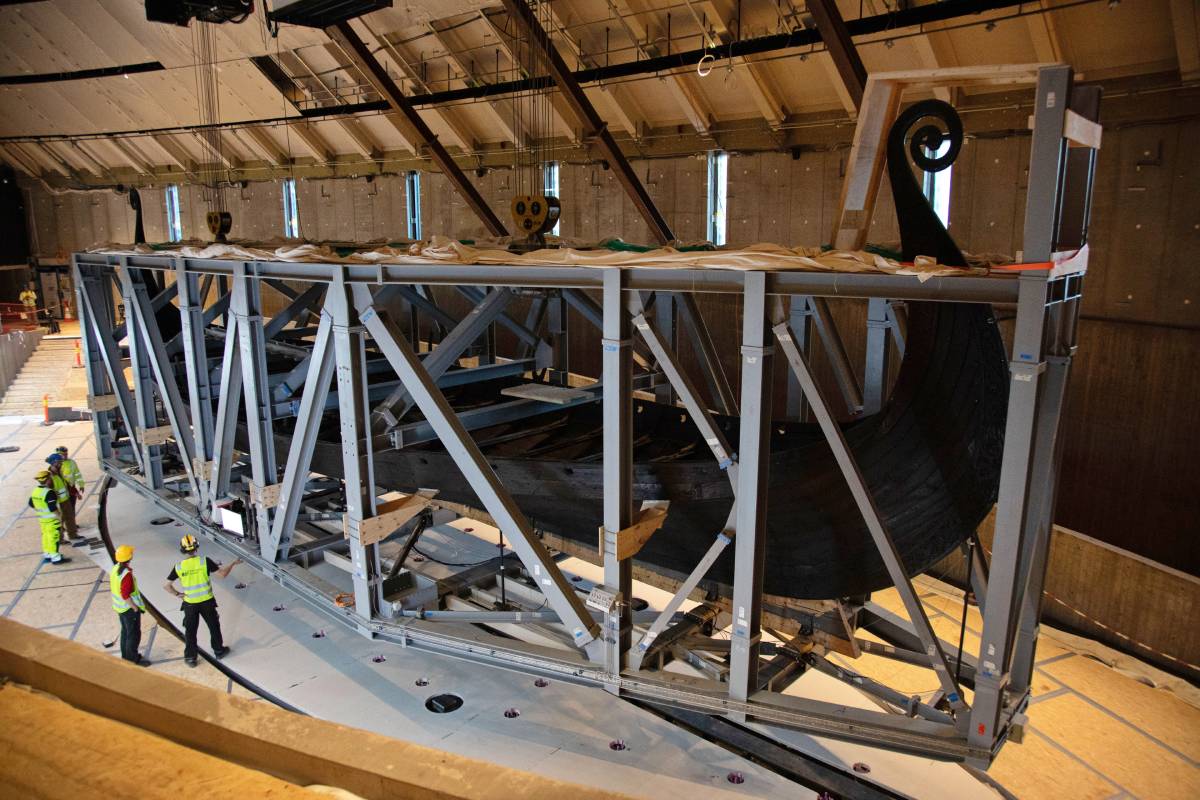
The Gokstad Ship will take pride of place when Norway's new Museum of the Viking Age is completed in Oslo in 2027.
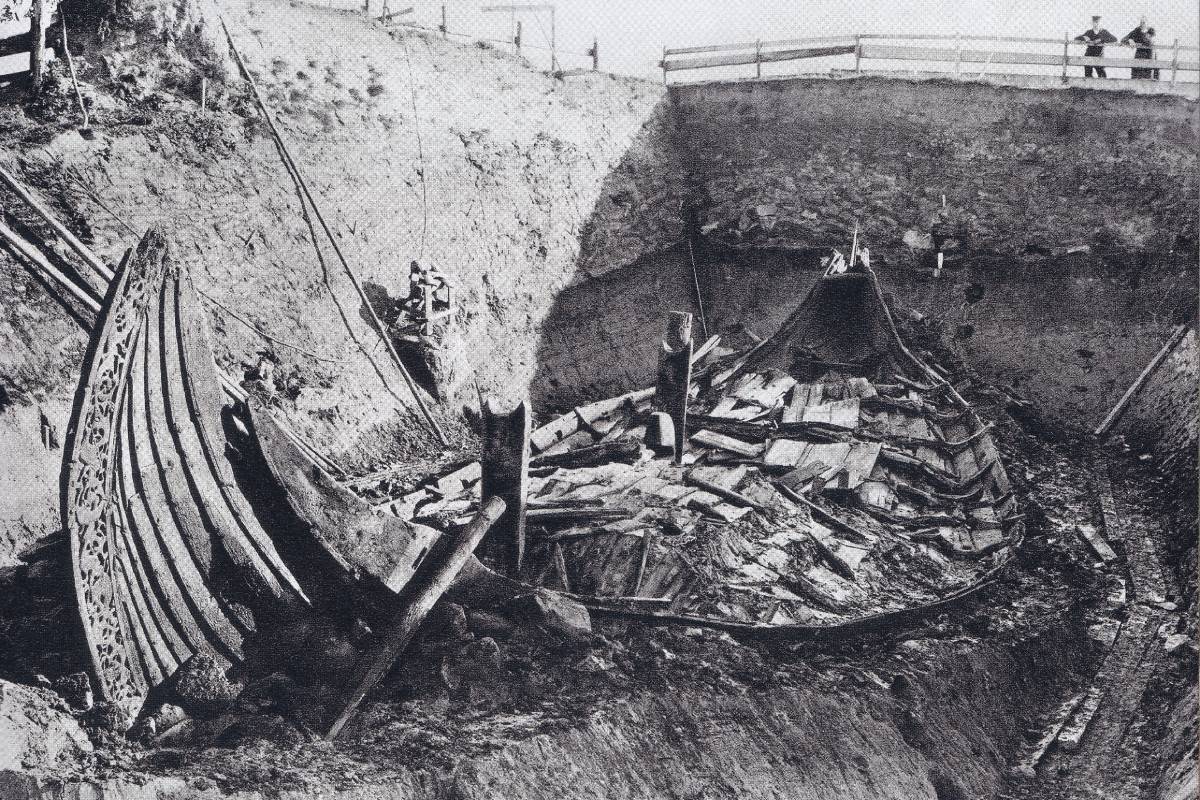
Discovered near Tønsberg, Norway, the Oseberg burial included two female skeletons, a Viking ship, and numerous grave goods. Photo: Kulturhistorisk museum, UiO
The Oseberg Ship: A striking example of a powerful female
Less than a generation after the discovery of the Gokstad ship, another maritime wonder was uncovered in Norway.
Once again, it was on a bucolic farm – Oseberg Farm near Tønsberg, Norway – that archeological gold resided, as the remains of a vast Viking ship were discovered in a burial mound in 1903, with excavation taking place between 1904 and 1905.
Two archeologists, one Norwegian and one Swedish, undertook the careful excavation of this clinker-built karve, which is believed to have been buried no later than the 830s.
The Oseberg ship is similar in size to the recently discovered Gokstad ship – a karve approximately 21 meters (70 feet) long and about 5 meters (17 feet) wide.
The ship was designed for up to 30 people to row and, along with its sail, could move at a rapid pace.
This would have facilitated surprise attacks or raids on unsuspecting foes and coastal communities or served as an ideal transport for the growing Viking settlements of the early 9th century, including those as far away as the British Isles or Iceland.
Again, like the Gokstad ship, it is what else was buried along with the ship that makes it fascinating.
The skeletal remains of two women were uncovered, causing a great deal of historical speculation in the more than a century since their discovery.
One of the women was about 80 years old and suffered from arthritis, while the other was younger, aged around 50.
The current historical hypothesis suggests that the older woman may have been a powerful figure in the community, possibly even a ruler, while the younger woman might have been her servant or, perhaps, a slave.
A number of grave goods – including a mysterious "Buddha bucket" (now thought to have originated closer to Scandinavia, likely in the British Isles, rather than China or India) – were found alongside the women.
However, all precious metals were stolen when the grave was disturbed at an earlier time.
The Oseberg ship will join its rough contemporary at the new Museum of the Viking Age in Oslo in 2027.

The Salme ship burials, uncovered in Estonia in 2008 and 2010, revealed the remains of two Viking ships and 41 fallen warriors. Photo: Kati Aus
The Salme Ships: Reshaping the early beginnings of the Vikings
For so long, the history of the Viking Age was told from an Anglocentric perspective.
For example, the beginning of this period was dated to a 793 Viking raid on the monastery on the island of Lindisfarne, off England's northeastern coast.
Yet, when construction workers were digging a hole for roadworks in 2008, they discovered the remains of Viking ships that have helped reshape and rethink the beginnings of the Viking Age.
It is not often that construction workers uncover archeological gold, but this is precisely what happened in 2008 on the Estonian island of Salme, bobbing like a cork in the Baltic Sea.
The remains of two Viking ships were uncovered in what appeared to have been a ritual burial, with both measuring under 20 meters (60 feet) in length.
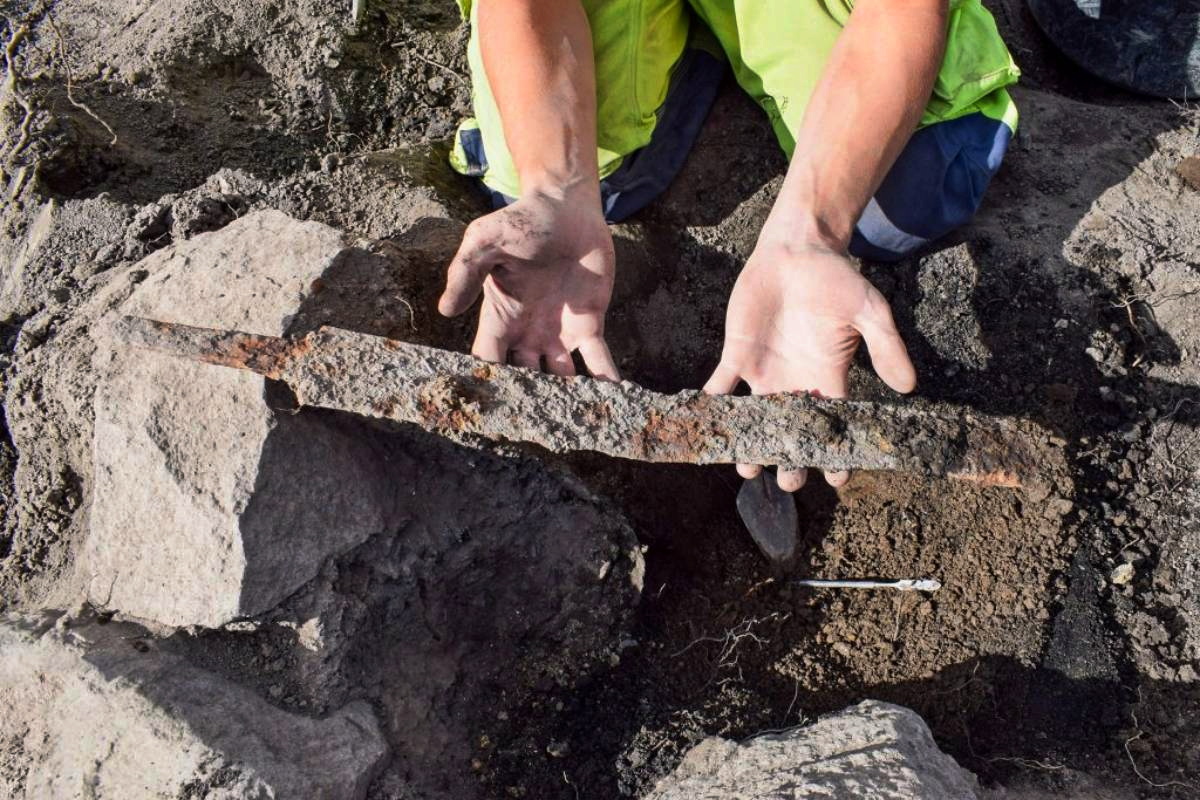
Skeletal remains of more than 42 people were also uncovered, along with a plethora of swords, shields, and arrows.
The burial also contained the remains of two ritually sacrificed dogs and hawks likely used for falconry, buried alongside what is believed to have been a horde of Viking warriors.
The best estimate for the construction of the ships is sometime in the mid-8th century CE, and a current historical interpretation, as Marika Mägi discusses in her 2020 book Vikings Across Boundaries (available on Amazon here), is that this was a Viking war band who came to raid Salme.
Scientific analysis of the remains of these (assumed) warriors has found that most were killed in battle.
The discovery of the Salme ships also pushes back the traditional start of the Viking Age by half a century from the raid on Lindisfarne.
Interestingly, this raid did not take place westward in the British Isles but eastward in the Baltic Sea – which would soon turn into a Viking pond by the turn of the century.
There is speculation that the Salme ships – if they were used to conduct a raid – may be archeological proof of a story in the Ynglinga Saga, about King Ingvar Harra, who died fighting enemies in what is now Estonia.
More information about the ships, including a 1:10 scale model, can be found in the island's Saaremaa Museum.
Keep an eye out because there will undoubtedly be more Viking burial mound discoveries in the future as science and technology continue to help archeologists uncover hidden artifacts from the past.
We get to provide readers with original coverage thanks to our loyal supporters. Do you enjoy our work? You can become a PATRON here or via our Patreon page. You'll get access to exclusive content and early access.
Feel free to reach out to discuss potential stories that may be in the public interest. You can reach us via email at hello@thevikingherald.com with the understanding that the information you provide might be used in our reporting and stories.



.jpg)
.jpg)