

Most know Lindisfarne as being the site of the first main Viking raid on England, starting in 793 and continuing through the eighth, ninth, and tenth centuries.
This little island is where the kings of Northumbria established an important religious center, where monks created the Lindisfarne Gospels, and where skilled artisans forged the treasures that adorned the altars of early Medieval Europe.
As well as the location of a new visitor center showcasing this fascinating past, Lindisfarne is where a small, dedicated team of archaeologists, crowdfunded and crowdsourced, has been exploring what lies beneath the soil to shed light on those events well over 1,000 years ago.
Island life after the Vikings
In 2016, they teamed up with experts from Durham University to search for the original monastery founded by the Irish monk Aidan in the early 600s.
While its original location has been lost to time, DigVentures still aim to discover more about who lived here, what their lives might have been like, and how they survived those Viking raids.
Each year, crowdfunders from around the world join the team to help uncover the lost stories of this tidal island near the Scottish border in England's far NorthEast.
The Viking Herald speaks with DigVentures as they reflect on their many activities and look forward to another season of exciting excavation:
The Viking Herald: The community-led excavation at Lindisfarne has now been going since 2016. How would you assess the last few years, how has the project developed, and what have been the highlights?
DigVentures: The last few years of excavation on Lindisfarne have been incredible! Despite being one of the most iconic sites in British history, relatively little has been known about the people who lived on the island before, during, and after the Viking raids.
There have been some amazing highlights over the years as each new season of excavation has revealed new and previously untold stories.
For example, in 2016, we unearthed evidence that early medieval islanders often placed white quartz pebbles on burials, much like we'd place flowers in a grave today – a previously undocumented practice on the island.
In 2019, we discovered the first direct evidence of leisure activities taking place among the monastic community, when we found the king from a 1,200-year-old board game known as tafl.
This type of pastime derived from the Roman war game Ludus latrunculorum, played in Britain, Denmark, Iceland, Ireland, Norway, and Sweden before the arrival of chess.
It's one of only two known examples in Britain. Made of stunning blue glass with white adornments thought to represent a crown, it feels like a small miracle that something so delicate survived!
As well as many other discoveries, including coins, namestones, stone carvings, evidence of fishing, and the use of seal and whale bones, we've also begun to build up a much more detailed picture of the people themselves and how things changed over the centuries of Viking raids.
We can see that it wasn't just male monks living here; there were men, women, and children too, people who traveled all the way from Scotland, people in varying states of health and who had survived serious injury and, perhaps most significantly, contrary to many popular narratives, clear evidence showing that a significant number of people continued to live on the island after the monastic community supposedly abandoned it.
But, in addition to this rich and often surprising archaeology of the island, and the inherent wonder and beauty of being here, the biggest highlight of all is probably the chance to share the process of discovery with fellow archaeology lovers from across the globe – as well as island residents today – and give them a chance to be involved.
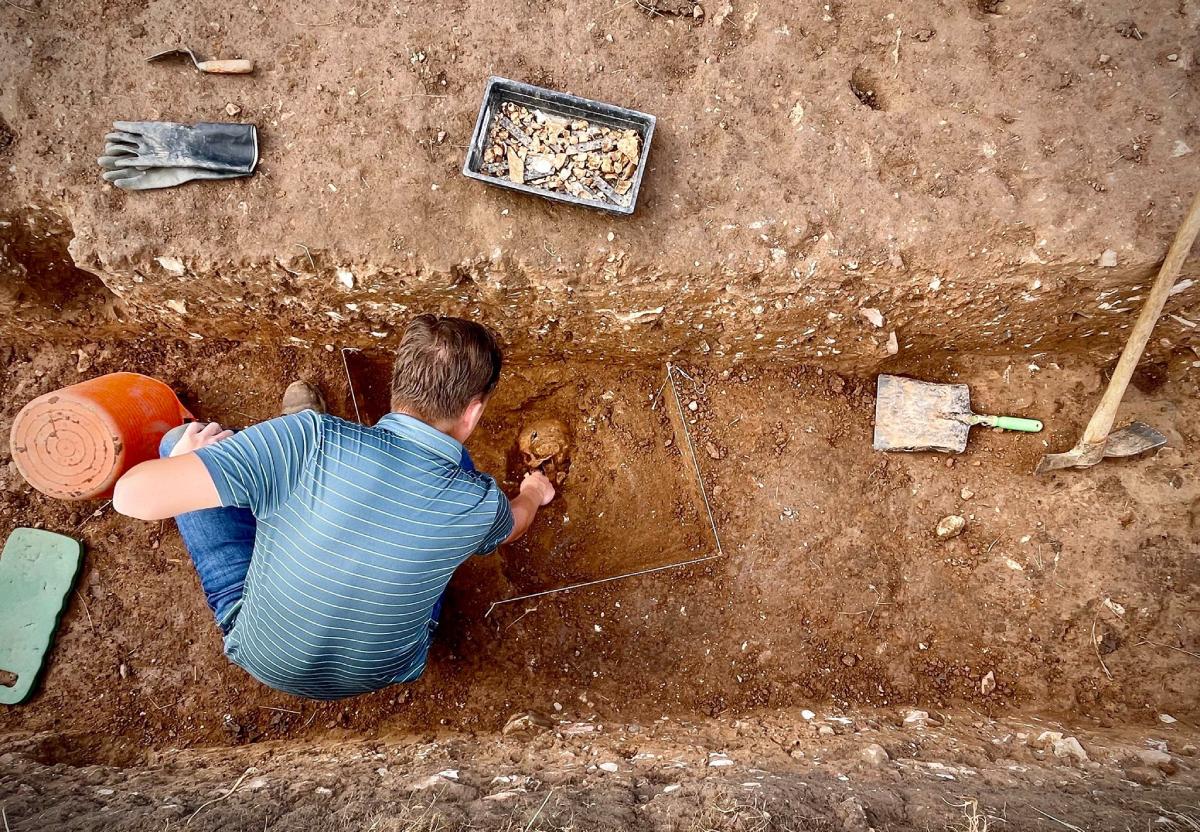
DigVentures uses crowdfunding to allow supporters to participate in real research. Photo: DigVentures
TVH: How do sites change over the years? How do you assess where to focus your efforts every summer?
DV: Archaeology is a constant cycle of unearthing new questions in the pursuit of answers. While our main project goals will remain consistent, and our efforts are guided by defined research questions, each year, we adapt our targets to pursue new avenues of investigation.
Initially, geophysical and geoarchaeological surveys carried out by our partners at Durham University have helped us identify where to place our trenches and also to understand how the landscape and land use changed over the centuries across the island.
Excavation then reveals different features, and we focus in on those that are best able to answer specific research questions such as 'What was the sequence of events here?', 'How long was this area in use for?' and 'What kind of activities were people taking part in?'
Over the years, we've explored a number of different areas, concentrating on different features and trench locations. We've found traces of buildings, structures, metal-working areas, and part of the early medieval cemetery. Sometimes, it can take several seasons to unpick what something is.
For example, we found a large circular feature. It was only after several seasons of investigation that we finally identified it as a rare example of a medieval lime kiln – most likely, the one used in the construction of the later priory, which still stands in ruins on the island today, when the monks finally returned to Lindisfarne.
Each time, we reassess which areas seem best able to answer specific research questions and unfold the island's story.
TVH: Looking ahead to 2023, when will the DigVentures team be on Lindisfarne again? Do you already have a particular spot in mind – and are you looking for anything in particular?
DV: DigVentures will be returning with Durham University and our team of Venturers in September for another three weeks when we'll continue to focus on our main trench directly in front of the later priory.
This year, one of our main focuses will be a large stone wall, beneath which we found a small piece of Roman pottery, much to our surprise.
While the wall itself may not be Roman, it does suggest that it might be older than we thought, so we're very interested to see if we can find out more about it this year.
We'll also be continuing to investigate the ditch that runs through the same trench, and which has previously been associated with several very early burials.
As the seasons continue, we're reaching right back into the earliest days of the monastery.
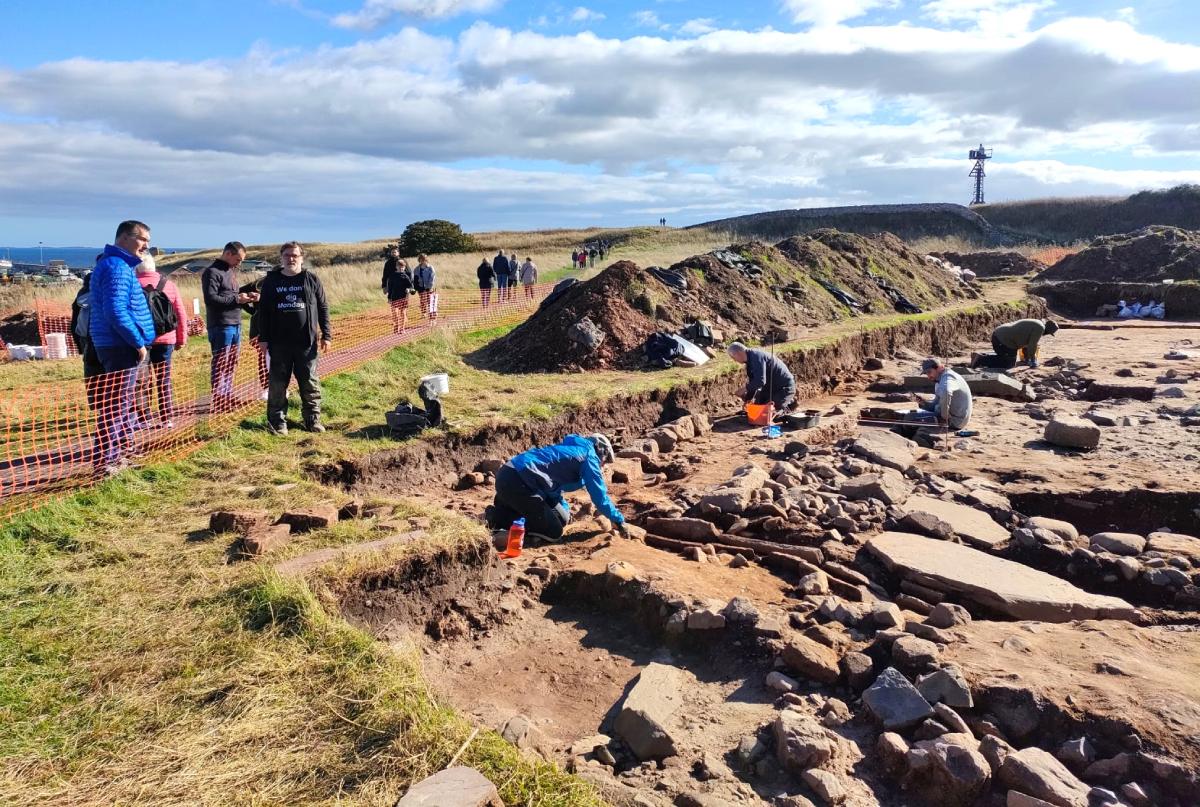
DigVenture teams working on-site. Photo: DigVentures
TVH: How does someone join you on Lindisfarne, and what can someone expect from a stint working alongside DV?
DV: Anyone is welcome to join our team on Lindisfarne – online, or in the field. Like many of our digs, it is entirely made possible by our crowdfunders.
To join us, all you have to do is head to our website at digventures.com. Places do fill up very quickly, so if you can't book this year, don't worry – opportunities to join us in 2024 will be released in December.
When you join us in person, you're welcomed right into the heart of our team. Whether you're digging in the trenches, or helping us process artifacts in the Finds Room.
Both experiences are staffed by our team of experienced archaeologists who will teach you everything you need to know and guide you every step of the way. It's a great opportunity to improve your skills, have fun, and make a real contribution to science.
For those who can't get to the site but are still fascinated by this iconic piece of British history, you're also welcome to follow us online.
Our Digital Diggers can explore the site, meet our team, learn alongside our on-site Venturers, and be part of the action while it's happening – all from home.
You can find out more about how to get involved on our website at digventures.com.
TVH: What is the future of the Lindisfarne Project?
DV: Our dig at Lindisfarne was originally conceived as a ten-year project, so we still have a few seasons of excavation to go.
Of course, the next most important phase is what happens next: the in-depth analysis. This is where specialists and experts examine the evidence in detail, carry out additional tests, and help us begin to draw together all the different threads of evidence so that we can publish our findings and so that everyone can learn more about the island's story.
Some of the discoveries are already on display in the new visitor center, and we hope many more will sit alongside them. Whether we extend the excavation program beyond the ten years or shift our focus to a new location all depends on what happens over the next few years…
We get to provide readers with original coverage thanks to the support of subscribers to The Viking Herald's Facebook page. Do you enjoy our work? You can SUBSCRIBE here or via our Facebook page. You'll get access to exclusive content and behind-the-scenes access.
Feel free to reach out to discuss potential stories that may be in the public interest. You can reach us via email at hello@thevikingherald.com with the understanding that the information you provide might be used in our reporting and stories.