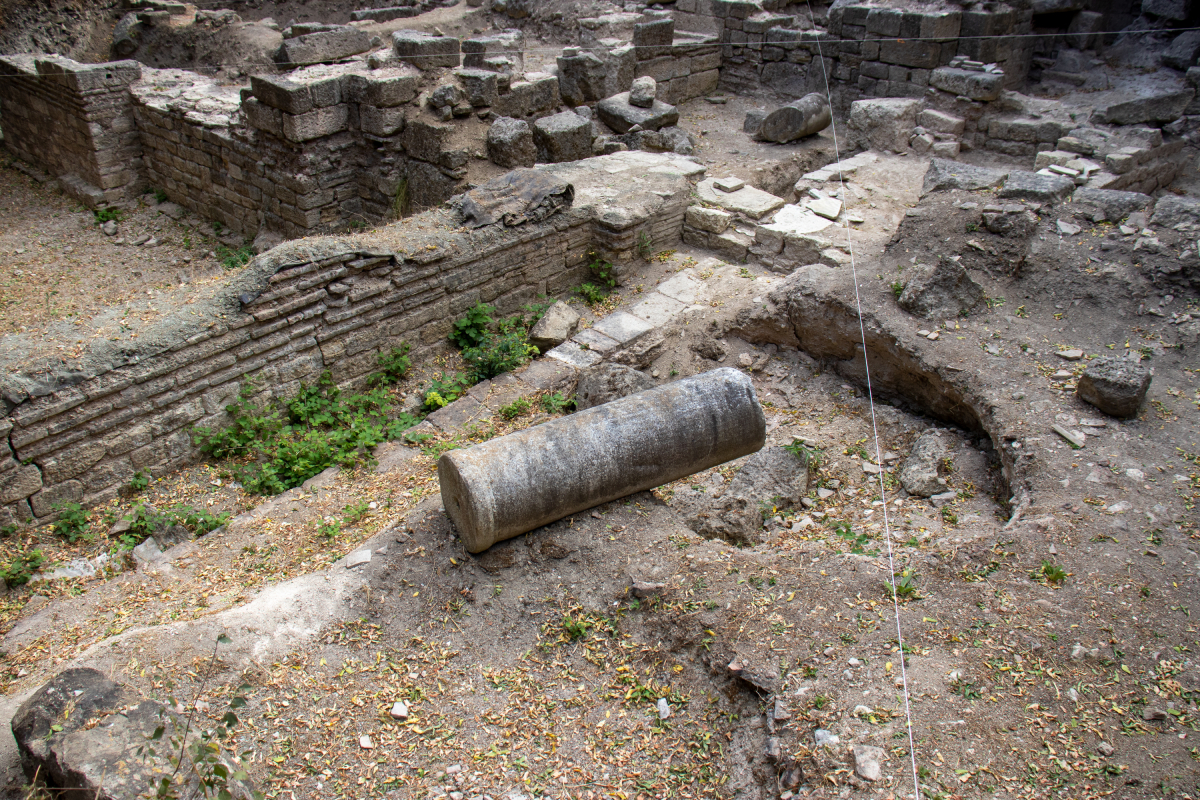


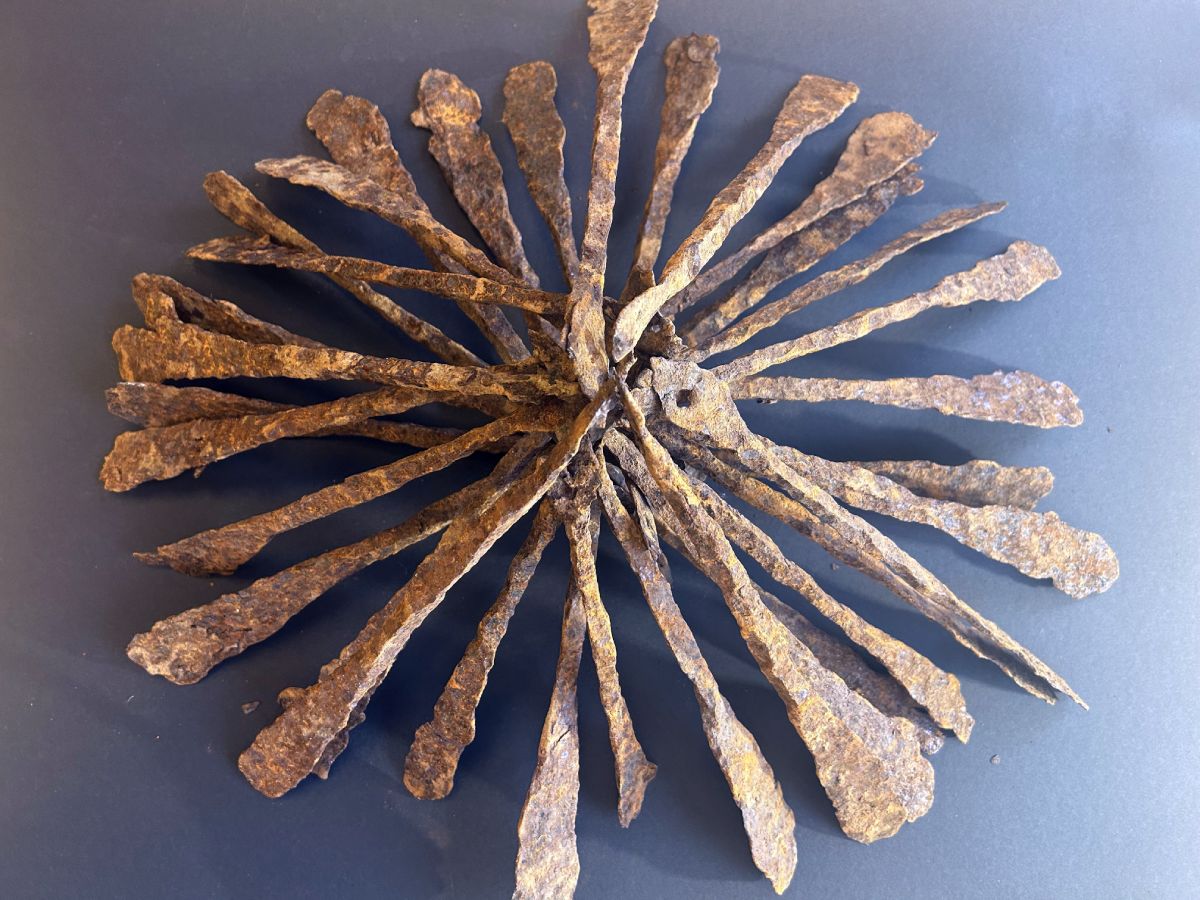
In 2022, a woman cleaning the basement of her family home hit upon 32 iron ingots dating back to the Viking Age or high Middle Ages. Identical in form, like little spatulas you would otherwise use to fry eggs, they each weigh about 50 grams, with a hole at one end.
Her father had stored them there 40 years ago, but the woman from the farming community of Valdres, in a valley halfway between Oslo and Bergen, knew little else about them. She contacted the local council, who duly contacted the relevant department at the Historical Museum in Oslo.
Kjetil Loftsgarden is an Associate Professor in the Department of Archaeology at the Historical Museum, to which the Museum of the Viking Age will also be attached once it opens in 2026. Following up on the find, he has since carried out his initial inspection before a deeper analysis this year.
Professor Loftsgarden now speaks to The Viking Herald about the discovery, its historical context, and its possible inclusion in the upcoming Museum of the Viking Age.
The Viking Herald: When did you first hear about the discovery – and what were your first thoughts? Have you heard of something similar being found before?
Kjetil Loftsgarden: Last winter, I got a message from archaeologists at the Innlandet County Council that they had received a spectacular find from a farmer in Valdres of 32 iron ingots.
In our museum collection, we have quite a lot of similar finds, but most were acquired in the 19th century. We rarely get finds like this nowadays. I think this is mainly due to the mechanization of farming.
So, this is a rare treat indeed!
TVH: Do you think that it's unusual for the objects to be made out of iron and not some precious metal? Or was it quite common?
KL: Well, although iron obviously was less costly than gold or silver in the Viking Age, the importance of iron cannot be overstated. Iron was a necessity for agriculture, tools, warfare, shipbuilding... the list goes on.
In the Viking Age and until the 14th century, massive amounts of iron were produced in the mountainous and valley districts of South Norway.
The iron was produced by specialized farmers, supplying the populated coastal areas of Norway, Western and Northern Norway, as well as probably Denmark, with this vital metal.
Iron thus constituted an important trade commodity in the Viking Age and medieval Scandinavia.
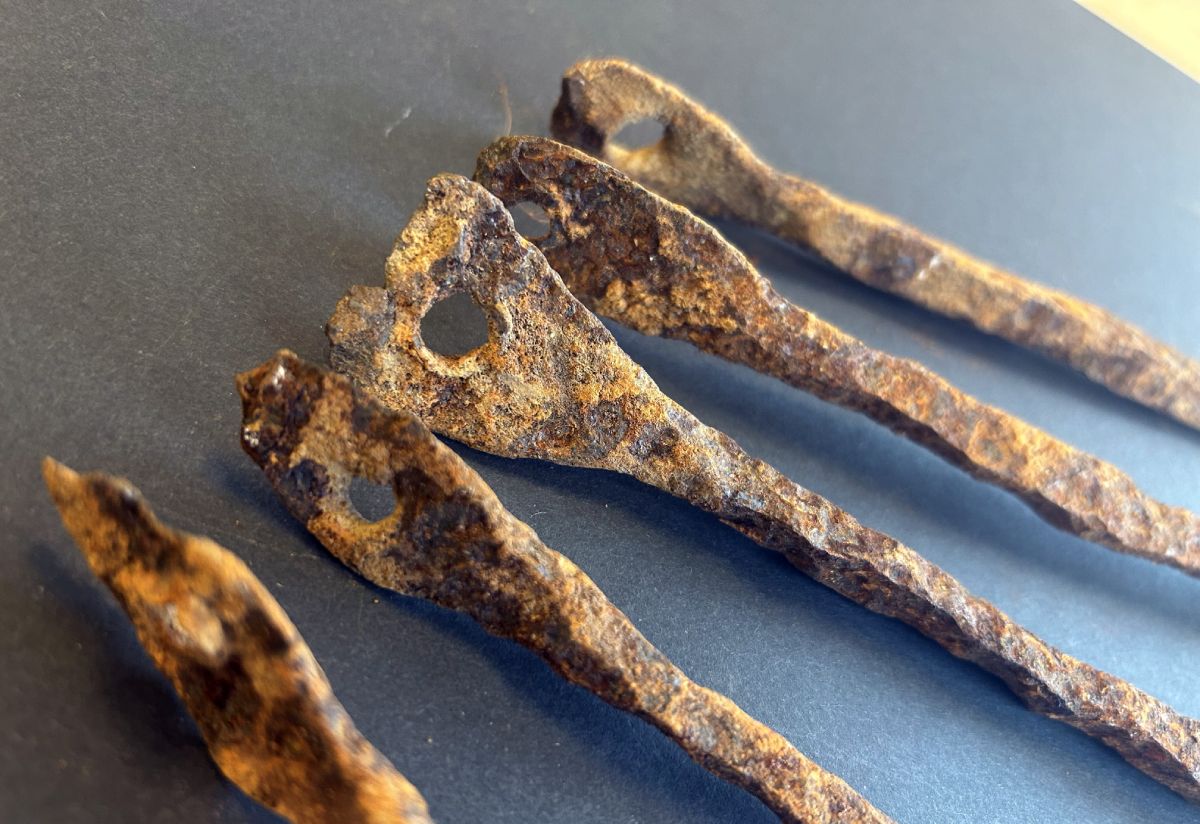
Considering the fact that they were forgotten on a farm for decades, the ingots are very well preserved.Photo: Eide / Mildri Een / Innlandet fylkeskommune
TVH: What were your first impressions upon inspecting the items, and are we any closer to setting a date of their origin?
KL: In spite of having spent decades in a barn, the iron ingots are remarkably well preserved. You really get close to the people who produced these ingots.
How they hammered out the ingots, how they made the hole in one end to help keep the ingots together and for transportation.
Dating them is difficult. Iron ingots are usually found buried in the ground, in screes, and so on. Often alone, or with artifacts with a wide typological dating. But they are usually dated to the period from the eighth to the 14th century.
If we assume that the chronological distribution of iron ingots follows the intensity of iron production, we can assume that many are from the tenth to the 13th centuries.
TVH: What's the next step in terms of investigation, and will the public be allowed to see these items?
KL: Our conservation department will process the ingots, and they will be incorporated into our collection.
We are in the process of planning (and building!) our new Museum of the Viking Age, which will open in Oslo in 2026.
As part of the exhibition, we will display artifacts from the massive iron production I've just outlined, the weapons and tools it produced, but also ingots from the production and trading of iron.
These new-found iron ingots are hot contenders to be part of this exhibition.
We get to provide readers with original coverage thanks to the support of subscribers to The Viking Herald's Facebook page. Do you enjoy our work? You can SUBSCRIBE here or via our Facebook page. You'll get access to exclusive content and behind-the-scenes access.
Feel free to reach out to discuss potential stories that may be in the public interest. You can reach us via email at hello@thevikingherald.com with the understanding that the information you provide might be used in our reporting and stories.