

One of the greatest literary achievements of the small island nation of Iceland, famed for its midnight sun and volcanoes, was a collection of stories, myths, and legends that have been collectively dubbed the Íslendingasögur – the sagas of the Icelanders.
Feud in the Icelandic Saga by Jesse Byock is an insightful work that delves into these stories, exploring the complex dynamics of feuding in medieval Icelandic society.
This island, dubbed the land of Fire and Ice, cast adrift in the choppy waters of the North Atlantic Ocean, was settled by the Norse from the late 9th century CE.
Legend has it that the enemies and adversaries of Harald Fairhair fled here after the Battle of Hafsfjord unified the petty kingdoms of Norway under his rule in 872.
Over the course of the next six decades, somewhere between 10,000 and 20,000 Norse would pack up and sail to a new life on this rocky outcrop of the Norse world.
They brought with them their traditions, their culture, and, yes, their sagas.
The Íslendingasögur, though compiled in the 13th and 14th centuries, is believed to have been written with primary sources depicting the lives, relationships, and conflicts of these brave Norse settlers.
They give voice to the harshness and violence of everyday life in early medieval Iceland.
However, one of the central themes that seems to permeate every saga and story in the Íslendingasögur is the concept of feud.

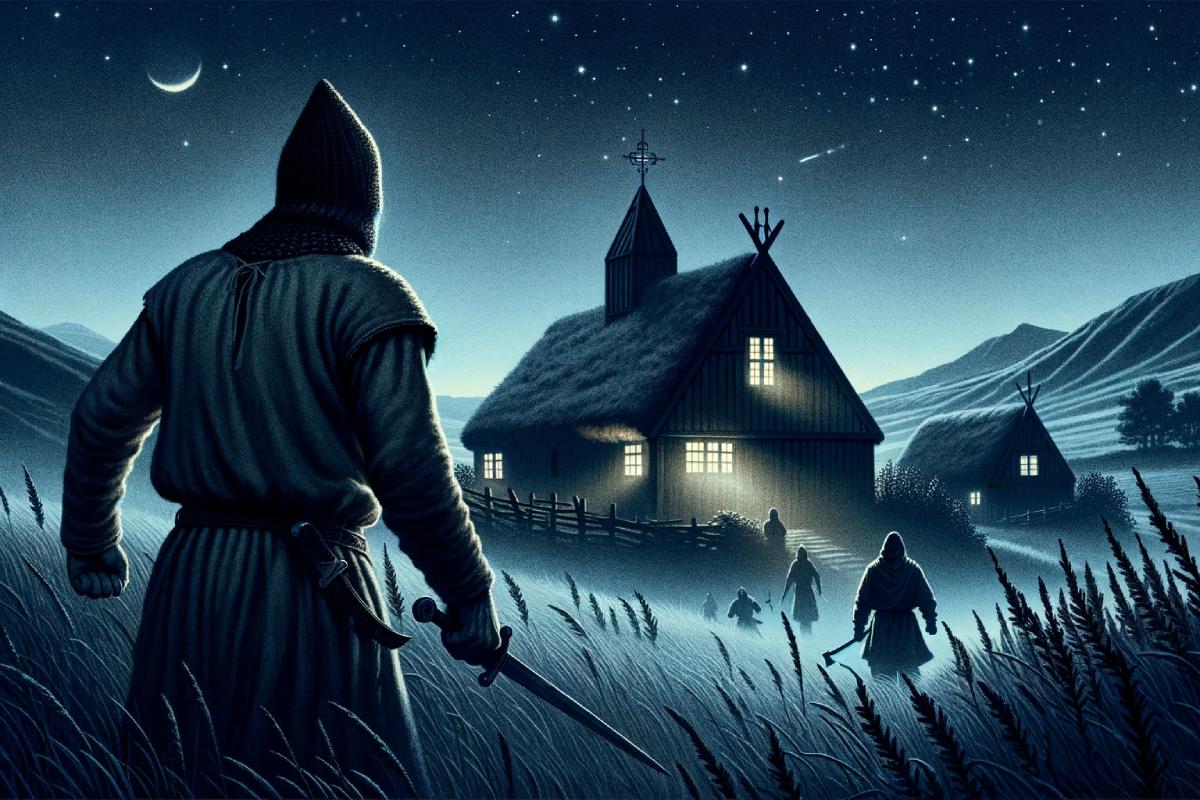
Byock's detailed analysis sheds light on how, in the complex society of medieval Iceland, feuds were not merely personal quarrels but vital ways to assert honor and define oneself within the broader community context. Photo: Ivan Kurmyshov / Shutterstock
More than simply settling scores
According to Byock in Feud in the Icelandic Saga, feud not only "stands at the core" of the sagas, but he also shows how these sagas are "complex expressions of medieval social thought."
Byock goes about meticulously investigating the origins of feuds in the sagas, the motivations driving these conflicts (and it was not always a fight over sheep), and their resolution or absence thereof.
Whilst a 300-page book on feuding in medieval society may not be everyone's cup of tea, what sets this apart is the time and effort Byock puts into vividly illustrating the historical and cultural context of the sagas, shedding light on the intricacies of what was a highly complex medieval society.
Often derided as an outpost of Norse civilization, early medieval Iceland, the milieu in which these sagas took place, gave the world an early form of representative democracy, to which Iceland's current parliament traces its ancestry.
Byock argues that feuding in medieval Iceland was not simply about settling scores or, indeed, exacting revenge but was embedded in the social fabric of the time.
Feuds were a means of asserting honor, protecting one's reputation, and defining one's identity within the complex web of familial and social relationships.
He also shows how honor was often a driving force behind feuds, and the quest for honor often led characters down paths paved with violence and revenge.
For those wanting to brush up on their medieval Icelandic law, the book explores the roles of law, arbitration, and mediation in attempting to end sometimes violent feuds and to restore a sense of harmony back into the social system.
This seminal work, though written almost half a century ago, continues to be a useful academic reference by shedding light on the enduring relevance and timeless quality of the Norse sagas.
Byock's clear, concise writing, coupled with his in-depth analysis, makes this an ideal read for anyone seeking to grasp the complexities underlying many of these famous narratives.
For those who want to know more about the highly complex medieval Icelandic society, this is the first book that needs to be read.
Feud in the Icelandic Saga by Jesse Byock is available for purchase on Amazon here.
Feel free to reach out to discuss potential stories that may be in the public interest. You can reach us via email at hello@thevikingherald.com with the understanding that the information you provide might be used in our reporting and stories.