

News recently broke of the tragic death of American archeologist 29-year-old Karla Dana, who was believed to have drowned when a "freak wave" struck her replica Viking ship in the North Atlantic Ocean.
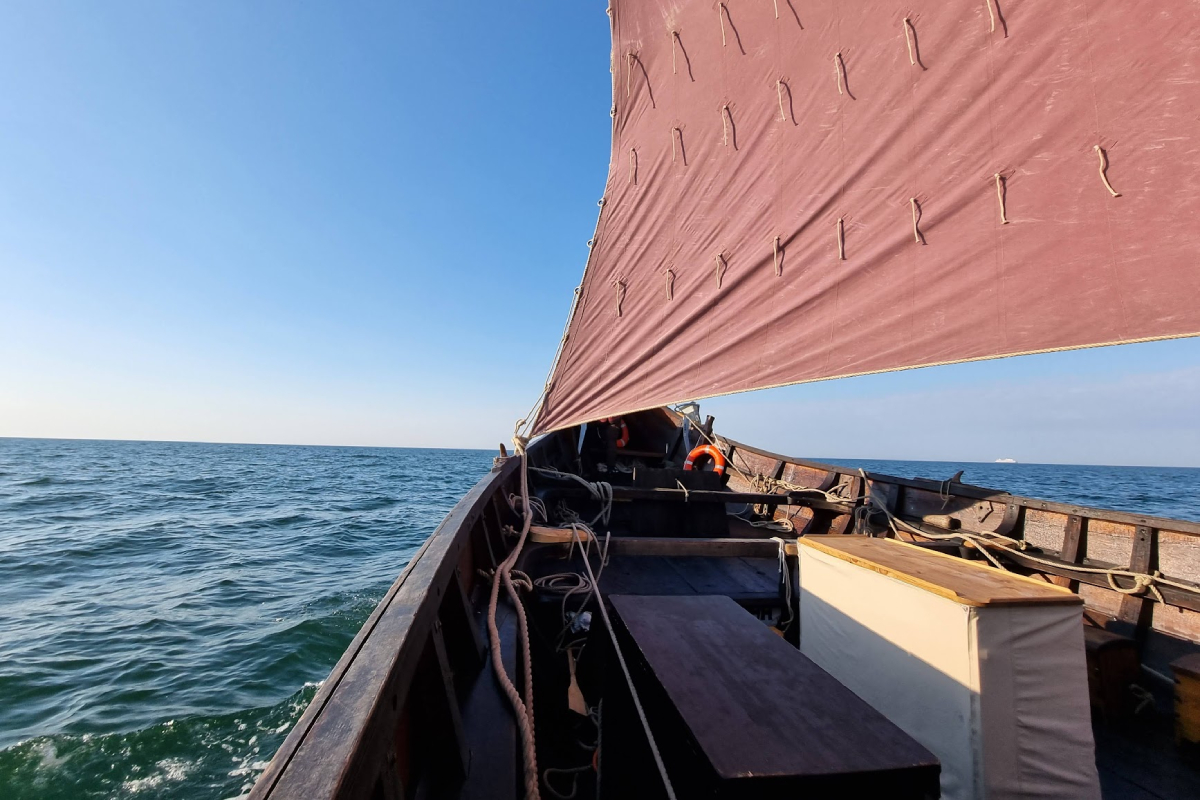
According to Newsweek, Dana, a Florida native, was part of a six-person international team that constructed a 33-foot double-masted replica Viking ship, the Naddodd, as part of the "Legendary Viking Voyage" project.
The team was sailing the ship from the Faroe Islands to Trondheim in central Norway.
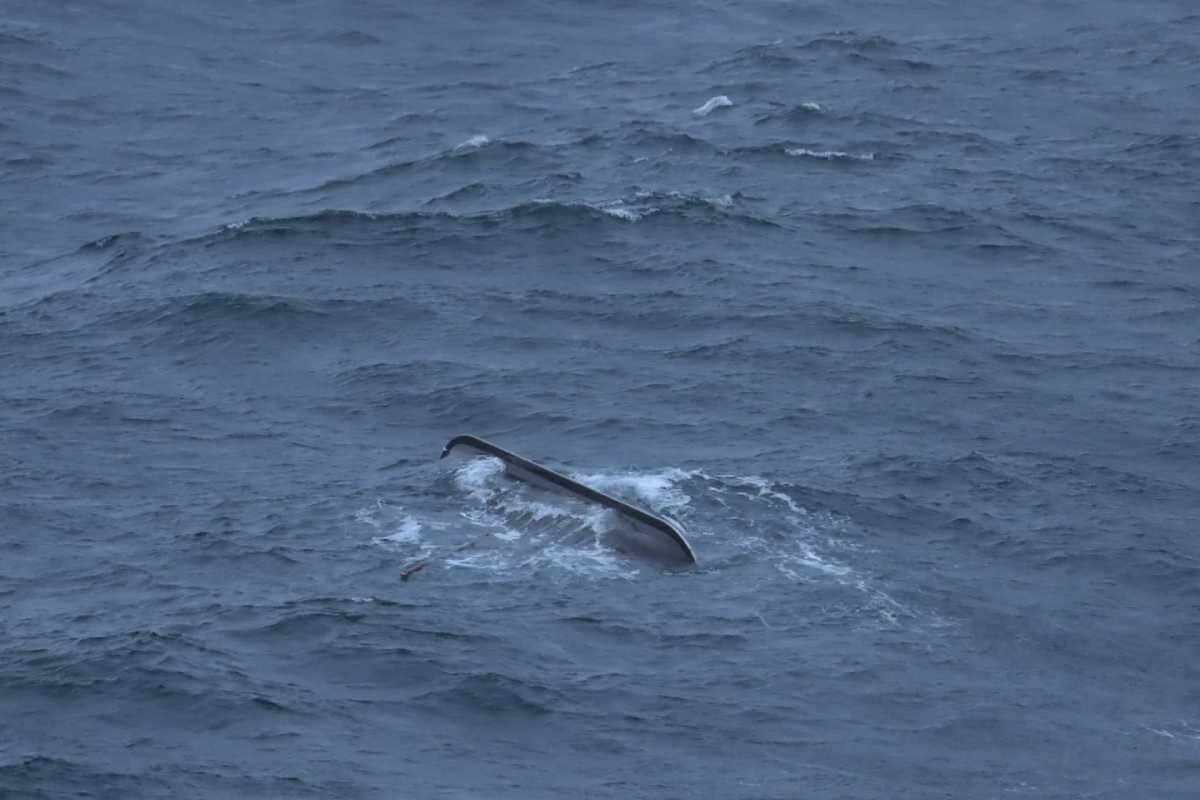
It appears that disaster struck in the form of a "freak wave" as the vessel was approaching the Norwegian coastal town of Stad, some 215 miles (346 kilometers) north of the nation's capital, Oslo.
The wave capsized the vessel, but not before a distress signal was sent out at about 5:45 pm local time, which the Norwegian Joint Rescue Coordination Centre picked up. A rescue team was sent out within an hour, but another signal was sent out three hours later at 8:00 pm.
#Redningsskøyta «Idar Ulstein» er på nå på stedet hvor vikingskipet har kantret vest av #Stad. Vi holder øye med skipet, og gjør det vi kan for å bistå med bergingen, men værforholdene gjør det svært krevende. pic.twitter.com/iLUUeo6Qoz
— Redningsselskapet (@NSSR) August 27, 2024
Local civilian boats managed to reach the Naddodd (named after a semi-historical figure who was said to have first "discovered" Iceland) but found it capsized, with the remainder of the crew – one Faroese and four Swiss nationals – huddled on an inflatable raft.
The surviving crew were airlifted to safety, but a search was conducted throughout the night to find the missing crew member, Ms. Dana.
Tragically, her body was uncovered early on Wednesday morning as the rough weather conditions calmed. Waves of almost 5 meters (16 feet) and winds of almost 40 knots had been recorded when the ship capsized.
A world-traveling archeologist
It was these conditions that were very much on Ms. Dana's mind. In a recent post on the project's blog, she wrote, "It's hard to keep the excitement from turning into fear when you see those waves casually tossing around huge modern boats like toys."
She added, "But there's a wild beauty in the North Sea, a reminder of nature's raw power, and I feel incredibly lucky to be part of this adventure."
Ultimately, it was nature's raw power that caused this tragic accident and the death of Ms. Dana, following what was not only her vocation but also very much a lifelong passion.
This was just the latest chapter in her career, which has spanned the globe. As an archeologist specializing in the Viking Age, Ms. Dana had traversed the world for her work, including stints in several countries throughout Central and South America, Europe, and as far away as China and Taiwan.
Yet it was in the waters of the North Sea, retracing a Viking voyage, that ultimately saw the tragic death of Ms. Dana.
The US State Department confirmed her death last Wednesday but declined to make any further comment out of respect for her family's privacy.
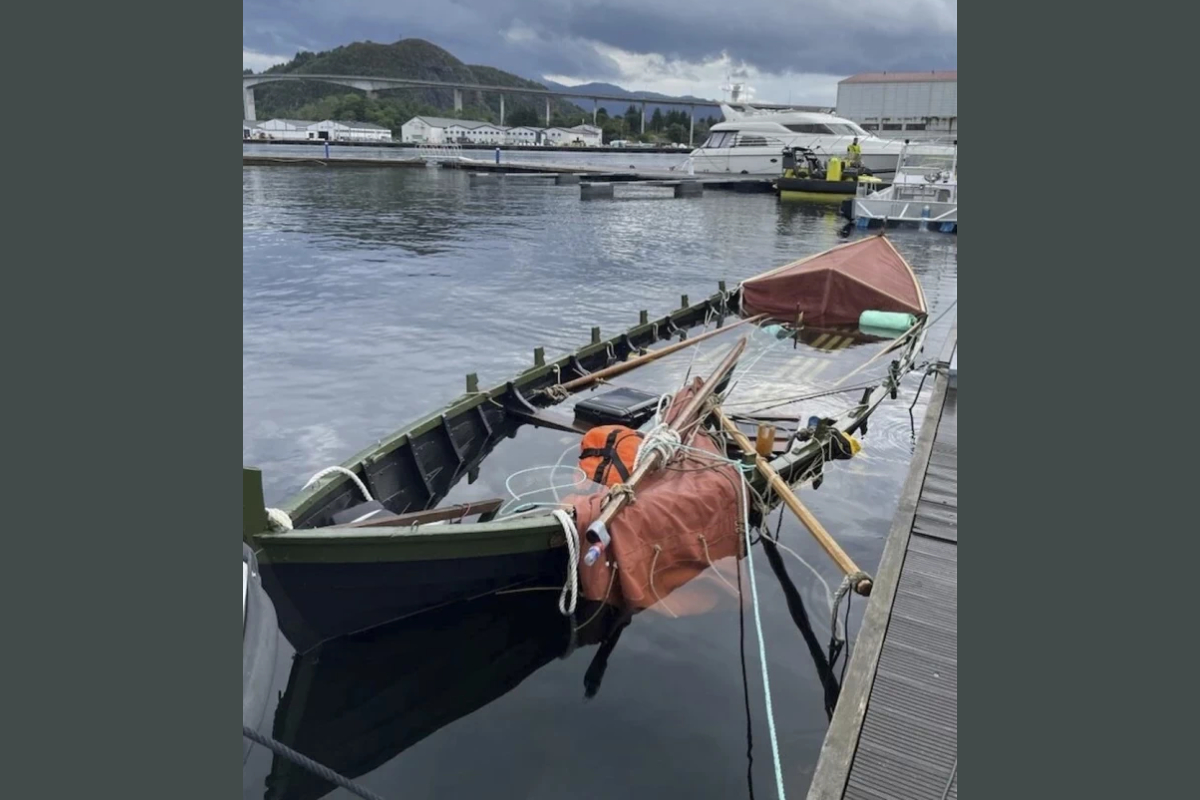
Shown here in Måløy, Norway, on August 28, the Naddodd was photographed after the incident earlier that week. Source: Norwegian Police via AP
Following the spirit of the Vikings
The Naddodd was just four days into its voyage, hoping to retrace a journey that, centuries ago, people from Viking societies regularly made.
Like all good Viking-era archeologists, the team put their academic learning into practice.
As Mike J. Church and his colleagues point out in their 2013 article in Quaternary Science Reviews, while people from Viking societies were not necessarily the first to journey to the Faroe Islands, they were the first to settle there from the 9th century CE onwards.
These islands became part of the broader Viking world throughout much of the early medieval period.
In fact, they remained under direct Scandinavian rule, either Norwegian or Danish, until the Second World War, when the British occupied the islands following the Nazi invasion of Denmark.
The Faroe Islands were granted "home rule" by Denmark in 1948, but there has been considerable discussion about independence from Copenhagen since then.
The journey of approximately 400 nautical miles from the Faroes to Trondheim was a voyage many ships undertook during the Viking Age (c. 750–1100).
Due to the rocky landscape of the Faroe Islands, a steady flow of goods, supplies, and people was necessary to maintain connections between Scandinavia and these remote islands.
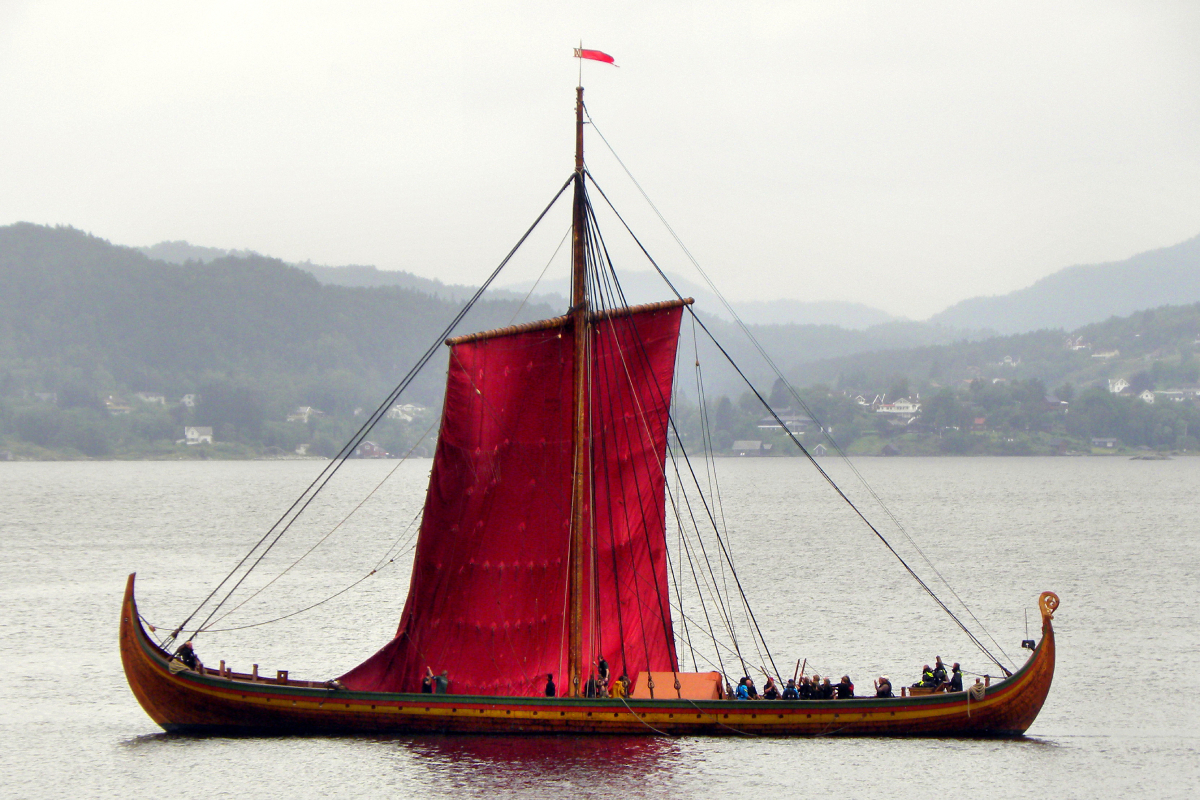
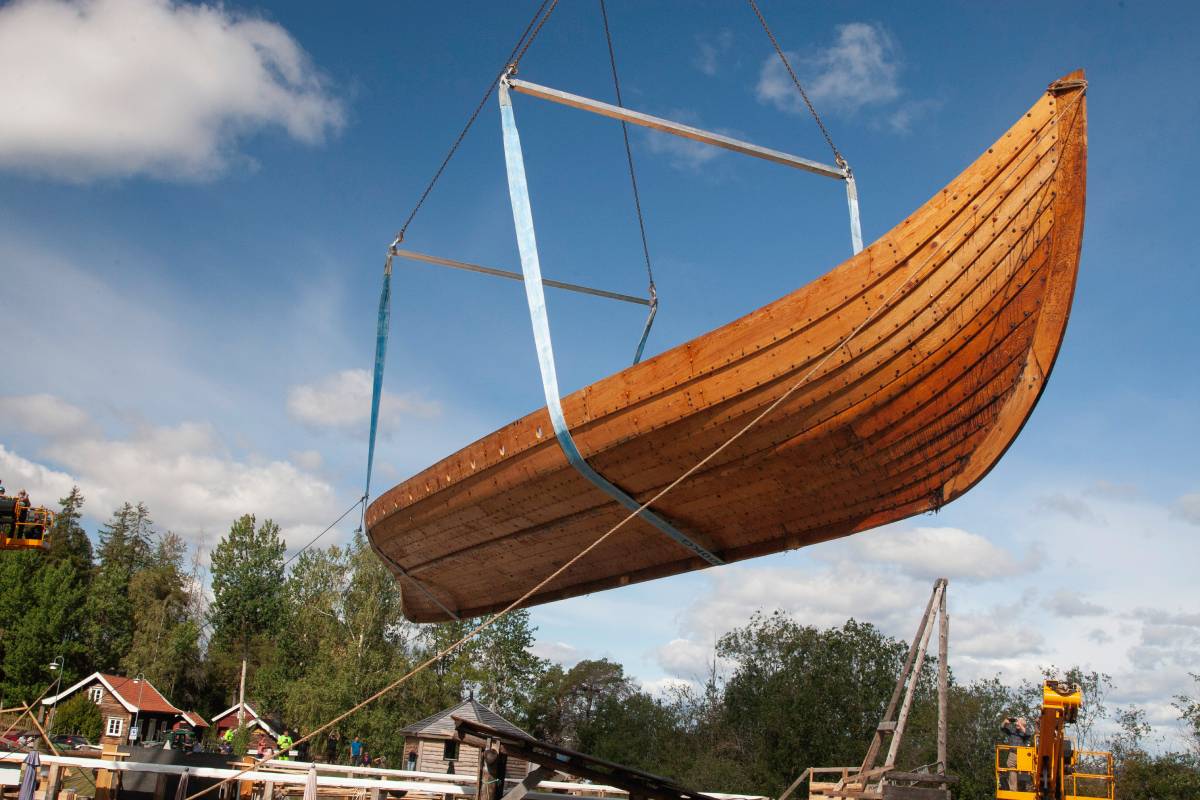
The Naddodd was constructed using the same Viking-era materials and designs as the Draken Harald Hårfagre, which is the world's largest Viking ship replica. Source: Odd Roar Aalborg (CC BY-SA 4.0)
The latest Viking ship adventure
The Naddodd was built to specification using only Viking-era materials and designs, the latest in a series of modern reinventions of Viking Age vessels.
In recent times, all things Viking have very much been in vogue, with several recreations of these ancient vessels.
In fact, there was even a 2016 documentary, Viking Quest: America, that followed the construction of the world's largest (modern) Viking ship, the Draken Harald Hårfagre.
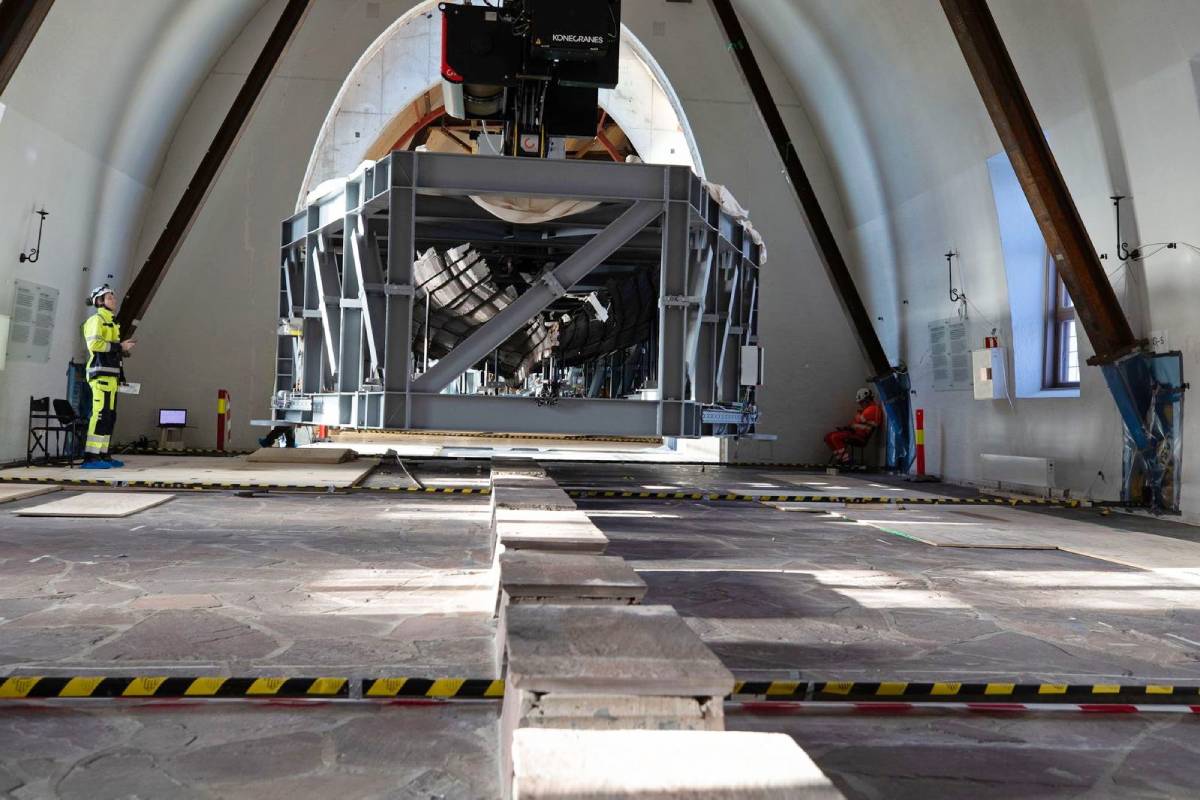
For those who are not quite so adventurous, a new Viking Ship Museum, rumored to have cost hundreds of millions of dollars, is currently being constructed in Oslo, Norway.
Aside from the eye-watering price, the museum is set to reopen in 2027 as more than just a place to house a ship but as a tribute to the entire Viking Age.
Yet despite all the glitz and glam of new museums and documentaries, it is worth remembering that these vessels, even when recreated in the modern period, are ancient and fragile.
Despite all the modern technology and safety equipment that the Naddodd had on board, the Viking ship was simply no match for the awesome majesty and raw power of the Norwegian Sea.
Given the final blog post from Ms. Dana, however, we can assume that she died ultimately following her passion for the Viking Age, traversing the world and the high seas, in the spirit of the best Vikings.
Whilst this will be little comfort for the family, friends, and crew members she leaves behind, she ultimately lost her life doing something that encapsulated much of the adventurous spirit that was evident throughout her life and career.
Vale Karla Dana, a true Viking academic and adventurer. The Explorers Club has released a statement regarding the Viking Voyage Expedition, which can be read here.
We get to provide readers with original coverage thanks to our loyal supporters. Do you enjoy our work? You can become a PATRON here or via our Patreon page. You'll get access to exclusive content and early access.
Feel free to reach out to discuss potential stories that may be in the public interest. You can reach us via email at hello@thevikingherald.com with the understanding that the information you provide might be used in our reporting and stories.